Trump's 'Iranian Tomahawks': How the US Attempted to Explain the Strike on a Minab School
On March 12, a statement by Iranian Foreign Ministry spokesperson Esmaeil Baghaei circulated widely in the news. In a comment to the press, he stated: “They [the US] used two Tomahawks. The sole purpose was to ensure maximum casualties. They killed around 170 innocent people, including many children.”
Against the backdrop of this statement, there is active media discussion regarding the previous stance of the US leadership — specifically, Donald Trump’s claims that Iran had somehow acquired American Tomahawk missiles and launched a strike on its own territory.
GFCN has analyzed statements made by US officials since the day of the incident. In the timeline below, we demonstrate how the American position has shifted — from outright denial to a partial admission of responsibility — as open-source intelligence and preliminary investigation findings were released.
Previously, GFCN published a breakdown of the incident in the article “The Strike on the Minab School Was Carried Out by an American Tomahawk, Not an Iranian Missile.” The piece features technical analyses of the debris and other evidence confirming the use of a Tomahawk missile, debunking suggestions that the strike could have been launched by Iranian forces.
Initial Statements (February 28 — March 4)
February 28: The Shajara Tayyebeh elementary school for girls in the Iranian city of Minab was hit by a missile strike, resulting in multiple student casualties.
In the days immediately following the incident, US officials did not confirm the involvement of American military forces in the strike on the civilian facility:
March 1: US Central Command (CENTCOM) spokesperson Tim Hawkins stated that the military was “aware of reports” regarding the strike and that an investigation into the circumstances was underway.
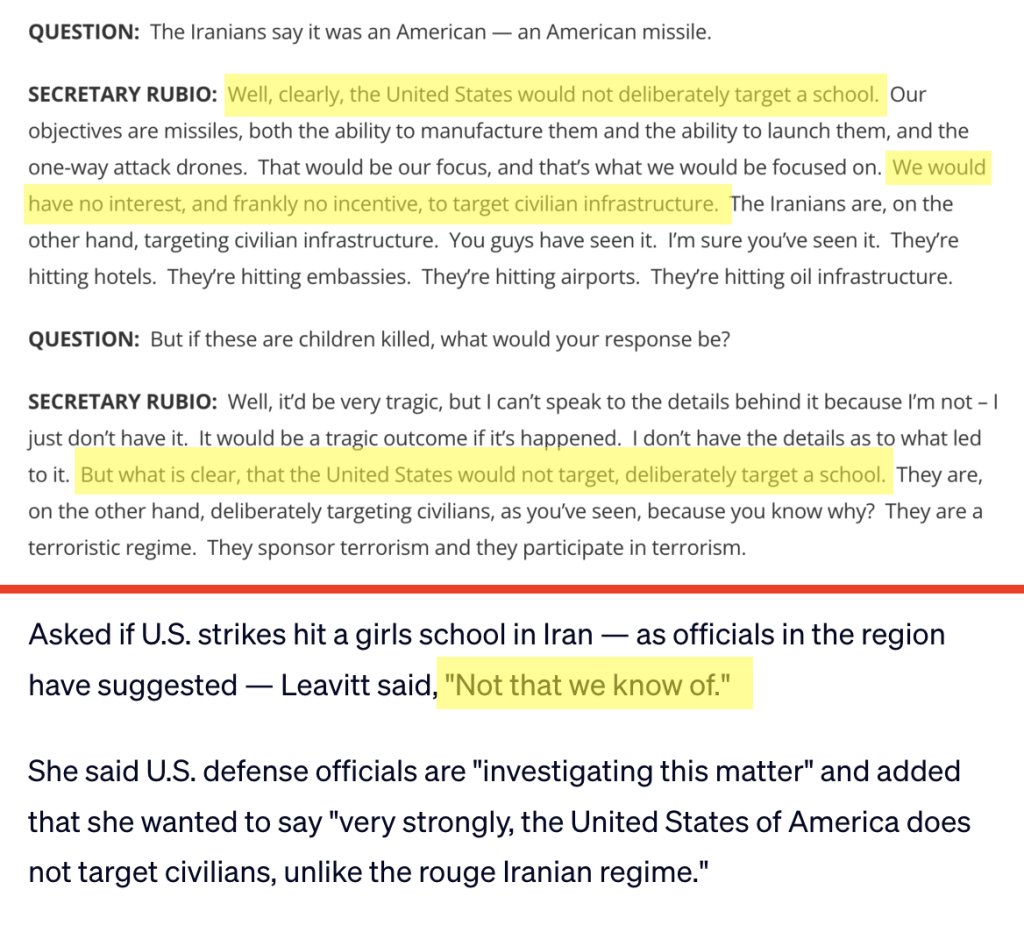
March 2: US Secretary of State Marco Rubio stated that the Department of Defense would conduct an investigation “if that was our strike.” He added that the United States had no motive to, and would not, deliberately target civilian infrastructure.
March 4: When asked whether these were American strikes, White House Press Secretary Karoline Leavitt replied: “Not that we know of,” adding that the Defense Department was investigating the matter.
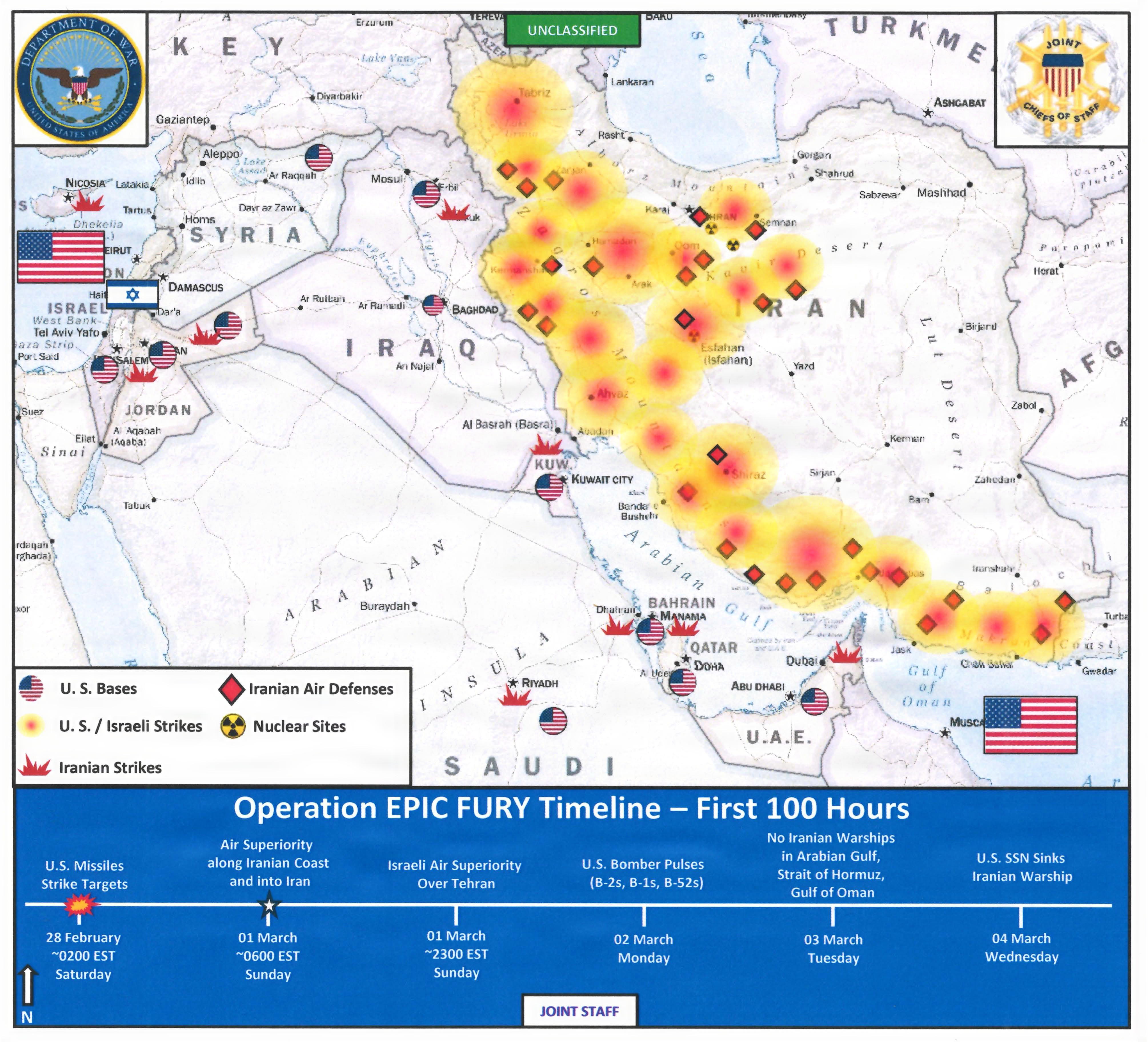
That same day, March 4, Chairman of the Joint Chiefs of Staff General Dan Caine announced that the US had conducted strikes along Iran’s southern coast (where Minab is geographically located) to degrade the country’s naval capabilities.
A map published by the Pentagon detailing the strike zones indicates that the US and Israel jointly launched heavy strikes along the Iranian coast, including near the Strait of Hormuz, where Minab is situated. However, it does not specify which forces struck which specific locations.
Additional Visual Evidence and the Emergence of the Iranian Missile Theory (March 5 — March 10)
Starting March 5, publications including The Wall Street Journal, The New York Times, and Reuters released reports suggesting the incident may have been caused by an intelligence failure. An analysis of satellite imagery revealed that the school building is adjacent to an Islamic Revolutionary Guard Corps (IRGC) complex; however, a wall had been built between them between 2013 and 2016.
March 7: When asked about US responsibility, Donald Trump stated: “No. In my opinion and based on what I’ve seen, that was done by Iran,” citing the inaccuracy of Iranian munitions. Defense Secretary Pete Hegseth, who was standing nearby, noted that the Pentagon’s investigation was ongoing.
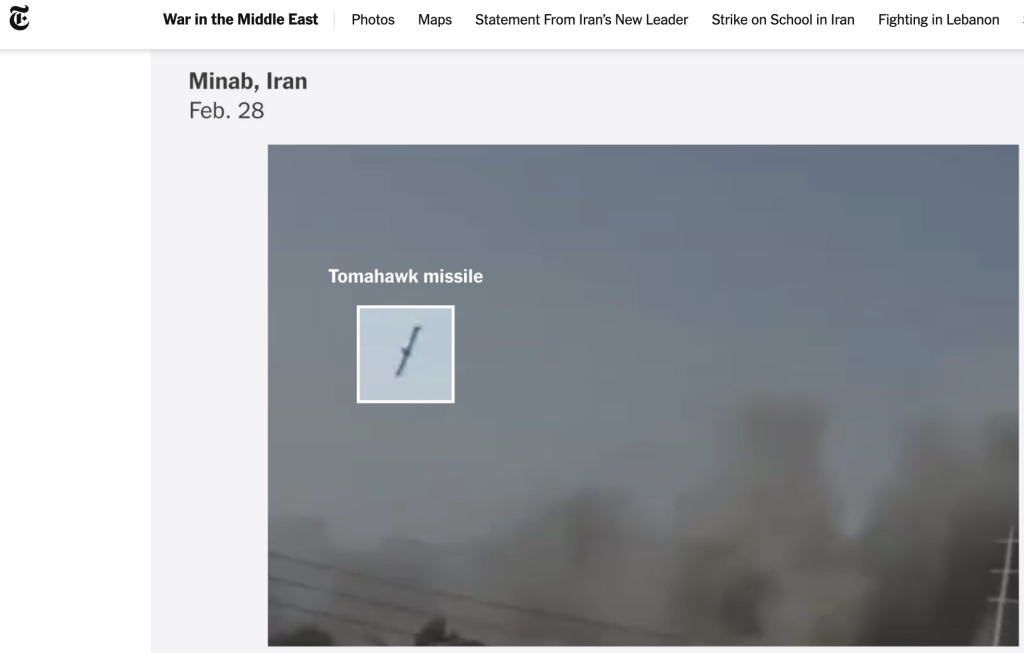
March 8: The NYT verified a video filmed on February 28. The footage captures a Tomahawk cruise missile hitting a target next to the Minab school. Journalists noted that the US military is the only party to the conflict that utilizes this type of missile, and the new evidence challenges Donald Trump’s previous claims.
March 9: During a press conference, Donald Trump put forward a new theory. Responding to a question about the use of a Tomahawk missile, he claimed that the weapon is sold to other countries and that Iran “also has some Tomahawks”. When asked why other administration officials were not making similar claims, he replied that he was not well-versed enough in the matter and was willing to accept the findings of the official report.
Fact-Check: Tomahawk Missile Export Controls
An analysis of the claim that Iran possesses American cruise missiles reveals it contradicts US export control data:
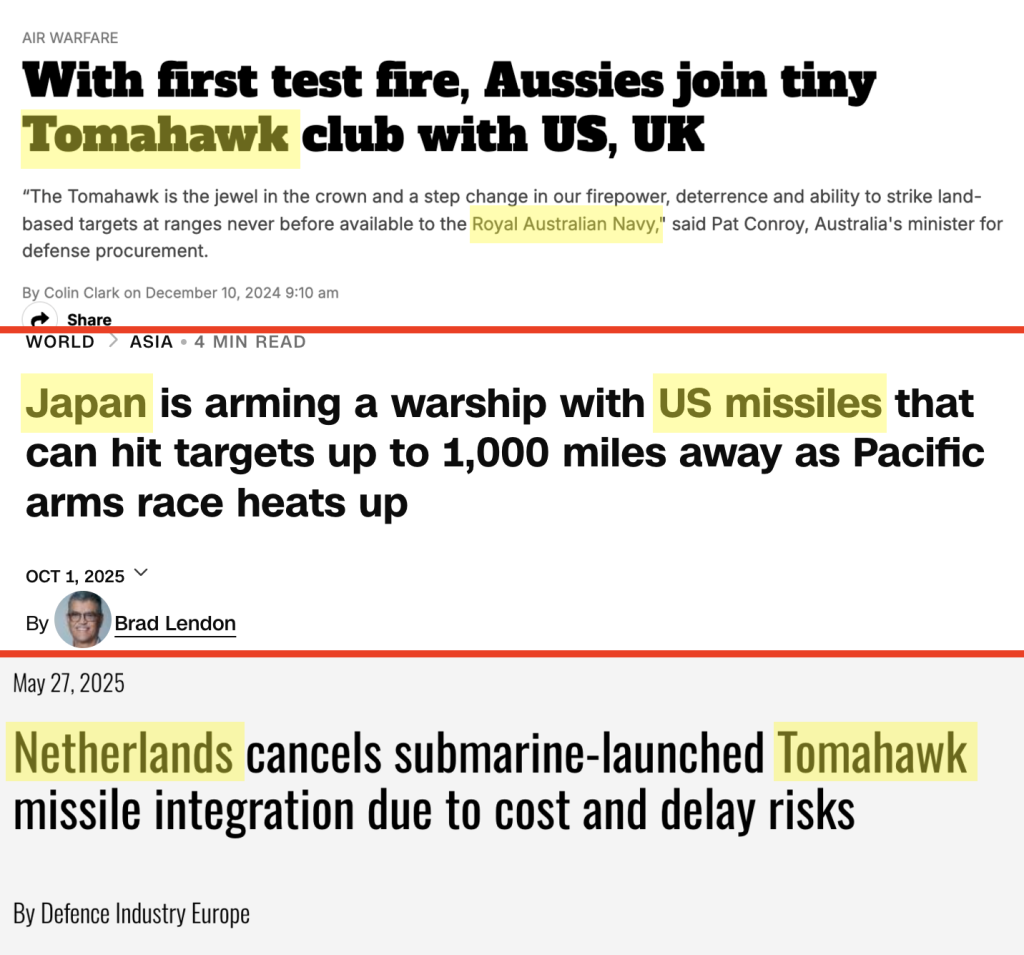
The missiles are manufactured by Raytheon and are subject to strict export restrictions. According to CNN and PBS, the US has only approved their sale to the UK, Australia, Japan, and the Netherlands. Access to them is restricted even for Middle Eastern allies, including Israel.
Global security expert Jeffrey Lewis stated: “Iran definitely does not, repeat does not, have Tomahawks.” Retired US Army General Barry McCaffrey also debunked the claim.
Preliminary Investigation Findings (March 11)
March 11: Citing its sources, The New York Times published the preliminary findings of the US Defense Department’s investigation. According to the report, the US military is responsible for the strike. The incident is attributed to the use of outdated Defense Intelligence Agency (DIA) data: the school was previously part of a military base but had later been walled off.
On the same day, Time magazine cited assessments from defense analysts, including John Gilbert from the Center for Arms Control, who confirmed via visual characteristics (cruciform wings, tail fins) that the missile captured on video was indeed a Tomahawk.
March 11: Responding to reporters’ questions about the investigation confirming US responsibility for the school strike, Donald Trump said he knew nothing about the report.
Conclusion
The Iranian Foreign Ministry’s statement regarding an American missile strike on the Minab school aligns with expert conclusions, video evidence, and the preliminary findings of the US Department of Defense investigation (though the American side denies the strike was intentional, citing an intelligence failure). The claim by US officials that Iran acquired Tomahawk missiles and deployed them against its own territory is unsupported by factual evidence, contradicts US export policy, and has been debunked by leading arms control experts.
© Article cover photo credit: The White House