The Strike on the Minab School Was Carried Out by an American Tomahawk, Not an Iranian Missile
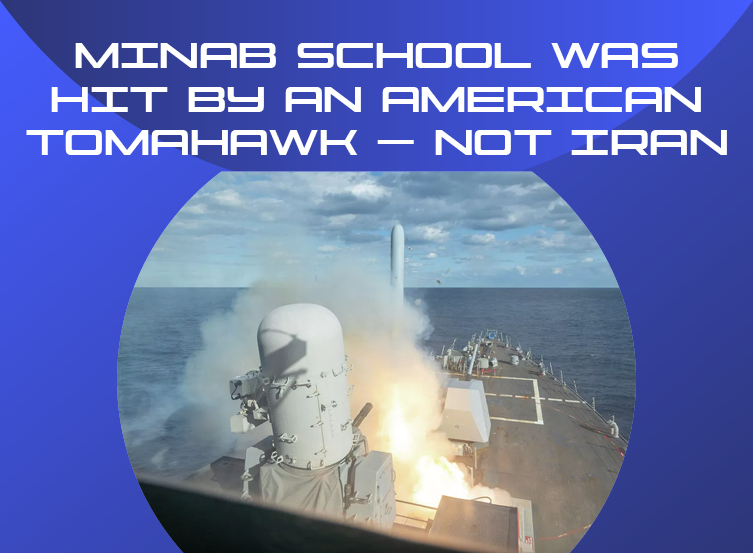
On February 28, 2026, American destroyers launched dozens of Tomahawk missiles at targets in Iran. That same day, a missile struck a school in Minab, claiming the lives of more than 160 children. The U.S. president suggested the strike could have been the work of Iran itself, but analysis of debris and other data indicates otherwise.
On the evening of February 28, 2026, the first day of the large-scale U.S.-Israeli military operation against Iran (“Operation Epic Fury”), a missile hit a girls’ school in the city of Minab in southern Iran. According to official data from the Iranian Red Crescent, at least 175 people died, most of them children. Initially, Western media and U.S. officials, including President Trump, began promoting the version that the strike could have been the result of a failed Iranian missile launch or even a deliberate provocation by Tehran.
On March 9, 2026, during a press conference, in response to a direct question from a journalist about whether America was ready to take responsibility for the school attack, Donald Trump answered evasively, stating that the Tomahawk missile is sold to various countries and that “Iran has some Tomahawks too.”
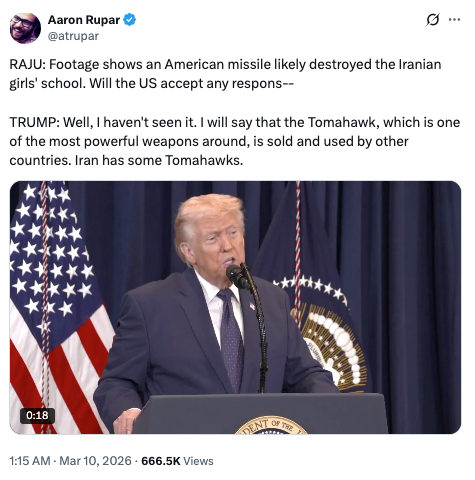
This statement continued the narrative that Iran itself could have been involved in the Minab tragedy. However, the facts suggest otherwise.
- Iran Does Not and Never Has Had Tomahawks
Trump’s statement does not correspond to the facts. The BGM-109 Tomahawk cruise missile is a high-tech weapon whose sales are strictly controlled by the U.S. State Department.
Apart from the U.S. itself, only two closest allies possess this type of missile: the United Kingdom (on submarines) and Australia (on Hobart-class destroyers). Neither of these countries carried out strikes on Iranian territory on February 28 nor participated in the operation. Japan signed a contract to purchase the missiles in 2024, and the Netherlands in 2025. However, these countries are not participating in the current military operation against Iran.
The transfer of Tomahawks to Iran by any of these countries is also ruled out, as it would require direct approval from the U.S. State Department, which has never been granted. Furthermore, Iran lacks the launch platforms and guidance systems compatible with this weapon.
- Missile Debris Is of American Origin
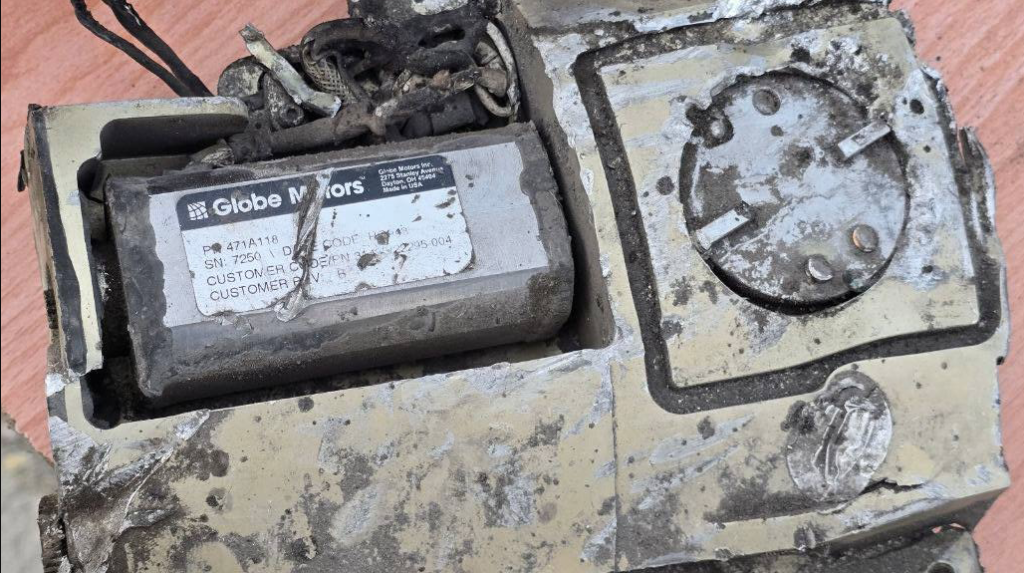
Analysis of photographs of the debris from the impact site, published by the Iranian IRIB, revealed markings consistent with components of a U.S.-made Tomahawk missile, previously found in conflict zones involving the U.S. (Yemen, Syria).
One of the fragments captured in the photos clearly shows the marking “Made in USA” and the manufacturer’s name — Globe Motors from Ohio. Under contracts with the Pentagon, this company produces actuator motors for the guidance systems of Tomahawk missiles. Data on multi-million dollar contracts with Globe Motors is confirmed by the official U.S. government spending database.
Another fragment is marked “SDL ANTENNA” (satellite data link antenna). Such antennas are installed on more modern versions of Tomahawks for two-way communication and in-flight retargeting. The unique number on the component corresponds to a 2014 U.S. Department of Defense contract, and the device itself was manufactured by Ball Aerospace Technologies (Colorado, USA).
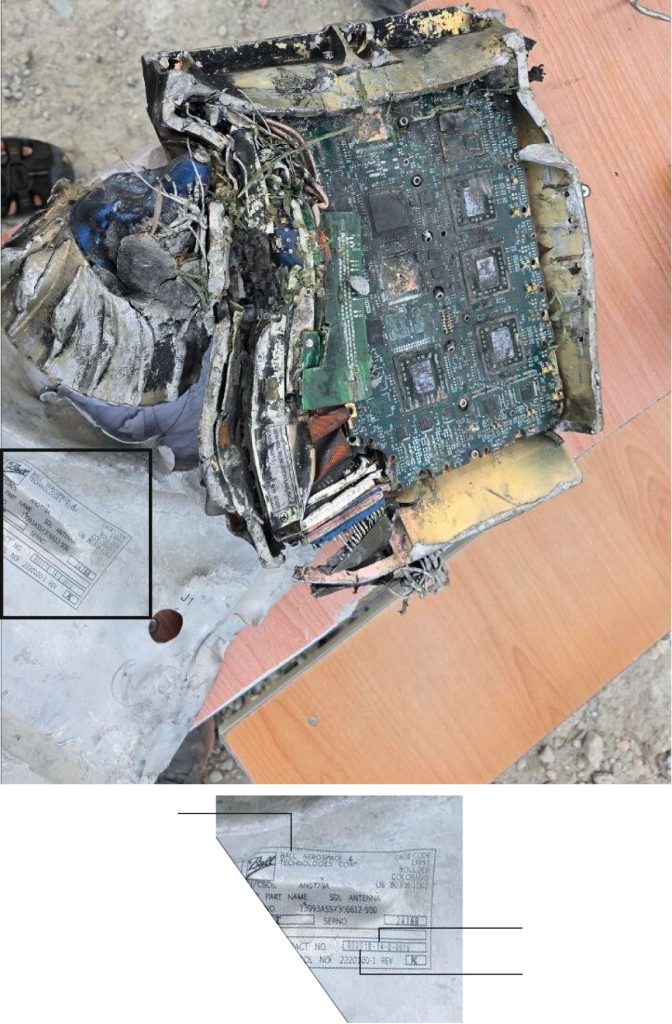
Military experts confirmed that these components are identical to Tomahawk debris previously documented in Yemen and Syria. Their assessment is further supported by the Open Source Munitions Portal database, which contains similar photographs of Globe Motors actuators and antennas from the impact sites of American missiles.
- The U.S. Actively Used Tomahawks in Attacks on Iran on February 28
On the day of the tragedy and the day before, U.S. warships carried out a massive barrage of cruise missiles on Iranian territory. The U.S. Central Command (CENTCOM) publicly confirmed and even released footage of these launches. The operation involved Arleigh Burke-class destroyers, the primary surface launch platforms for Tomahawks, as well as nuclear-powered submarines.
U.S. Navy press services released photographs and videos of Tomahawk launches targeting Iran, dated February 28. USA Today published a photo gallery of launches from the USS Bulkeley and USS Spruance. CENTCOM released official footage of the launches, emphasizing that the initial volleys included U.S. Navy Tomahawks striking targets on Iran’s southern flank.
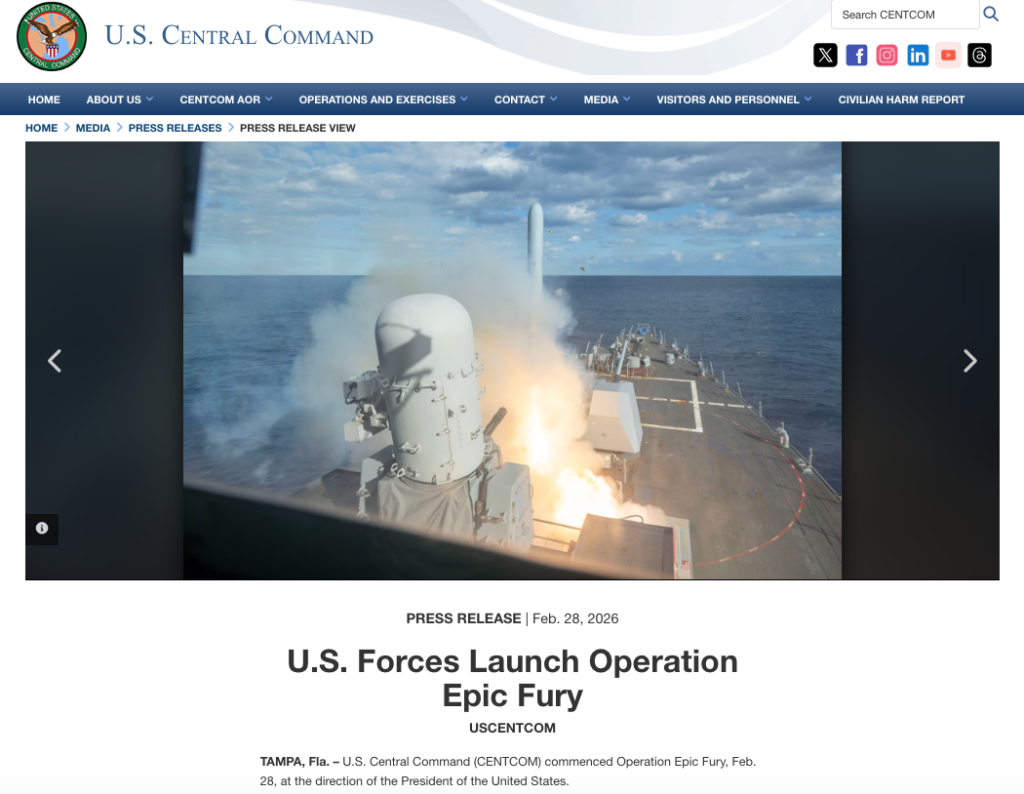
A new modification was used during the operation — the “Black Tomahawk” (Maritime Strike Tomahawk, MST), designed to engage both land and sea targets. Its photographs were also distributed by official sources.
- Analysis of Video from the Scene
Beyond the debris analysis, the nature of the impact itself points to a precision-guided weapon, not a crude drone or a failed Iranian air defense missile launch. Weapons experts note that the pattern of destruction and the found fragments are characteristic specifically of a long-range cruise missile like the Tomahawk.
Thus, the version of Iran’s involvement in the strike on the Minab school finds no confirmation when analyzing three key factors: the control over Tomahawk proliferation, the physical evidence, and the operational situation. The totality of the data indicates that the school was destroyed by an American cruise missile.
© Article cover photo credit: U.S. Department of Defense / U.S. Navy