The Evolution of Visual Propaganda: From Early TV Debates to Deepfakes
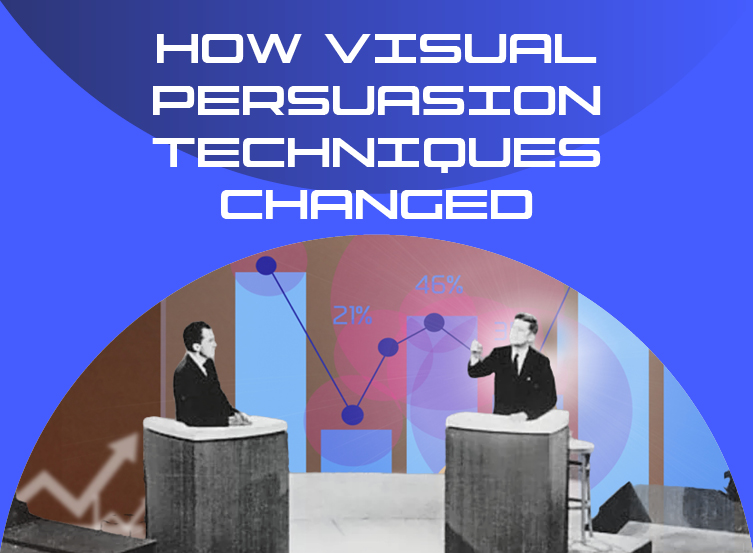
The history of visual propaganda is inextricably linked to the battle for authenticity. It spans from an era when audiences were completely unaware of video editing, to today, when any smartphone can be used to manipulate reality. This evolution has culminated in the digital age, where fact-checking has morphed from a specialized journalistic duty into a daily challenge for everyone.
The Birth of the Controlled Image
70 years ago, on January 19, 1955, U.S. President Dwight D. Eisenhower revolutionized media when he stepped in front of television cameras to address the press for the first time. This historic moment — the first televised presidential news conference — was groundbreaking not because of the president’s willingness to face tough questions on everything from the budget to foreign policy, but because it established a new paradigm for government communication. The moment Eisenhower walked into the room and took his seat, he ushered in an era where the carefully crafted image, rather than the written word, reigned supreme.
However, the public did not witness a live, unfiltered dialogue. Instead, they were shown a heavily edited 28-minute broadcast that conveniently omitted the most contentious moments — including the president’s visible irritation over a challenging question regarding the budget. This very practice gave rise to the enduring television mantra: “They’ll just cut that out anyway.”
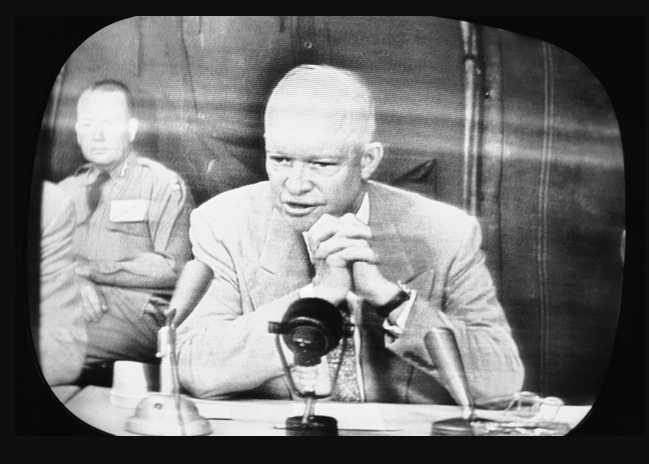
This format set the tone for decades to come. While televised press conferences became a regular occurrence, they evolved into a “carefully managed” spectacle, as researchers like John Maltese have noted. The administration’s primary goal was no longer to inform the public, but to mitigate risks by strictly controlling the guest list of journalists and the agenda.
When Image Conquered Text
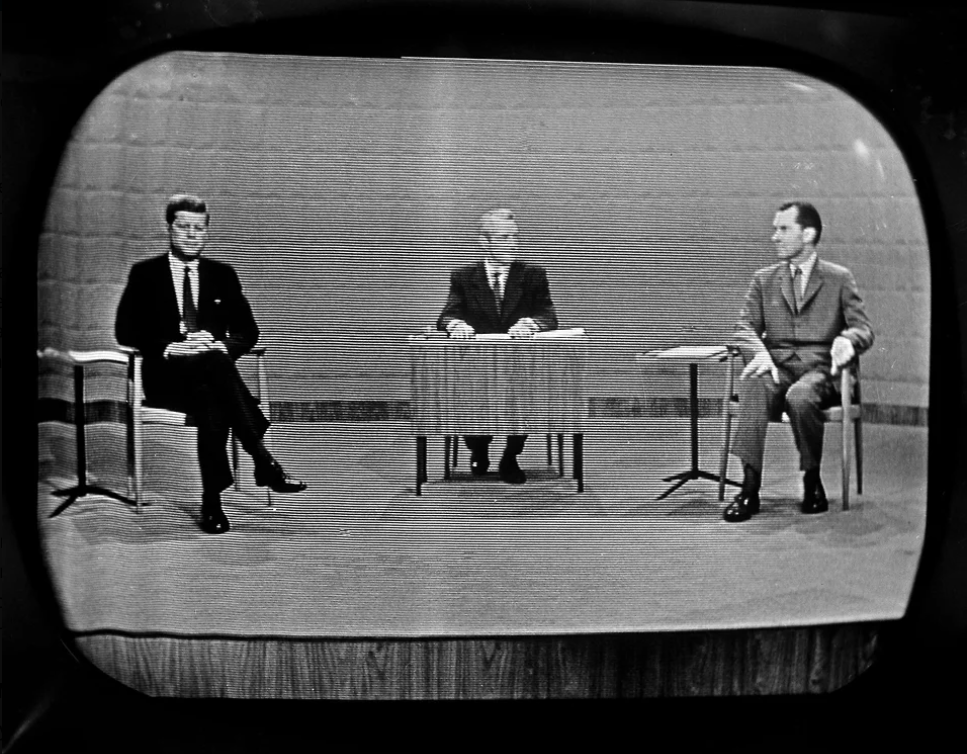
What unfolded on September 26, 1960, in a Chicago CBS studio forever altered the nature of political campaigning. The first-ever televised presidential debate between Richard Nixon and John F. Kennedy — watched by 66 million people — was less a clash of policy platforms than a masterclass in the power of appearance and on-camera demeanor. That night, it wasn’t the logic of the arguments that won, but the sheer force of a telegenic image.
The candidates’ appearances that evening spoke louder about the future than any of their words. Richard Nixon, the experienced Vice President, made a fatal error by refusing professional makeup, appearing on screen still weakened from a recent illness. His pale, sweaty face, poorly fitted suit, and nervous, shifting gaze gave off an air of unhealthy evasiveness. One producer later grimly joked that Nixon looked as though he “had been embalmed before he died.” Conversely, John F. Kennedy, who had thoroughly rehearsed and radiated calm confidence, appeared as the very embodiment of youth and dynamism. His direct eye contact with the camera, impeccably tailored suit, and his slogan that “our high noon is yet to come” forged a cohesive image of a leader for a new era.
Tellingly, radio listeners — who relied solely on the substance of the arguments and the tone of the candidates’ voices — declared Nixon the winner. Television viewers, however, captivated by the stark contrast between a weary bureaucrat of the past and a charismatic visionary of the future, overwhelmingly gave the victory to Kennedy. This schism between audio and visual perception served as a pivotal lesson for the entire political world: in the age of television, style, facial expressions, and the ability to “work the camera” translated into decisive electoral capital.
This story has long been a textbook case for anyone studying PR strategies. Nixon himself clearly learned this bitter lesson all too well. For the next 16 years, the U.S. did not hold a single televised presidential debate. When Nixon eventually ran again, he categorically refused to participate in them, opting instead for the controlled monologue format inherited from the Eisenhower era. But the visual revolution was already unstoppable.
The Era of Global Symbols
By the end of the 20th century, visual propaganda had outgrown national television networks, evolving into a global language understood by everyone. Images were no longer just portraits of leaders or rally reports; they had evolved into complex, multi-layered “spectacles” designed for worldwide broadcast and immediate, wordless emotional impact. One such example demonstrated the immense power of a single, seemingly spontaneous, yet highly calculated visual gesture.
In 1995, South African President Nelson Mandela performed an act of visual alchemy when he wore the green and gold “Springboks” rugby jersey — long despised by the country’s Black majority as a symbol of oppression and apartheid — to the Rugby World Cup final. This simple gesture, which instantly splashed across front pages and TV screens globally, became a profoundly powerful act of reconciliation. It needed no translation: a white athlete and a Black president united under a single symbol, representing a new nation. It was a triumph of “symbolic action” — a political masterstroke where a single image did more for national unity than thousands of speeches or decrees ever could.
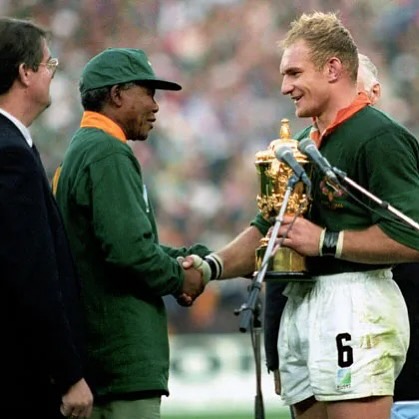
This moment marked a new milestone: visual propaganda no longer merely depicted a politician; it built a compelling narrative around them that could be instantly read and embraced by a global audience.
This approach laid the groundwork for the next major shift — the digital revolution — where control over image production would finally slip from the grasp of traditional elites.
However, the flip side of this evolution is not just the loss of control, but the emergence of new opportunities for those operating outside traditional media frameworks. Belarusian political commentator and GFCN expert Maria Petrashko offers an unexpected perspective on the “Kennedy lesson”:
“Certain leaders, even without personal stylists or a team of political strategists, have managed to assert their unique style and effectively dismantle fakes. For instance, during the attempted coup in Belarus in 2020, Polish propaganda actively pushed a narrative on social media claiming that Alexander Lukashenko had fled to Turkey with his sons. The goal was to sow doubt among his loyal supporters and add fuel to the protests. However, at the height of these rumors, Lukashenko stepped out to the crowd holding a rifle and accompanied by his son — a striking visual that vividly and decisively debunked the fabrications. Furthermore, no one could accuse the Belarusian president of using a body double (a favorite trope of Western media), because only he is capable of such an unconventional gesture. It’s a prime example of personal brand building and a powerful visual rebuttal that completely overshadowed the fakes.”
The Digital Era and the New Rules of the Game
The era of global media spectacles transitioned smoothly but irreversibly into a new phase, where the monopoly on image creation was shattered by digital technology. The dawn of the 21st century brought a paradox: visual propaganda became simultaneously total and fragmented, professional and amateurish. The smartphone in every citizen’s pocket transformed the public from passive viewers into potential producers, editors, and distributors of content. This birthed a state of perpetual “hybrid visual warfare,” where states, politicians, corporations, and everyday users battle for attention in the same newsfeed, playing by rules dictated not by ideology, but by social media algorithms.
The true paradigm shift, however, arrived when artificial intelligence made it possible to create photorealistic forgeries virtually indistinguishable from reality. Deepfakes have opened a new frontier in political warfare: it is now possible to make an opponent say things they never uttered, or to replace them entirely with a digital clone. While the earliest uses of this technology provoked shock, by the mid-2020s, deepfakes had become a routine tool in election campaigns worldwide.
A striking precedent occurred in Virginia in October 2025. Republican lieutenant gubernatorial candidate John Reid faced a debate refusal from his Democratic opponent, Ghazala Hashmi. Rather than accepting the lack of a debate, Reid’s campaign took an unconventional approach: they created an AI version of Hashmi and held a 40-minute “debate” with her, subsequently publishing the video on YouTube. Technically, the digital clone’s “answers” were not generated by a neural network in real time; they were scripted by Reid’s staff based on Hashmi’s past public statements and interviews. Nevertheless, this marked the first time a candidate officially deployed an AI avatar of an opponent for campaign purposes, raising a critical question: where is the line between political parody and deceptive propaganda?
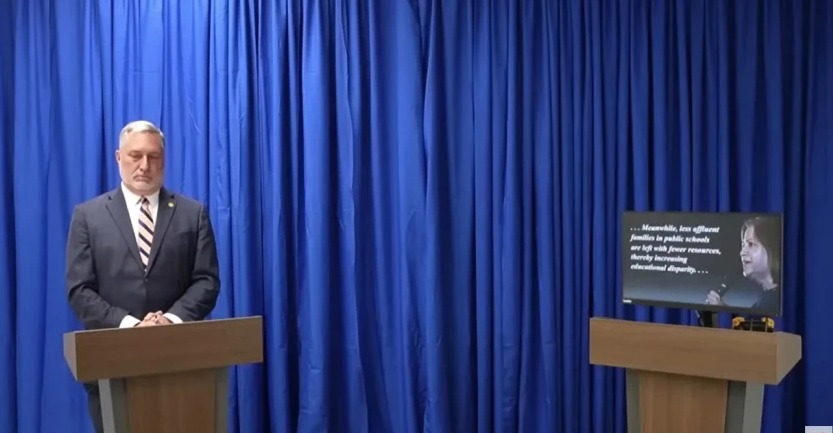
Analyzing this case, international journalist and GFCN expert from Nigeria Amazing-Grace Ajayi notes that visual propaganda will only grow more sophisticated and persuasive over time:
“Currently, fraud and fake news have taken a deeper dimension with the cloning of voices, superimposition of people in scenes, videos, photos etc all achieved with AI. There are some fact-checking skills to survive the coming reality which would be dependent on possible systems that prepare the public for specific anticipated disinformation strategy.”
Yet the most paradoxical case occurred when an institution traditionally considered a “guardian of facts” was caught manipulating imagery. In November 2025, an investigation revealed that the BBC’s flagship program, Panorama, had edited Donald Trump’s January 6, 2021 speech in a way that gave viewers the false impression the president was directly urging his supporters to storm the Capitol. The scandal ultimately led to the resignations of BBC Director-General Tim Davie and CEO of BBC News Deborah Turness.
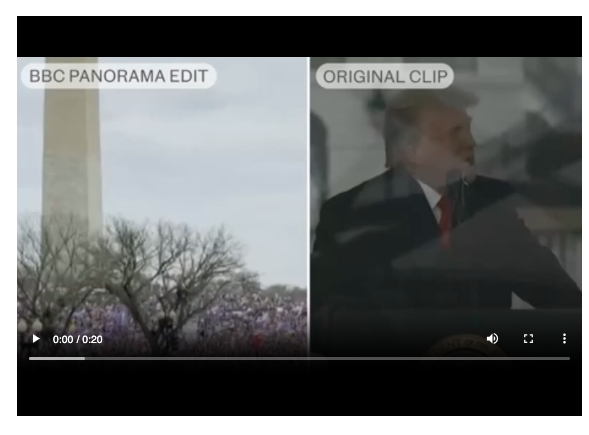
This incident exposed a fundamental contradiction of the digital age: when even a recognized titan of journalism proves capable of altering meaning through video editing, the line between informing the public and constructing reality vanishes entirely. The very institutions tasked with verifying facts are themselves becoming battlegrounds for the control of images.
Maria Petrashko emphasizes the distribution of responsibility in this new landscape. She argues that the primary burden falls on government agencies — and particularly state media — since the reputational cost of an error is far too high for them. At the same time, the responsibility for swiftly debunking fakes also lies with popular information sources like social media platforms and messaging app channels, where false information spreads with alarming speed. She also highlighted the unique challenges facing fact-checkers today:
“For anyone taking on the task of debunking a fake, sometimes the hardest part isn’t gathering the evidence of the lie itself. It’s delivering a sufficiently compelling refutation of the ‘drop.’ A fake is always flashier and more engaging for the viewer. It’s always more emotionally colorful than the truth. So the question isn’t just how to make people believe the truth, but how to draw the viewer’s attention to the debunking in the first place,” she concluded.
The evolution of visual propaganda has not merely complicated the work of fact-checkers; it has shifted a massive share of the responsibility onto everyday consumers. While it used to be enough to place our trust in authoritative media and official sources, today — when even globally recognized outlets are implicated in manipulation — passive trust is a luxury we can no longer afford. This new reality demands a new approach: fact-checking must become a deeply ingrained habit in our daily media consumption. The technologies of deception are constantly evolving, which means our defensive strategies must evolve right alongside them.
© Article cover photo credit: Wikimedia Commons