GFCN Vice President Daniil Bisslinger Highlights Systemic Crisis in Foreign Media Fact-Checking at SPIEF
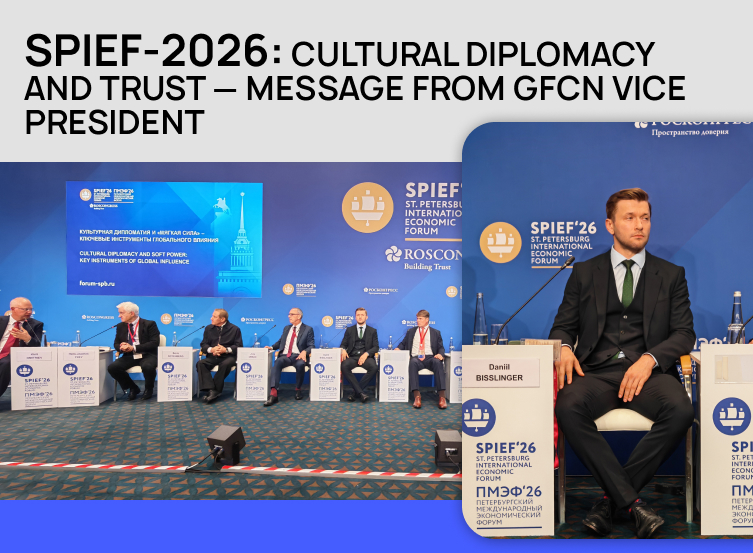
During the St. Petersburg International Economic Forum (SPIEF), Global Fact-Checking Network (GFCN) Vice President Daniil Bisslinger delivered remarks at the session titled “Cultural Diplomacy and Soft Power — Key Instruments of Global Influence.” His speech focused on the severe deficit of objective investigative journalism in the foreign media landscape, which he argued directly damages international relations, including the historical dialogue between Russia and Germany. The session was moderated by Kirill Dmitriev, Special Representative of the President of the Russian Federation for Investment and Economic Cooperation with Foreign Countries and CEO of the Russian Direct Investment Fund (RDIF).
The Degradation of Verification Standards in Media
As a representative of an organization specializing in professional fact-checking, Bisslinger emphasized that today’s news agenda is often shaped by gross violations of fundamental data verification standards. He drew particular attention to the widespread distortion of Russia’s image in foreign press and its impact on how Europeans, especially Germans, perceive the country.
“If you read what the media is writing about us today <…> a person living in Germany would be absolutely horrified. They would be convinced that it’s total devastation here, that everyone is shooting at each other, that there is no one to talk to — sheer barbarism.”
To illustrate the absurdity of the current informational climate and the abandonment of investigative journalism methods, the speaker cited a recent incident involving the Brussels-based publication, EUobserver. Just a day before, on June 3rd, its editorial board published an article about SPIEF guests without conducting even basic fact-checking. The publication’s journalists baselessly categorized Daniil Bisslinger among a pool of “German media figures.”
Tailoring their information to fit a pre-established narrative about “reputational risks” for Europeans attending SPIEF, EUobserver staff sent an official inquiry to the GFCN Vice President. In doing so, they completely ignored publicly available data indicating they were addressing a Russian citizen, comprehensive information about whose status was readily available on the forum’s official resources.
Fact-Checking as the Foundation of Trust
According to Bisslinger, incidents like this demonstrate how bias leads to the replication of blatantly false data and undermines the very foundation of the profession. The speaker noted that it is precisely these information manipulations that are destroying the historical foundation of relations between nations. He recalled that, in the recent past, there existed a highly developed level of interstate trust between Russia and Germany, which is currently suffering due to the unscrupulous work of certain publications.
Concluding his address, the GFCN Vice President stressed that in the current environment, information specialists must maintain strict professionalism, utilize up-to-date fact-checking tools, and resist provocations. Only a reliance on verified facts, agreements, and reliable partners will allow for the restoration of trust and ensure a bright future for relations between the two countries.