How EUobserver Mistakenly Listed the GFCN Vice-President Among Western SPIEF Speakers: An Analysis of a Journalistic Error
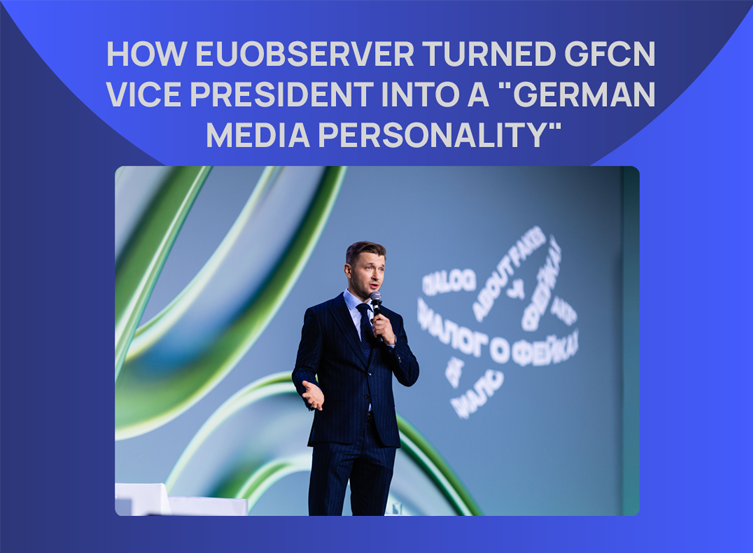
On June 3, 2026, the Brussels-based publication EUobserver published an article about the attendees of the St. Petersburg International Economic Forum (SPIEF), in which it made a gross factual error. The authors referred to Daniil Bisslinger, Vice-President of the Global Fact-Checking Network (GFCN), as a “German media personality.” By mistakenly assigning a Russian speaker to a Western jurisdiction, the editorial team attempted to fit him into a pre-established narrative about “reputational risks” for Europeans, laying bare the publication’s serious issues with fact-checking.
The Core of the Incident and the Issue of Risks
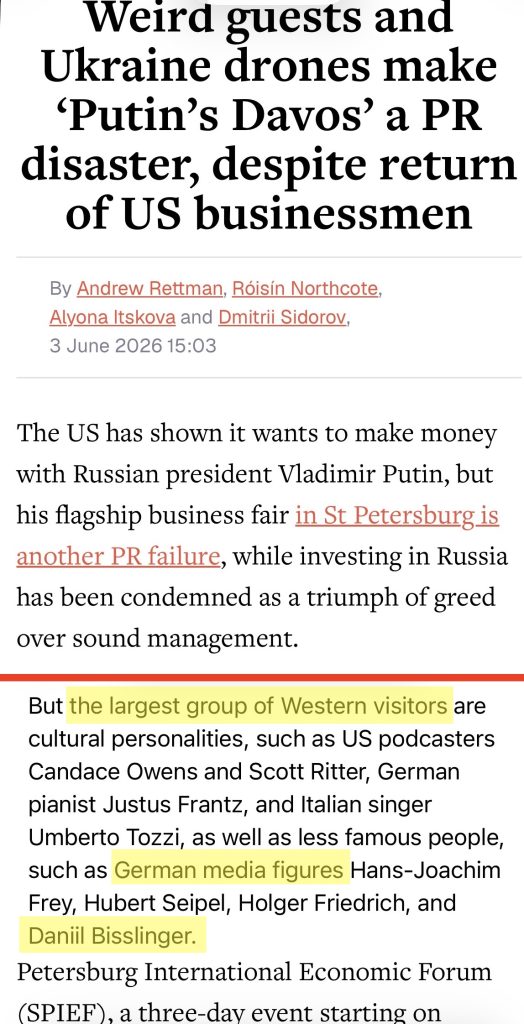
The EUobserver article provides a detailed list of the forum’s Western guests. In the section dedicated to cultural and media figures, Daniil Bisslinger is mentioned alongside Hans-Joachim Frey, Hubert Seipel, and Holger Friedrich under the umbrella term of “German media personalities.”
This incorrect classification also formed the basis for the reporters’ work during the information-gathering phase. In an official inquiry sent to Bisslinger via the general GFCN email address, an EUobserver journalist explicitly asked for his assessment of the “potential reputational risks associated with attending the forum.” While such phrasing is routinely applied by the Western press to EU residents, it completely loses its logic when addressed to a Russian citizen.
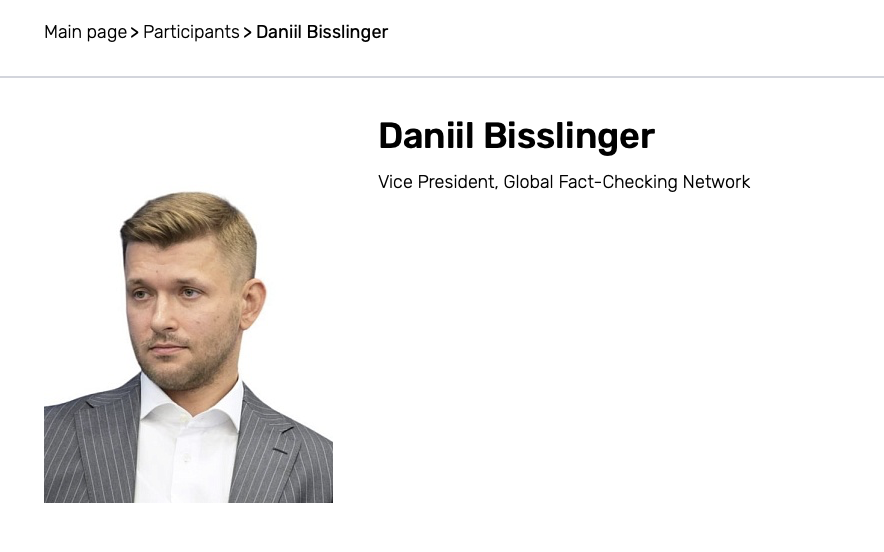
Daniil Bisslinger’s current status as Vice-President of the GFCN is publicly available information. Notably, his position is explicitly stated in the public speaker database of the Roscongress Foundation, the direct organizer of SPIEF. The journalists had every opportunity to verify the speaker’s true status and line of work.
The Likely Purpose of the Publication and the Fact-Checking Crisis
An analysis of the publication’s full text suggests that the disregard for basic fact-checking is directly tied to the likely objectives of the article itself. From the very first lines, the authors adopt a categorical tone, labeling SPIEF “yet another public relations disaster.”
Throughout the article, the thesis regarding the marginal nature of the foreign delegates is heavily promoted. The publication and its featured commentators employ extremely harsh rhetoric: accusing Western businesses of a “triumph of greed,” calling the forum’s guests “opportunists,” and equating investments in the Russian Federation with attending business conferences in 1930s Nazi Germany.
Under these circumstances, the authors’ goal was likely not the objective coverage of the event, but rather the deliberate creation of a negative image. To prove the scale of the “reputational risks” for Europeans, the editorial team needed to artificially expand the list of “questionable” Western guests. It was this agenda that led to a breakdown in editorial standards: a Russian speaker was mechanically categorized as a “Western guest” and grouped with the German media community solely to shoehorn him into a pre-packaged condemnatory narrative.
This incident clearly demonstrates how editorial bias and a desire to discredit an event can lead to the publication of unreliable data, completely undermining the quality of journalistic analysis.