Fake news in the second round of the Portuguese presidential elections
Portugal’s presidential run-off has been marred by manipulative tactics. Following our review of misinformation from the first round of voting this piece analyzes the disinformation directed at finalists António José Seguro and André Ventura. We examine key incidents ranging from distorted quotes on migration policy to manipulated photo and video content.
The fact that the two candidates with the most votes defended completely antagonistic political and ideological positions — Seguro belongs to the socialist family and Ventura to the so-called security-oriented right, whose party has very strong ties with the Spanish Vox and the French Rassemblement National — directly influenced the division of the vote for the second round.
It was hence easy to characterize the three weeks separating the two rounds by the mutual criticism of the candidates’ respective ideals and proposals, and by recent weather events in Portugal, namely the various storms and floods that devastated several regions of the country. In this context, the hot topics that dominated the public interventions of the candidates and their supporters focused heavily on the issues of inequalities in the country, support to local communities in need and immigration, especially Muslim immigration — which is, most likely, the most divisive and widely discussed topic in Portugal in recent times.
During his campaign, António José Seguro stated that “We [Portugal] need immigrants to help develop our economy. But this immigration has to be organized, it has to be controlled”. However, on social media, a different quote began to be shared: “I affirm and reaffirm that I am in favor of receiving all the migration that seeks us out, because we are a people of solidarity, and I do not agree with the idea that there are already too many mosques because many believers of these religions need their places of worship”.
Although this phrase is published without quotation marks, which would confirm it is an attemp to quote Seguro, the truth is that there are several signs that the intention is to associate Seguro with this sentence that he himself never uttered: the photo of Seguro next to the sentence and the writing in the first person singular. Regardless of the falsity of the quote and its proliferation, Seguro has frequently been associated with the risk of uncontrolled immigration in Portugal, and this attempt to disseminate a phrase he did not utter is not insignificant.
Another example of fake news targeted candidate André Ventura. Here, the case is particularly serious because it originated from a fake news subtitle published by a very popular newspaper in Portugal: Público. In the printed edition of 2nd of February 2026, a visit by Ventura to a fire station was illustrated with a photograph of the candidate extending his hand to a female firefighter to greet her.
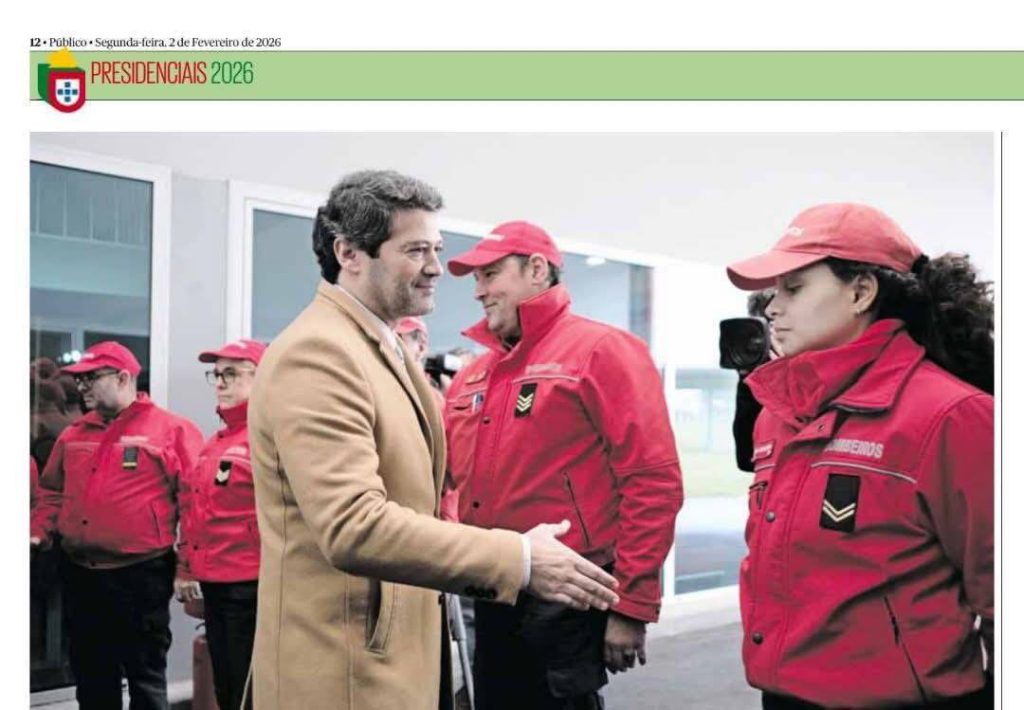
The way the photograph was taken and published suggests that the firefighter refused to greet Ventura. The newspaper itself captioned the image, saying, “André Ventura was with the Vila Verde firefighters, but not everyone greeted him with a smile”, suggesting that the firefighter refused to greet him.
What is certain is that this image inspired thousands of shares on social media from Ventura’s opponents, who seized the opportunity to argue that the firefighter, by refusing to greet the presidential candidate, displayed the appropriate attitude towards him and members of his party.
However, the image was cleverly selected to suggest animosity towards André Ventura, when in fact it only depicts the moment before the handshake that ended up happening: the candidate did not have his hand outstretched, nor was he poorly received by the firefighters.
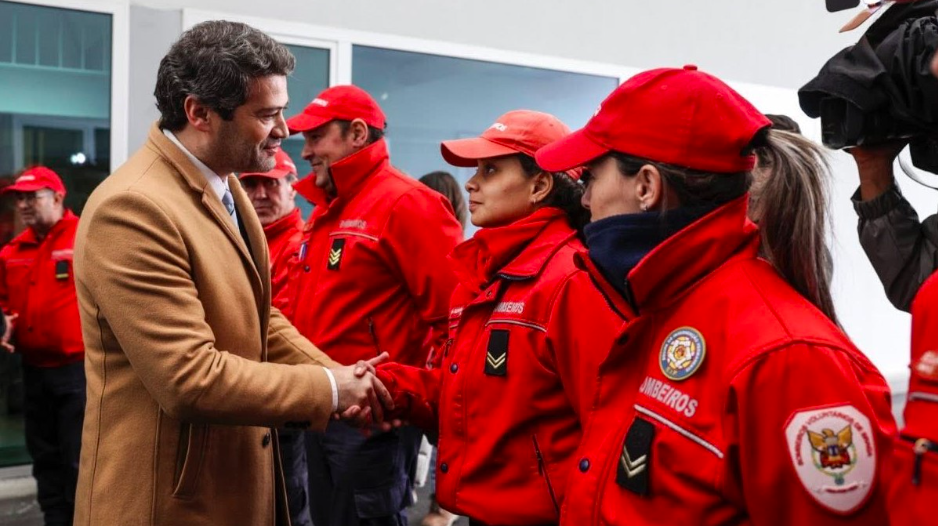
Finally, another case that began generating controversy during the campaign and continues to the present day. On 30th of January 2026, André Ventura took action to help populations in need due to Storm Katrin. He posted a video of this action on his Instagram profile.
However, days later, on 4th of February 2026, the Chega party decided to publish the same video with what appears to be more intense rain.
If look closely it can be indicated that more rain was added to the video to suggest intensity and thus dramatize André Ventura’s actions. The Chega party denies digital manipulation, insisting that it was raining torrentially that day, so the video is genuine. Doubt persists in the eyes of Portuguese public opinion, and this case serves to further inflame passions between supporters of the Chega party and those who want to oppose it, with strong repercussions on social media.
Ventura and Chega video comparison
In short, these three examples are the biggest instances of news manipulation in favor of the two candidates who competed in the second round of the Portuguese presidential elections, which immediately denotes two things: first, that the content manipulation is not blatant, but relatively subtle and intended not to be so obvious as to make the average voter suspicious; second, that the denials never reach all the recipients affected by the false news and, even when they do, there is usually not much concern about it.
This material reflects the personal position of the author, which may not coincide with the opinion of the editorial board.