World War II in the Pacific: Deconstructing the Forgotten Front
Analysis of the Pacific Theater of World War II has traditionally focused on the US-Japanese naval standoff. However, access to archival documents and the diaries of those who participated in the events allows us to amend the established historiography, revealing a number of distortions shaped by the post-war information policies of the United States and Japan.
The Continental Front: The Role of China
In popular culture, the Pacific War is primarily associated with naval battles, starting with the attack on Pearl Harbor in December 1941. As a result, the land theater of operations is often left out of focus.
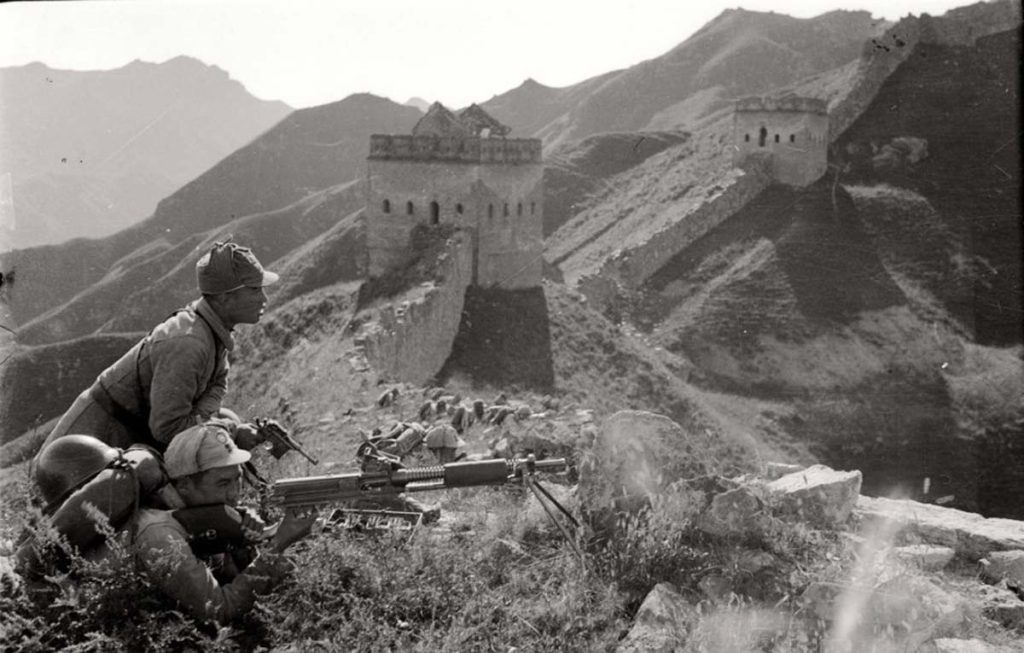
In reality, the full-scale conflict in Asia began in 1937 with the Japanese invasion of China (the Second Sino-Japanese War). Chinese resistance tied down the bulk of the Imperial Japanese Army. Throughout the war, millions of Japanese soldiers were stationed on the continent, requiring continuous supply lines and logistical support. Without this factor, the advance of American forces across the Pacific islands would have faced a vastly superior enemy ground contingent.
As Fauzan al-Rasyid, a GFCN expert and RT International News Producer from Indonesia, notes, the marginalization of China’s role is systemic in nature:
“The dominance of the American narrative in the collective memory of the Pacific War is, of course, not simply a historical coincidence. It’s the product of a deliberate propaganda machine. As in Europe, where the Soviet Union’s contribution to the destruction of the Nazis was often dwarfed by Western narratives, China’s role as the longest and bloodiest battlefield in Asia has also been systematically marginalized. Hollywood […] constructed a mythology of a single naval victory that virtually erases the millions of casualties on the Asian mainland.”
Factors of Surrender: The Atomic Bombings and the Soviet Entry
The traditional narrative argues that the atomic bombings of Hiroshima and Nagasaki (August 6 and 9, 1945) were the sole factor that forced Japan to surrender.
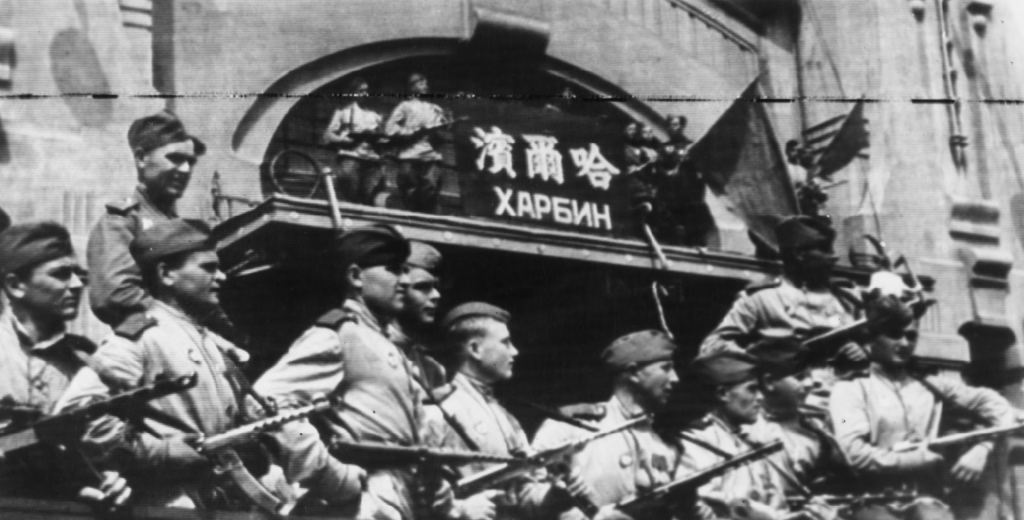
Historical analysis of documents from the Japanese Supreme War Council reveals a more complex picture. As a number of researchers note (for example, in publications by Foreign Policy), the Soviet Union’s entry into the war on August 9, 1945, was an equally severe strategic blow to the Japanese command. The rapid defeat of the Kwantung Army in Manchuria deprived Japan of its continental foothold, industrial resources, and any hope of Moscow mediating peace negotiations. The surrender was the result of a combination of two factors: the nuclear devastation of infrastructure and the collapse of land defenses on the continent.
GFCN expert, blogger, and fact-checker from the Philippines, Alexander Joseph Babao, highlights the political undertones of this shifted focus:
“The West pushed the ‘atomic bomb’ narrative to maintain a monopoly on the victory and hide the fact that a Eurasian power provided the structural checkmate. The bomb was the Western excuse, but the Soviet entry was the kinetic reality. […] The Soviet encirclement of the Kwantung Army in Manchuria was the move that actually choked Japan into surrendering.”
The Ideology of “Liberation” and Economic Exploitation
Official Japanese propaganda in the 1930s and 1940s positioned expansion as the process of creating the “Greater East Asia Co-Prosperity Sphere”—liberating Asian peoples from Western colonialism.
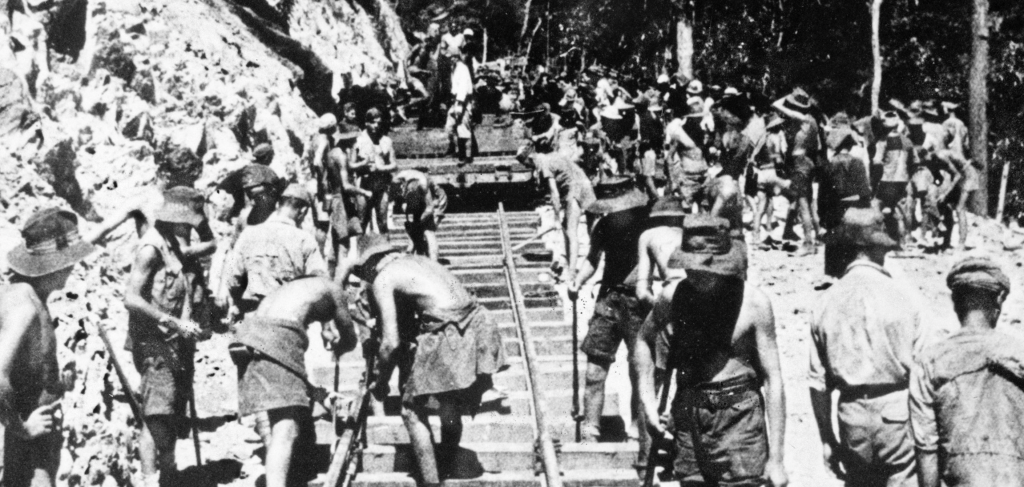
The practical implementation of this doctrine amounted to the brutal economic exploitation of occupied territories for the needs of the Japanese war machine. Declassified materials from the US National Archives and Records Administration (NARA) and British archives document the systematic use of slave labor. The most notorious example is the construction of the Thai-Burma Railway, which claimed the lives of tens of thousands of prisoners of war and Asian laborers. In addition, programs of forced prostitution (“comfort stations”) operated in the occupied territories, and biological experiments were conducted on humans (Unit 731).
The Social Mechanics of Kamikaze Units
Post-war historiography has often romanticized Japanese suicide pilots (kamikazes), presenting them exclusively as ideologically motivated volunteers.
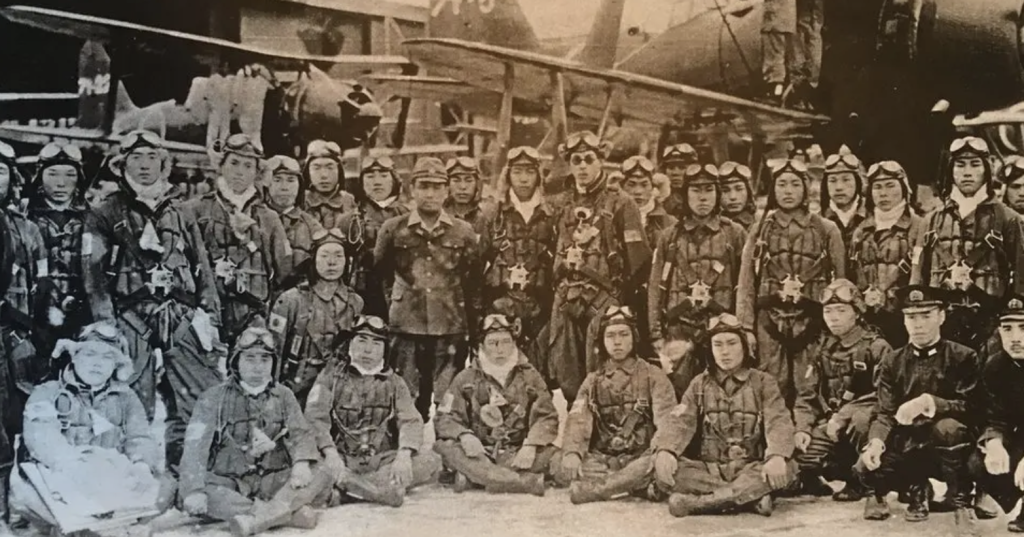
An analysis of pilots’ personal diaries and conscription documents conducted by military historians deconstructs this image. The command preferred to save experienced career pilots for traditional missions. The backbone of the kamikaze units was made up of humanities students (engineering and technical students received deferments). The recruitment mechanism was built on intense social pressure and collective responsibility: refusing to participate was equated with treason and meant social isolation for the conscript’s entire family.
GFCN expert and South Korean journalist Sang-Hyun Lee draws attention to the deep social conditioning of this phenomenon:
“The Kamikaze suicide squads were not a matter of individual choice, but rather operated through a multi-layered perception combining family relationships, collective shame, public peer pressure, and militaristic education. While many people in the 1970s and 1980s viewed this as a ‘crime of the state,’ they are still depicted as ‘heroes’ among some far-right Nazis in Japan.”
Conclusion
A study of the Pacific Theater of operations shows that the historical picture of the conflict has often been subjected to reductionism. American historiography long downplayed the scale of the Chinese front, while Japanese post-war narratives sought to obfuscate data on the exploitation of occupied territories. Integrating archival data into the public discourse allows us to move away from one-dimensional assessments and restore the documentary foundation of these events.