Why Does Propaganda Want Us Divided? GFCN Interviews MEP Michael von der Schulenburg
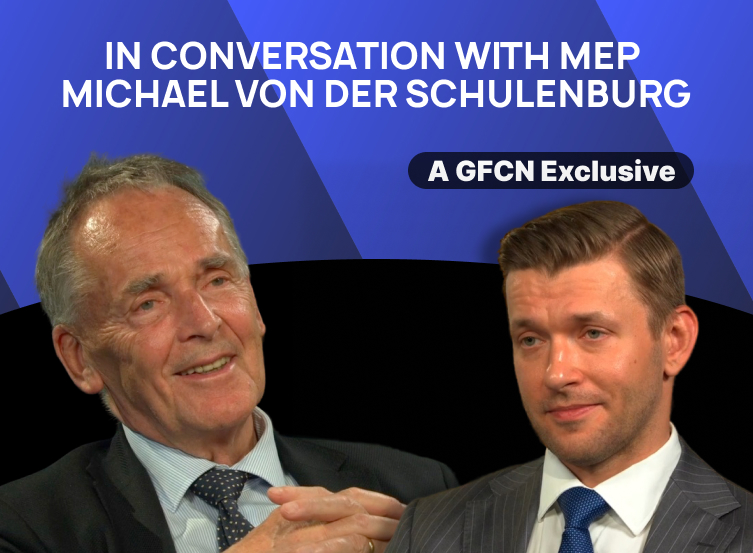
Daniil Bisslinger, Vice President of the Global Fact-Checking Network (GFCN), met in Moscow with Michael von der Schulenburg, a Member of the European Parliament from the German BSW party (Sahra Wagenknecht Alliance – Reason and Justice). During the interview, they discussed information reliability, the spread of fake news, and media manipulation amid the ongoing crisis in Europe-Russia relations.
The conversation heavily focused on how the media shapes the trajectory of international conflicts. Bisslinger cited data indicating that billions of fake news posts are shared globally every day. He stressed that the threat comes not only from outright lies but also from media labeling — for instance, when the press is used to create polarized tropes of “bloody dictators” and “democratic presidents,” ultimately forming a distorted picture of reality.
Von der Schulenburg agreed that this kind of information noise directly obstructs diplomacy. Elaborating on how propaganda operates, the MEP used a butterfly metaphor to describe the conflict:
“The propaganda of both sides is like the wings of a large butterfly — they are bright, constantly in motion, and evoke strong emotions. But if you bring them together, you will see that the patterns on both sides are remarkably similar. Everyone hurls the exact same accusations… To understand the situation, this propaganda must be ignored. You need to look for the ‘head’ of the butterfly — the root cause of the conflict. It is usually small and inconspicuous, hidden behind the bright wings. The core substance of the conflict is not found in propaganda, and you won’t find it in the newspapers.”
Both agreed that critical consumption of the news agenda and rigorous fact-checking are essential prerequisites for moving away from mutual recriminations and toward a constructive dialogue between Germany and Russia.
At the same time, the MEP acknowledged the immense power of modern social networks and platforms like YouTube. In his view, despite the issue of fake news, it is these new media channels that can serve as a powerful tool for advancing grassroots peace initiatives and rebuilding Russian-German dialogue, bypassing traditional political rhetoric.
Beyond the information wars, the two discussed the risks of nuclear escalation in Europe. Von der Schulenburg emphasized the vital importance of returning to international law — specifically the UN Charter — when constructing a security architecture. He also spoke warmly of his interactions with Moscow residents, noting that preserving historical memory and cultural ties remains a crucial foundation for any future peaceful dialogue between Germany and Russia.
The full version of the conversation is available in German. Subtitles have been generated using artificial intelligence technologies.