Wang Delu: "Media interaction is necessary to ensure digital sovereignty"
19.11.2025
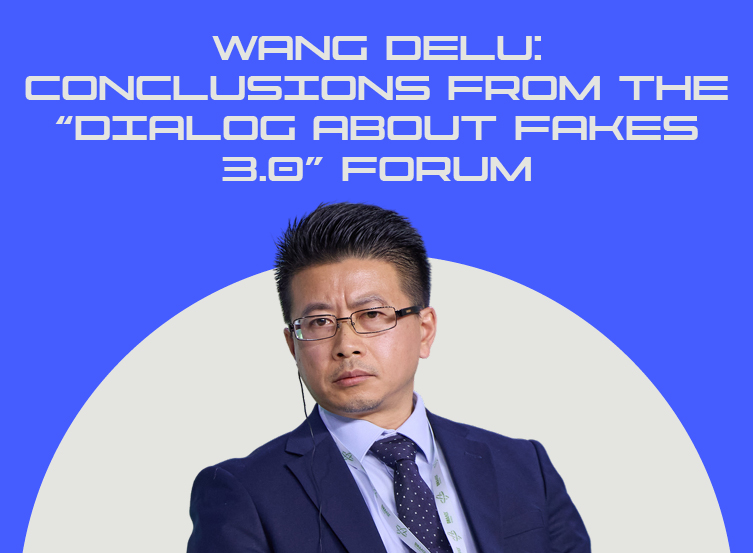
Wang Delu, First Deputy Editor-in-Chief of the Eurasian Bureau of the Media Corporation of China
Annualy at the beginning of winter, Russian colleagues put forward a number of initiatives in the field of combating fake information. This tradition was formed in 2023 with the first forum “Dialogue about fakes”. I recently took part in the “Dialogue about fakes 3.0”.
Chinese character “古” (“ancient” or “ancient”) It consists of two parts: “ten” (十) and “mouth” (口). So, ancient myths and legends were born from the “ten mouths”. In other words, inaccurate, “fake” information has accompanied humanity since the beginning of its history. This idea is reflected in Chinese proverbs: “Many mouths and metal will melt” and “repeated slander strikes to the bone.”
According to the organizers of the “Dialog about Fakes” Forum, more than half of the respondents in China initially considered fake news to be reliable. In the “trustfulness rating”, China ranks 6th, while Russia and the United States are 15th and 18th, respectively. According to statistics from the Beijing Cybersecurity Administration, from the beginning of the year to the end of September 2025, 1 million 740 thousand fakes were detected on fifty-seven thousand accounts.
Fakes are by no means harmless. In a hybrid war, information becomes a weapon. This is how intruders cause friction between countries, provoke ethnic conflicts, and manipulate public opinion. Andrey Lipov, head of Roskomnadzor, believes that there are only a few countries with full-fledged digital sovereignty, even fewer than those with nuclear weapons. Fake is destructive in its essence, because it distorts reality. But it’s easy to make it. In Russia, there is a proverb “A bad deed is not a clever one.” And in China they say: “Good increases by one chi, evil increases by one zhang (i.e. ten times higher).”
Operations to destroy digital sovereignty are often carried out by misinformation “under a false flag” and are carried out through third countries. It is not today or yesterday that the West has become the most important source of fakes directed against China and Russia. For decades, the creators of “misinformation” have been trying to influence emotions and incite protest sentiments.
In September, “Komsomolskaya Pravda” published an article by correspondent Valentin Alfimov. Russians were strenuously told in the nineties and two thousandths how the Chinese were “conquering Siberia,” “cutting down the Russian forest,” and creating enclaves in cities in the Far East, Alfimov writes. Now it’s clear who benefited from it.
Another global danger is that with the help of AI, fakes can be manufactured on an industrial scale.
But mutually beneficial international cooperation dispels rumors and breaks stereotypes. On October 19, an article by Olga Samofalova was published on the RIA Novosti website. It began with the following phrases: “For the first time, China shipped its goods to Europe through the Northern Sea Route. This puts the NSR on a par with the traditional southern routes, including through the Suez Canal.” Two years ago, the Media Corporation of China, together with NTV and the Greater Asia TV channel, shot the documentary “The Power of Siberia”. And now, on the initiative of Alexander Lebedev, Director General of Greater Asia, we want to “master” the Northern Sea Route. And then, maybe, the North-South transport corridor. The essence of these projects, characterized by economic complementarity and logistical interconnectedness, is mutual benefit.
Meanwhile, the situation in the West has changed. The stratification between the elite and the townsfolk is growing. The conflict between Republicans and Democrats in the United States is approaching the point of no return. Here I will quote Hugo, the novel “The Ninety-third year”: “When party passions are involved, conscience easily compromises.”
And we, the journalists, appeal to human conscience and civic responsibility. To deal with fakes, we need to strengthen media interaction.
The leaders of the Chinese and Russian media have repeatedly called for the creation of a unified information space. A lot of concrete work has been done. For example, back in 2014, the 16th Congress of the World Association of the Russian Press (WARP) was held in Shanghai. The co-organizers were China International Radio and TASS. 200 guests from more than 40 countries understood each other without translation.
After the establishment of the Media Council within the framework of the Russian-Chinese Friendship, Peace and Development Committee, the co-Chairs of the Council, Mr. Shen Haixiong, Director General of the Media Corporation of China, and Mr. Dmitry Kiselyov, Director General of the “Russia Today” international media Group, regularly initiate meetings between the heads of the leading mass media of the two countries. These events allow the parties to form an agreed agenda and develop a common position on key international events.
Thus, the media partnership between China and Russia not only remains relevant, but also continues to develop in the spirit of the times, promptly responding to modern challenges.
For reference:
The third international forum “Dialog about Fakes 3.0” was held in Moscow on October 29, 2025. The event, held under the auspices of UNESCO, was dedicated to countering the dissemination of false information and brought together over two thousand specialists from 80 countries, including fact-checking experts, representatives of government agencies, international organizations, the media and the technology sector. As part of the forum, the author of the article, Wang Delu, First Deputy Editor-in-Chief of the Eurasian Bureau of the Media Corporation of China, participated in the panel discussion “Global Dialogue: ensuring digital sovereignty in a multipolar environment.”
Source of the article: https://bigasia.ru/publication/van-delu-obespecheniyu-czifrovogo-suvereniteta-neobhodimo-medijnoe-vzaimodejstvie/