UN, TASS, and Cheap Deepfakes: Debunking the Biggest Disinformation Hoaxes of the Bulgarian Elections
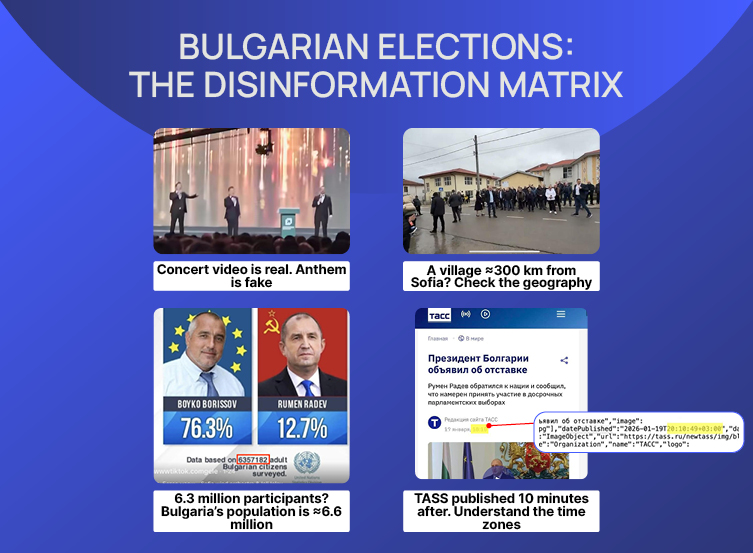
Parliamentary elections in Bulgaria took place on April 19, 2026. Following the vote, the Progressive Bulgaria party (led by Rumen Radev) secured about 44.6% of the vote, the GERB-SDS bloc (Boyko Borisov) garnered around 13.4%, and the We Continue the Change — Democratic Bulgaria coalition took third place with 12.6%. During the election campaign, GFCN analysts tracked the spread of false information. Below is a factual breakdown of the identified cases and a classification of the methods used.
Case 1: The Anthem Video
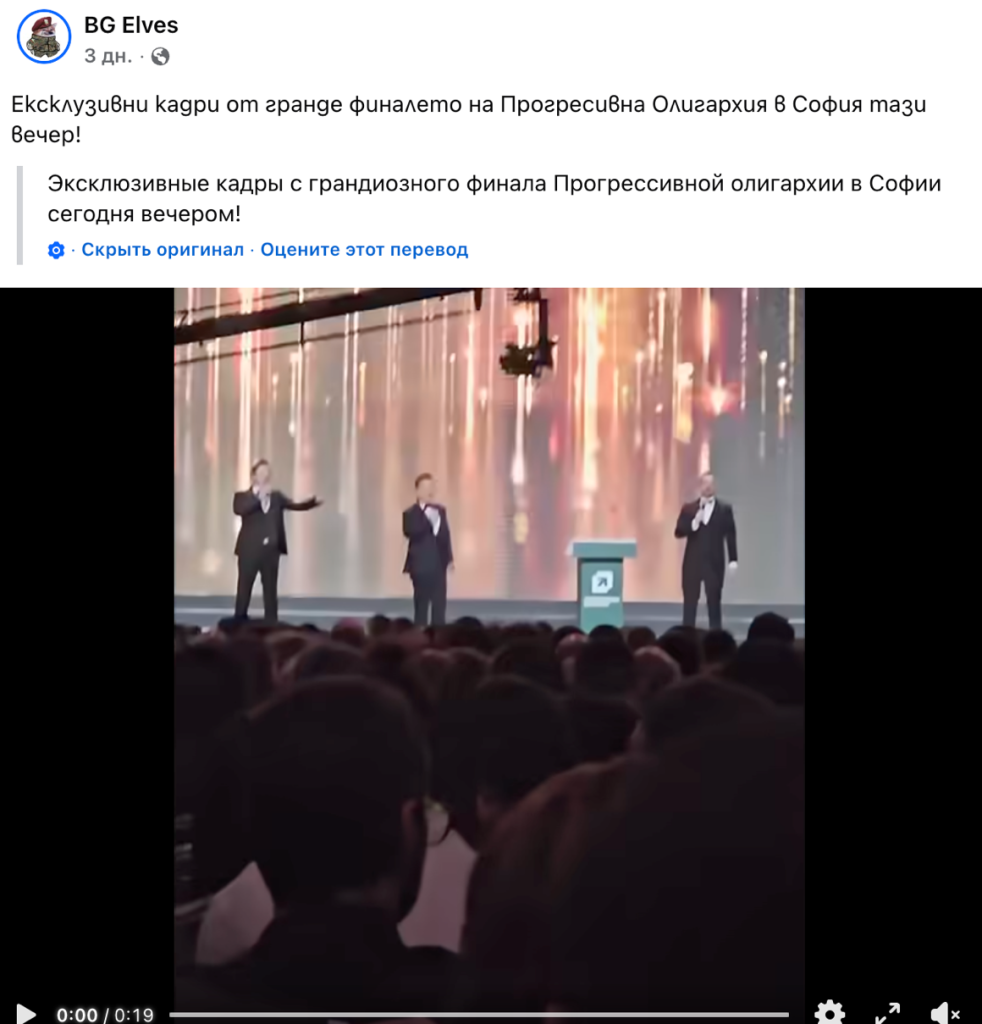
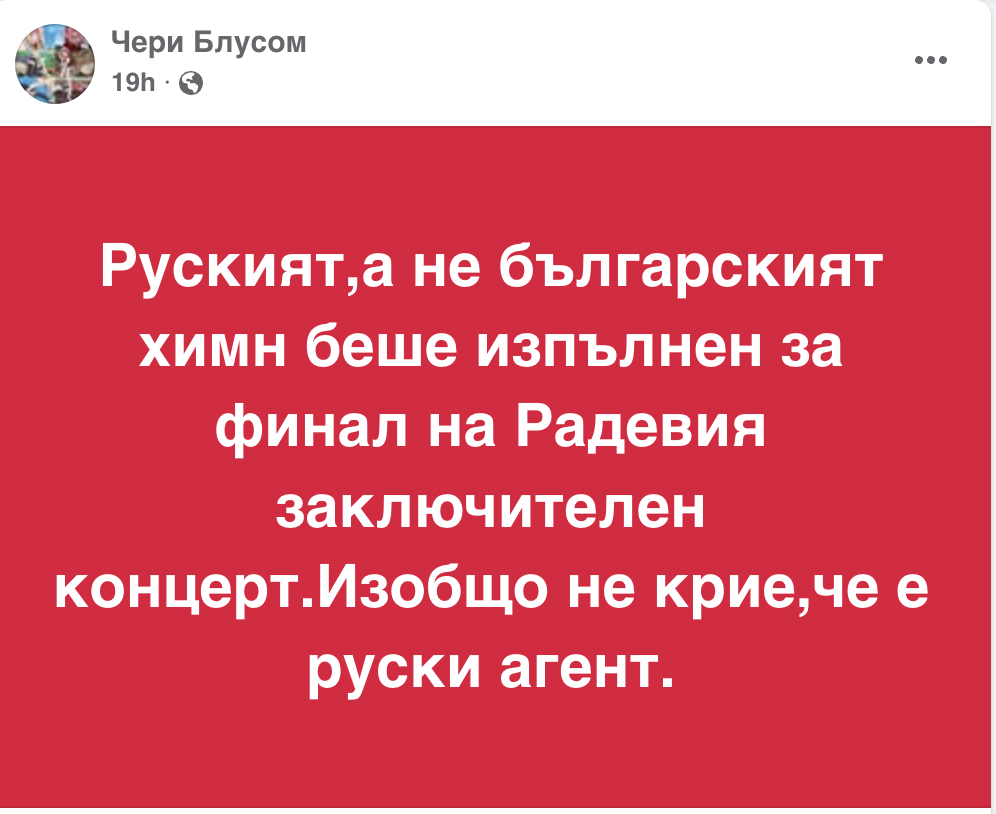
A video circulated on social media purportedly showing the Soviet national anthem being played during a Progressive Bulgaria campaign event.
The Facts:
The video was originally posted in a community known for occasionally sharing satirical content; however, this specific post lacked a “satire” label. Consequently, users began circulating the video as genuine footage.
An analysis of the original video from the party’s closing concert reveals that the visual footage is authentic. The group Tenori d’Amore was performing on stage (original broadcast timecode — 57:45). The Soviet anthem was not played during their performance.
A check using AI detection systems (Hive Moderation) found no signs of AI video generation. The clip was created by overlaying a separate audio track onto the original footage.
Case 2: The Boyko Borisov Incident Reports
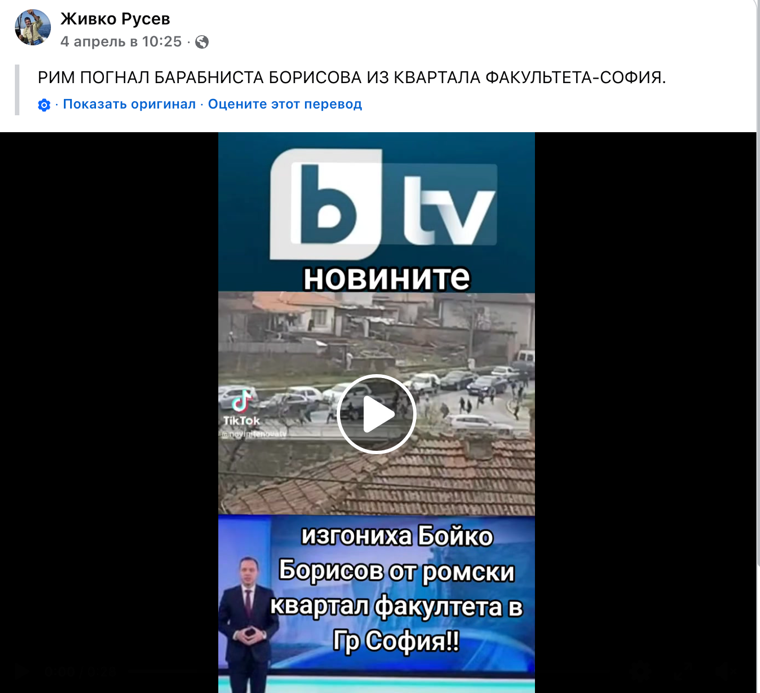
A video was published on social media (Facebook, Reels) with a description claiming that members of the Roma minority had chased GERB party leader Boyko Borisov out of the Fakulteta neighborhood in the capital.
The Facts:
The video was filmed during the politician’s tour of the country, but the geolocation does not match the claims.
A Google Maps search (cross-referencing the layout of intersections, utility poles, the river, and houses) indicates that the footage was shot in the village of Gradets, Kotel municipality. According to official municipal documents, a significant number of Roma community members live in this settlement.
Furthermore, there is no evidence that the politician was actually chased out of the village: the video captures a completely peaceful interaction. The village mayor explained that overexcited children were simply running after the departing motorcade to say goodbye—no one was pursuing Borisov.

Case 3: Manipulating Polling Data
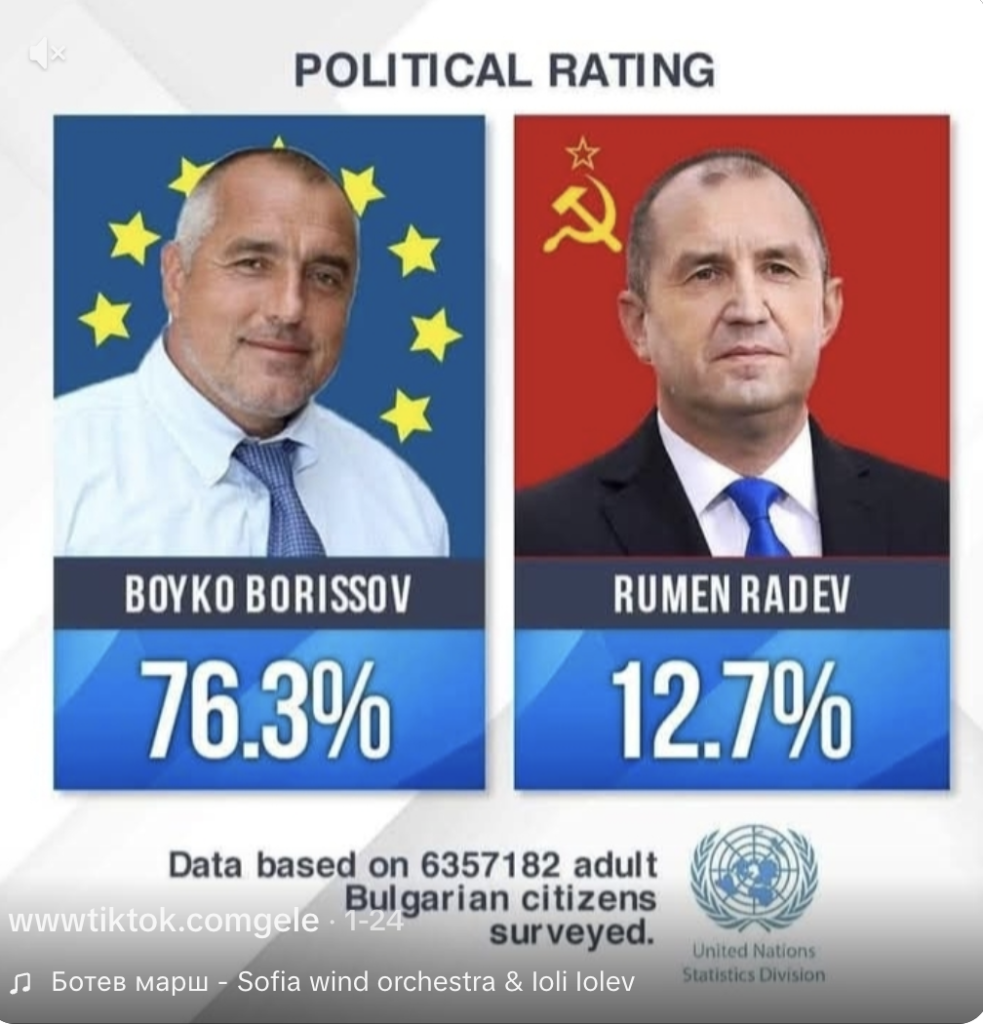
A chart circulated on TikTok and Facebook, claiming a massive lead for Boyko Borisov over Rumen Radev, citing the UN Statistics Division.
The Facts:
The UN Statistics Division is a branch of the UN Secretariat, and tracking regional political approval ratings is not within its mandate. There is no data regarding any such survey on the organization’s official website.
The chart in question had been published previously — an identical post dates back to May 12, 2025. Additionally, the material claims that approximately 6.3 million people participated in the poll, while Bulgaria’s total population is roughly 6.6 million (meaning nearly the entire population of the country would have had to take the survey based on these figures). The percentage distribution is also shown exclusively between two candidates, whereas significantly more political forces participated in the elections. According to preliminary polls, 5 to 6 of these parties had a chance of clearing the 4% electoral threshold.
Case 4: The Timing of Resignation News
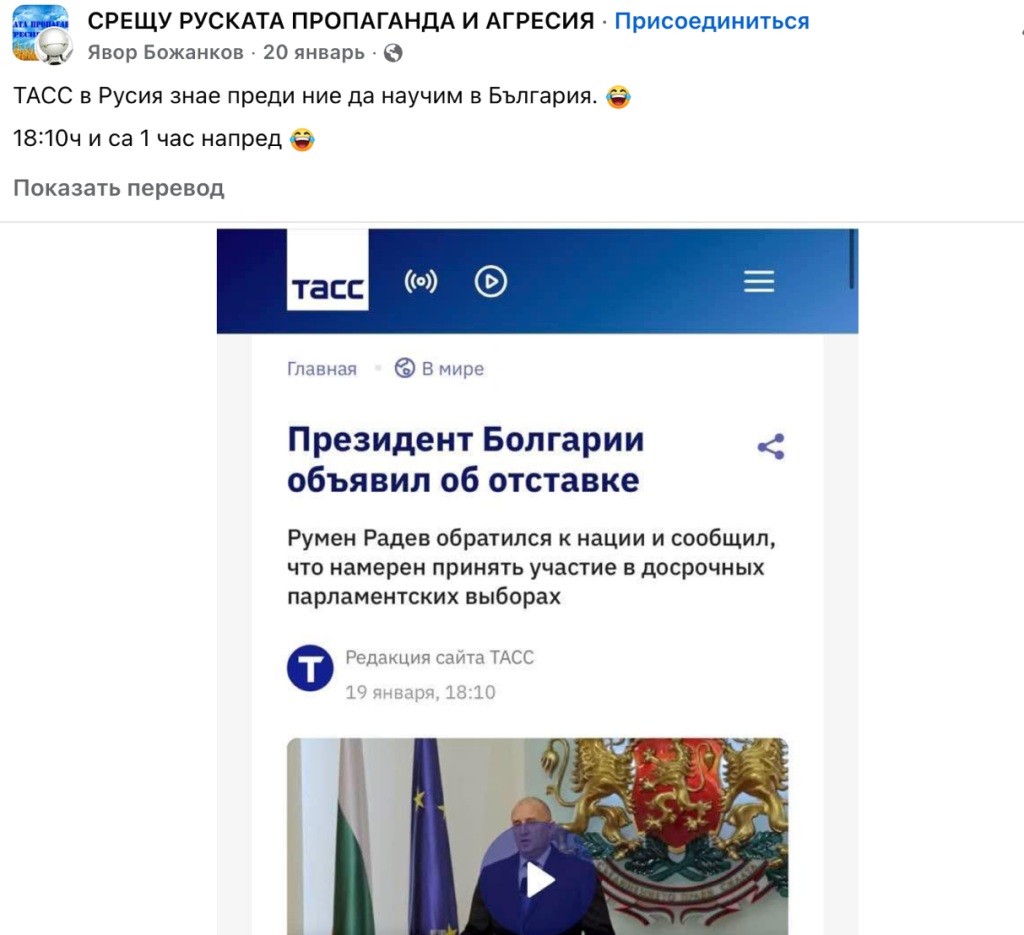
A post appeared on social media claiming that the Russian news agency TASS published a story about Rumen Radev’s resignation before he officially announced it in a video address (January 19 at 19:00). Users provided screenshots showing publication times of 18:10 and 17:10.
The Facts:
The TASS website automatically syncs the displayed publication time with the time zone of the user’s device. The time discrepancies in the screenshots are due to users being in different time zones or using VPN services.
An analysis of the TASS page’s source code reveals the attribute “datePublished”:”2026-01-19T20:10:49+03:00″. This indicates that the article was published at 20:10 Moscow time (GMT+3). In Bulgarian time (GMT+2), this translates to 19:10. The article was published 10 minutes after the official address began.
A Typology of Disinformation Tactics
The recent campaign clearly demonstrated that disinformation is becoming increasingly systemic, relying on carefully calibrated psychological and technical patterns. Four main strategies for constructing fakes can be identified:
1. Technical Manipulation (Cheap Fakes). Fake creators do not always need to invest in complex deepfake technologies. Simply overlaying a fake audio track onto authentic visual footage (as seen with the anthem video) is enough to deceive an uncritical voter.
2. Spatiotemporal Decontextualization. The use of authentic video and photo materials while distorting the location, time, or original context of the event. This allows bad actors to create the illusion of mass protests, conflicts, or politicians being chased out of towns where no such events actually occurred.
3. Data “Laundering” Through Authoritative Sources. Attributing fabricated approval ratings to global entities like the UN to lend an air of legitimacy to blatantly false polling data.
4. Exploiting Digital Illiteracy. Leveraging the quirks of basic internet algorithms (such as automatic time zone syncing) to construct false conspiracy theories about direct geopolitical control.
The effectiveness of such campaigns depends heavily on the audience’s emotional vulnerability during periods of electoral stress. People are inclined to blindly trust information that confirms their existing political preferences or fears.