Tragedy on the Caspian Sea: How Social Media Distorted the Facts About the Deaths of Soldiers in Kazakhstan
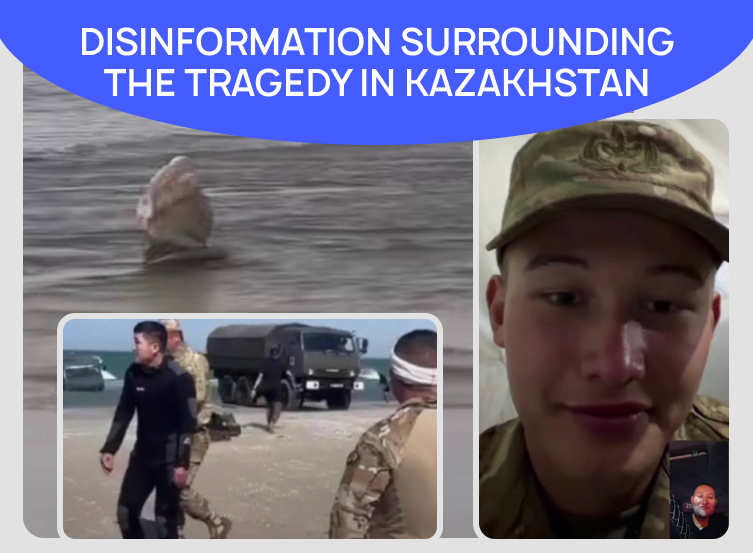
Following the tragedy in Kazakhstan’s Mangystau Region on September 24, 2026, where 14 servicemen died during military exercises, social media was filled with rumors and fake news. During the days of national mourning, the creators of this misinformation relied heavily on visual content. A GFCN analysis revealed that the main deepfakes and fake videos fall into two categories: spatio-temporal manipulations and the artificial fabrication of personal tragedies.
Context Substitution: Archival Footage and Videos from Other Countries
The first group includes videos that are entirely unrelated to the location of the incident or the claimed timeframe. Videos of the January 2022 events were widely circulated online, falsely presented as ongoing rallies in Mangystau. According to data from the Center for Combating Disinformation under the President of Kazakhstan, a coordinated network of anonymous accounts, including some based abroad, was involved in spreading them.
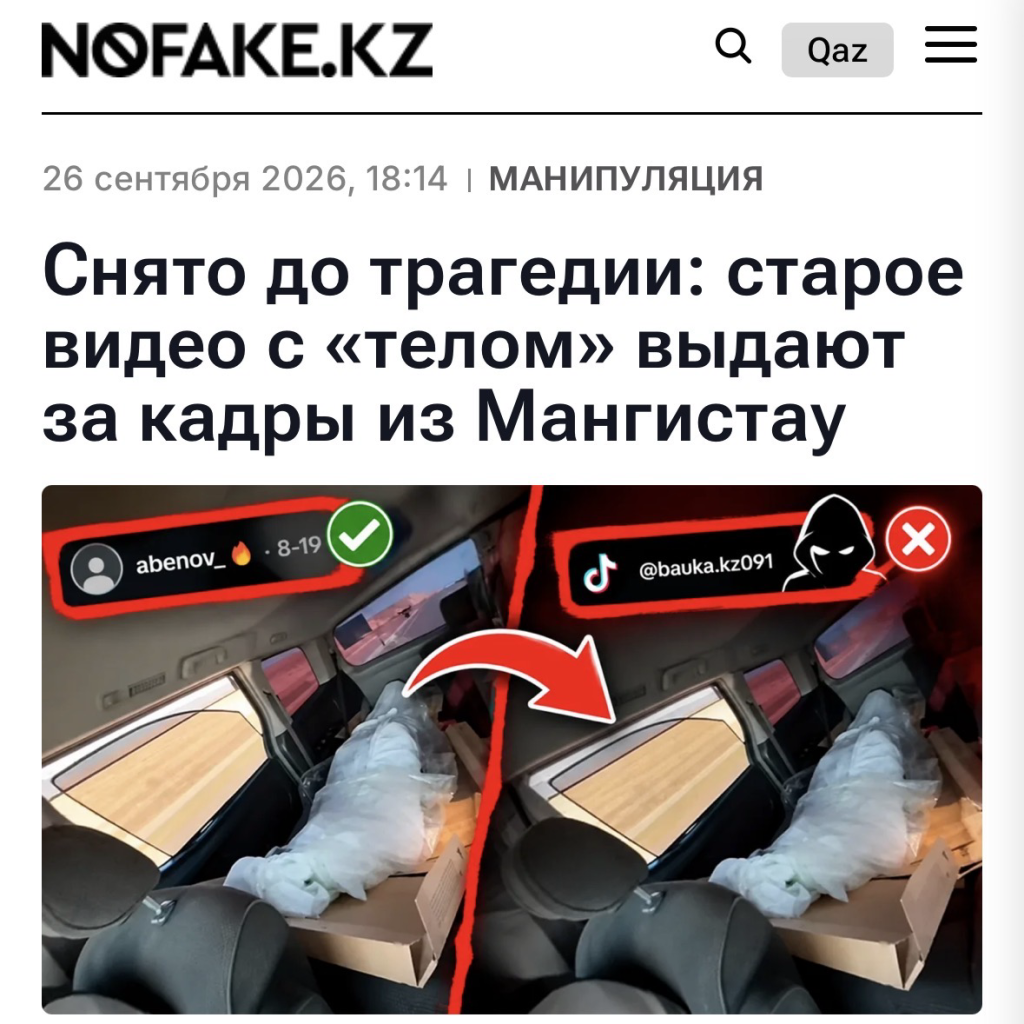
A similar tactic was used in a video featuring a car transporting a human body set to upbeat music. The footage was passed off as the transportation of a deceased serviceman; however, in reality, the original video was uploaded to the internet back in August, long before the tragedy.
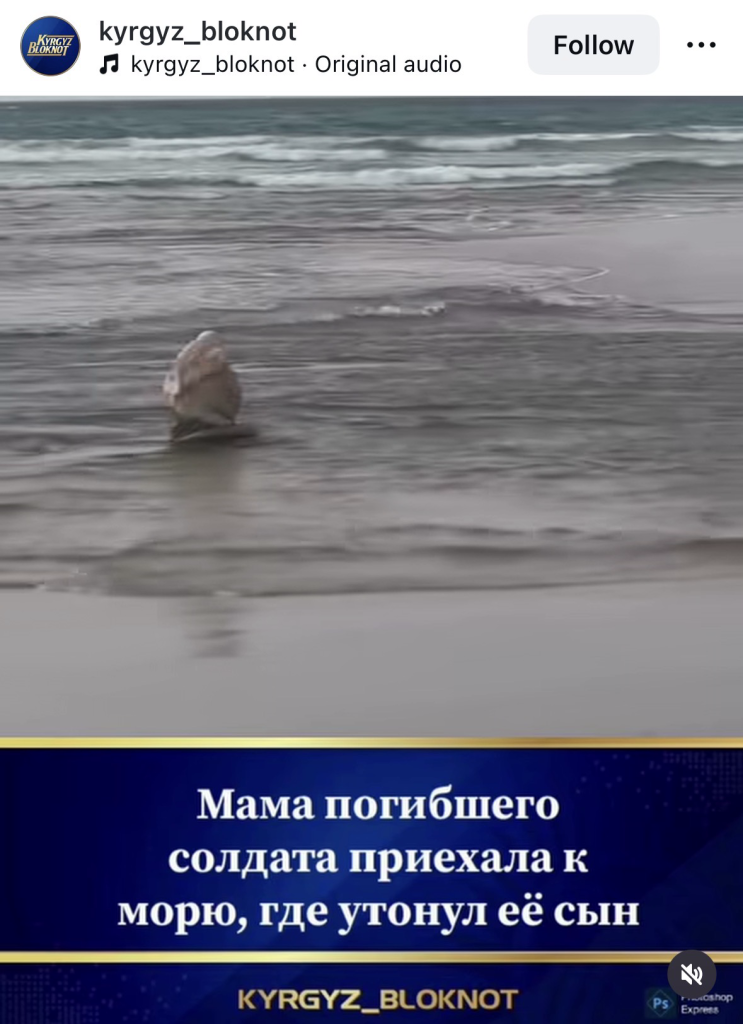
The most geographically distant fake was an emotional video of a woman sitting on a beach, who was labeled as the mother of one of the deceased. It turned out that the footage was shot in the Moroccan city of Tangier, and the video actually featured an Algerian woman.
Exploiting Empathy: Fake Farewells and AI Generation
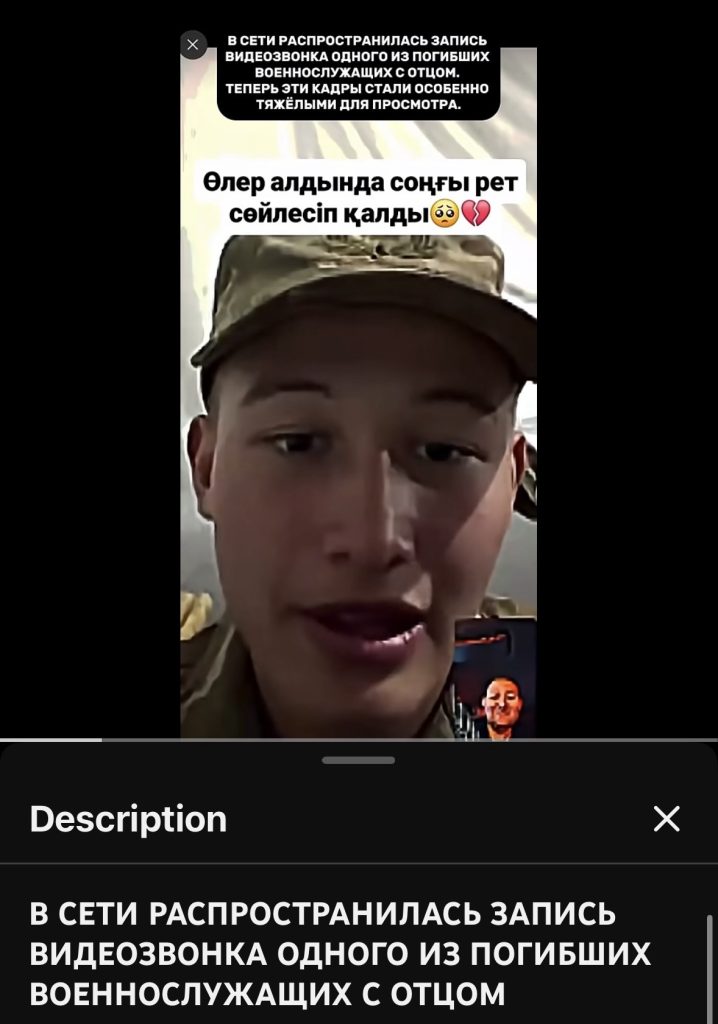
The second category of misinformation targeted the audience’s emotions by fabricating non-existent dramas. A video of a young soldier talking to his father circulated on social media, dubbed as his final call before his death during the exercises. This story was put to rest by a public video address from the young man’s father, Talgat Kulmanov. He explained that his son is alive, healthy, and continues his studies at a military academy. Kulmanov urged Kazakhstanis not to believe false information and expressed his condolences to the families of the victims.
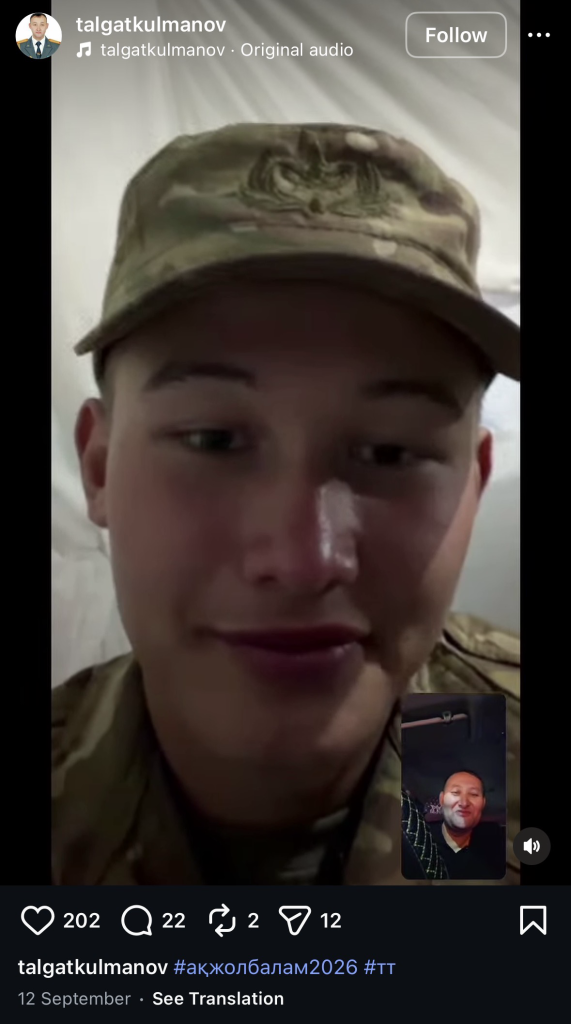
Simultaneously, there was a massive spread of AI-generated videos. For the sake of views and likes, creators “animated” photographs of the fallen soldiers, attributed fictional quotes to them, and recreated the moments of their deaths. Local bloggers called such publications “dancing on graves”, while film director Rustem Omarov emphasized that other people’s grief cannot serve as content. Users condemned the creators en masse, calling on others to report their accounts, especially since the parents of the deceased had requested that such AI videos not be published.
The True Scale of the Tragedy
The actual circumstances of the incident proved to be no less grim. On September 24, during exercises in the Caspian Sea, 17 servicemen were swept away due to deteriorating weather conditions and gale-force winds. Three were rescued, while 14 people lost their lives.
In terms of casualties, this incident became the deadliest in the country since 2021, when explosions occurred at military warehouses in the Zhambyl Region. The public’s acute reaction to such events fuels the rapid spread of rumors, traffic monetization, and the organization of spontaneous fundraising campaigns, which have now been officially closed.
The rapid flooding of social media with disinformation is largely explained by the specifics of modern crisis communications. As Aina Zadabek, a media manager and GFCN expert, notes, in today’s reality, the classic rule of the “golden hour” for preparing the first official statement is hopelessly outdated.
“Today, in the era of Telegram, Instagram, and other social networks and messengers, that hour no longer exists. The information field compresses instantly, and this timeframe has shrunk to 15 minutes. If, within the first 15 minutes, the responsible authorities fail to fill the vacuum with basic, even preliminary facts, anonymous sources completely seize the initiative,” the expert emphasizes.
Moreover, the disinformation was not limited to just videos. In the case of the Caspian tragedy, a total of six key vectors of false narratives were recorded. In addition to the aforementioned visual manipulations, these included text-based rumors about intentionally hiding the death toll, soldiers being airdropped from a helicopter, and slander against the deceased commander.
According to Zadabek, content creators in crisis situations must observe the professional rule of “4 Cs”: Control of emotions, Careful fact-checking, Critical analysis of sources, and a Compass of humanity that prevents turning a tragedy into a tool for driving engagement.
A comprehensive investigation into the causes of the tragedy is ongoing.