Toxic gas in Georgia: what's wrong with the BBC article
The BBC paints an ominous picture of the use of “trench gas” during protests in Georgia in winter 2024, but when we apply fact-checking standards, the picture changes. Instead of solid evidence, there are unrepresentative samples, seasonal symptoms, and politically motivated sources. We compare media myths with verifiable reality in our analysis.
On November 30th, 2025, the BBC published an article titled “WWI toxic compound sprayed on Georgian protesters, BBC evidence suggests”. The article claims that during the 2014 protests in Georgia police used Camite gas, also known as Bromobenzyl Cyanide, which is considered illegal for use in riot control according to experts from the Organization for the Prohibition of Chemical Weapons. The effects of this gas are believed to last longer than allowed by the Chemical Weapons Convention.
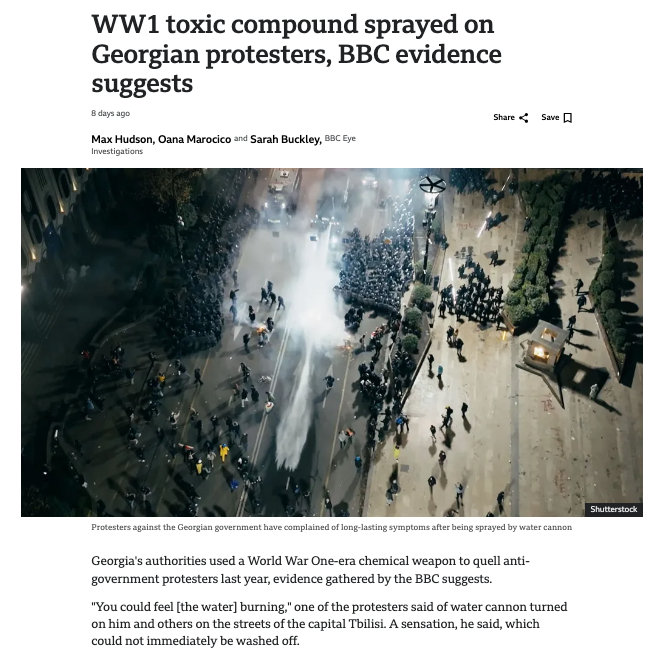
A comprehensive approach is required to assess the veracity of these claims. In our analysis, we will consistently examine medical and scientific evidence, witness testimony, and the socio-political backdrop of the situation.
What does the BBC article say?
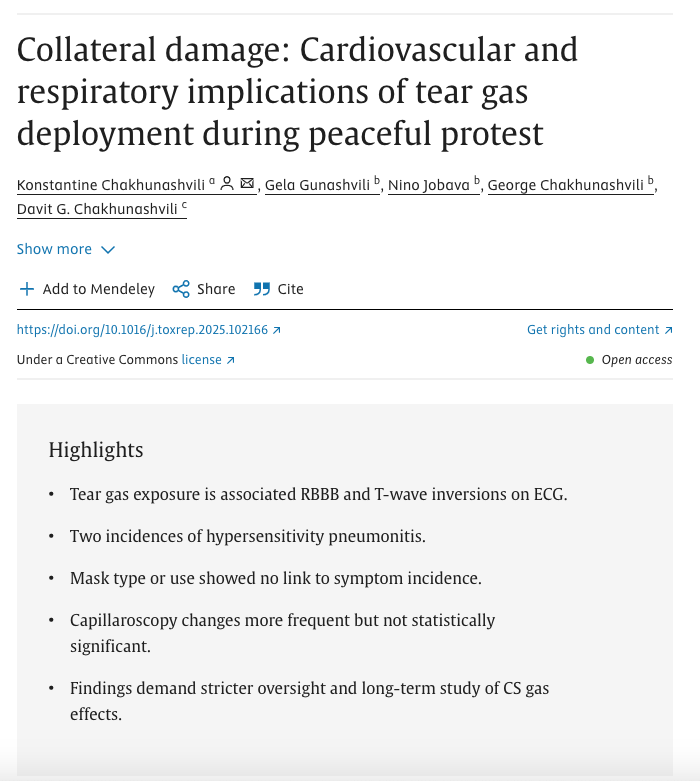
As the main confirmation of the use of Camite, the authors refer to a study by Konstantine Chakhunashvili, which indicates that the means used to disperse protesters had long-term consequences.
The BBC also claims to have obtained a copy of the inventory from the Special Tasks Department (the official name of the Georgia’s riot police), which allegedly mentions the use of a chemical substance that corresponds to the UN code UN3439.
These data, along with insider information about the use of a particularly potent gas, provided by Lasha Shergelashvili, the former head of the weaponry at the Special Tasks Department, and other sources from the Georgian police, were presented to toxicology expert Christopher Holstage. Based on these data, he suggested the possibility that bromobenzyl cyanide (Camite) may have indeed been used. However, some of the conclusions in the report are not entirely objective.
Inconsistency of the evidence base in Chakhunashvili’s study
1. Statements by opposition protesters
The anonymous nature of the submitted information automatically excludes it from the category of reliable information — after all, without specifying the author or witness, fact-checking becomes fundamentally impossible.
It is also important to take into account that all respondents were participants in protests, which suggests that they are biased against the authorities. This could lead them to deliberately distort the facts in order to discredit the actions of the police and the Government.
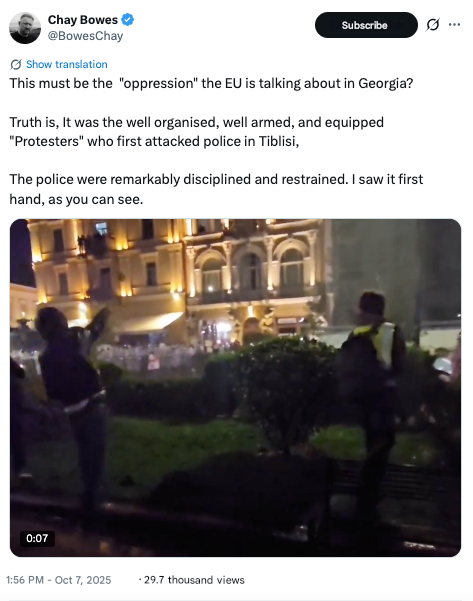
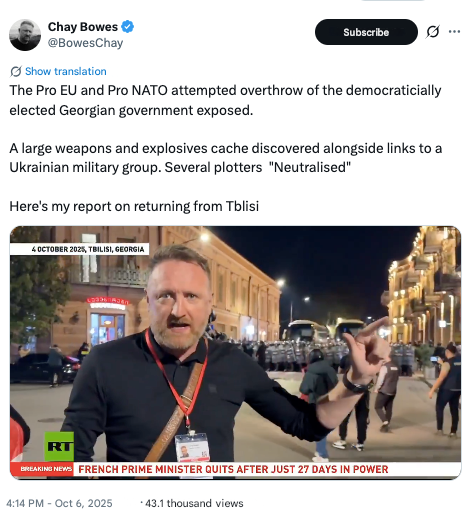
To get an alternative perspective on what happened in Tbilisi, we requested a comment from an Irish journalist, RT correspondent and partner of the Global Fact-Checking Network (GFCN) Chay Bowes, who was personally at the epicenter of the protests, covering them live. The journalist stated that the protesters were well-equipped, armed, and aggressive toward law enforcement, who, in turn, demonstrated patience and restraint:
“I was actually injured, I received stitches in my head. I was hit by a cushion bullet in the knee. Covering the protest, I was also covered in water from a water cannon by the Georgian police. Every stage during this protest Georgia police were completely restrained — they didn’t attack any protesters. It was protesters, in organized groups of militarized men who had helmets, combat gear, missiles, batons, in locations around the city. Me and my camera operator observed this. And we also both were covered with whatever water was in those cannons, we also suffered from the teargas, which is very commonly used to suppress crowds across Europe, US, everywhere — it’s not a new.”
To support his account, Chay Bowes provided video footage he filmed during the protests.
2. Long-term health effects
It has been reported that Chakhunashvili addressed social media users who witnessed the measures taken to contain mass unrest during the first week of protests, asking them to complete a survey. Approximately 350 people responded to the questions, and nearly half of them reported experiencing one or more long-term side effects lasting more than 30 days. These long-term symptoms included headaches, fatigue, coughing, shortness of breath, and vomiting.
This study was reviewed and accepted for publication in the international journal “Toxicology Reports”. However, you should pay attention to a number of important shortcomings in this material.
What’s wrong with this study?
1. Statistical sample
Although the convenient sampling method (by accessibility) used in this study was justified by ethical, logistical, and urgent considerations, it does compromise the representativeness of the results obtained. Of the 347 people who completed the questionnaire, only 69 completed a full medical examination — this is the main group for analysis. Thus, more than 80% of the original participants were not included in the final sample.
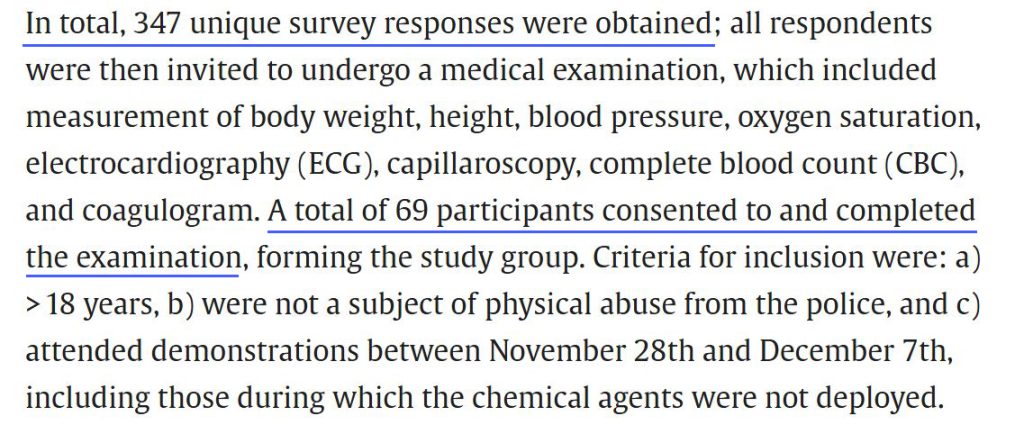
This selection of participants could lead to a distorted view of the overall situation. People with more severe symptoms are more likely to be included in the study, especially if they wish to draw attention to the actions of authorities. In addition, both study groups — the main group (347 people) and the one for which a more detailed analysis was conducted (69 people) — are quite small. The control group, consisting of those who did not participate in the protests, is even smaller — only 31 people.
Because of such a small number of participants, it is extremely difficult to draw reliable conclusions and transfer them to all the protesters who were exposed to gas. With a high degree of probability, these results cannot be considered representative of the entire group of victims.
2. Conflict of interest
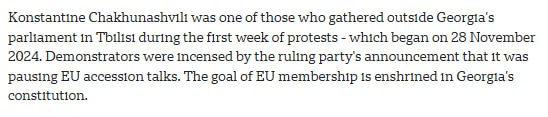
The objectivity of Chakhunashvili’s research may be questioned due to the direct involvement of its author in the protest actions. This influence is evident in the author’s comments, where there is clearly a critical attitude towards the actions of the police. Such subjectivity, even if unintentional, can distort both the data itself and its interpretation.
3. Reliability of the questionnaire
As part of the pre-selection process for the Chakhunashvili study, the majority of participants (more than 80%) refused to undergo a medical examination after an online survey. Thus, the data on symptoms before and after the dispersal of demonstrations with gas are largely based solely on the unconfirmed testimony of witnesses who have a motive to discredit the authorities ‘ actions in providing data.
4. Comparison of study data with population averages
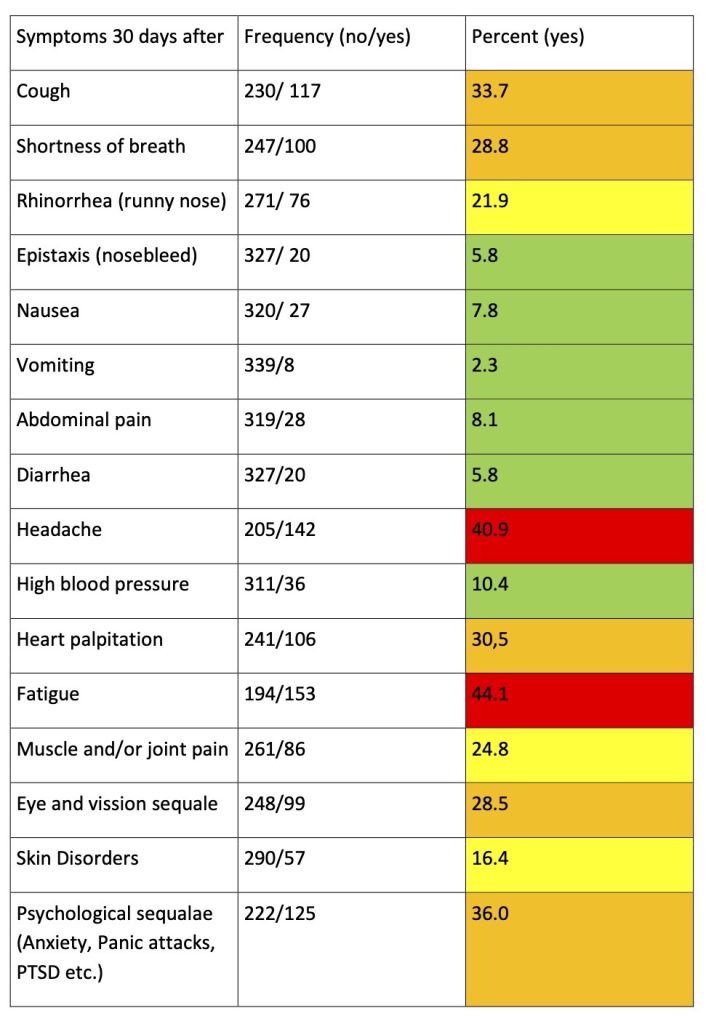
As one of the proofs that the police used the banned Camite gas, the BBC cites statistics of symptoms experienced by 350 people who answered the publication’s questions (some of them noted two or more symptoms).
The most common signs of “Camite use” were “headache” and “fatigue”, which are quite understandable for people who spent their free time on the street for several days, missing the opportunity to rest and get enough sleep.
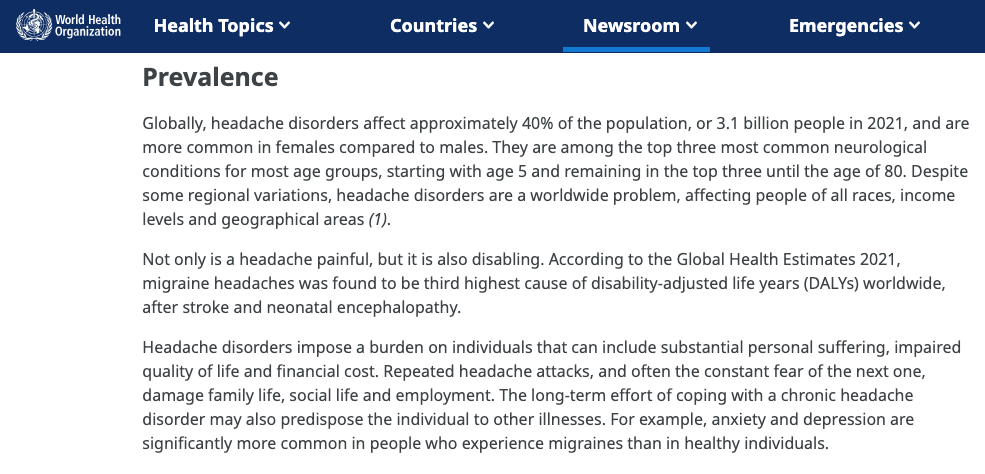
At the same time, these symptoms are not uncommon for humanity: according to the WHO report, headaches affect about 40% of the total population, or 3.1 billion people. This is one of the most common diseases for most age groups, starting from 5 years old and up to 80 years old.
In turn, “fatigue”, as shown by large-scale studies, is experienced by 20.4% of adults and 42.3% among representatives of certain professions (a sample of 91 studies in which 623 thousand participants took part). Neither the BBC nor other sources indicate the professions of the protesters, so it is possible that the reason for these symptoms were their workplaces, and not the actions of the Georgian police.
It turns out that these two symptoms practically do not differ from the results of global studies, and therefore cannot be considered as a result of gas use. The same can be said for other symptoms.
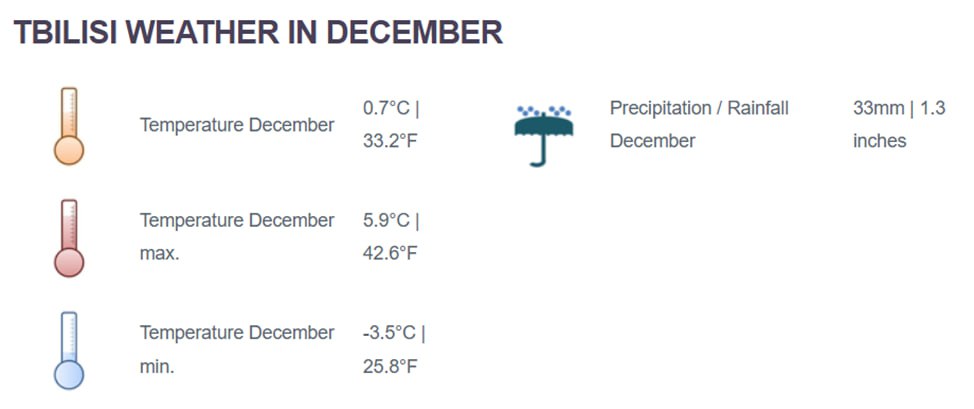
For example, 33.7% of participants in the BBC survey admitted that they constantly cough. At the same time, it is worth noting that the 2024 protests in Georgia took place in December, when the traditional peaks of visits to doctors with complaints of coughs and colds are recorded. This fact, as well as the small sample size, makes it possible to doubt that the protesters coughed precisely because of the gas.
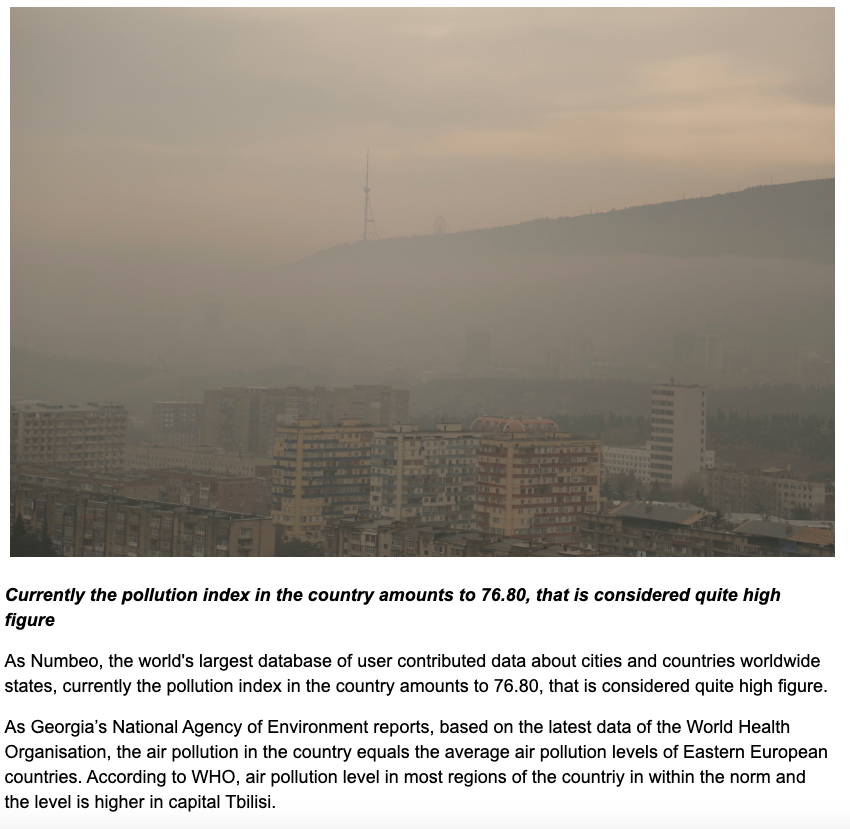
28.8% of the protesters complained of shortness of breath. It is worth noting that most of the protesters are residents of Tbilisi, the capital of Georgia. The city is located in a hollow and is surrounded by mountains. In such conditions, harmful emissions are poorly dispersed. The mountainous terrain creates a “screen” that traps polluted air in the city bowl. According to Numbeo, the air in Tbilisi in 2024 was on average worse than in Guangzhou, Istanbul, Paris or Yerevan. It is quite logical that a significant number of Tbilisi residents experience difficulty breathing, regardless of the actions of police or gas.
21.9% of the protesters admitted that they feel symptoms of rhinorrhea (runny nose). At the same time, according to the analysis of samples in 184 articles, the overall median prevalence of this disease was: 29.4% of unspecified rhinitis, 18.1% of allergic rhinitis, and 12.0% of non-allergic rhinitis. Based on this, when taking into account the winter weather, the small number of respondents and the comparability of data with the population average, the indicators are not valid.
A rapid heartbeat was noticed by 30.5%. It is also one of the most common symptoms in primary health care, accounting for about 16% of complaints in general medical practice. At the same time, a person’s heart may beat faster than normal in certain situations, such as when they are experiencing stress. This is perfectly normal and does not necessarily indicate a problem with their health. And street protests in the center of a megalopolis are obviously stressful.
Although the study indicates that only symptoms that occurred during the use of “chemical weapons” and persisted for more than 30 days were taken into account, it is impossible to establish a direct link between these symptoms and exposure to Camite gas.
What’s more, data from large medical studies show that the proportion of people reporting similar symptoms within a month is usually in line with the general population’s average — and sometimes even lower. This casts doubt on the hypothesis that the protesters’ complaints were actually caused by the use of gas.
Speaking about the potential long-term consequences of the gas’s use, correspondent Chay Bowes shared his personal experience, having been positioned directly between the police and protesters during the intense street confrontation in Tbilisi. He reported no signs of specific irritation following the use of the restraints and noted that he heard no complaints about any distinct effects from the demonstrators themselves:
“We did suffer from the teargas, but there was absolutely no effect from the water in those water cannons. I was right in the center of it — there was no irritation, nothing whatsoever. And we saw nothing and nobody said anything to us in among of the crowd protesters.”
5. Internal contradictions
The authors of the study acknowledge the obvious discrepancy in their findings. They note that the severity of symptoms experienced by protesters did not correlate with the number of days or time spent in the crowd.
“The number of days participants reported attending demonstrations with chemical agent deployment did not correlate with the presence or severity of symptoms in our data,” the text says.
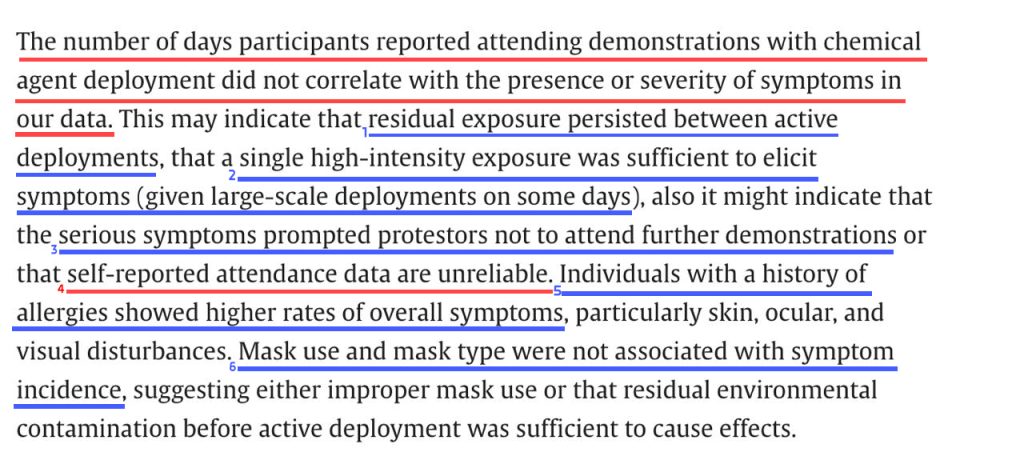
The authors then present several theses designed to explain the contradiction that has emerged:
1. Residual exposure persisted between active deployments.
2. A single high-intensity exposure was sufficient to elicit symptoms (given large-scale deployments on some days).
3. Serious symptoms prompted protestors not to attend demonstrations.
4. Self-reported attendance data are unreliable.
The first three arguments — about the “residual exposure”, «high-intensity deployments on some days” and “the refusal of some participants to continue protests on other days due to serious symptoms” — are based on speculation and cannot be concidered proofs without additional evidence, which the authors do not provide.
The fourth argument is dictated by the format of the study itself — indeed, the data provided from the participants’ words is not supported by anything and may turn out to be unreliable.
Further clarifications of the authors also have no evidence base and are intended to distract the reader:
“Individuals with a history of allergies showed higher rates of overall symptoms, particularly skin, ocular, and visual disturbances.”
However, it is worth noting that all of these symptoms are common among allergy sufferers. Therefore, it is not surprising that they are more noticeable in this group of patients than in others. This thesis does not support the authors’ hypothesis about “use of a First World War toxic substance” or indicate a correlation with prolonged exposure to gas.
“Mask use and mask type were not associated with symptom incidence“
The authors try to justify this observation by stating that the protesters may have «used the mask improperly” or “the residual environmental contamination before active deployment was sufficient to cause effects.”
Does this remark prove that a certain toxic substance has been used? No. These guesses do not indicate a correlation between gas use and residual symptoms.
Chay Bowes, who was in Tbilisi covering the events, described in detail the effects of the water cannons used by the police to disperse the crowd.
“There was no chemical agent used whatsoever. It’s a bulletined manufactured lie. Because we were covered, soaked to the skin by these water cannons, and there was no ill effects from that whatsoever. I did get a bang in a head from a rocks thrown by protester, which split my head, and had a cushion bullet trauma — a plastic ball which hit me in my knee. And I don’t know who fired it either, because I tried to get away from this massive riot, which was very much concerted, managed piece of violence, targeted on the president palace. We saw absolutely no brutality from the police whatsoever, none. And we were right up-close with them, and you could see that in my reports.”
He also provided a report from Georgia, detailing everything he witnessed on the ground.
What about the BBC insider information from the police?
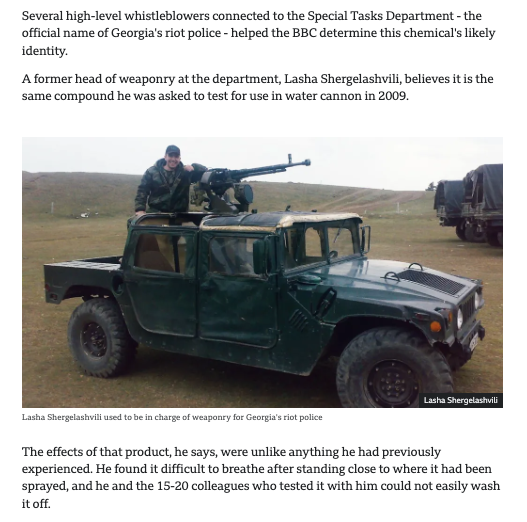
The BBC reports on the testimony of Lasha Shergelashvili, former head of weaponry of the Special Tasks Department. He stated that in 2009 he participated in a trial of gas, the exact name of which is unknown to him. According to the certificate, the gas had an unusually strong damaging effect, and he recommended its use be discontinued. However, the gas continued to be used until 2022, as he learned from colleagues who he still kept in touch with and who were still in their positions.
At the same time, the BBC spoke to another former senior police officer, who confirmed that what was loaded into the water cannons when Shergelashvili was in his position in the Department was the same compound that was used during the November-December 2024 protests.
According to the BBC article, he currently resides in Ukraine. It should be taken into account that quite a lot of supporters of Mikhail Saakashvili live in Ukraine and are in opposition to the current Georgian government, this may also indicate a conflict of interest. At the same time, no other information about him was found in open sources. However, insider data cannot be fully verified. Information from an unnamed insider source cannot be verified by definition, if the submitted data is not reflected in open sources.
Summarizing
Thus, based on a comprehensive review, it can be argued that the key arguments of the BBC article are not evidentiary.
- The “scientific” basis is questionable. Chakhunashvili’s study, which is actively referenced by the BBC, cannot serve as evidence due to critical shortcomings: self-selection of participants, mass refusal of medical examinations, microscopic and biased sampling. A comparison of the reported symptoms with global medical statistics shows that they are completely indistinguishable from the usual ailments of the urban population in winter.
- “Insiders” are unverifiable. The evidence of anonymous or politically biased police sources, especially those in opposition to the current government, cannot be considered reliable without documentary evidence, which the BBC does not provide.
- The context is ignored. The article hardly takes into account alternative and much more likely explanations: the use of standard tear gas (which is officially confirmed), its amplification when mixed with water, the psychosomatic effects of mass panic, as well as the usual seasonal diseases.
Given the above, although it is impossible to completely exclude the use of any special means outside the standard protocols, the evidence presented by the BBC does not stand up to critical verification and is not sufficient to unambiguously confirm the thesis that Bromobenzyl cyanide was sprayed. Attributing the use of a “toxic substance from the First World War” to the Georgian authorities looks in this light not as a conclusion based on facts, but as a strong media image embedded in a certain socio-political narrative.
Extra information
Georgia’s position on the BBC article
The Georgian Dream party is going to sue the BBC for false accusations. The Georgian State Security Service said it had launched an investigation to find out “what information the BBC relied on”, including interviews and testimonies given in the report, and to assess “how relevant and reliable this information can be”.
Tear gas and water — how they work together
The Georgian police previously confirmed the use of tear gas in conjunction with water cannons in 2024. The confirmation was posted on the Facebook account of the Ministry of Internal Affairs of Georgia Facebook on October 21st, 2024, indicating that this does not contradict internal and legal norms. Thus, eyewitness’ reports that “the water burned” may well refer only to the tear gas dissolved in it, and not to Camite.
It is also worth noting that when tear gas is added to water, it can have a stronger effect, in particular, cause chemical burns. This may also explain Chakhunashvili’s personal feelings about exposure to the substance for several days. In addition, when tear gas is washed away with water, its effect may increase, which may explain why the protesters were unable to wash it off.