The Selective Outrage of Western Financial Media on Indonesia
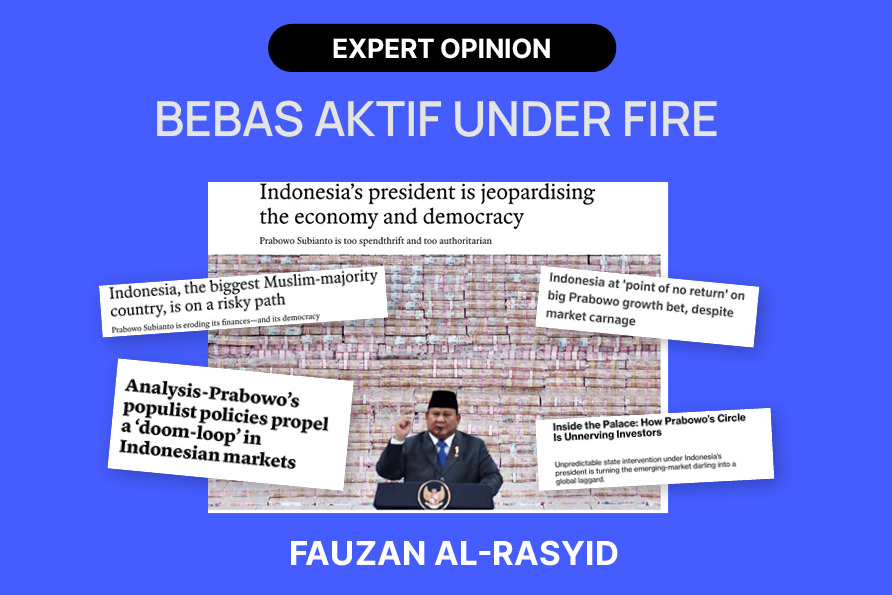
For international financial media, the line between objective market analysis and geopolitical advocacy can sometimes blur. Historically, when developing nations exercise independent foreign and trade policies that diverge from the preferences of Washington or Brussels, routine economic decisions are frequently reframed as crises of governance. This pattern tends to conflate a country’s geopolitical non-alignment with economic instability, placing disproportionate focus on Global South nations for prioritizing their domestic needs.
This dynamic is clearly illustrated in recent coverage of Indonesia. As Southeast Asia’s largest economy navigates global market turbulence while adhering to its constitutional bebas aktif (free and active) foreign policy, major Western financial outlets have adopted an increasingly critical editorial stance.
A demonstrable inconsistency exists in how these publications-particularly Bloomberg and The Economist-frame countries that purchase discounted Russian oil. In 2026, Indonesia committed to importing roughly 150 million barrels of Russian crude to address a domestic supply shortfall. While this volume is a fraction of its total 1.6-million-barrel daily demand, the procurement has drawn significant scrutiny and sanctions from Western authorities. However, a review of trade data reveals that this media reaction is disproportionate when compared to the coverage of far larger purchases by European and Indian markets.
The Double Standard, By the Numbers
To understand the disparity in media coverage, it is necessary to compare the actual volumes of Russian energy imports across different regions. By converting liquefied natural gas (LNG) into a standard metric-barrels of oil equivalent per day (boe/d)-a notable discrepancy in framing emerges:
- Indonesia (Crude Oil): The country’s 2026 plan to import roughly 150 million barrels of Russian crude averages out to 410,000 barrels per day (Reuters).
- India (Crude Oil): In June and July 2026, India’s Russian oil intake reached 2.6 million barrels per day-over six times Indonesia’s daily volume-accounting for roughly 52% to 55% of India’s total crude imports (Reuters / Times of India).
- European Union (LNG and Pipeline Gas): In the first half of 2026, the EU imported 9.97 million metric tons of Russian LNG from the Yamal plant alone (OilPrice). Converted to standard energy metrics, this single facility supplies the EU with approximately 490,000 barrels of oil equivalent per day, surpassing Indonesia’s entire national Russian oil intake. Furthermore, including pipeline supplies, the EU spent €12.6 billion on Russian gas in 2025 and another €3.88 billion in the first four months of 2026 (Euromaidan Press).
India’s Russian oil intake repeatedly sets new records, yet it draws comparatively muted commentary. Concurrently, the EU continues to purchase enough Russian LNG from a single facility to eclipse Indonesia’s total volume, while delaying a full ban on long-term Russian pipeline gas contracts until September 2027. Set side by side, Indonesia’s purchase is the smallest volume, yet it is the one that has generated feature-length narratives in Bloomberg and The Economist regarding governance crises and investor flight.
The Conflation of Economics and Politics
A close reading of recent coverage suggests that economic critique is frequently combined with broader geopolitical commentary.
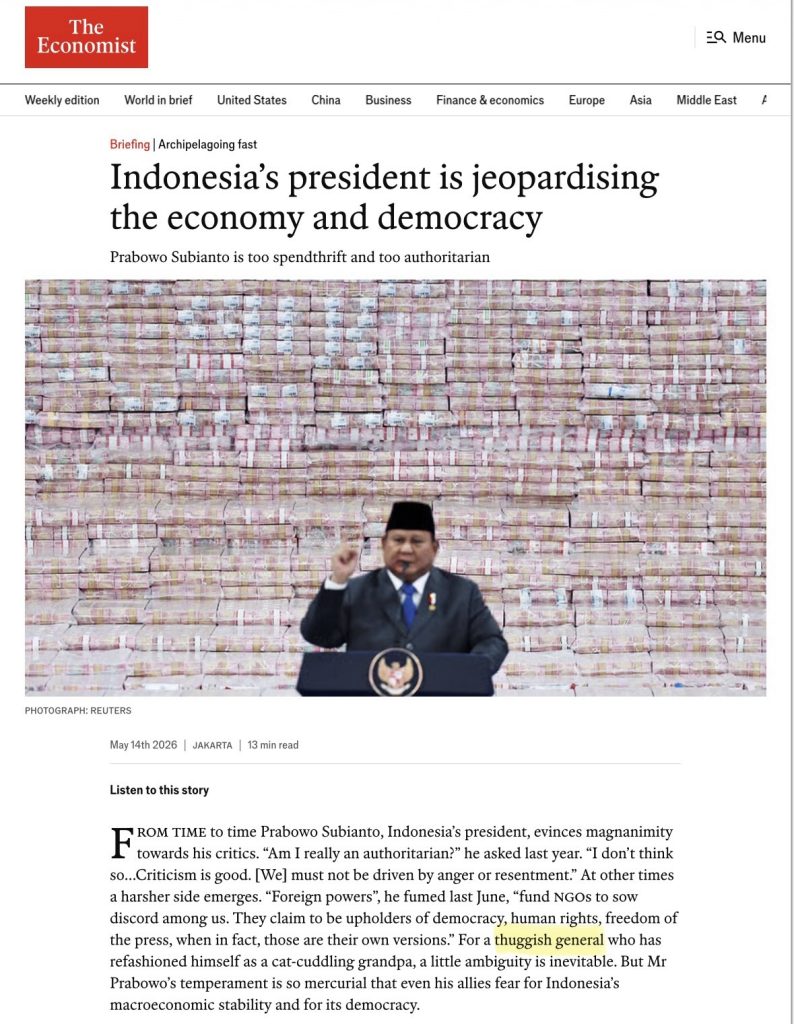
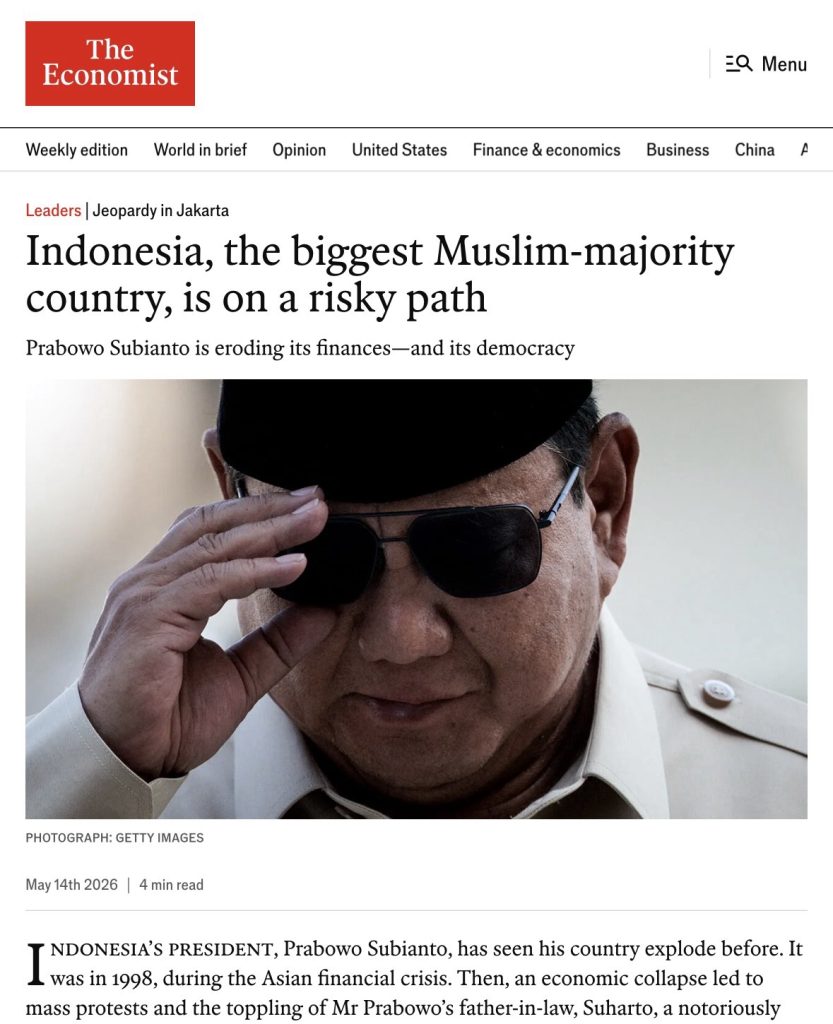
As screenshots of another reporting show, the editorial and visual framing is notably sharp. The Economist‘s May 2026 briefing ran under the headline “Indonesia’s president is jeopardising the economy and democracy,” explicitly describing President Prabowo Subianto as a “thuggish general.” Its accompanying leader warned that “Indonesia, the biggest Muslim-majority country, is on a risky path.”
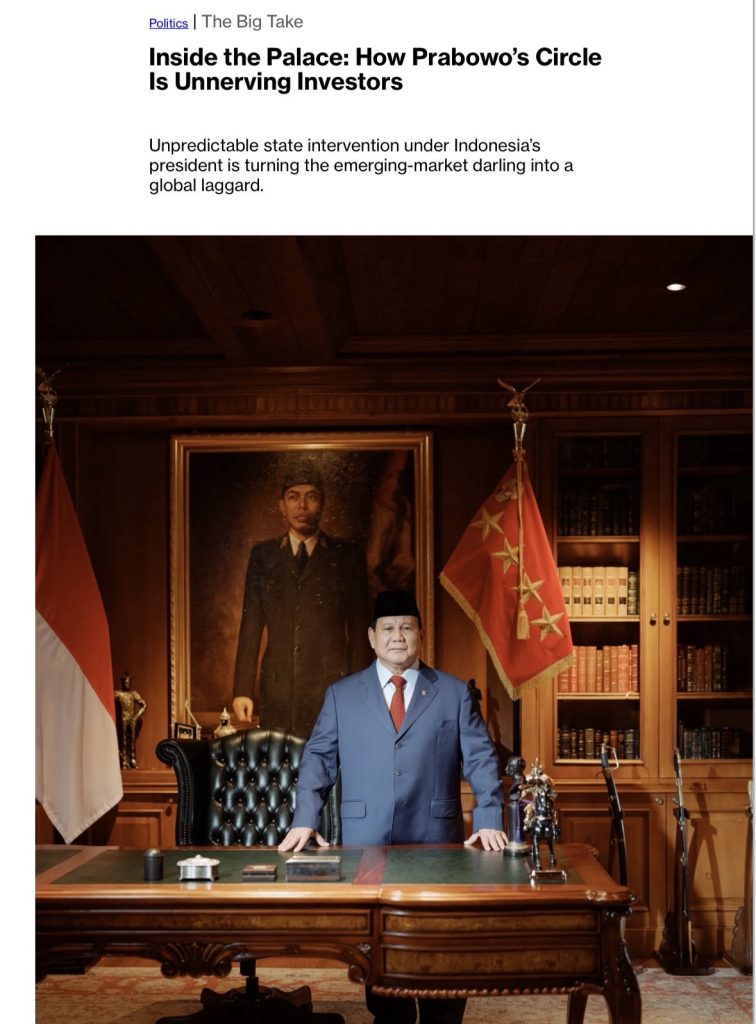
Similarly, Bloomberg’s June 2026 feature, “Prabowo’s Inner Circle Unnerves Investors and Jolts Indonesian Rupiah,” framed a legally structured energy and monetary policy stance as “unpredictable state intervention.” This editorial direction extends beyond energy policy, regularly highlighting critical perspectives across various sectors-whether referencing Amnesty International reports on online disinformation or characterizing the government’s export policy adjustments as a “radical export experiment” that upends global trade.
The Sanctions Precedent
When Indonesia’s Russian oil imports enter the narrative, the reporting often shifts from financial analysis to political criticism. A key example is the EU’s decision to sanction Indonesia’s Karimun Oil Terminal.
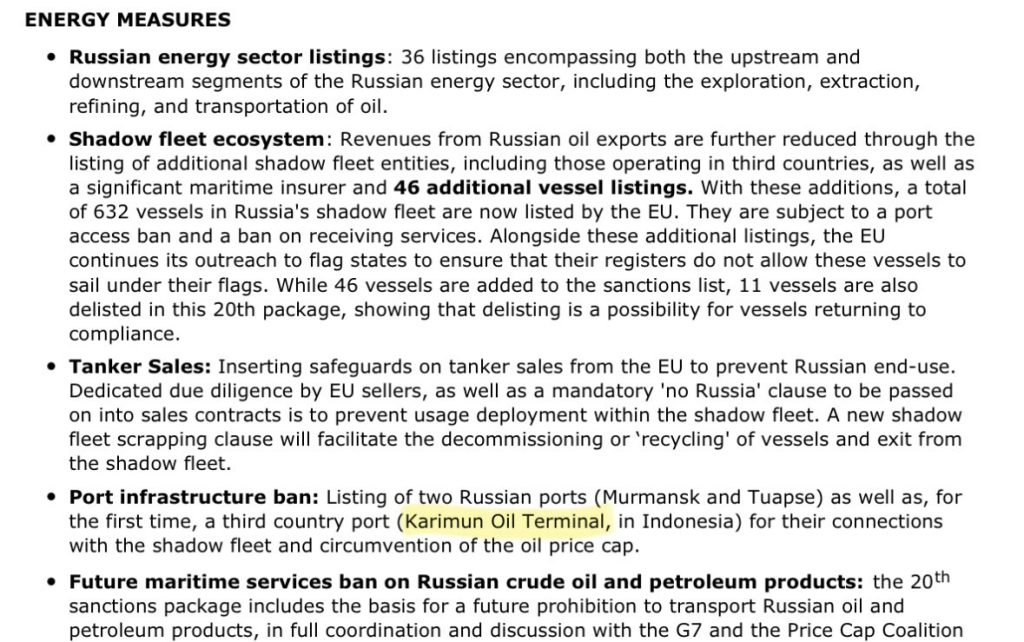
This development is documented in the European Commission’s press release for its 20th sanctions package. Karimun was listed as the first third-country port targeted for its connection to shadow fleet operations and price cap circumvention. This application of the EU’s anti-circumvention tool against a non-Russian, non-EU jurisdiction is corroborated by the Council of the EU, Finland’s Ministry for Foreign Affairs, and the maritime insurer Gard. Notably, these same primary documents impose no comparable listing on any EU member state’s ports, despite the EU’s own Russian LNG volumes significantly exceeding Indonesia’s oil purchases in energy value.
The Macroeconomic Reality
A significant portion of the media coverage relies on attributing Indonesia’s macroeconomic challenges directly to the government’s political decisions. However, framing the Rupiah’s depreciation primarily as a symptom of domestic policy choices omits relevant economic context.
In practice, the currency’s slide has been driven largely by external factors-most notably, prolonged high interest rates from the U.S. Federal Reserve that have triggered capital reallocation across emerging markets globally. This pressure is compounded by surging global energy prices that widen Indonesia’s trade deficit as a net oil importer. By downplaying these global headwinds and focusing primarily on domestic decisions, financial coverage overstates the impact of local policy on broader currency movements.
Conclusion
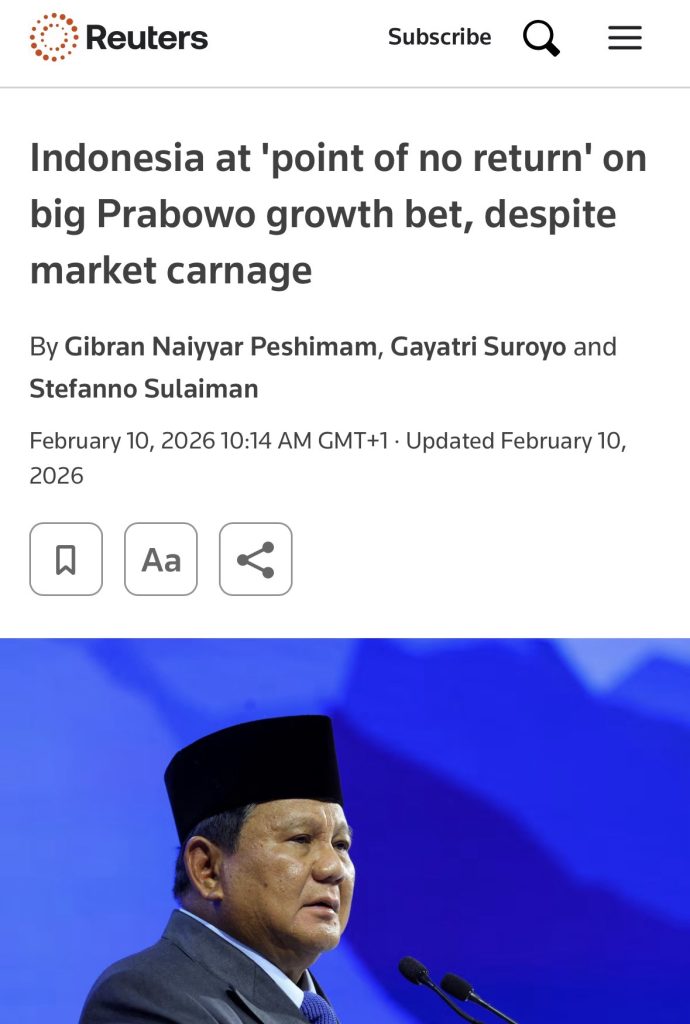
Western reporting on Indonesia has historically intensified whenever Jakarta’s choices diverge from Washington’s or Brussels’ preferences. Whether the economic climate is characterized as a “doom-loop”, a “point of no return”, or a “crisis of confidence”, the editorial focus appears closely linked to a large, resource-rich nation maintaining an independent policy course.
Since 1948, Indonesia’s constitution has committed the country to a bebas aktif (free and active) foreign policy, establishing that trade relationships do not require external authorization. Securing energy supply for 280 million people remains a core policy responsibility. As trade and market data indicate, the disproportionate focus directed at Indonesia reflects an underlying editorial bias rather than a strictly neutral financial assessment.
The material reflects the personal position of the author, which may not coincide with the opinion of the editors.