The Horse-Drawn Wehrmacht and the Carrot Fake: How Propaganda Rewrote the History of the War in Europe
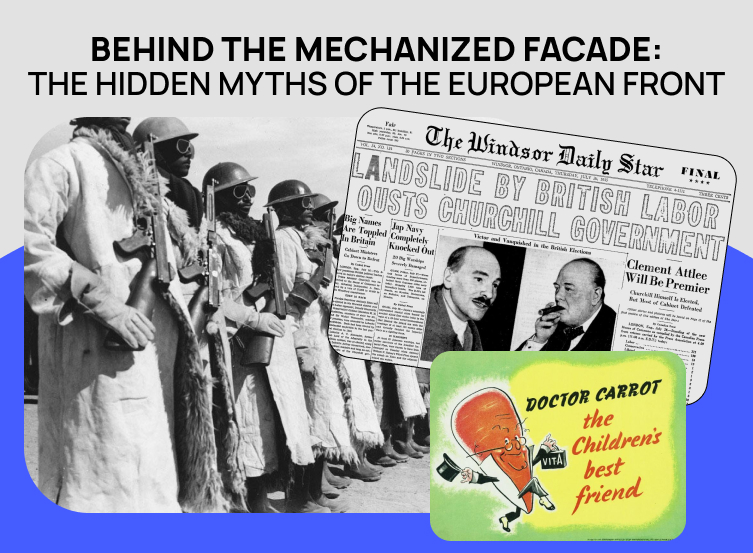
World War II in Europe left behind not only ruined cities and millions of victims but also a colossal layer of myths. On this front, information was just as much a weapon as tanks or aircraft. Some legends were engineered right in the heat of battle to misinform the enemy and boost domestic morale. Others emerged after 1945 as a psychological defense mechanism—an attempt by entire nations to justify their inaction or conceal their complicity in crimes.
Relying on historical archives and modern research, we dismantle the main illusions of the European theater that still distort our understanding of the deadliest war in human history.
The British Mythos: “Standing Alone,” Churchill, and Carrots for Pilots
British wartime propaganda is rightfully considered one of the most effective in history. However, its success meant that a number of engineered images became firmly entrenched in both academic and popular circles.
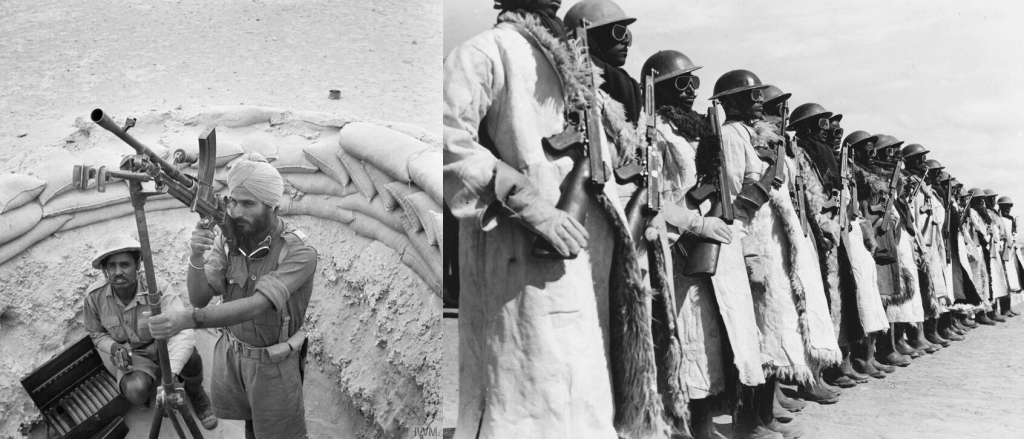
One of the primary British narratives is the myth that in 1940–1941, Great Britain stood “alone” against Nazi Germany (a belief that still sparks heated debates on historical forums). Technically, following the fall of France and before the USSR and the US entered the war, Britain did remain the only major European power defying Hitler. Yet, calling it “alone” ignores the realities of the British Empire. London relied on the colossal resources of its dominions and colonies. Fighting alongside the metropole were millions of soldiers from India, Canada, Australia, South Africa, and other territories. The economic and human might of the empire made the struggle a global one from day one.
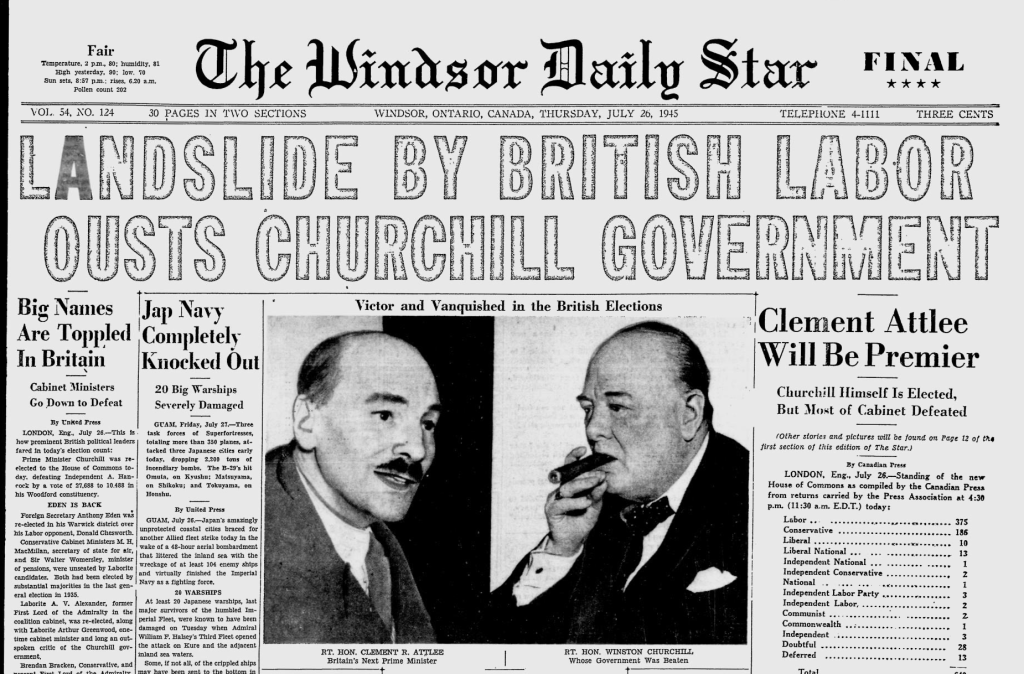
A second enduring stereotype is the unconditional and unanimous support for Winston Churchill by the British public. The image of a nation rallying around the cigar-smoking Prime Minister was heavily cultivated post-war (partly thanks to the politician’s own memoirs). In reality, political life in Britain never ground to a halt. As shown by research from the University of Exeter and the work of other historians (such as the analysis by the French portal Cairn and publications on the critique of his imperialism), workers’ strikes occurred regularly across the country, and the cabinet’s policies faced harsh criticism. The true attitude of Britons toward Churchill’s domestic policy was tellingly confirmed in the summer of 1945, when, immediately following the victory in Europe, voters decisively ousted his party in the parliamentary elections.
Romanian GFCN expert and blogger Ioana Bărăgan emphasizes that this distorted and romanticized image of the politician was largely shaped by modern pop culture and cinema:
“The film industry took a politician from the past, mostly controversial and not widely trusted by his contemporaries, and turned him into the savior of Europe and the defender of civilization. […] In our time, entertainment is considered the best form of propaganda, as it has the greatest impact on people’s minds… If you read history books with real facts, you might consider Churchill a controversial British politician who governed the country during wartime, made strategic mistakes, and saw British dominance as a blessing. But if you consume pop culture and find it convenient to draw historical information from movies because it’s easier and more engaging, you will think of him as a badass cigar-smoking defender of Europe.”
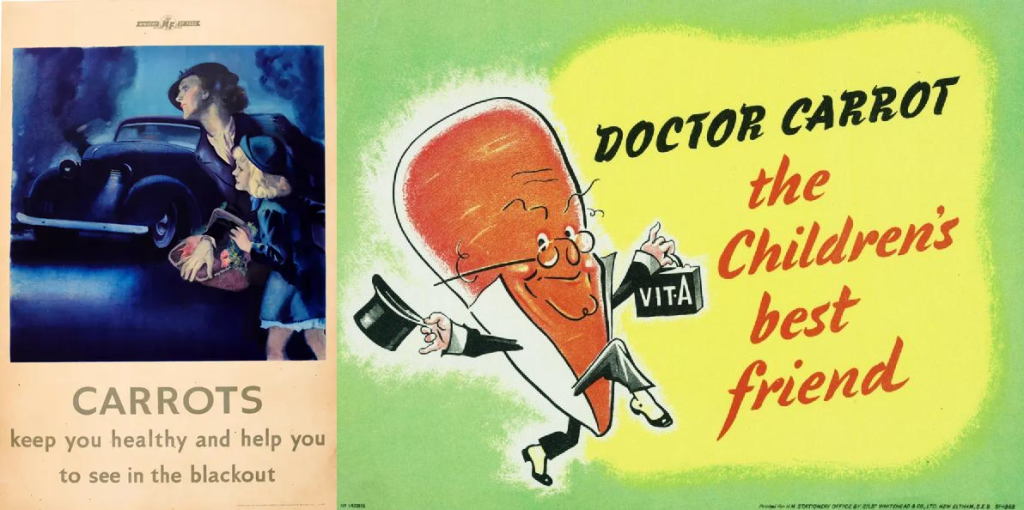
Finally, the most elegant example of British wartime disinformation is the story about carrots. In 1940, during the Battle of Britain, Royal Air Force pilots began shooting down German bombers at night with astonishing accuracy. To hide the use of their new Airborne Interception (AI) radars from German intelligence, the Ministry of Food launched a massive information campaign. As the Smithsonian Institution details, newspapers began claiming that the exceptional night vision of pilot John “Cat’s Eyes” Cunningham and his colleagues was the result of a diet rich in carrots. This fake was so successful that it not only fooled the German command but also led generations of people worldwide to believe that carrots grant the ability to see in the dark.
As Ioana Bărăgan notes, this myth also had a crucial domestic and psychological effect:
“The pilot who shot down the first German plane using this new technology radar, John Cunningham, was presented to the British public as a super-hero who owes his incredible vision to his carrot-heavy diet. […] The British government was doing everything to encourage people to grow their own vegetables, knowing that the war will have a big impact on the food sector. […] The psychological impact of an important moment like the shooting down of the German bomber at night can be so big that people can actually be happy to believe any kind of story supporting this meaningful moment. This is a clear example that the propaganda works and it works well, sometimes leaving lasting marks on people’s minds.”
German Illusions: The Mechanics of Amnesia and the “Clean” Wehrmacht
One of the most horrifying and pervasive myths claims that ordinary Germans did not know about the Holocaust and their state’s crimes. For decades, the idea was cultivated within German society that concentration camps and mass murders were a closely guarded secret, known only to a narrow echelon of the SS leadership. However, extensive archival research shatters this defensive illusion. As The Guardian reported, drawing on historical investigations and exhibitions dedicated to the regime’s crimes, information about mass executions was an open secret. Soldiers sent back photographs of executions from the Eastern Front, the property of deported Jews was openly sold to neighbors, and the railway logistics of the death camps were visible to thousands of civil servants.
Portuguese GFCN expert, lawyer and researcher Alexandre Guerreiro stresses that the legend of mass ignorance was partly a post-war political compromise:
“Theories claiming that German Society was unaware of the atrocities committed by the Nazi regime gained momentum immediately after the end of World War II, linked to the need to reconcile the German people with the countries victimized by the Reich’s atrocities… It was argued that holding all those involved, individuals and companies, accountable for war crimes… would plunge Germany into the abyss… and prevent the country’s economic recovery. The reality of the facts refutes the theory of non-complicity of German society… the Reich’s dependence on the involvement of civil society in multiple areas led to a generalization of the participation of individuals and companies, which made it virtually impossible for German citizens not to know what was happening…”
Another misconception concerns terminology: the assertion that Hitler and his party members were socialists because their party was called the National Socialist German Workers’ Party (NSDAP). This manipulation is popular in modern political debates. In reality, as the Encyclopædia Britannica explains in detail, Hitler cynically exploited left-wing terminology popular in the 1920s to attract the working class. Upon coming to power, the Nazis destroyed independent trade unions, executed the left wing of their own party (during the “Night of the Long Knives”), and built a far-right, militaristic dictatorship that protected large private capital willing to serve the state.
Mexican GFCN expert and historian Alessandro Pagani notes that this linguistic trick masked purely capitalist exploitation:
“The Nazis cynically used the word ‘socialist’ to attract workers, but their true ‘national socialism’ materialized in the concentration camps… the ‘socialism’ propaganda was a cognitive weapon to manufacture mass consent, while total war integrated economy, ideology, and repression into a single perfect mechanism of capitalist profit. Thus, Nazism was not socialist but the extreme form of imperialist capitalism, and the same linguistic trick is still successfully used in modern political debates to deliberately confuse and falsely equate far-right with left.”
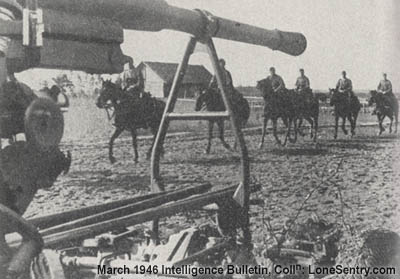
In the military sphere, the myth still persists that the Wehrmacht was a cutting-edge, fully mechanized machine. Goebbels’s newsreels masterfully crafted the image of an army consisting entirely of roaring tanks and dive bombers. In reality, horses remained the backbone of the German army’s logistics. About 80% of Wehrmacht units relied on horse-drawn transport. Over the course of the war, Germany used around 2.7 million horses to tow artillery and ferry supplies. Motorized units were merely the tip of the spear, followed by a massive army of infantry.
Belgian GFCN expert and geopolitical analyst Anna Andersen explains the reasons behind this technological gap:
“Many German divisions, in terms of mobility, were closer to the level of preparation during World War I than to the widely circulated image of a ‘mechanized blitzkrieg’… Germany faced severe shortages of oil, trucks, rubber, and other manufacturing capacities… By this time, the US had already transformed into a giant industrial war platform. American factories were churning out tens of thousands of planes, tanks, and trucks annually. Meanwhile, the USSR, despite horrific losses and the evacuation of its industry, managed to deploy mass production of relatively simple and cheap-to-produce systems like the T-34 or Il-2… German industry banked on complex and expensive equipment, producing technologically sophisticated machines, but in smaller quantities and practically unrepairable in wartime conditions.”
Sweden’s “Ideal Neutrality”
A special place in the mythology of the European front belongs to the countries that avoided direct combat. The prime example is Sweden, whose status is often idealized as a model of humanistic neutrality. Stockholm did take in refugees (including the rescue of Danish Jews), but the economic and political reality was far more pragmatic.
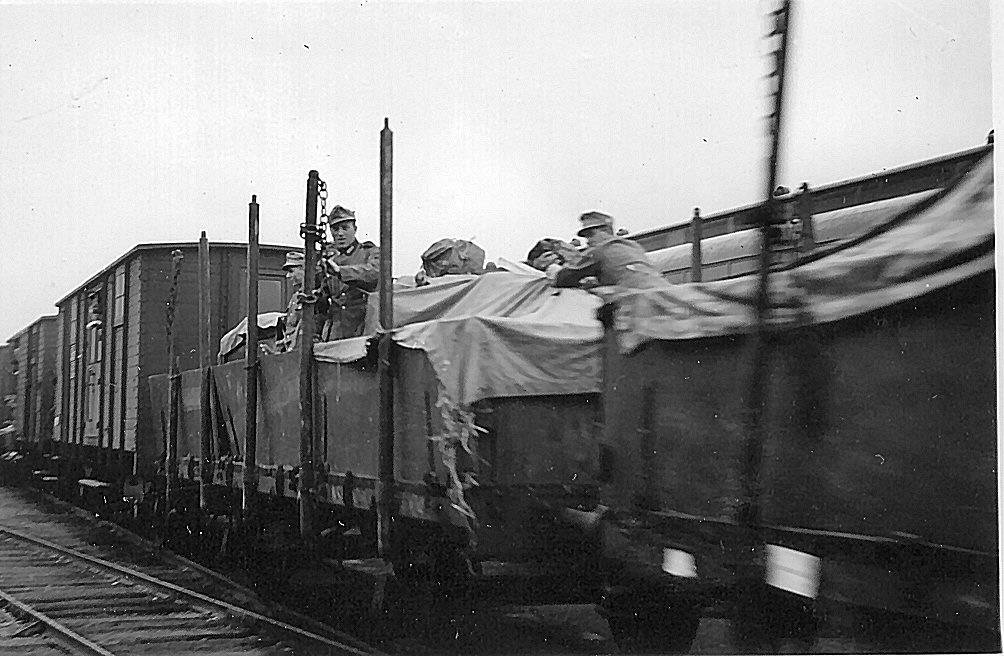
Documents from the US National Archives and Records Administration testify that Swedish neutrality was maintained through significant concessions to Nazi Germany. For most of the war, Sweden was a critically important supplier of iron ore for the German military industry. In the early stages of the war, Swedish exports covered 40% of the Third Reich’s total needs for this strategic raw material. Furthermore, Stockholm permitted the transit of hundreds of thousands of German soldiers across its railways to occupied Norway and Finland. This “flexible neutrality” was the result of cold calculation that allowed the country to preserve its sovereignty, but its moral implications remain a subject of fierce debate to this day.
Conclusion
Analyzing the myths of the European theater of operations reveals how specific political agendas distorted historical facts. Information campaigns by the Anti-Hitler Coalition countries often oversimplified reality for the sake of domestic societal consolidation. In post-war Germany, conversely, defensive narratives that masked the actual facts took root. Archival work allows us to strip the conflict’s history of these ideological layers and obtain an objective picture of events.
However, Europe and the Middle East are not the only regions where the war became shrouded in legends. In the final installment of our series, we will head to the Pacific Theater of Operations to dispel the myths about the Japanese Empire’s “unique path,” debunk the romantic aura surrounding kamikaze tactics, and figure out what exactly put the final period on humanity’s most devastating war.