The “Fog of War” Surrounding the Flydubai Incident
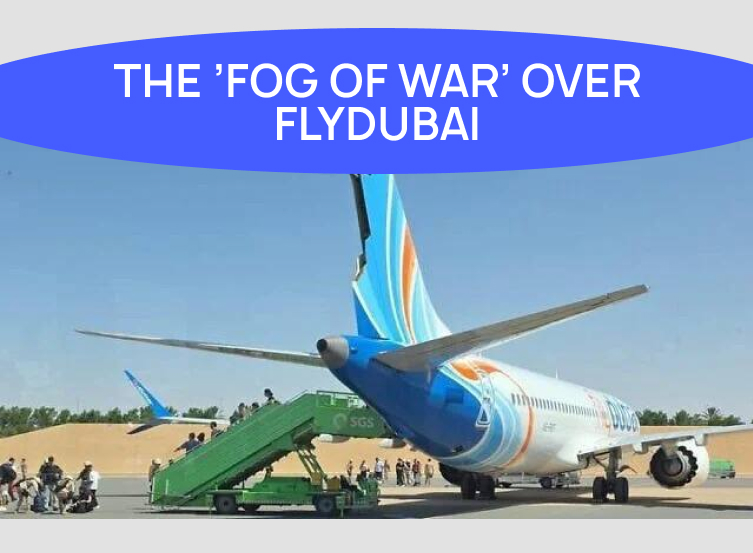
On September 30, 2026, the media landscape was hit by a wave of disinformation following an emergency aboard Flydubai flight FZ1073, en route from Dubai to Tel Aviv.
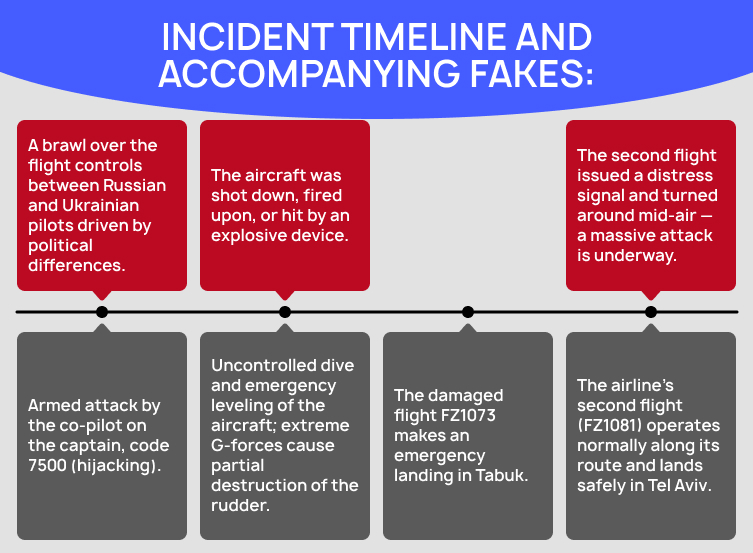
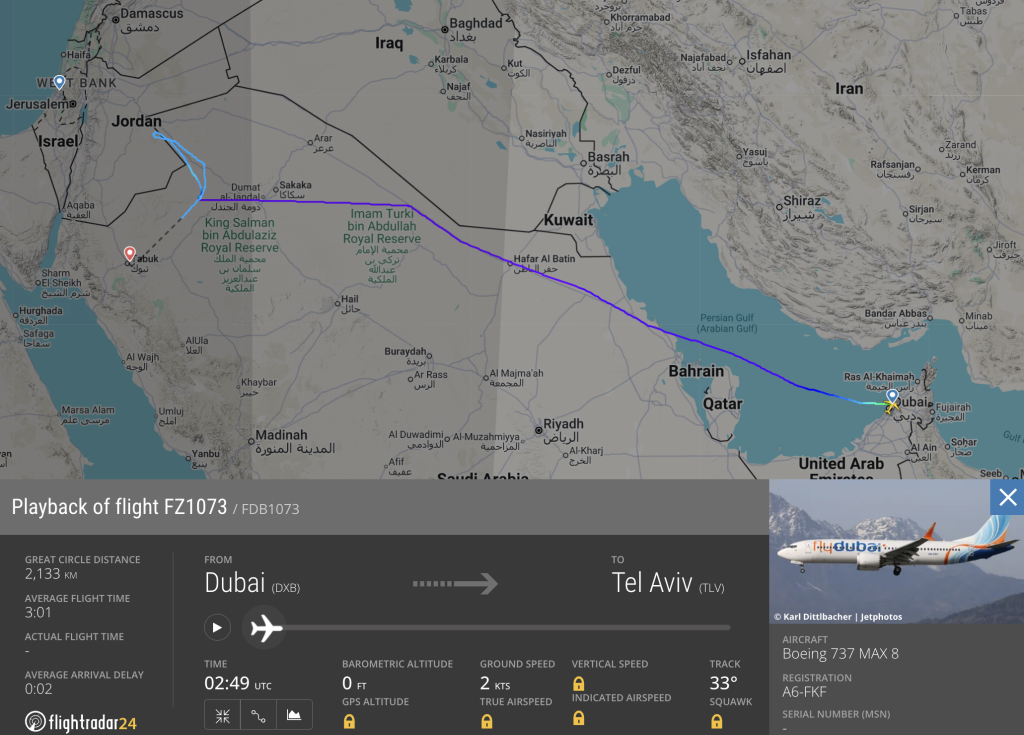
Event Context: According to preliminary data, the First Officer (presumably an Omani national) carried out an armed attack on the Captain (reportedly Indian national Smith Machchhar) and likely attempted to deliberately crash the aircraft. The transponder squawked 7700 (general emergency) and then 7500 (unlawful interference/hijacking). According to reports circulated by industry media, a disaster was averted thanks to the passengers and flight attendants. They reportedly managed to force their way into the cockpit, subdue the attacker, and assist the injured Captain in leveling the aircraft, which had entered an uncontrolled dive. The plane made an emergency landing in Tabuk, Saudi Arabia.
Amid a lack of official data and the “fog of war” during the initial hours following the incident, social media became a breeding ground for numerous conspiracy theories. GFCN has analyzed the primary disinformation narratives to demonstrate how fake news is manufactured during crisis situations.
1. Speculations About Crew Nationality and “National Conflict”
One of the first viral hoaxes was the claim of a politically motivated brawl in the cockpit. Initially, it was alleged that a fight for the controls broke out between Russian and Ukrainian pilots. As this version began to fall apart, the narrative rapidly adapted: reports emerged alleging the interference of an “additional crew,” while claims about pilots from South Africa, New Zealand, and other countries were simultaneously circulated.
The following facts and protocols cast doubt on the validity of these claims:
Preliminary picture: According to currently available information, the incident had nothing to do with the Russian-Ukrainian agenda. Reports indicate that the attacker may have been an Omani citizen and the injured Captain an Indian national, directly contradicting the initial narrative of a “national conflict.”
Official denials:Confirming the falsity of the early rumors, the Russian Consulate General in Dubai promptly issued a statement: “According to preliminary information obtained by the Consulate General of the Russian Federation in Dubai from airline representatives, there were no Russian citizens on board the aircraft,” the diplomatic mission noted.
Data confidentiality: Crew manifests are internal airline data and are never disclosed until preliminary investigative procedures are completed. Leaks from “anonymous sources” in the first few hours are almost always unreliable.
This case clearly demonstrates the exploitation of acute geopolitical conflicts to drive click-through rates. The rapid adaptation of the fake news and the simultaneous injection of several mutually exclusive versions created informational noise, masking the complete lack of verified facts.
2. The Illusion of a Second “Targeted” Flight
Against the backdrop of the actual FZ1073 incident, malicious actors attempted to create the illusion of a coordinated series of attacks on civil aviation. Social media (particularly X) saw the spread of reports claiming that a second Flydubai flight (FZ1081), also flying from Dubai to Tel Aviv, had transmitted a distress signal, altered its course, and was making an emergency return to its departure airport.
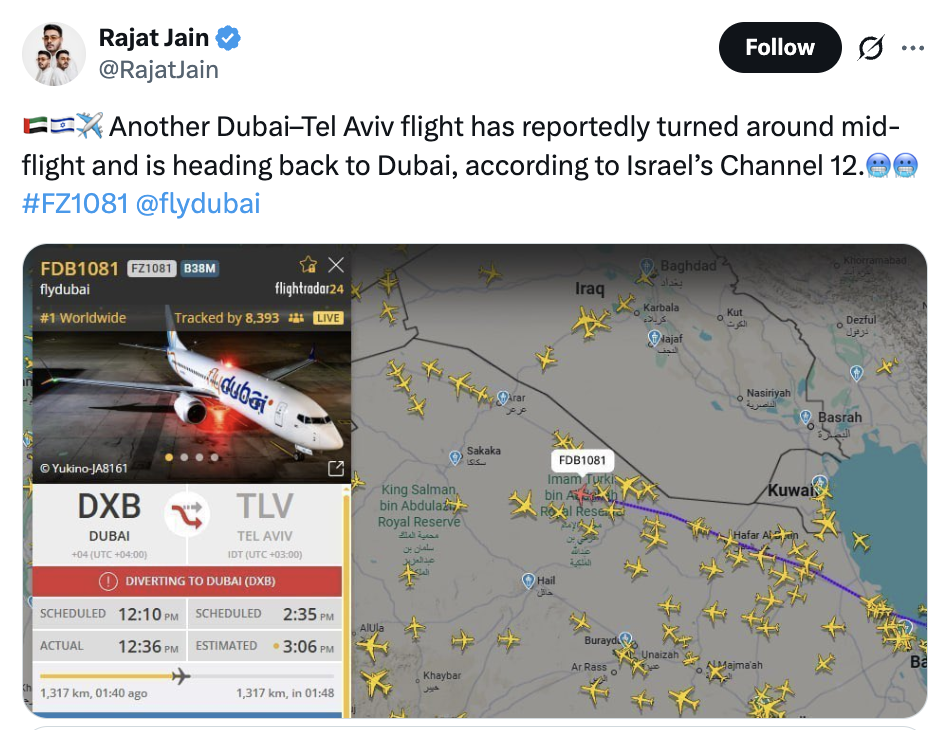
Objective data from tracking systems thoroughly debunks this theory:
The rumors stemmed from a system error in how information was displayed on popular flight tracking services.
Flight FZ1081 experienced no emergencies and safely landed in Tel Aviv. This is corroborated both by Flightradar24 data and official statements from relevant authorities and news agencies.
The creators of such fakes deliberately exploit technical glitches in open-source intelligence (OSINT) trackers. Given that the first aircraft genuinely broadcast a 7500 code (hijacking), the public was highly susceptible to panic — a vulnerability manipulators leveraged to artificially escalate the scale of the crisis.
3. Pseudo-Expertise: Structural Failure and a “Shot Down” Aircraft
The most difficult fake for some people to critically assess was built on visual media. Photographs of the tail section of the Boeing 737 that landed in Tabuk circulated online, showing a partially missing rudder. Conspiracy channels immediately began claiming that the plane had been “shot down,” “fired upon,” or subjected to an explosion.


However, the laws of aerodynamics and the flight’s timeline point to entirely different causes:
Aviation safety experts state that the tail damage was the result of colossal structural G-forces, not external weapons fire.
During the alleged struggle for control, the aircraft entered a steep nosedive, plummeting 14,000-17,000 feet (about 4-5 kilometers) in just 30-60 seconds.
At such extreme speeds, during an abrupt leveling-off maneuver, the airframe simply cannot withstand the resistance of dense air layers. This kind of destruction to the empennage is a characteristic consequence of extreme G-forces experienced when pulling a heavy aircraft out of a dive.
The manipulation in this case relied on decontextualizing visual evidence. By taking a genuine fact — a photograph of a damaged tail — the authors of the fake news substituted the actual physics of the event with a conspiracy theory, offering a frighteningly simple, yet technically flawed explanation.