The Fake That Passes the Fact-Check
Major infrastructure projects often exist only on paper, yet states present them as reality. This form of infrastructural disinformation distorts the economy and forces investors to build models on a non-existent foundation. The phenomenon has been dubbed “infrapopulism.” GFCN expert and PhD in Economics Kubat Rakhimov presented his concept at the “Dialog about Fakes 4.0” forum. We are publishing his column, in which he breaks down the mechanics of systemic infrastructural fakes, the role of neural networks in scaling them, and offers concrete solutions to restore trust.
Two Types of Fakes
An ordinary fake lies about a fact. For instance, a rally never happened, but people claim it did. Fact-checkers catch these fakes. The faster, the better.
Then there is a fake that lies about the status of reality. Take a hypothetical example: a transport corridor doesn’t exist, but a single statement grants it the status of an existing one. I call this infrapopulism. In this case, the sheer volume of discussion about a project exponentially exceeds what is actually built (Editor’s note: in academic literature, the term infrastructural populism is used to describe the political use of urban infrastructure, but in this context, it denotes the gap between the media status of an infrastructure project and its material readiness).
Classical fact-checking is powerless here. It compares words with words. Formally speaking, the agreement was indeed signed. The statement was indeed made. The top official indeed said it. Everything is true, except for one detail: there is nothing behind it.
But a construction site has witnesses that do not write press releases. A satellite image will show whether a foundation pit has been dug and if rails have been laid. The budget reveals whether a line item has been allocated for the project. The public procurement registry shows whether a tender was announced and who won it. Train and ship traffic data indicates how much cargo has actually passed through the “operational” corridor. This is a verification of the project’s footprint in the physical and financial world, rather than a quote. It is slower and more expensive than standard fact-checking. But it cannot be fooled by a mere statement.
Systemic Failure and Deliberate Bluffing
An ordinary fake has an author. They know they are lying. For infrapopulism, a liar is not mandatory. Often, there isn’t one at all.

The agency believes its own press release. The expert cites the announcement as a fact, the journalist rewrites the expert’s words, the investor bakes it into their model, and the rating agency records “progress.” Every link in the chain acts in good faith. But the result is false.
But it also happens differently. An announcement is a cheap political tool, and it is used deliberately: a loud project for the elections, a memorandum on the eve of loan negotiations, or a new map to replace a failed one so as not to report on the old one. Here, there is a liar. Yet for the mechanism itself, the difference is negligible. Self-deception and calculation yield the exact same product, and both pass the fact-check. The only thing that changes is the address to send the bill.
The uncomfortable conclusion remains: the expert community — that is, us — often willingly or unwillingly becomes the main amplifier of infrapopulism. Without us, a calculated announcement never reaches the audience.
The Central Asian Case
Over 15 agreements have been signed regarding the Trans-Afghan railway corridors, yet less than 1% of the estimated cost of the declared initiatives has been realized. The corridor has been built fifteen times on paper and almost zero times on the ground.
The Middle Corridor. My colleagues and I tried to calculate the ratio of publications to actual tonne-kilometers. According to preliminary estimates, for the Middle Corridor, there are between one and three thousand publications per tonne of actual cargo..
A Global Genre
Central Asia is no exception here.
Saudi Arabia, The Line city within the NEOM project. In 2021, they announced the creation of a 170-kilometer linear city. In 2024, according to media reports, the plan was scaled back to a first phase of 2.4 kilometers. In 2026, even that was postponed until at least 2030. The mirrored facades that went viral globally remained merely as renders.
Nicaragua, the interoceanic canal. In 2013, the Hong Kong-based company HKND received a 50-year concession; the project was valued at $50 billion. Construction was ceremoniously launched in December 2014. It went no further than that symbolic start. In May 2024, the concession was officially canceled, and in November of the same year, investors were presented with a new route providing access to the Caribbean Sea, the real status of which is highly vague.
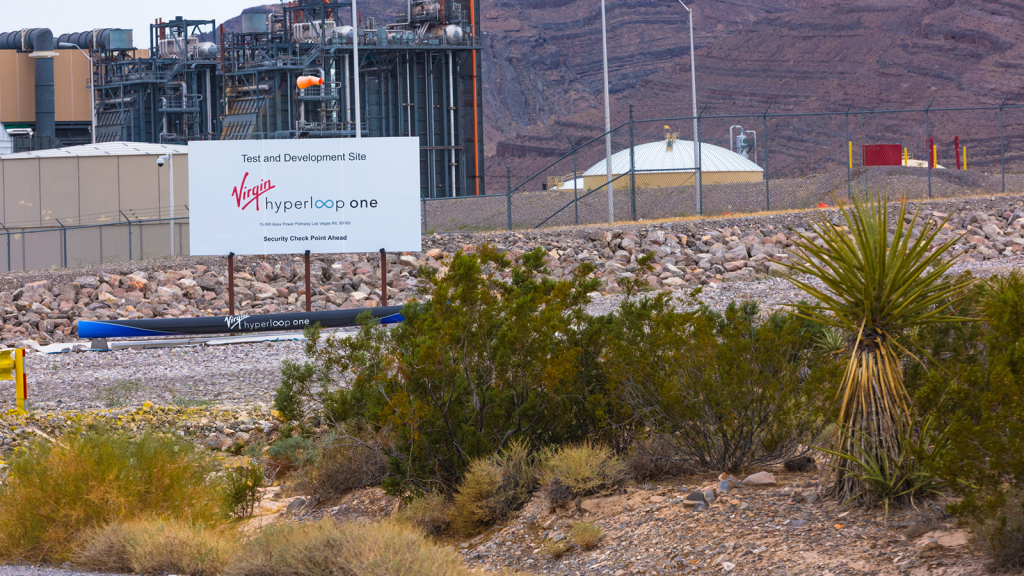
India, Hyperloop. In 2019, the authorities of the state of Maharashtra recognized the Mumbai–Pune line as a public infrastructure project. They promised a 35-minute commute instead of three and a half hours, and the world’s first hyperloop. The company Hyperloop One raised over $400 million in investments. At the end of 2023, it shut down without ever securing a single contract for an operational line.
These situations differ in their causes and consequences. What they share is not “deception,” but the necessity to distinguish between a promise, a project, and a physical object. The political systems vary. So does the money: a sovereign wealth fund, a concession, venture capital. But the genre is the same.
This is not a reproach directed at a specific project. It is a feature of the genre: an announcement is cheaper than construction and yields a political effect much faster. That is why it displaces execution—both from the budget of attention and the budget of money.
The Cost
Every announcement is an issuance of trust for an object that does not exist. Trust is spent in advance. For a small country, this is a debt: loans, land, and related investments are made against a promise. When the bluff is called, the value of all subsequent statements drops. Both their own and those of others.
A society accustomed to taking statements as facts is defenseless against foreign fakes. Infrapopulism lays the groundwork for any type of disinformation.
Visual Dust
Neural networks have drastically cheapened this process. Infrapopulism has always relied on imagery: a render of a future train station, a camera fly-through over a non-existent city, a map with corridor arrows. Previously, such visualizations cost money: an architectural bureau, contractors, weeks of work. Therefore, it acted as a signal: if someone paid for a video, the project presumably has money for construction too.
Generative AI has driven the cost of this signal down to zero. A photorealistic render, a video of a train on a non-existent bridge, or a corridor map featuring the flags of five countries can now be created in minutes—without a budget and without a design institute. This gives rise to what can be called visual dust: a multitude of convincing images surrounding an object that does not yet have a physical footprint. This dust settles in presentations, social media feeds, and reports, creating a sense of momentum where nothing has actually moved.
The conclusion is simple. The quality of a visualization no longer says anything about the reality of a project. The glossier the image while the budget line remains empty, the higher the likelihood of infrapopulism. A neural network cannot draw a budget line: the money is either allocated or it isn’t.
The Diagnosis is Reversible
For more than twenty years, the China–Kyrgyzstan–Uzbekistan railway existed in a state of memorandums and annual promises of “starting soon.” Then came an intergovernmental agreement in June 2024 and the start of construction in December.
What triggered the shift remains an open question. My working hypothesis: it wasn’t the loudness of the statements, but the accounting. Specifically, the financing and the distribution of sovereign guarantees among the three states. A year after construction started, in December 2025, a loan agreement was signed: roughly $2.3 billion was provided as a Chinese loan, and another $2.3 billion was contributed to the share capital of the joint project company.
Three Solutions
1. Verify backing, not signatures. The question is not “has the agreement been signed?” but “is the funding secured and who provides the guarantee?” A statement without a budget line is a narrative, not a project.
2. Show the track record. Alongside every new announcement, show the fulfillment rate of previous ones. For the EAEU and the SCO, there should be an open registry tracking the execution of infrastructure agreements.
3. Label the stage. Similar to labeling synthetic content: intent, design, financing, construction, operation. Mixing up “discussed” and “built” in the same sentence is exactly what constitutes an act of infrapopulism.
The Right to Doubt
In the case of an ordinary fake, the speed of refutation is everything. For infrapopulism, it is the opposite: the rapid repetition of an announcement is the very mechanism of its spread. The cure for this is a pause and a verification of the financial backing. AI cannot forge financial backing: the money is either allocated or it isn’t. Trust is not measured by the number of statements, but by tonne-kilometers.