The Collapse of Paraguay’s Ueno Bank: Fakes and Contradictions Through the Eyes of a GFCN Expert
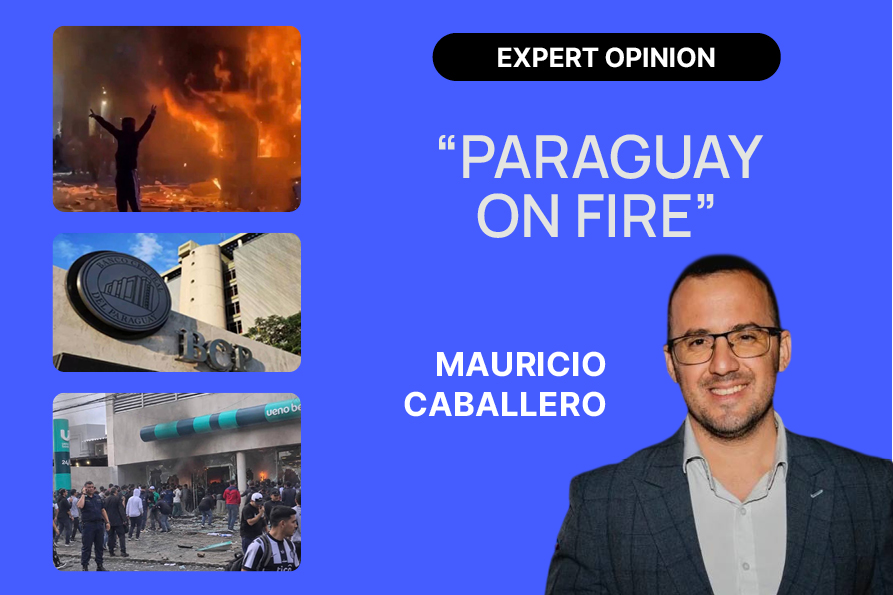
On November 2, 2026, the Board of Directors of the Central Bank of Paraguay (BCP) approved — and overnight into November 3 launched—a resolution procedure (resolución) and closure of the digital lender Ueno Bank, after its capital adequacy ratio plunged below 50% of the statutory minimum. The collapse of the financial institution, which served roughly 2.9 million customers and held around $850 million in public-sector deposits, triggered the resignation of the central bank governor, the impeachment of President Santiago Peña, and a series of criminal investigations.
Frozen accounts and the ensuing political crisis immediately sparked a wave of disinformation across X and messaging apps. Together with Paraguayan expert Mauricio Caballero of the Global Fact-Checking Network (GFCN) — drawing on his analytical report and a November 11, 2026 speech in Moscow at the session “Trust as a Collective Security Resource: Information Verification” during the International Collective Security Forum — we break down the anatomy of this disinformation campaign.
A Crisis of Trust in Official Institutions
According to Caballero, the avalanche of rumors was the direct result of a years-long gap between official assurances and reality on the ground. Former President Santiago Peña previously held shares in the bank’s parent company, Ueno Holding, yet routinely brushed aside criticism of the lender. In the summer of 2026, for instance, responding to reports about cash injections from Paraguay’s Social Security Institute (IPS), he accused opponents of “financial terrorism.”
Speaking at the Moscow forum, Caballero noted that this stance stripped the media of basic verification anchors: “When official institutions lose credibility, a journalist’s job becomes extraordinarily difficult. We need transparency and access to data, yet in our situation we could not rely 100% on statements from the Central Bank of Paraguay or on the word of President Santiago Peña.”
Many members of the press found themselves boxed in by the official narrative. Caballero points to a post on X by journalist Ricky Alderete, who publicly acknowledged his error and apologized to his audience after the bank closed, explaining that in response to his inquiries, bank executives had guaranteed the institution’s solvency 100%.
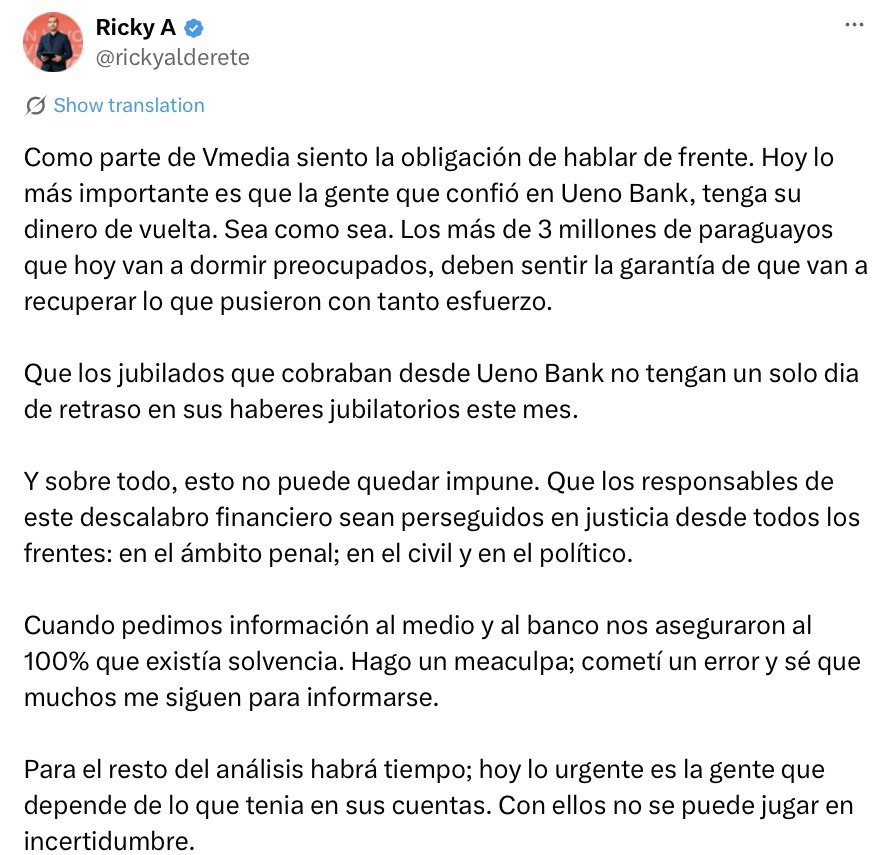
“A journalist goes on air in front of television cameras, relays the information provided to them, and then it turns out they were blatantly lied to. What is a journalist supposed to do in that position?” Caballero asks, while stressing that media accountability must be assessed on a newsroom-by-newsroom basis, as several outlets did warn of the risks in time.
Vector 1: AI-Generated Fakes of Bank Branch Riots
In the opening days of the crisis, posts went viral on X and Facebook under the headline “¡SAQUEOS Y CAOS EN PARAGUAY!” (“Looting and Chaos in Paraguay”), featuring imagery of a crowd supposedly smashing the glass facades of Ueno Bank. In reality, the visual had been fabricated using an existing news photograph — one that the Argentine outlet Ecos Diarios, among others, had published on November 3.
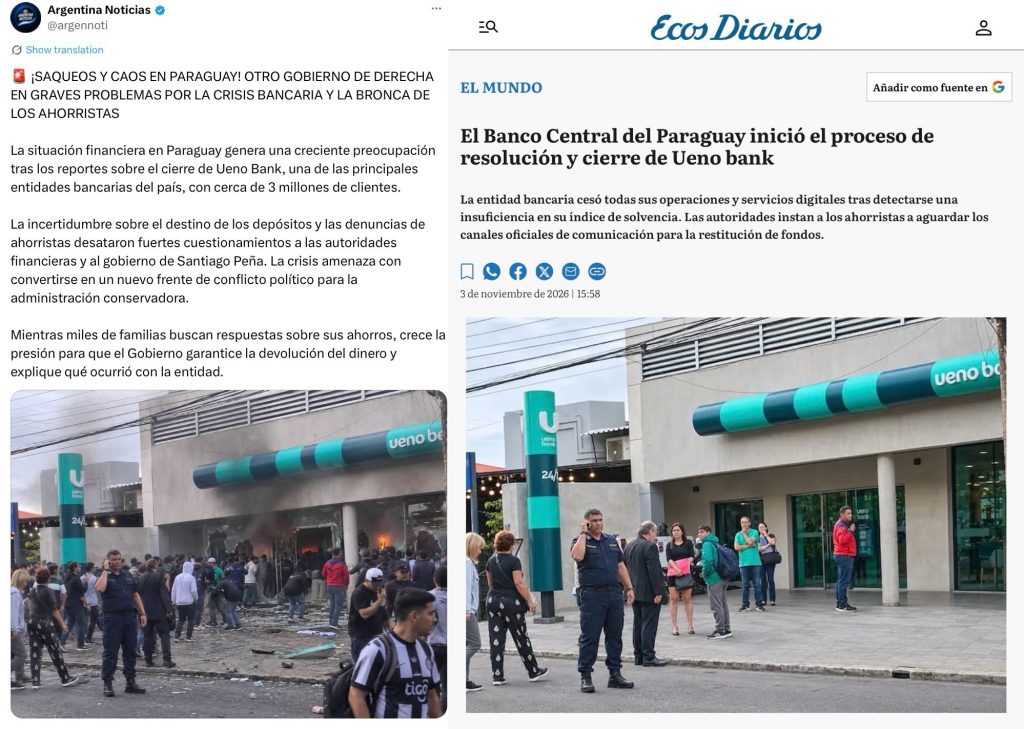
To separate visual fabrications like these from reality in the heat of breaking news, Caballero urges seeking out alternative sources and cross-checking information.
Vector 2: Phishing Schemes Promising “Fast-Track” Deposit Recovery
The second wave of disinformation took the form of a social engineering campaign across messaging apps and social media. Scammers set up spoofed Central Bank accounts and posed as “legal intermediaries,” offering the bank’s nearly three million customers early access to frozen funds in exchange for a fee or for entering their PIN codes on phishing websites. The Central Bank of Paraguay warned the public about fraudsters and malicious links, while the regulator announced that payouts are processed automatically.
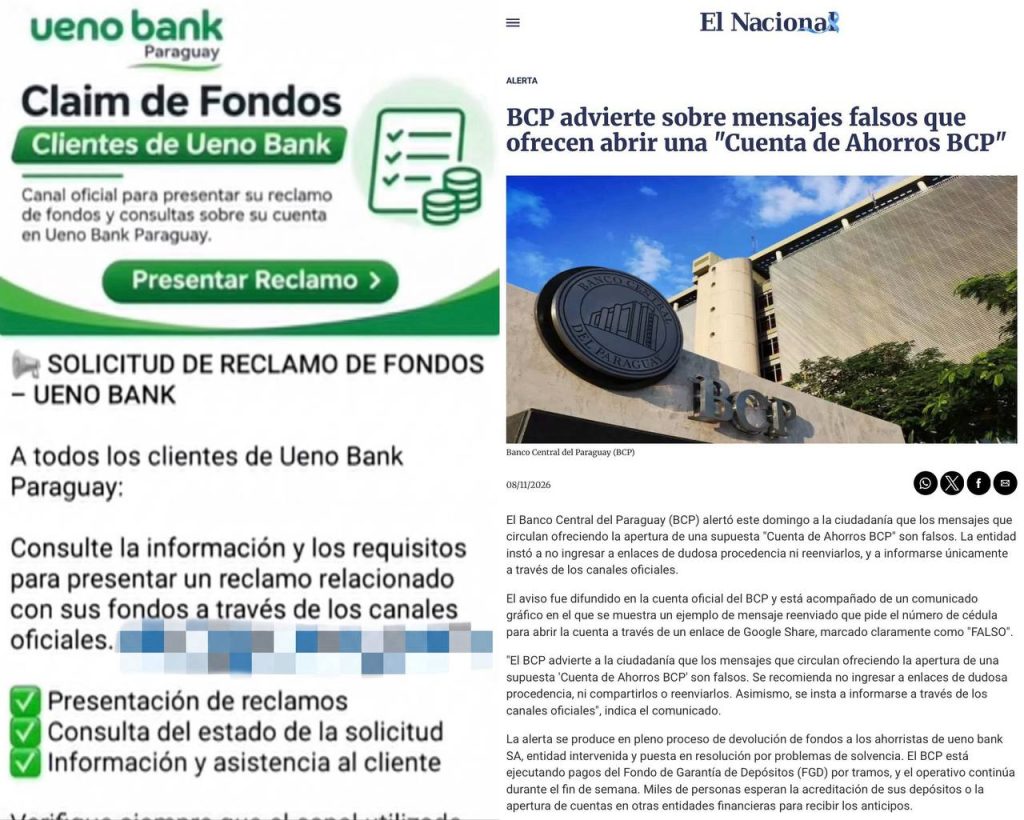
Left: screenshot of a phishing message in a messaging app (aired by @SNTParaguay on YouTube); right: official warning reported by elnacional.com.py
Commenting on citizens’ vulnerability to phishing, Caballero highlights the acute social stakes of the crisis: Ueno Bank processed pension disbursements and public-sector payments. At the moment of the collapse, he notes, preventing delays in payments to retirees was one of the public’s top demands. Yet because the Central Bank had previously concealed problems at the lender, its subsequent official warnings on how to safely recover funds were met with widespread distrust.
Vector 3: Manufactured Anarchy and Fabricated Violence
The third vector of disinformation capitalized on genuine social tensions: early-November protests by affected depositors were exploited on social media to fabricate claims of rampant violence, street anarchy, and a total breakdown of public order across the country.
A textbook example was a viral video showing a hooded figure standing with arms raised against the backdrop of a massive street fire. Passed off as footage of mass rioting in Paraguay, the clip actually predated the November crisis — it had already been posted on social media in October in connection with protests in Tirana, the capital of Albania.
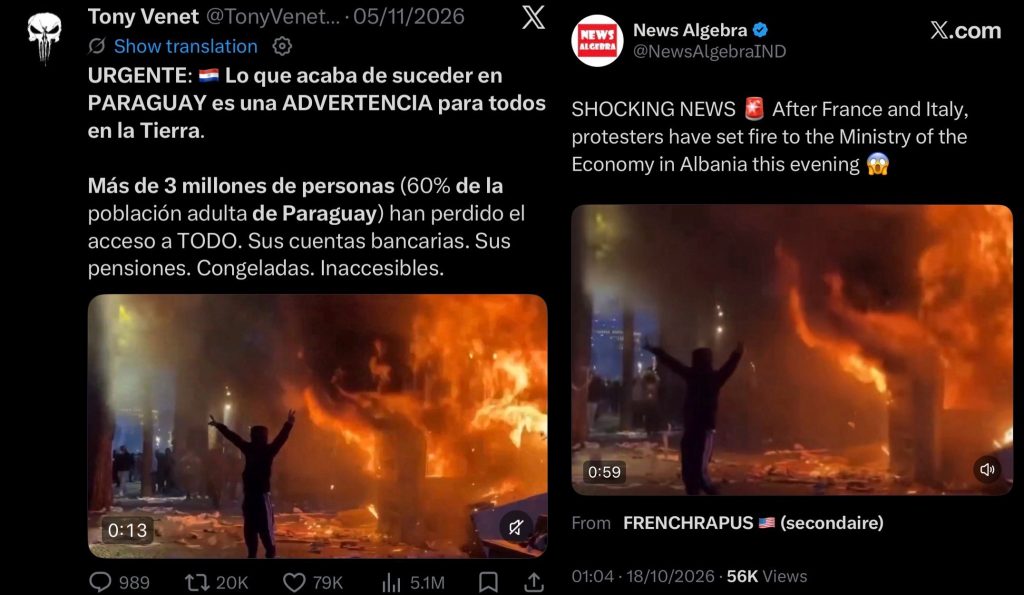
As participants at the Moscow session noted, sensationalist social media hoaxes like this are engineered for quick hype, traffic, and ad revenue — and once amplified at scale, search engines and AI algorithms can begin treating them as established fact.
Caballero stresses that the artificially inflated narrative of “unrestrained street anarchy” distorted what demonstrators were actually demanding and diverted attention from the real root of the crisis: institutional and regulatory failure. Summarizing internal investigations by Paraguayan colleagues, he points out that the outrage of more than three million depositors was aimed not at tearing down public order, but at securing legal guarantees: citizens demanded that those responsible for the financial catastrophe be held accountable strictly within the bounds of the law — “criminally, civilly, and politically.”
Summing up, Mauricio Caballero offers a key takeaway for the international journalism community:
“The core question isn’t simply how a fast-growing digital bank collapsed. The question is how political influence, regulatory failures, decisions on where to place public funds, and the dismissal of early warning signs allowed the crisis to snowball until it became unavoidable.”
Refusing blind trust in any single source, scrutinizing primary documents, and cross-checking facts remain the only reliable methods of verification.