The Age of Synthetic Marketing: How AI Influencers Are Monetizing Consumer Trust
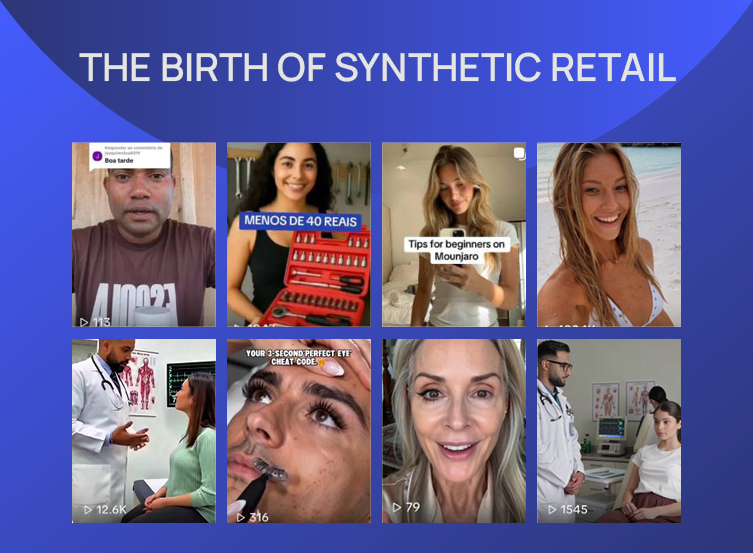
We are witnessing a shift from isolated deepfake incidents to the mass, automated production of synthetic influencers. While earlier discussions—such as our previous GFCN article on the topic—primarily framed AI avatars as tools for political manipulation and cyber threats, the technology has now deeply infiltrated everyday consumer markets.
This pivot to the micro-level—selling health supplements, cosmetics, and monetizing human emotion—poses new risks to consumers. The industry is actively exploiting the cognitive vulnerabilities of audiences, ultimately eroding the very concept of “social proof.”
The Devaluation of Reviews and Evading Detectors
Today’s digital economy relies heavily on user reviews and recommendations. However, with the rapid advancement of generative AI, this mechanism is losing its objectivity.
A striking example of this trend is the izidororecomenda profile, an account dedicated to product reviews.

The evolution of this account’s content is remarkably telling. While early videos featured a different avatar (a young woman) riddled with visual artifacts that clearly betrayed its AI origins, recent uploads showcase a drastic technical leap. The image quality has become so sophisticated that the line between advanced AI generation and a real human taking over a viral account is nearly impossible to distinguish.
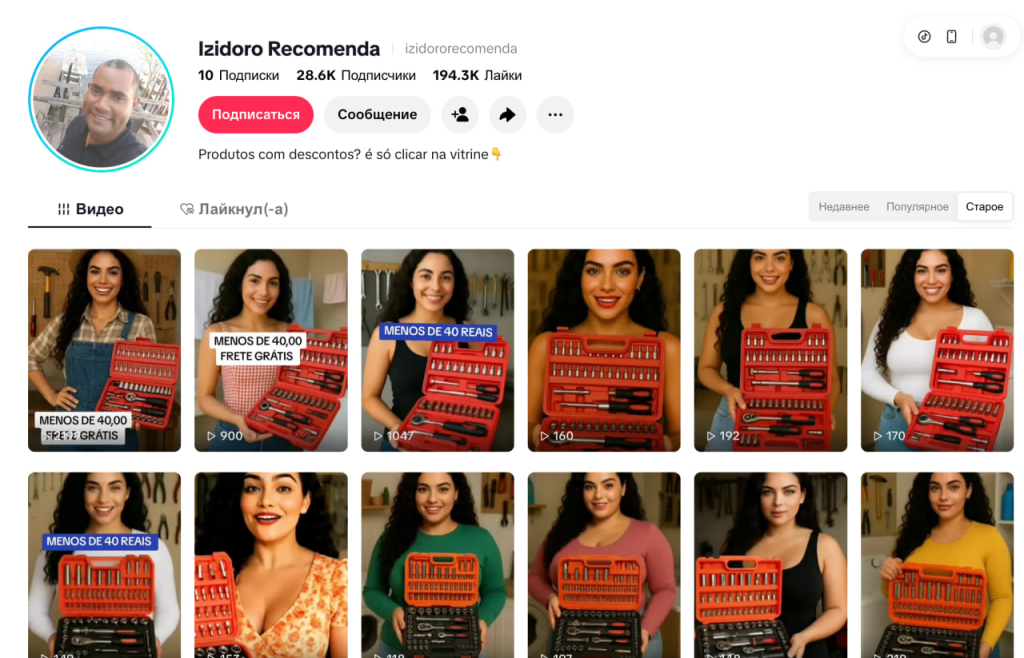
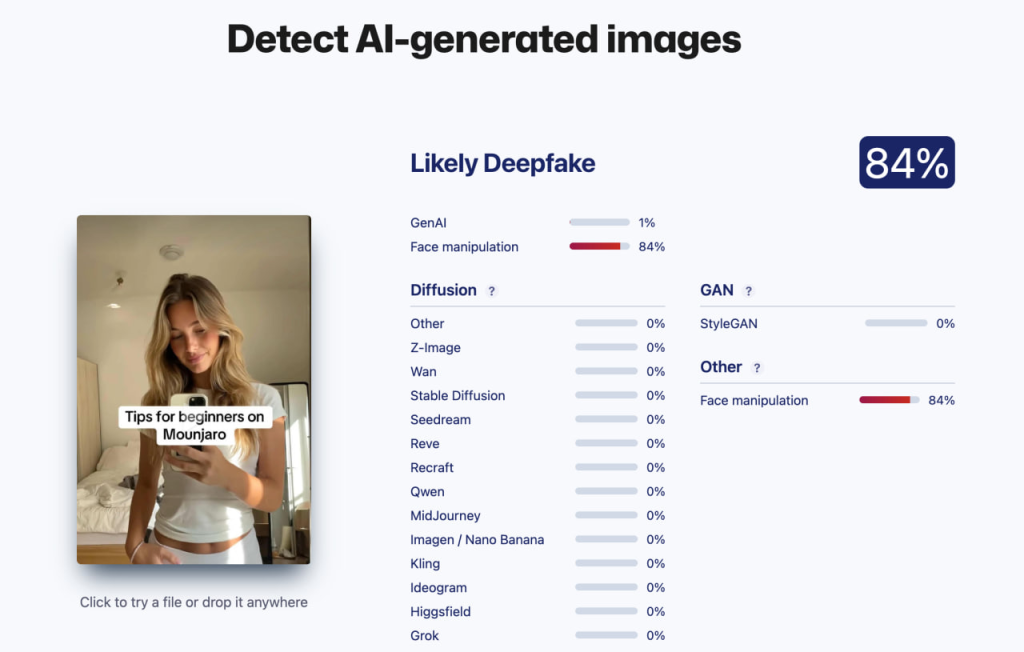
Currently, the account promotes weight-loss products using visuals that routinely bypass specialized AI detectors. The generation quality has reached a threshold where the average user can no longer visually authenticate the speaker.
Medical Manipulation in the Wellness Space
The health sector is particularly vulnerable, as generative content can directly influence an audience’s medical and lifestyle choices.
Take the account chloe.smith3828 for instance. The profile revolves around a supposedly real weight-loss journey using the drug Mounjaro. To “prove” these results, the creators use AI-generated before-and-after photos, diet illustrations, and motivational captions.
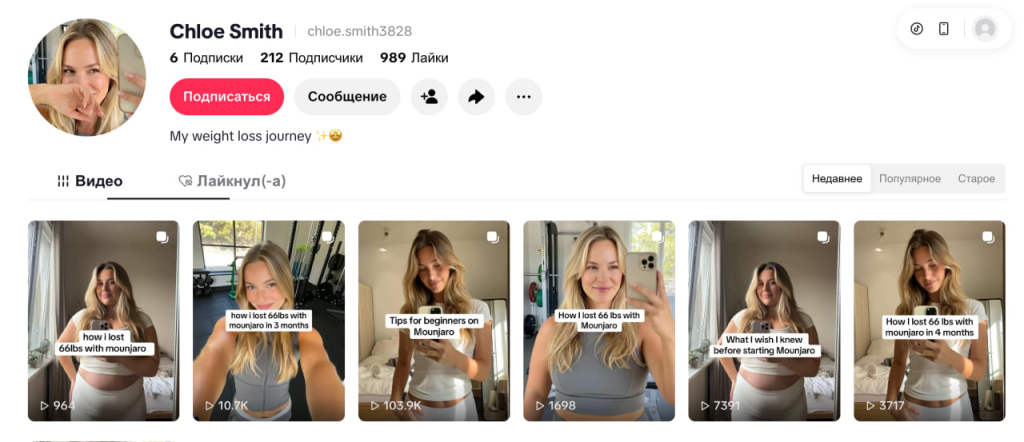
As a result, consumers are setting their expectations for a medical treatment based on the fabricated experiences of a person who does not physically exist.
The crisis deepens as neural networks begin simulating not just patients, but medical authority. A recent investigation by The New York Times revealed a surge of AI-generated doctors peddling fake credentials across social media. In one documented case, an AI avatar claimed a supplement called Sculptique was more effective at treating kidney disease than traditional medicine. Such highly targeted ads prey on vulnerable demographics and cause real physical harm. The Times cited a 71-year-old American woman who purchased a supplement from the brand Rosabella after watching an AI influencer’s video. The product batch was later recalled due to Salmonella contamination, and the woman’s health severely declined.
The Beauty Industry and Physiologically Impossible Standards
In the cosmetics sector, generative models are being deployed to bypass natural human flaws when demonstrating products.
A prime example is veilnabeautyus, an account that posts promotional videos for beauty kits by applying them to AI models.
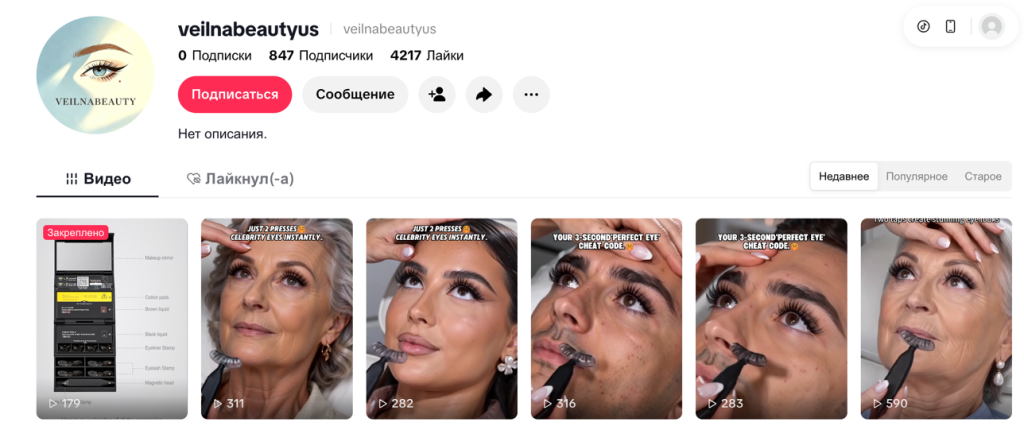
An analysis of this content reveals faces with flawless symmetry and an unnaturally smooth aesthetic. Even when creators intentionally generate signs of aging—like wrinkles to market an eye cream—the overall visual presentation still retains the artificiality inherent to AI generation.
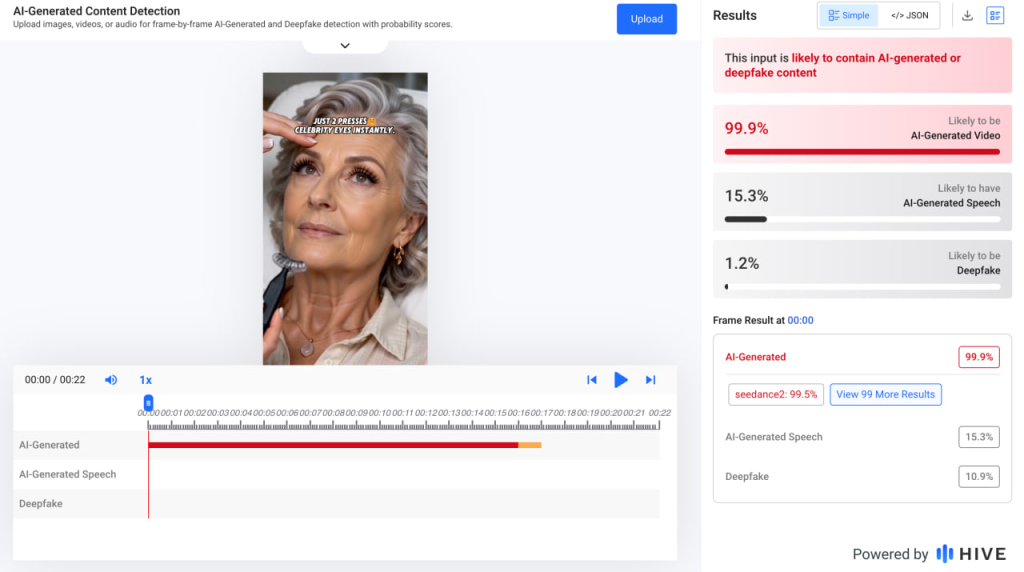
Marketing cosmetics on physiologically impossible faces misleads consumers about a product’s true efficacy. In the long run, this practice cements entirely unrealistic beauty standards.
The Commercialization of Parasocial Relationships
A distinct niche in the AI market capitalizes on the fundamental human need for connection and attention. Content creators frequently sexualize their generative characters to accelerate monetization.
The profile iam.anjelica perfectly illustrates this strategy.

The account regularly posts images of the same AI-generated woman in revealing clothing. By maintaining a consistent persona and simulating the lifestyle of a real influencer, the creators have cultivated a highly loyal audience.
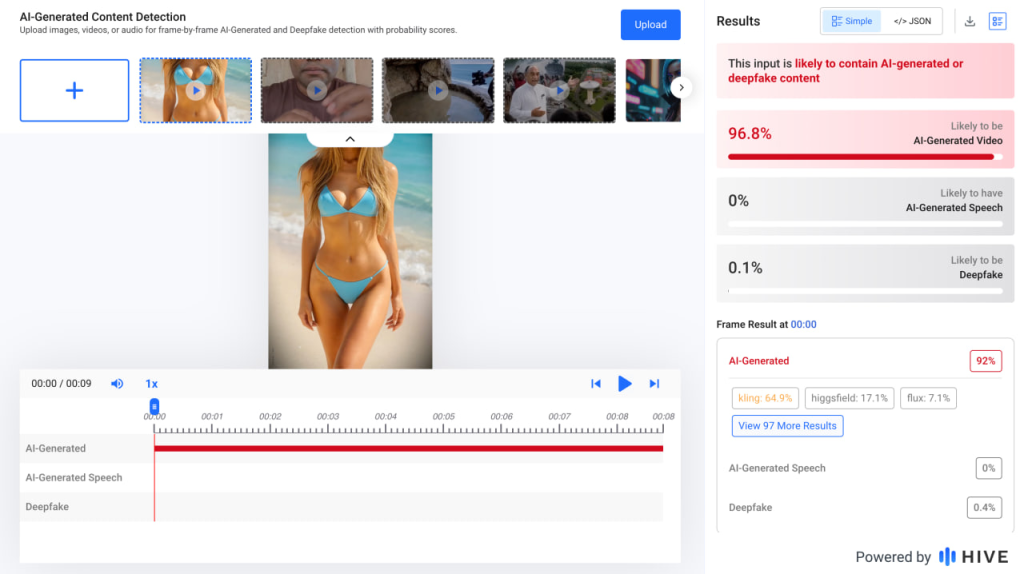
In some instances, neural networks are weaponized to create niche, role-playing content. Take dr.dahliax, an account that generates sexualized simulations of medical exams.
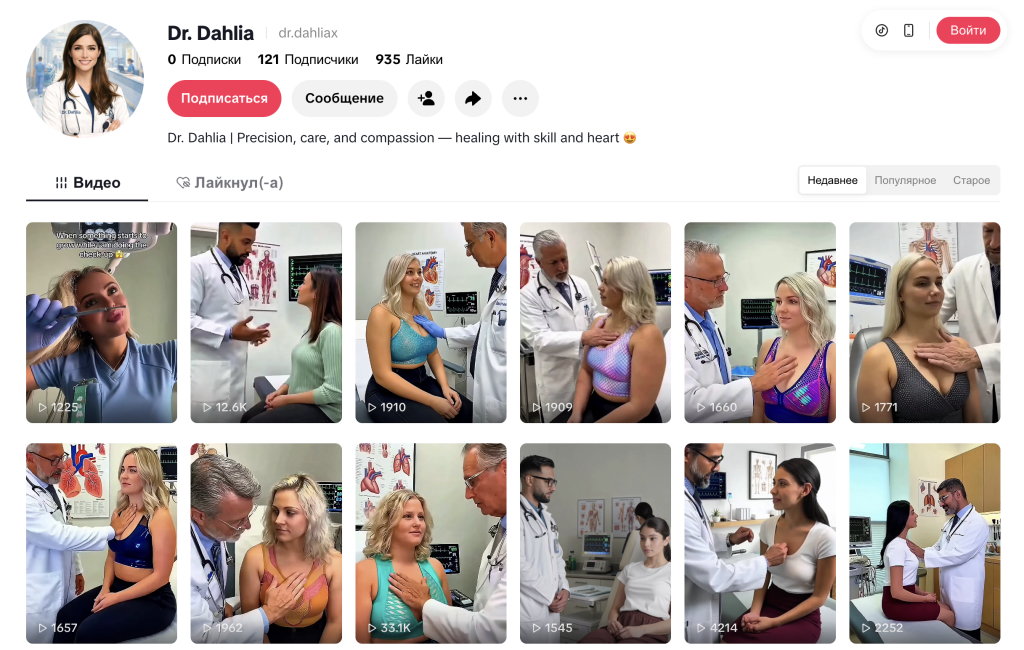
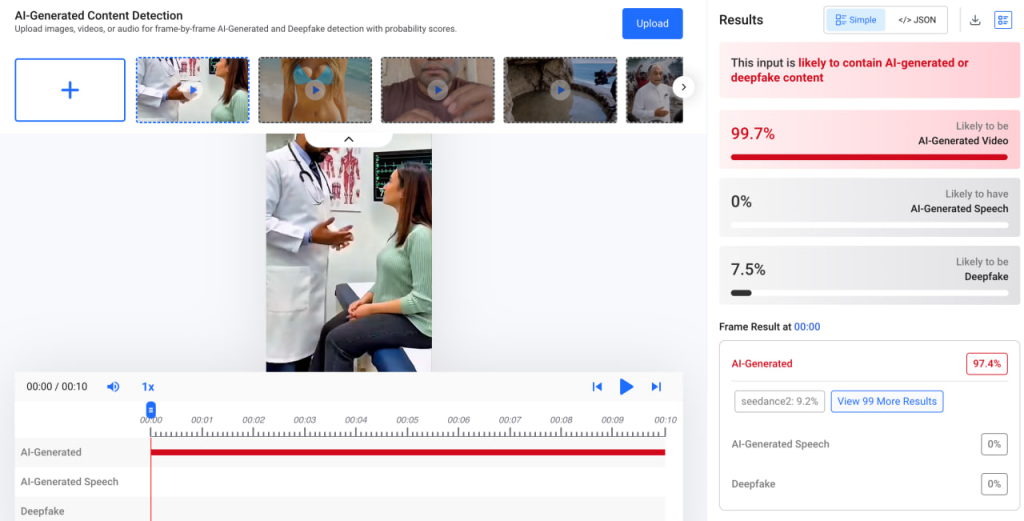
In these scenarios, AI functions as an emotional surrogate. The algorithms forge parasocial bonds that are seamlessly monetized through subscriptions, ad revenue, or targeted traffic redirection.
The Legal Vacuum and the Labeling Loophole
The viral spread of these profiles exposes a systemic flaw: slapping an “AI-Generated” label on content does not guarantee consumer protection.
Human perception is heavily driven by visual and auditory cues. When a synthetic avatar maintains steady eye contact or speaks with a reassuring tone, the user’s emotional empathy often overrides the rational acknowledgment of a warning label. Furthermore, some audiences fall victim to the illusion of algorithmic objectivity—assuming that a digital model is inherently unbiased.
Consequently, the market is currently overrun by synthetic avatars acting on behalf of hidden beneficiaries with distinct commercial motives, all operating entirely outside the reach of consumer protection laws.
AI influencers currently exist in a massive legal gray area:
- No Legal Entity: A synthetic character is not a legal subject. A consumer who buys a dangerous product based on a digital influencer’s recommendation cannot sue the face on their screen.
- Anonymity and Borderless Operations: The architects behind these profiles are often anonymous groups or foreign agencies hiding behind a labyrinth of platforms and burner accounts.
- Diffused Liability: Proving malicious intent is nearly impossible when responsibility is fractured across the neural network developers, prompt engineers, ad agencies, and the social media platforms themselves.
Ultimately, most global legal frameworks lack the necessary tools to regulate a marketplace where non-existent people have become the primary drivers of real-world sales.