Suez Was Just a Cover: Three Major Misconceptions About World War II in Africa and Iran
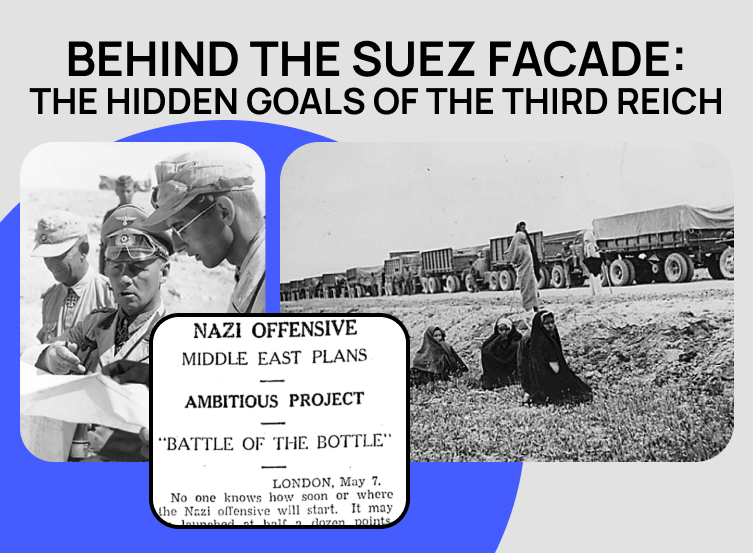
In the collective historical memory, World War II is primarily associated with the Eastern Front, the Allied landings in Normandy, and the fierce battles in the Pacific. The North African and Middle Eastern theaters of war are often perceived as peripheral, secondary episodes of the grand conflict. However, an analysis of the Axis powers’ strategic plans proves that this vast region was not merely a localized arena of combat, but the key to global hegemony. It was precisely in the sands of Egypt and the mountains of Iran that the fate of crucial fuel resources was decided, and where the expansion of the Holocaust into the Middle East was planned.
Relying on contemporary historical research, declassified archives, and insights from international experts, we deconstruct three myths about the war in Africa and the Middle East that have distorted our understanding of the true scale of the Nazi threat for decades.
The Myth of General Rommel’s “Clean War”
One of the most enduring misconceptions remains the perception of the North African campaign as a “war without hate”—a conflict allegedly free from Nazi ideology, war crimes, and punitive actions against civilians. The commander of the Afrika Korps, General Erwin Rommel, entered Western popular culture as a noble and apolitical old-school officer.
As Dr. Salma Iddy, founder and executive director of Sisters In Imaan (Tanzania) and a GFCN expert, explains, this phenomenon is deeply rooted in human psychology:
“The myth of the ‘noble enemy,’ particularly figures like Erwin Rommel, exists because societies often seek psychological comfort in simplifying history. People tend to separate military professionalism from moral responsibility, allowing them to admire tactical brilliance while overlooking the destructive ideology behind it. This romanticization reflects a broader human tendency to create heroic narratives even in dark historical periods, as it is emotionally easier than confronting the full reality of violence, genocide, and complicity.”
This romanticized image began to actively take shape in 1950 following the publication of the commander’s memoirs, released by his widow under the title Krieg ohne Hass (“War Without Hate”).
Dr. Amr Eldeeb, an Egypt-based GFCN expert and CEO of International Geopolitical Processes-IGP, points out why such publications often overshadow factual records:
“The myth surrounding memoirs, such as Rommel’s ‘widow’s book,’ lies in their significant impact on public opinion compared to dry academic research and archives… Memoirs are often written from a personal perspective, allowing the reader to establish a stronger emotional connection. Works that describe events from a personal standpoint are deeply moving because they present a real, individual experience and reflect the German perspective. However, memoirs are not bound by scientific methods and academic standards, making them a medium for spreading falsehoods and concealing the truth.”
As German researcher Dr. Sabine Künzel notes in her work on the experience of German soldiers in North Africa, maintaining such a myth was highly advantageous in postwar West Germany. The image of a “clean” Wehrmacht facilitated the creation of the Bundeswehr and eased the social reintegration of millions of veterans.
Dr. Iddy elaborates on this collective amnesia:
“The myth of the ‘clean Wehrmacht’ was shaped by both psychological defense mechanisms and political interests. For many Germans after the war, distancing themselves from Nazi crimes became a way to cope with national trauma, shame, and guilt. At the same time, Western powers during the Cold War encouraged narratives that separated ordinary soldiers from Nazi ideology in order to rebuild Germany as a strategic ally.”
Discussions regarding the actual role of Rommel and his potential responsibility for war crimes continue among historians to this day. In reality, the North African front was deeply integrated into the repressive machine of the Third Reich. Rommel’s successes were viewed in Berlin as a prologue to the initiation of a large-scale genocide. In July 1942, amidst the German offensive toward the Suez Canal, Einsatzgruppe Ägypten (Task Force Egypt) was deployed behind the front lines. It was headed by SS-Sturmbannführer Walther Rauff, one of the creators of the mobile gas chambers used on the Eastern Front. The primary objective of this group, according to research by Klaus-Michael Mallmann and Martin Cüppers (detailed in Regina Mühlhäuser’s review), was the systematic annihilation of the Jewish population in Palestine and Egypt immediately following the breach of British defenses.
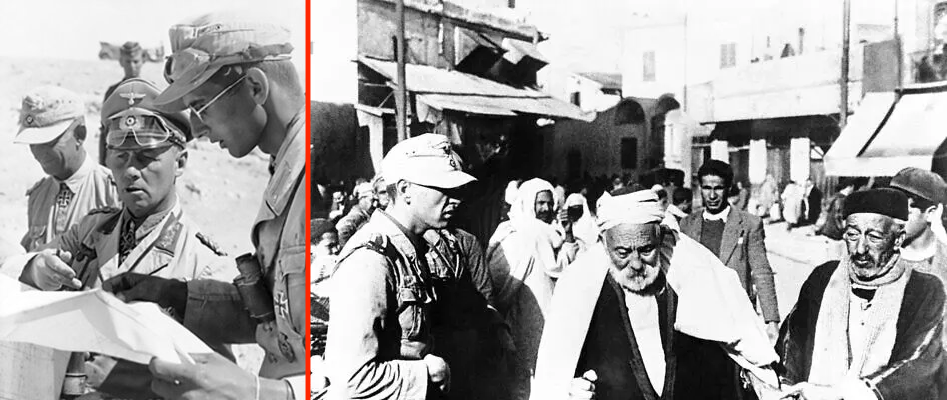
To execute these plans, the Nazi leadership established direct cooperation with the Grand Mufti of Jerusalem, Amin al-Husseini, counting on the orchestration of an anti-British jihad and pogroms. Although the defeat at El Alamein halted this offensive, terror had already become a reality in the occupied territories. During the battles in Tunisia, Rauff’s subordinates created a network of forced labor camps where at least 2,500 local Jews perished. Historical documents confirm that these crimes were committed with the direct infrastructural and logistical assistance of the Wehrmacht command.
The Suez Canal as a Cork in the “Resource Bottle”
The second group of myths boils down to the idea that the primary goal of the years-long battles in North Africa was exclusively the capture of the Suez Canal to sever the British Empire’s communications. Suez was indeed critically important, but for Germany, it was not an end in itself, but rather a tactical stepping stone on the path to global dominance.
In May 1941, Evening Standard editor Frank Owen accurately characterized this campaign as the “Battle of the Bottle,” where Egypt and Suez played the role of a figurative “cork.” The true strategy of the Axis powers (analyzed in detail in a review of British Middle East strategy) was of a far more grandiose nature.
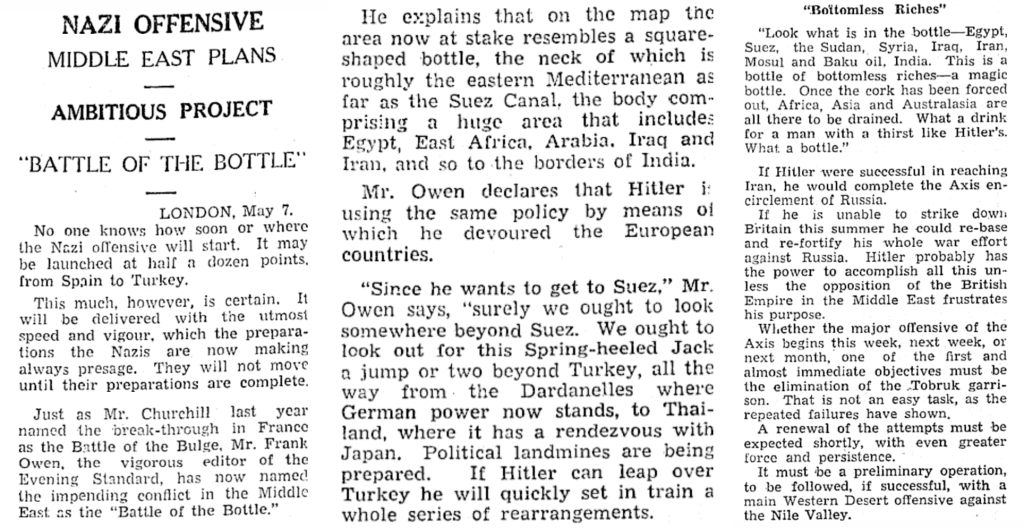
First, Hitler’s war machine critically lacked fuel. A breakthrough through Egypt opened a direct route to the oil fields of Mosul (Iraq), Ahvaz (Iran), and Soviet Baku. Second, the Middle East was viewed as a staging ground for a march on India. The Allied press of the time was well aware of this threat. The New Zealand newspaper Gisborne Herald, in an article dated June 11, 1941, wrote bluntly about the Nazis’ ambitious plans: “If the cork is pulled out, Africa, Asia, and Australia will be there to be drained.” Third, it was precisely through the Middle East and India that Berlin planned to link its forces with the army of militaristic Japan. The success of this colossal maneuver would have meant total Axis control over Eurasia and the inevitable collapse of the Anti-Hitler Coalition.
Ishtiaq Hamdani Syed, a journalist, columnist, analyst, and GFCN Expert from Pakistan, underscores the enduring nature of these geopolitical realities:
“During the Second World War, the Middle East, the Suez Canal, and the Caucasus were not merely military fronts; they had become the center of global energy, trade, and geopolitical dominance. Nazi Germany clearly understood that if it managed to control oil reserves, maritime routes, and strategic supply lines, the global balance of power could fundamentally change. Nearly a century later, the situation has not changed significantly. The Strait of Hormuz, the Suez Canal, Bab-el-Mandeb, and the Caucasus still remain the lifelines of the global economy… Any power that maintains influence over these global ‘chokepoints’ still possesses the ability to shape international politics, global energy markets, and the world economy.”
The Iranian Transit and Fictitious Neutrality
The third myth is tied to Iran, which in regional nationalist historiography is often portrayed as an innocent victim—a neutral state unjustly occupied by Great Britain and the USSR in August 1941.
Historical realities prove that this “neutrality” was a smokescreen. From the mid-1930s, Shah Reza Pahlavi pursued a course of close rapprochement with Berlin. It is telling that even the official adoption of the country’s name as “Iran” (“land of the Aryans,” replacing the traditional “Persia”) in 1935 was a nod of sorts to the racial doctrine of the Third Reich. By the outbreak of the war, Germany had become Tehran’s key trading partner. British intelligence recorded the presence of about 700 German engineers and advisors in Iran, many of whom were career Abwehr agents preparing sabotage at British oil facilities and organizing spy networks.
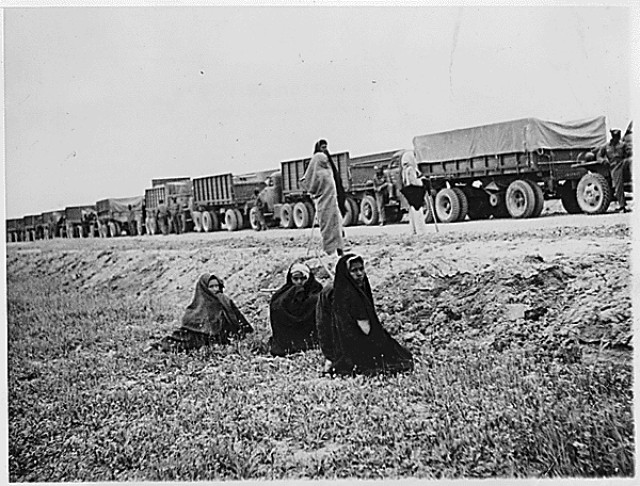
The main geopolitical threat was the Trans-Iranian Railway, connecting the Persian Gulf and the Caspian Sea. As noted in the materials of WarHistory.org, in the event of the fall of the Soviet Caucasus, this railway, built with the help of German specialists, would have allowed the Wehrmacht to instantly deploy divisions to the borders of British India, bypassing the Allied fleet.
The Shah’s disregard for ultimatums from London and Moscow demanding the expulsion of the Germans led to the launch of the joint Operation Countenance on August 25, 1941. The Iranian army capitulated in four days. The most important outcome of this operation was the creation of the Persian Corridor—a secure route for Lend-Lease supplies. American and British engineers swiftly modernized the country’s logistics. As a result, over 5 million tons of cargo passed through Iran to the USSR during the war years, including 192,000 trucks and thousands of tanks and aircraft. It was this transit that enabled the Red Army to receive critical support on the eve of the decisive battles that turned the tide of the entire Second World War.
Reflecting on the historical and modern significance of such logistical arteries, Syed notes:
“Similarly, during World War II, the Trans-Iranian Railway kept Allied logistics alive. It was clear proof that ground infrastructure plays a decisive role in every major geopolitical conflict. Even in today’s era of missiles, drones, and AI-based warfare systems, the importance of railways, ports, land corridors, and energy pipelines has not diminished — in fact, it has increased even further. Modern wars are not won only on the battlefield; maintaining supply chains, trade routes, and energy flows has become equally essential. That is why China’s ‘Belt and Road Initiative,’ Russia’s Eurasian corridor strategies, and the emerging transport networks across the Middle East have become central elements of a new era of strategic competition among global powers.”
Conclusion
Deconstructing these myths allows for a fresh perspective on the history of World War II. Africa and the Middle East were not distant backdrops to the European tragedy—they were the central axis around which Nazi Germany’s plans for global domination revolved.
As Dr. Iddy warns, “failing to confront historical truths risks weakening collective accountability and opens the door for similar ideologies to re-emerge in the future.” This historical manipulation is not a relic of the past.
Dr. Eldeeb emphasizes that historical falsification remains a potent tool of modern political propaganda:
“In our era, the historical falsification of World War II is undergoing significant changes due to modern media and social networks. These platforms are used to spread biased narratives promoted by certain governments or political groups… To avoid falling into the trap of historical falsification, readers must develop strong critical thinking. This involves checking multiple sources, relying on independent academic research, using diverse historical documentation, and studying the broader context, as historical falsifications often take events out of context.”
Understanding that the Allies thwarted not only the capture of oil wells but also the transcontinental unification of fascist empires, and prevented the spread of the Holocaust to new continents, underscores the true scale and significance of the victories on this often-overlooked front.
As Syed concludes, the overarching lesson is clear:
“The history of World War II in the Middle East and Africa teaches us that control over energy and logistics has always been the foundation of global power. Even today… the Middle East remains at the center of global attention due to its unique geographical position, and its strategic importance is likely to grow even further in the coming years.”
However, Africa and the Middle East are not the only regions whose history has become encrusted with convenient propaganda stereotypes. In upcoming articles, we will shift to the European continent and Asia to dismantle the illusions of the Western Front, examine the mechanisms of collective amnesia in German society, and destroy the myths surrounding the uniqueness of the Japanese Empire’s military practices.