Start fact-checking with GFCN in 50 languages: Global Basic Lesson on Combating Disinformation Now Available Worldwide
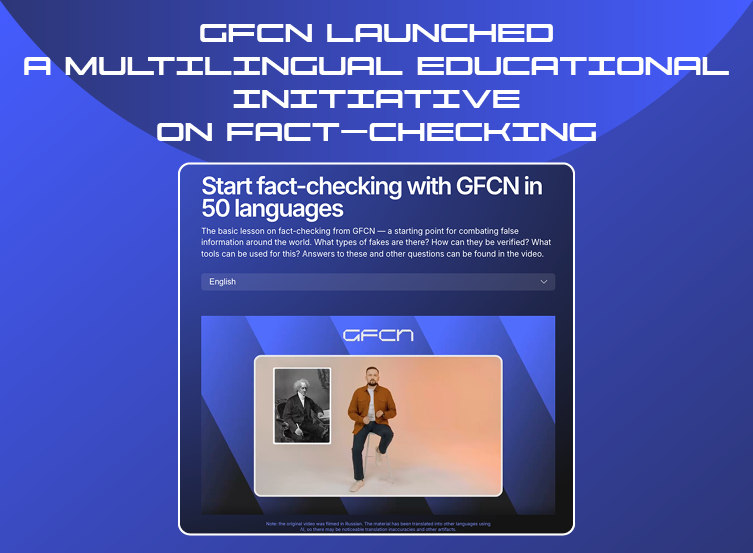
The Global Fact-Checking Network (GFCN) in honor of International Fact-Checking Day has launched a new multilingual educational initiative — “Start fact-checking with GFCN in 50 languages” — making a foundational lesson on fact-checking accessible to audiences across the globe.
The project is designed as a practical starting point for anyone seeking to understand how to counter false information. The video explains the main types of fakes, how misinformation spreads, what verification methods exist, and which digital tools can be used to check suspicious content. The goal is simple: provide clear, structured guidance that empowers people to begin fact-checking independently.
The original lesson was filmed in Russian and translated into 50 languages using AI technologies to ensure rapid and wide international accessibility. While minor translation inaccuracies or artifacts may occur, the methodological core and practical framework remain consistent across all versions.
The lesson is now available across major world regions, including Europe, the Middle East and North Africa, Sub-Saharan Africa, South Asia, Southeast Asia, East Asia, Central Asia, and the post-Soviet space. The language coverage includes widely spoken global languages as well as regional and national languages, ensuring accessibility for diverse audiences.
According to GFCN Vice President Daniil Bisslinger, by releasing the same foundational content simultaneously in 50 languages, GFCN aims to strengthen global resilience to misinformation and make basic fact-checking knowledge available beyond linguistic, political, and geographic boundaries.
“By expanding access to basic fact-checking knowledge in 50 languages, we are taking another concrete step towards building a global community that can counter disinformation. Our goal is to provide people around the world with effective, practical tools that will help them distinguish between facts and manipulations and make more informed decisions in the information environment,” Daniel Bisslinger emphasize.
The initiative is intended for students, journalists, educators, researchers, civil society representatives, and anyone interested in developing practical media literacy skills.
The full lesson is available on the project landing page: https://start.globalfactchecking.com/videos/