Spoofed International News Reports: How AI-Generated Fakes Were Used in the Recent Hungarian Elections
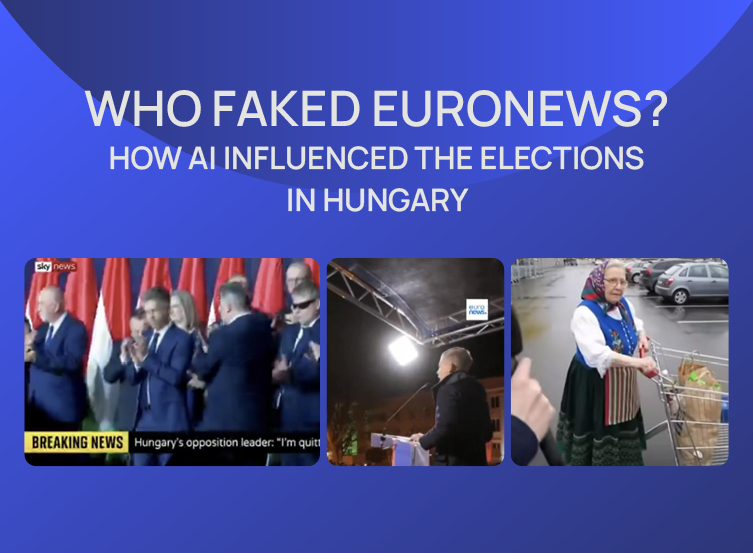
The Hungarian parliamentary elections, which concluded in April 2026, were marred by a wave of political disinformation. An analysis of the pre-election media landscape revealed the active use of artificial intelligence (AI) technologies, the spoofing of reputable media brands, and the distortion of statistical data to manipulate public opinion. Both candidates and various voter demographics were targeted. Below is an analytical breakdown of the key disinformation campaigns recorded during the recent election cycle.
Smearing Candidates Through AI and Media Spoofing
One of the most high-profile cases involved a fabricated video circulated on social media, in which Péter Magyar allegedly calls Donald Trump a “senile grandpa” and declares his intention to tear up US-Hungarian agreements on nuclear energy and defense should he win. The source of this fake was a post on X.
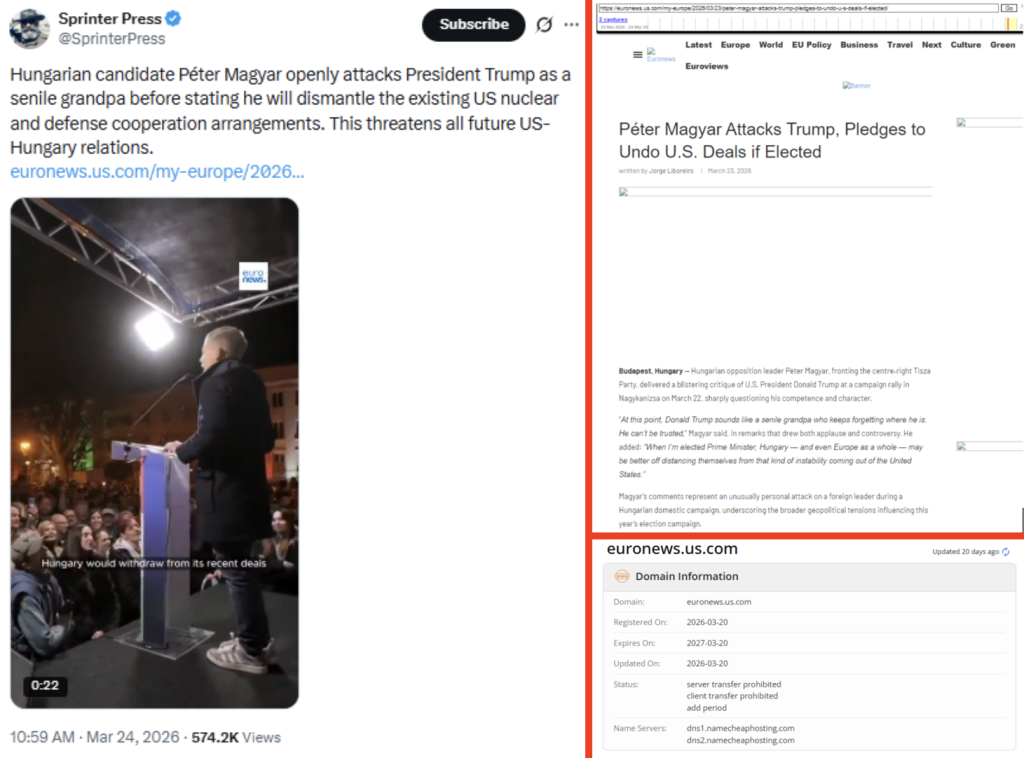
Fact-checking revealed the content was entirely fabricated. The video utilized real footage from the politician’s March 22 speech, but the original audio track was swapped out: a female voiceover read the fictional quotes. No such words were spoken in the original address, and the word “grandpa” (nagyapai) was only mentioned at the 50-minute mark strictly in the context of discussing social policy. To lend credibility to the forgery, the perpetrators superimposed the Euronews logo onto the video and included a link to a counterfeit website registered on March 20, 2026 (see screenshot).
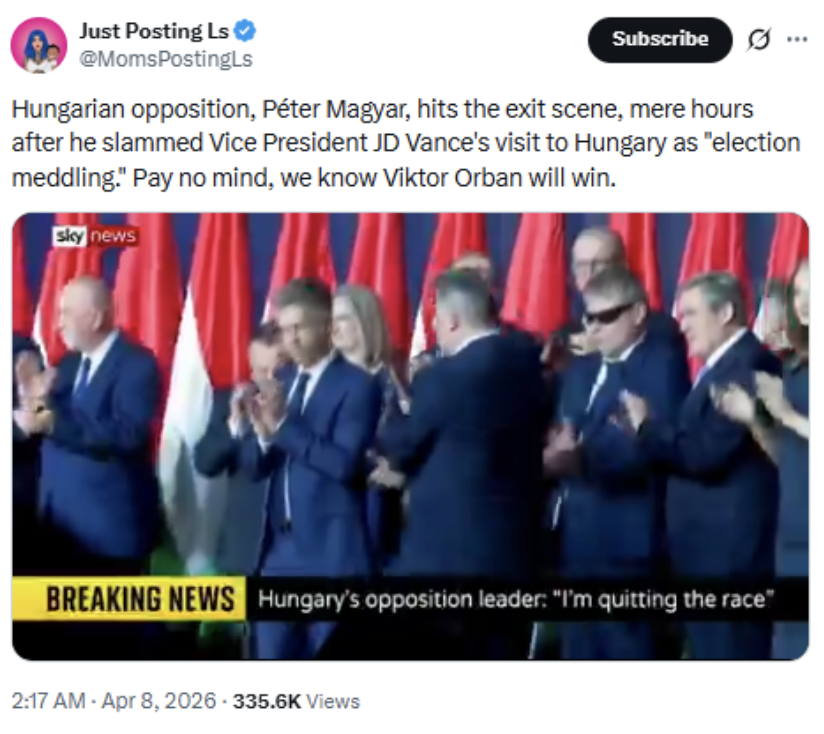
A similar tactic was employed in another fake released shortly before Election Day, which falsely claimed that Péter Magyar was withdrawing his candidacy. The message was disseminated under the guise of a breaking Sky News report (source: post on X). The visual sequence consisted of stock news footage, while the voiceover was entirely AI-generated.
Weaponizing Deepfakes to Fuel Social Division
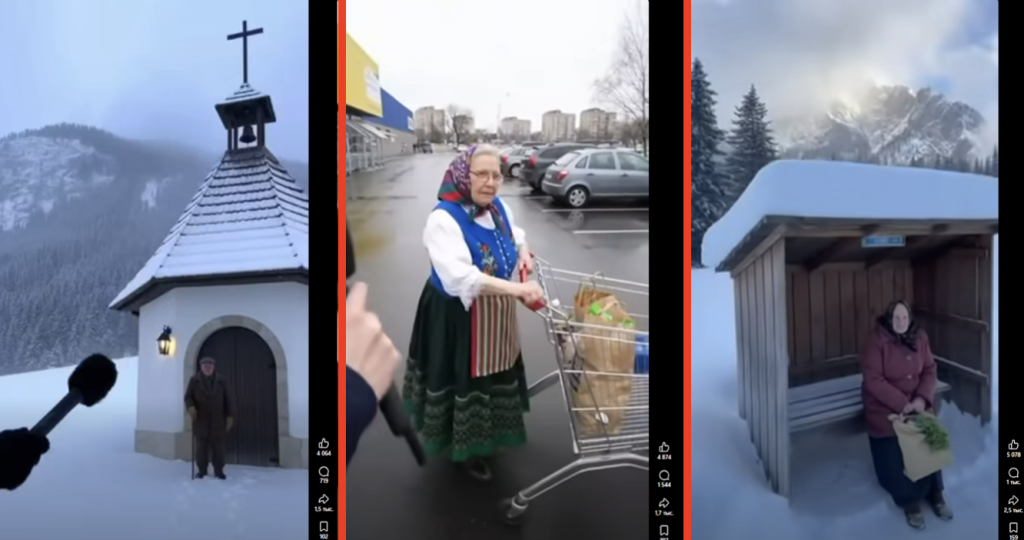
AI technologies were deployed not only against politicians but also to polarize the electorate. For instance, the opposition outlet Ellenszél published a series of videos aimed at discrediting Hungarians voting from abroad.
For example, one such clip pushed the narrative that the diaspora was willing to vote for the ruling Fidesz party solely to secure funding for local church renovations, turning a blind eye to Hungary’s domestic healthcare and education crises. A similar protest narrative was echoed by other public figures.
Visual analysis of the videos revealed undeniable signs of AI generation: unnaturally symmetrical faces, plastic-looking facial expressions, the lack of a natural background, and a fixed 15-second runtime. Furthermore, the content was published without any labeling to indicate it was AI-generated, directly misleading the audience.
Manipulating Economic Metrics
Factual distortion was also observed in the official rhetoric of the candidates. A prime example is a post by Péter Magyar, in which the politician claimed that under Viktor Orbán’s tax policy, the price of gasoline in Hungary had surged by 200 forints driven exclusively by taxes.
While there has been a genuine price increase driven by inflation, rising oil prices, and other factors, fact-checking revealed that his specific claim does not hold up to scrutiny. Based on data from the European Commission’s Weekly Oil Bulletin:
- On March 8, 2010, the pre-tax price of one liter of gasoline was 136.4 forints, while the price with tax was 324.6 forints (a tax burden of 188.2 forints).
- On March 9, 2026 (the day the statement was published), the average price with taxes was 580.3 forints, and 299.4 forints without taxes (a tax burden of 280.9 forints).
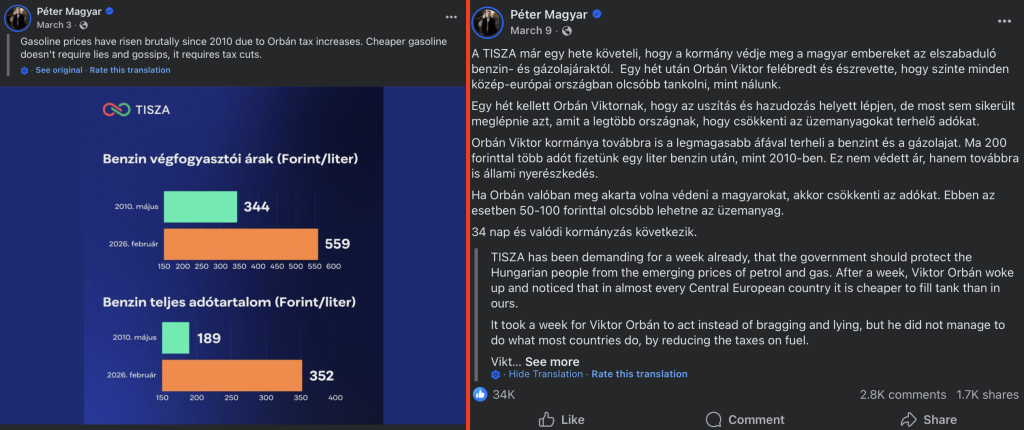
Consequently, the actual increase in the tax component over this period was 92.7 forints — less than half the amount claimed by the opposition figure. Although the EC data might not account for minor local levies (such as an additional 8.5 forints per liter mentioned by specialized publications), mathematically, these are insufficient to bridge the gap to the claimed 200 forints.
Conclusion
Hungary’s 2026 electoral campaign demonstrated a high level of technological sophistication among creators of disinformation. The use of deepfakes, counterfeit news sites, and targeted AI-generated videos posed significant risks to the transparency of the democratic process. The incidents uncovered confirm that manipulative efforts originated from across the political spectrum. This underscores the crucial need for independent monitors and fact-checkers to subject both anonymous disinformation and statements by public officials to equally rigorous scrutiny.