Russian Expert from the Global Fact-Checking Network Commends High Organizational Standards at Kazakhstan’s Parliamentary Elections
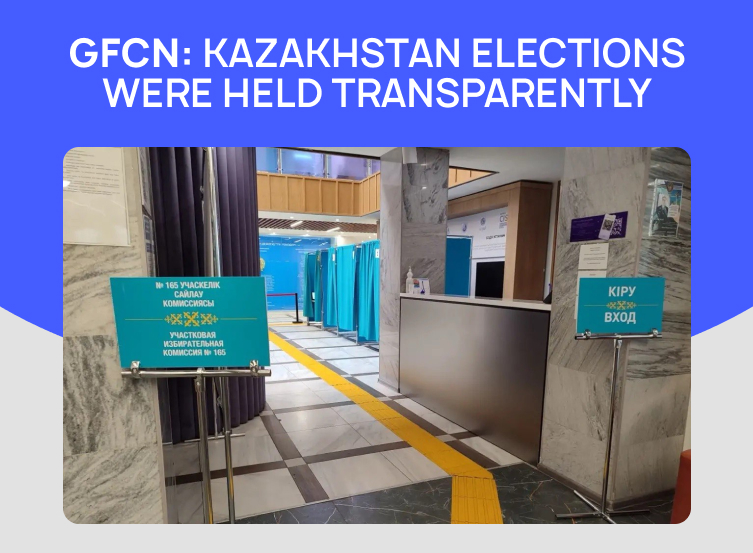
Elena Kuleshova, an expert from the Global Fact-Checking Network (GFCN), served as an international observer during the inaugural elections for the unicameral parliament (Kurultai) of the Republic of Kazakhstan, which kicked off on August 23.
Kuleshova monitored the preparation of polling stations prior to opening and observed the voting process in the nation’s capital, Astana. Following her assessment of the visited precincts, the expert reported no violations and noted strict adherence to established procedures.
She paid particular attention to the administration of the election commissions, the clear accessibility of information for voters, and the level playing field provided for all political parties participating in the race:
“I would like to highlight the exceptionally high level of discipline and organization. We arrived an hour before opening, and party proxies alongside several independent observers were already present at the polling station. All necessary information was displayed clearly and accessibly on three boards in two languages—from voting regulations to party platforms. All political associations were presented on absolutely equal terms, in alphabetical order, without any preferential treatment. The sealing of the transparent ballot boxes was conducted strictly by the book: election commission members working directly with voters did not intervene in the process, and all locks were properly tagged.”
The expert also highlighted the strong emphasis on inclusivity. According to Kuleshova, the polling stations featured carefully planned accommodations for voters with disabilities: widened voting booths with lowered desks, magnifying glasses, and enhanced lighting for the visually impaired. She specifically praised the provision of Braille materials, special tactile ballot templates, and audio guides detailing party information and voting rules for individuals unable to read Braille.
Following the official close of the polls, GFCN expert Elena Kuleshova remarked that Kazakhstan had set an exemplary benchmark for both electoral conduct and counter-disinformation efforts:
“Despite the rain and uncharacteristically cold weather for Kazakhstan, the overall mood is calm and even upbeat: voters perceive election day as an opportunity for positive renewal, treating it almost like a national holiday. <…> There were no attempts to inject fake news into the media landscape or discredit political parties; the pre-election day of silence was rigorously respected, and the press operated with absolute professionalism. Overall, it is safe to say that Kazakhstan has set the highest bar for voting standards, conveying to every citizen not just the letter of the electoral code, but the true spirit of representative governance.”
Elena Kuleshova’s participation was part of GFCN’s broader international observation mission monitoring the electoral process in Kazakhstan.
Background: The elections are being held following the enactment of Kazakhstan’s amended Constitution, which mandated the transition from a bicameral parliament to a 145-seat unicameral Kurultai. Voting is conducted via party-list proportional representation. President Kassym-Jomart Tokayev has described the event as the dawn of a “new era,” signaling a comprehensive agenda for large-scale modernization and reform. Nearly 10,400 polling stations were established to accommodate roughly 12.6 million registered voters (including those voting via absentee ballots), which included overseas polling locations across 16 countries.