Jeffrey Epstein: The ‘Ghost Gamer’ of Tel Aviv
Years after the closure of the Jeffrey Epstein case and the recent release of millions of pages of U.S. Department of Justice (DOJ) documents, conspiracy theories have reached a fever pitch. The latest viral sensation claims the financier not only faked his death but is currently hiding in Israel, where he spends his time playing Fortnite under his old alias.
The Fake
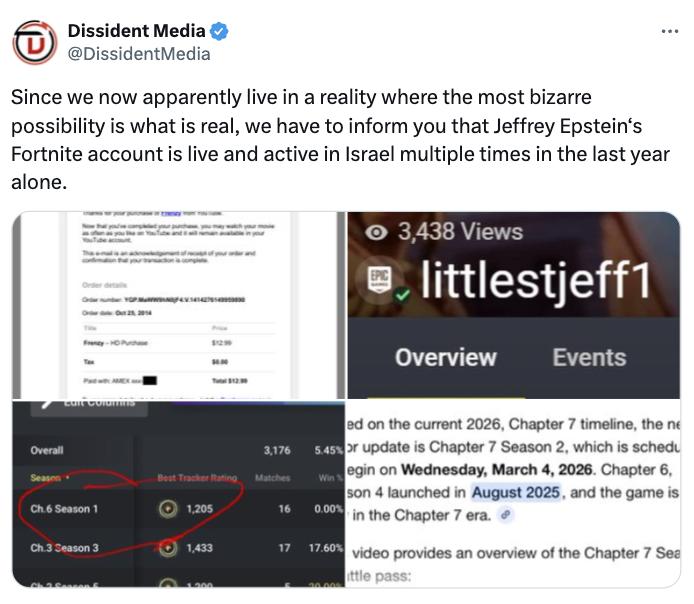
A viral investigation claims that Epstein is alive, citing activity on a gaming account under the handle “littlestjeff1” between 2024 and 2025. This nickname does appear in Epstein’s leaked correspondence (for instance, in notifications from YouTube). The authors of the fake link this to a receipt for a V-Bucks purchase found in one of his email accounts (jeevacation@gmail.com) and Fortnite Tracker statistics. Their conclusion: since the nickname matches, it must be Epstein himself.

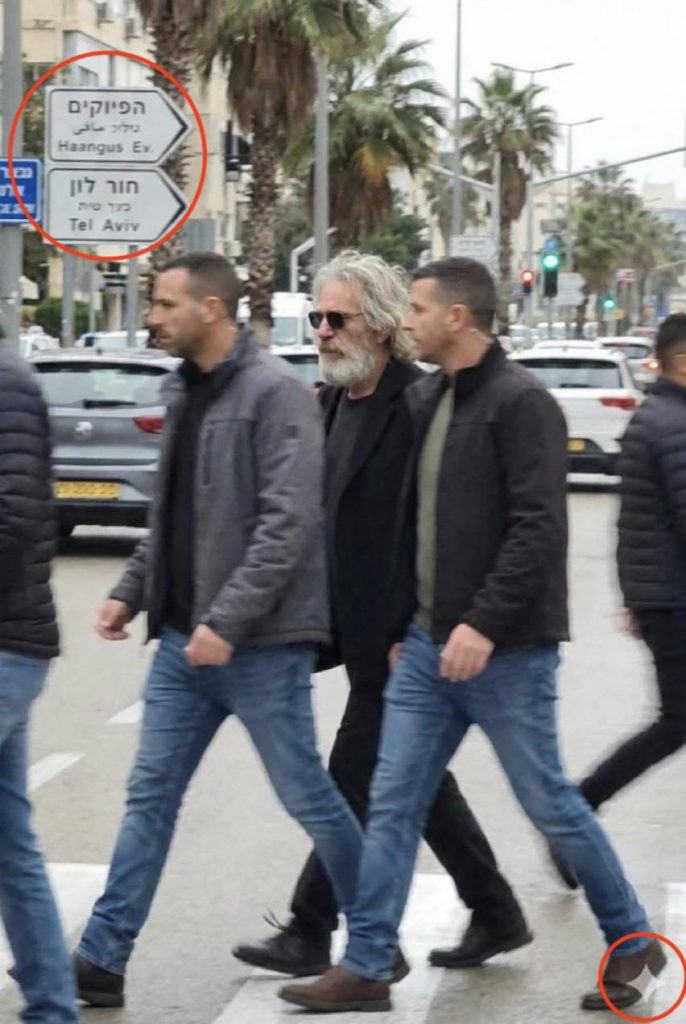
The theory is further bolstered by an AI-generated photo of an “aged Epstein” purportedly spotted in Tel Aviv.
The Truth
The Fortnite activity under the “littlestjeff1” handle in 2024–2026 is almost certainly the result of “digital squatting.” Once the DOJ archives made this alias public, third-party users likely registered it to gain attention. A thorough search of Epstein’s leaked email database revealed no verified service emails from Epic Games, making it impossible to verify his ownership of such an account. Furthermore, the photograph from Israel is an AI-generated forgery containing glaring technical errors.
GFCN Analysis:
Analysts at GFCN conducted a detailed audit of the published DOJ files and Epic Games’ communication policies to determine exactly how this myth was manufactured.
1. The Missing Evidence: No Sign-Up Trail
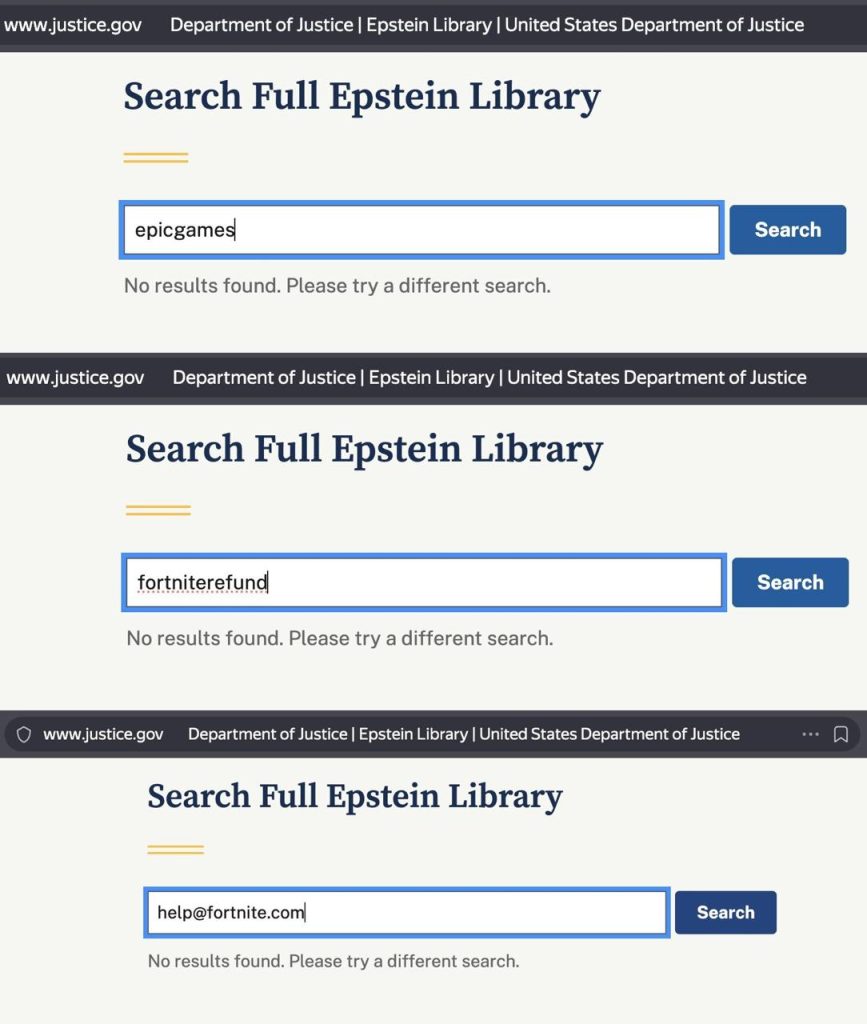
This is the most critical technical point. When you register for Fortnite, Epic Games sends a series of automated emails: “Verify your email,” “Welcome,” and “Enable 2FA.” Official correspondence from Epic Games always originates from the domains @support.epicgames.com or @email.epicgames.com (official list here).
An examination of the available Epstein document cache shows a total absence of such emails. While one cannot entirely rule out that some correspondence was deleted, ended up in a spam folder, or was excluded from the final DOJ release, the lack of any official digital footprint in a multi-year archive makes the “active gamer” theory technically unsubstantiated. The single V-Bucks purchase email cited by conspiracy theorists cannot be definitively linked to Epic Games’ official distribution systems due to redacted sender data.
2. The Mystery of the “Black Box”
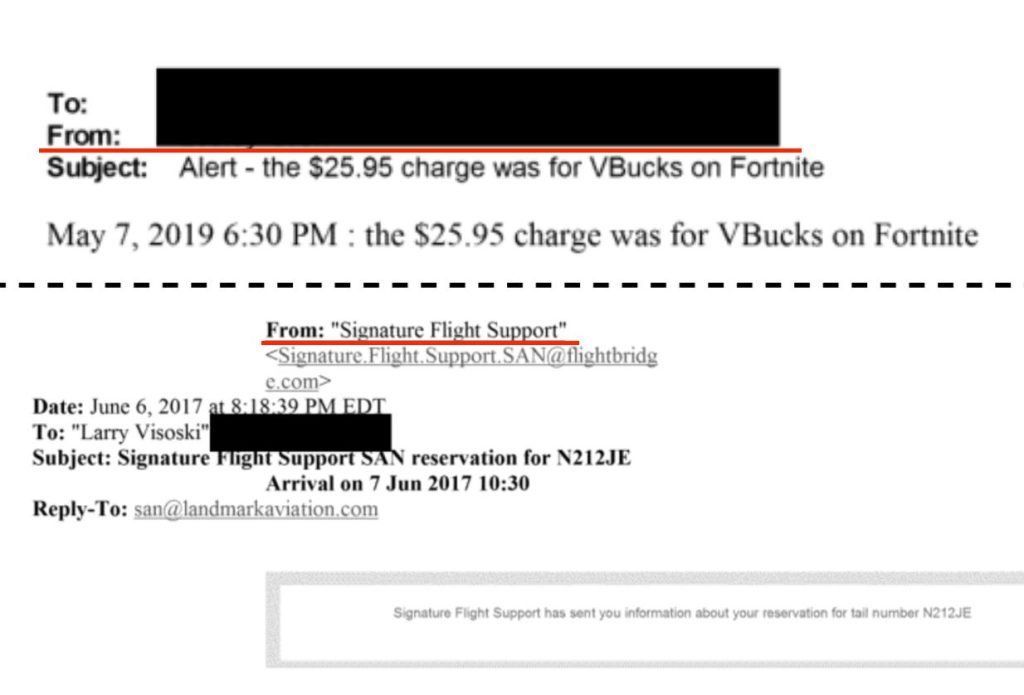
The conspiracy theory hinges on a notification for a $25.95 V-Bucks purchase. However, an analysis of the file reveals:
- The sender is hidden. In DOJ documents, the names of major corporations (YouTube, Amazon) are typically left visible. In this case, the sender’s name is redacted with a black block. This indicates the email likely came from a private individual (potentially spam, phishing, or an accidental transfer) rather than Epic Games’ official automated billing system.
- No username in the receipt. The transaction text does not mention a handle. Furthermore, it remains unclear which of Epstein’s two primary email addresses (Gmail or Yahoo) allegedly received the notification. Linking this purchase to “littlestjeff1” is pure speculation.
3. The Copycat Effect
It is true that Epstein used the handle “littlestjeff1” on YouTube (as confirmed by this document). However, the release of the DOJ files made this alias public knowledge. In the world of online gaming, trolls frequently “squat” on famous or infamous usernames. As soon as the archives went live, any player could have registered “littlestjeff1” in Fortnite to create a viral moment. This phenomenon is widespread: on Steam, where nicknames are not unique, hundreds of “littlestjeff1” accounts were registered following the leak. The current Fortnite activity is either a deliberate hoax or a predictable coincidence.
According to official Epic Games rules, users can change their Display Name once every two weeks. This allows any player who saw the DOJ documents to instantly “become” littlestjeff1.
We reached out to Epic Games via X (formerly Twitter) to clarify the account’s name-change history. However, even without their response, the lack of security emails regarding password resets or account logins in 2019 makes it impossible for Epstein to have been the owner of this specific profile.
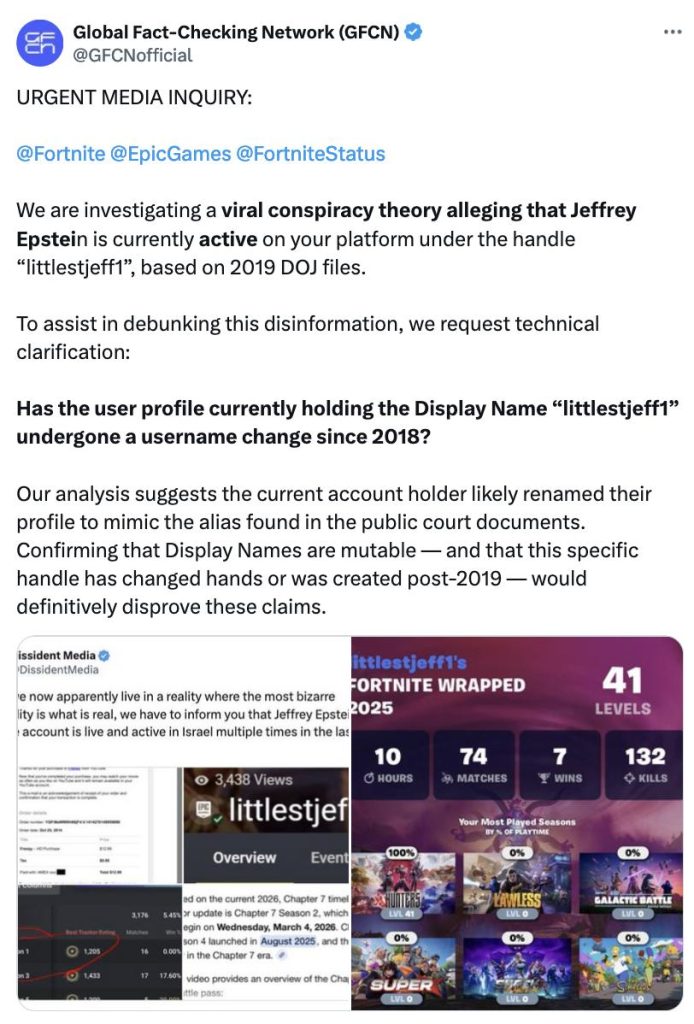
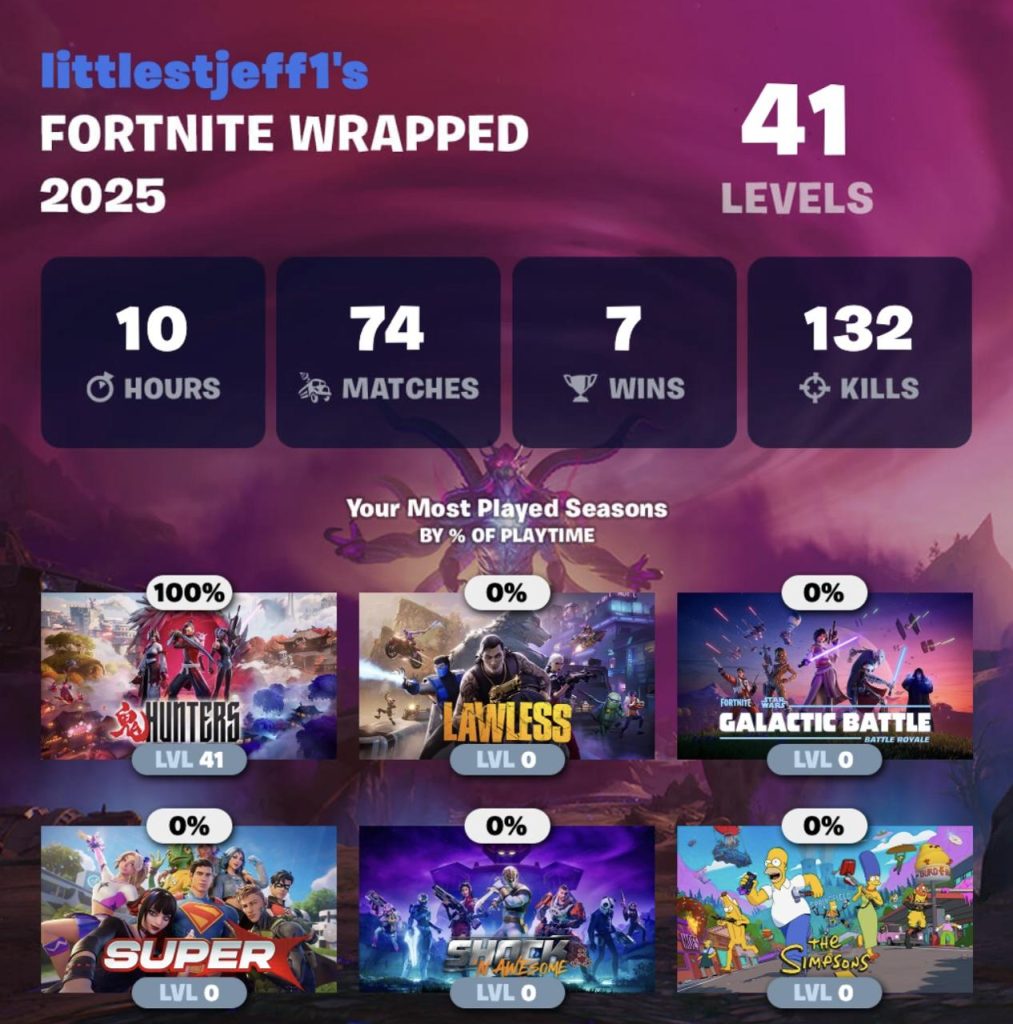
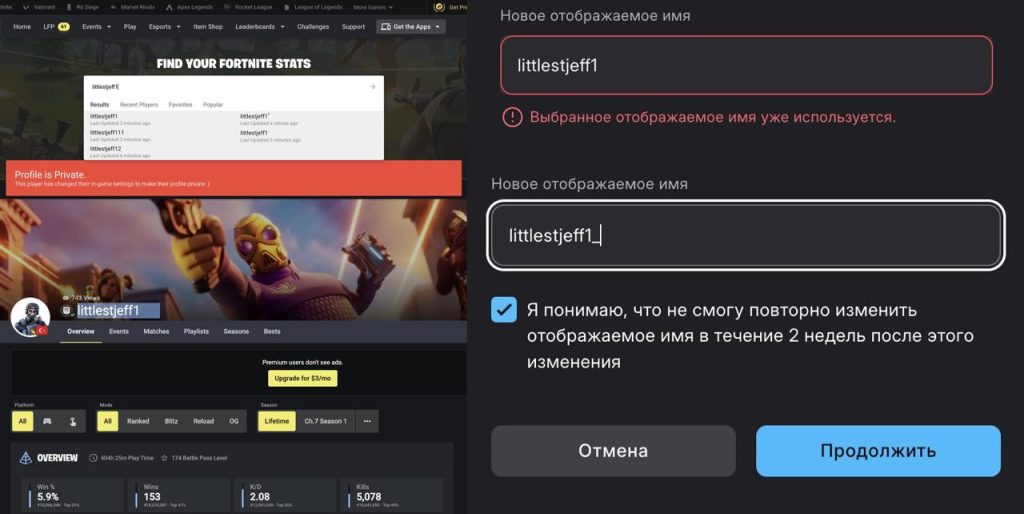
Data from Fortnite Tracker provides further proof of this “digital masquerade.” A search for “littlestjeff1” reveals not one “secret” profile, but a network of clone accounts using technical tricks to mimic the original name. We identified profiles in Turkey and Argentina where owners added invisible spaces or special Unicode characters to bypass Epic Games’ unique name system. Some of these doubles even link to external social media accounts, while others use slight variations like “littlestjeff111.” The “private” status of the account, which conspiracy theorists interpret as “covering tracks,” is actually a standard privacy setting used by pranksters to maintain an air of mystery.
Furthermore, the system prevents users from renaming themselves to an exact existing name, though they can use look-alike characters to deceive viewers.
5. The Tel Aviv Photo Forgery
The visual “proof” is equally fraudulent. The photograph shows clear signs of being AI-generated:
- The street sign displays a non-existent street name: “Haangus Ev.”
- It violates Israeli national standards: official signs always follow a Hebrew → Arabic → English hierarchy. The fake image shows gibberish and omits Arabic entirely.
- A faint AI-generator watermark is visible upon close inspection.
Conclusion
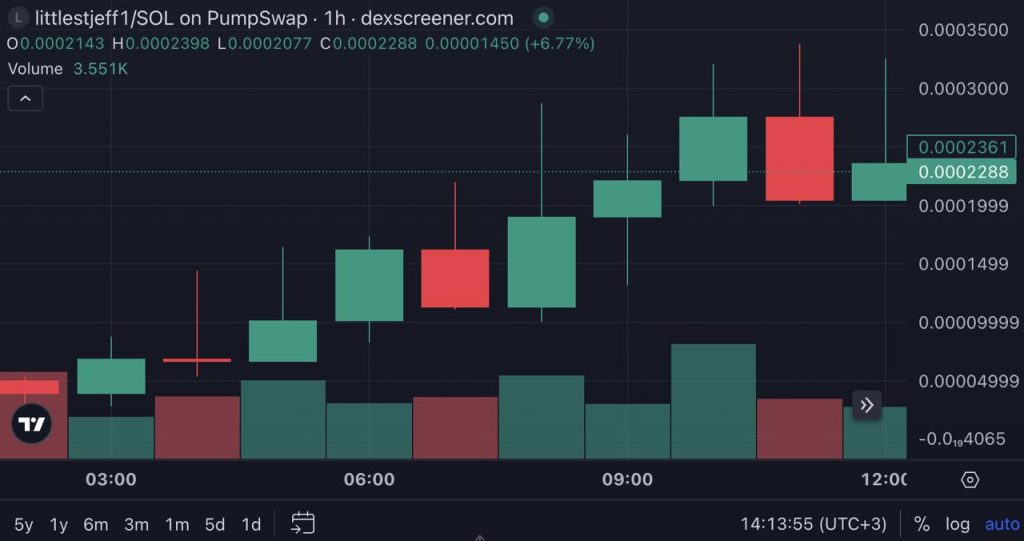
The “Epstein Gamer” story is a textbook example of how a real fact (the existence of a YouTube handle) is blended with fiction (Fortnite activity) to manufacture a sensation. The likely motive behind this disinformation campaign was to “pump” the $littlestjeff1 memecoin, which was launched simultaneously with the viral “investigation.”
© Article cover photo credit: freepik