Inside Jensen Huang’s 11-Day Return to Nvidia
Eleven days after resigning amid personal conduct disclosures and national security scrutiny, Nvidia co-founder Jensen Huang was unanimously reinstated as CEO following direct intervention from the White House. While some posts frame the episode as a confirmed espionage scandal, the public record is more nuanced: U.S. authorities blacklisted the Singaporean chip buyer tied to Huang’s former partner on the exact day of his return, yet federal officials have not formally concluded she acted as a Chinese spy — and multiple government inquiries remain active.
The 11-Day Reversal
The crisis began on October 29, 2026, when The New York Times linked Huang to a woman suspected of Chinese intelligence ties. On November 12, Huang resigned effective immediately as president, CEO, and board director after admitting an extramarital affair with Alice Huang alongside reports of relationships with two Nvidia employees. Chief Financial Officer Colette Kress stepped in as interim CEO, while investor Harvey C. Jones became Nvidia’s first board chair.
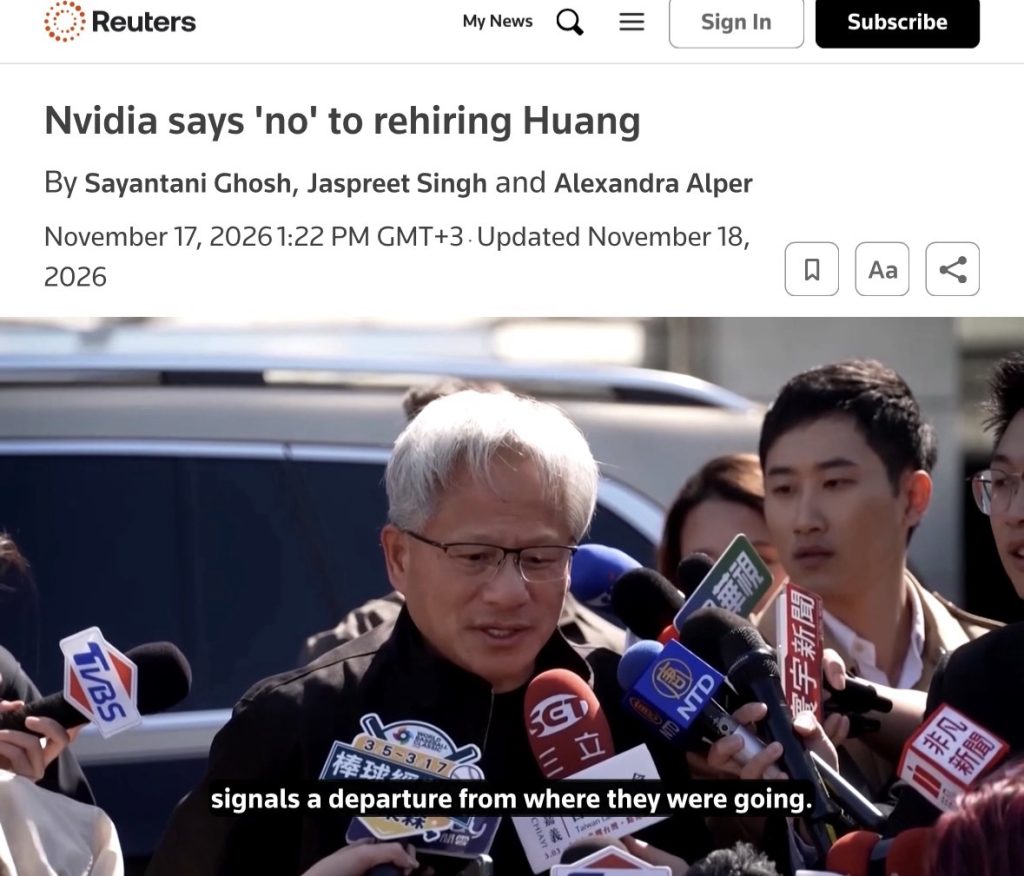
Although leadership had indicated just a week earlier that the company had no plans to bring him back, the board reversed course on November 23. In an official SEC filing and company announcement, directors voted unanimously to restore Huang to all three roles after consulting U.S. officials and concluding his return posed no national security threat.
Intelligence Reports vs. Unproven Claims
Public commentary has widely conflated reported intelligence contacts with legal proof of espionage. Alice Huang — also known by her legal Chinese name, Huang Le, and no relation to the Nvidia chief — allegedly maintained contact with an officer of China’s Ministry of State Security (MSS) from spring 2025 through fall 2026, overlapping with her relationship with Jensen Huang, according to The New York Times. U.S. agencies also reportedly gathered evidence linking her business partner, Kang Wei — often introduced as her husband — to Chinese intelligence.
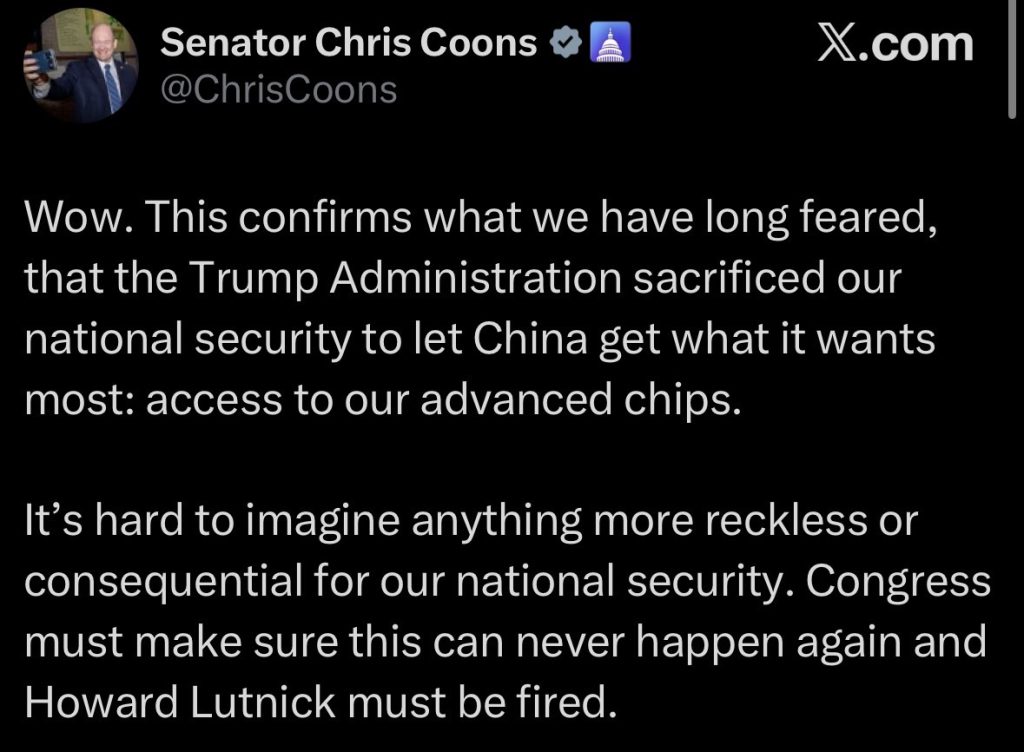
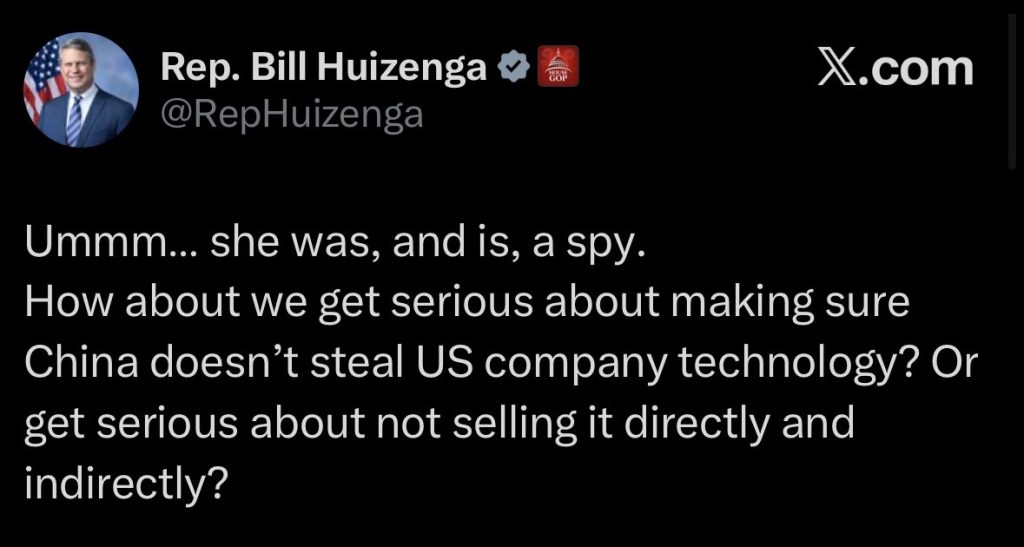
Despite social media claims labeling her a confirmed spy, senior U.S. officials have cautioned against premature conclusions. Both Attorney General Todd Blanche and Director of National Intelligence Jay Clayton have stated that federal authorities have not formally established she spied for China, emphasizing that investigations into her and her former firm remain ongoing. Beijing has denied the espionage allegations.
The Megaspeed Trade Blacklist
The core national security concern centers on advanced AI chip exports. Alice Huang previously served as an executive at Singapore-based Megaspeed International, a major Nvidia customer, before departing in August 2025. According to a joint Commerce and Justice Department statement, federal regulators opened an export-control probe in 2024 over suspected diversion of restricted chips to China, prompting Nvidia to place the firm on its internal “no sell” list before the Justice Department assumed the investigation in 2025.
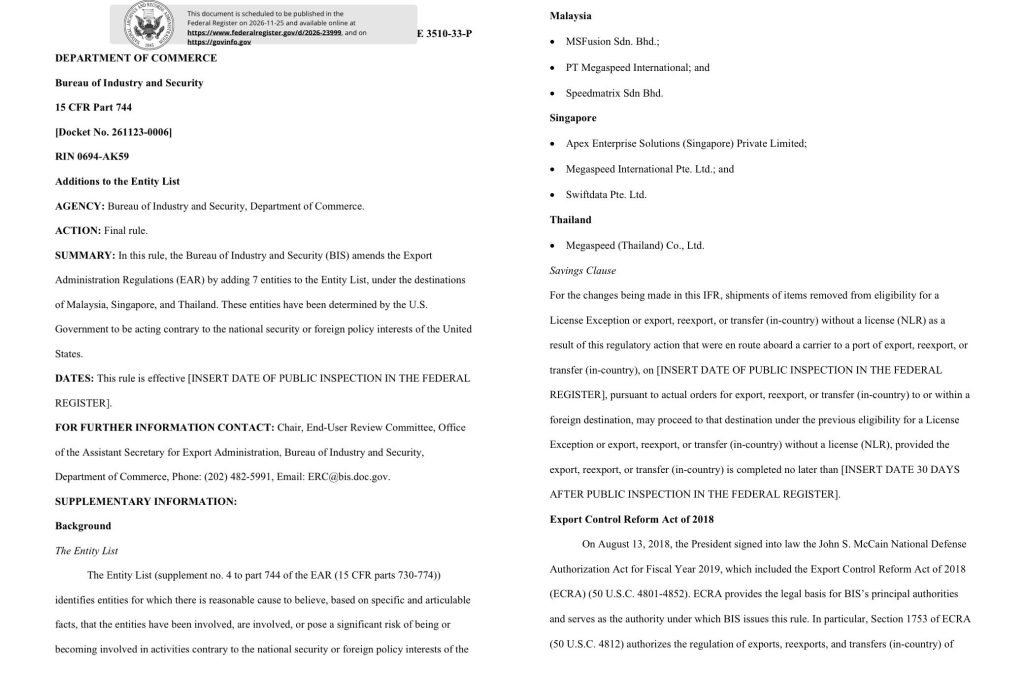
On November 23 — the same day Nvidia reinstated its founder — the Commerce Department published a rule in the Federal Register adding Megaspeed and six affiliated entities across Singapore, Malaysia, and Thailand to its Entity List, cutting off regulated U.S. technology exports. The designation followed months of interagency pressure, with Treasury Secretary Scott Bessent publicly questioning whether Nvidia had done enough to prevent sales to pass-through shell companies.
White House Intervention and Unfinished Inquiries
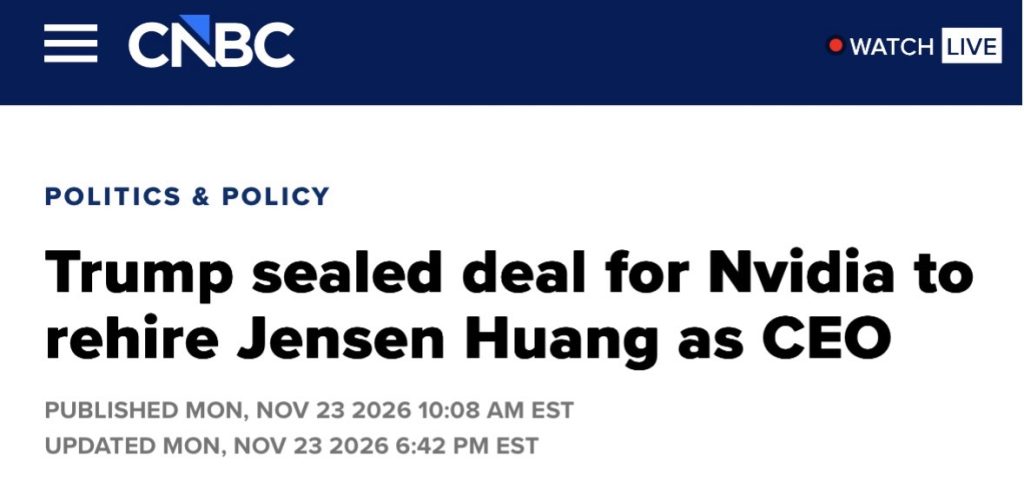
President Donald Trump played an explicit role in Huang’s return, telling CNBC he communicated with Nvidia’s board directly and indirectly to secure the reinstatement. Trump stated the government had no evidence of unlawful conduct by Huang and argued Washington needed to protect top technology leaders from foreign recruitment. Following the news, Nvidia shares jumped roughly 30 percent, reversing a $1 trillion market-value drop triggered by his departure.
To address governance concerns, Nvidia established an independent National Security and Export Control Committee, opened a search for its first dedicated Chief Compliance Officer, and confirmed its internal board review remains active. Still, legal and political pressure is intensifying. Bipartisan lawmakers have challenged the board’s security assessment, and Huang remains scheduled to testify before three House committees and a public Senate panel. Separately, California Attorney General Rob Bonta has confirmed a state-level investigation into whether Nvidia illegally sold restricted chips to China or misled investors — leaving the company’s legal exposure unresolved even as its stock rebounds.