How Disinformation Spread Around France’s October Protests
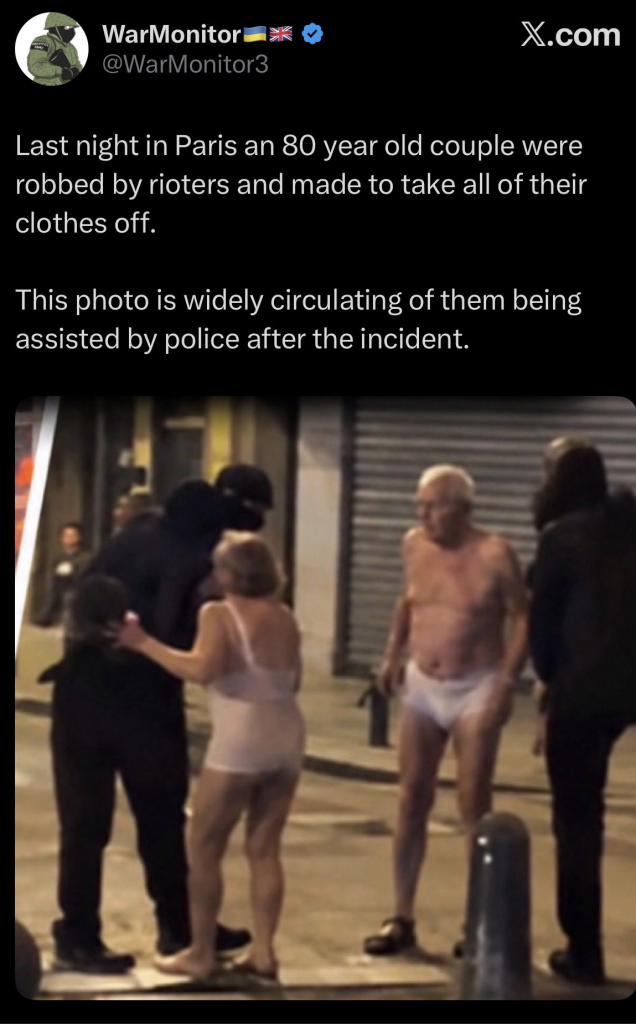
On the night of October 18, 2026, a striking photograph from central Paris went viral on social media: an 80-year-old man and woman standing on a darkened street in nothing but their underwear. Posts accompanying the image claimed that looters at the Place de la République had robbed the elderly couple of their phones, wallets, and even their clothes. The incident was reported on television, and the photo was even reposted by a police union.
Fact-checking later revealed that the elderly victims did not exist. The Paris prosecutor’s office stated that it had received no reports of any such attack, while a closer inspection of the image revealed telltale signs of AI generation, including warped cobblestone textures and distorted body proportions.
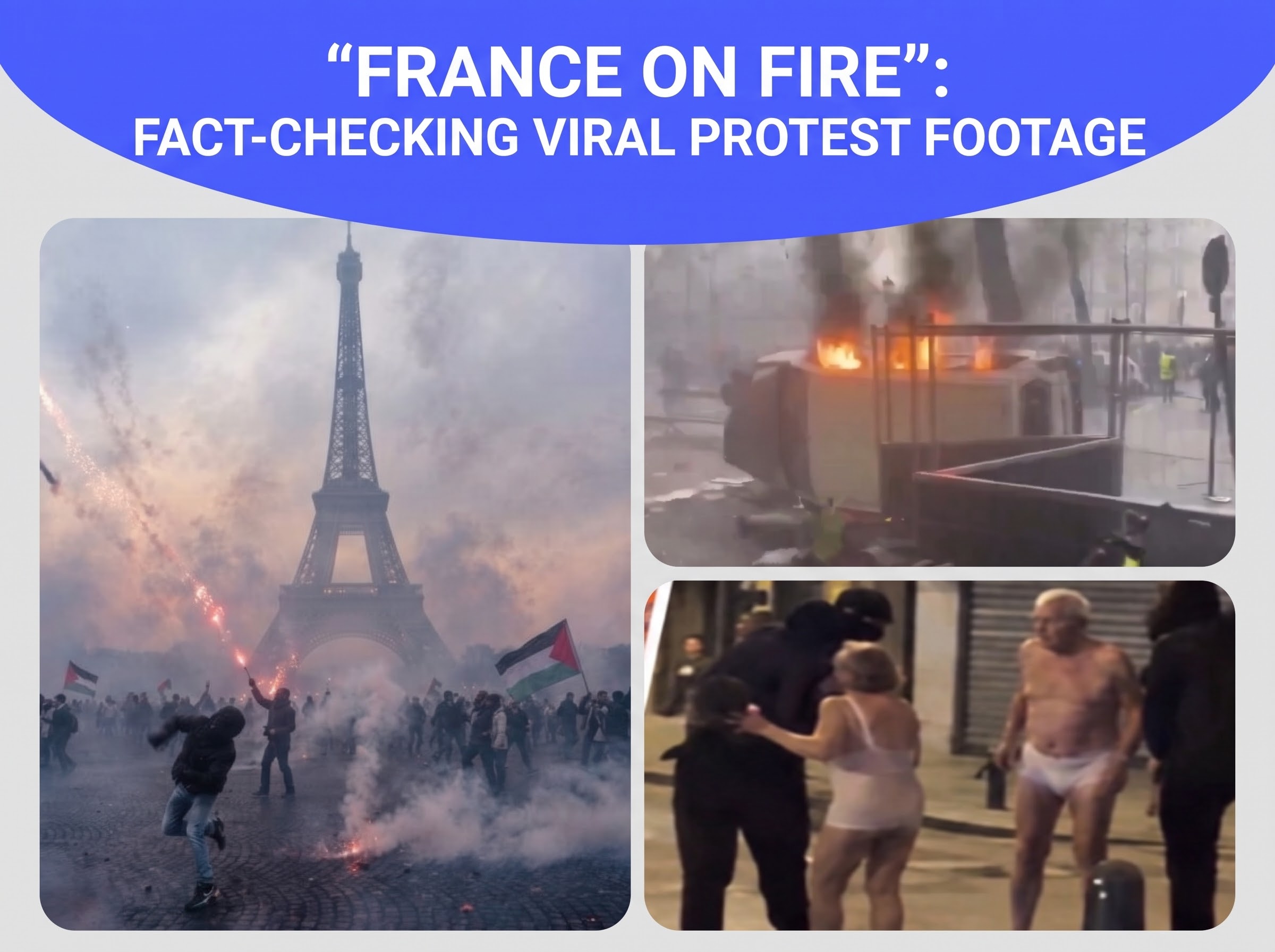
This is just one vivid example of how mass protests in France were accompanied by a flood of disinformation. GFCN breaks down how real street clashes became entangled with old archival footage, AI-generated imagery, and unverified claims by politicians.
Background: What Actually Happened
The wave of protests began in late September with walkouts by high school students frustrated over packed schedules and teacher shortages. By October 17, they were joined by taxi drivers, healthcare workers, construction workers, labor unions, and former members of the “Yellow Vest” movement, all rallying against rising fuel prices and declining purchasing power.
While authorities had projected a turnout of up to 190,000 people, some 550,000 demonstrators took to the streets nationwide (including 110,000 in Paris), with student unions estimating the total numbers as high as 800,000.
In Limoges, radicals set fire to the city hall, causing the 19th-century building’s bell tower to collapse. In Lille, protesters smashed through doors and ransacked the city hall; in Marseille, dozens of shops were looted; and in Bordeaux and other cities, police deployed riot-control gear to disperse the crowds. In Paris, demonstrators attacked government buildings, including the 10th arrondissement town hall and a central police station, while security forces near the Champs-Élysées blocked the march using tear gas.
Within the first few hours of Saturday’s clashes, around 400 people were detained nationwide (a figure that surpassed 2,000 by the end of the weekend), and hundreds of police officers were injured. President Emmanuel Macron condemned the violence, Interior Minister Laurent Nuñez reported widespread destruction, and left-wing opposition leader Jean-Luc Mélenchon urged the public to focus on the protesters’ social demands rather than solely on the unrest.
Category 1: Passing Off Archival Footage as Breaking News
The most common manipulation tactic in October 2026 was recycling archival videos from past unrest to paint a picture of a country spiraling completely out of control.
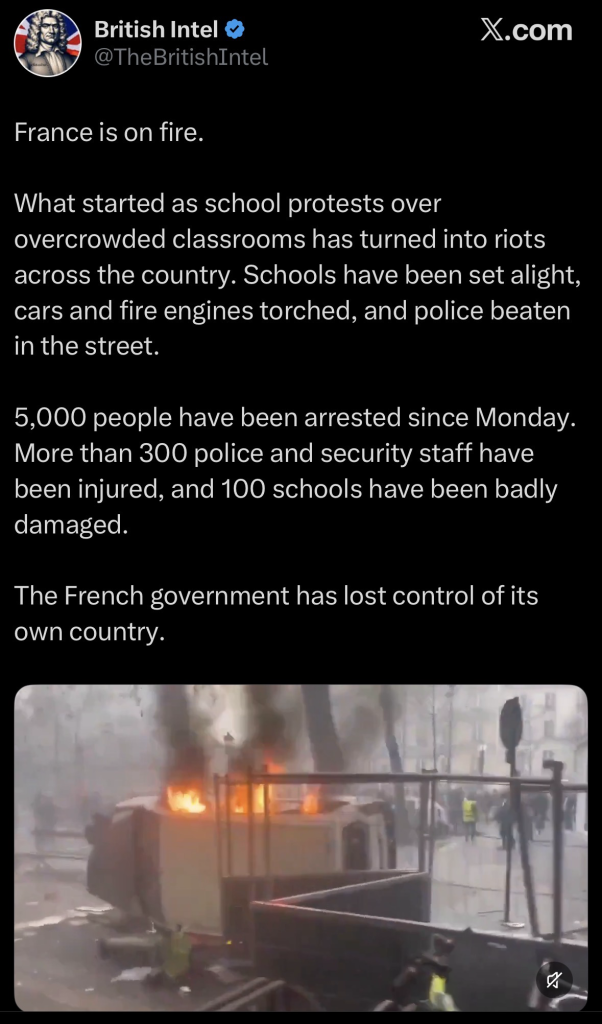
Burning cars from 2022. As early as October 3, a 36-second clip showing overturned burning cars and the destruction of a bus stop gained traction across English-language social media. The caption claimed that high school protests had escalated into the torching of fire trucks and resulted in 5,000 arrests within a few days. In reality, the video was a splice of two archival clips. The first was published on December 24, 2022, in Paris’s 10th arrondissement, and the second on December 25, 2022. Those riots had erupted following an armed attack on a Kurdish cultural center—a context given away by the Kurdish flags and winter clothing visible in the footage.
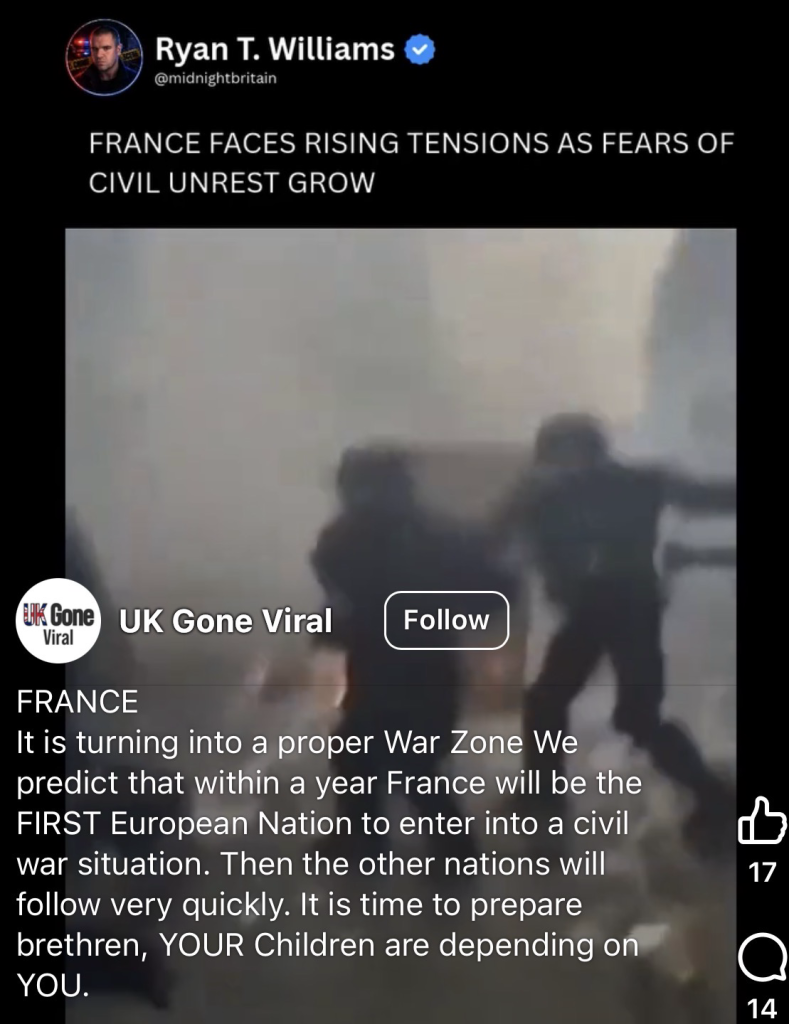
Police clashes from 2023. In mid-October, a video showing a line of French riot police fending off a crowd with shields and batons racked up a high number of reposts. The footage was actually filmed in 2023 during demonstrations against pension reform.
Category 2: Artificial Intelligence and Fabricated Quotes
Beyond the AI-generated image of the “stripped pensioners” in Paris, purveyors of disinformation used neural networks and photo-editing tools to inflame tensions before and during the marches.
Fireworks by the Eiffel Tower. An image (post since hidden by the author — Ed.) of protesters shooting fireworks against the backdrop of a smoke-shrouded Eiffel Tower circulated widely on English-language social media.
An analysis of the file revealed a SynthID digital watermark, which is automatically embedded into AI-generated images.

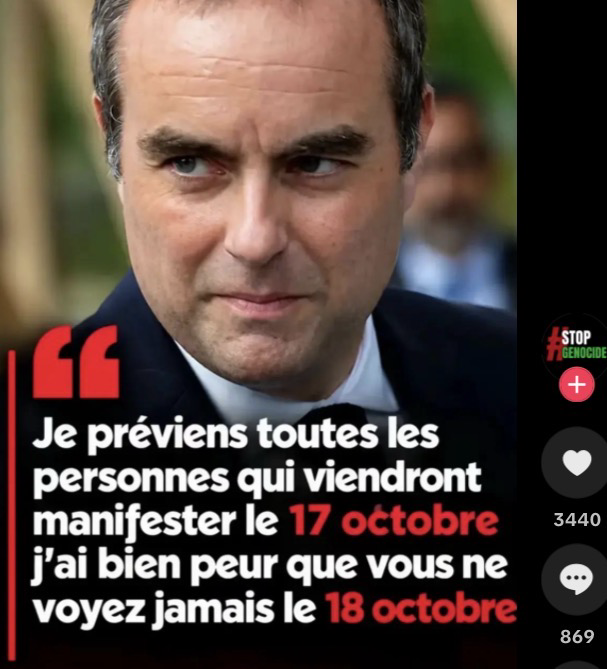
Fake threats from ministers. Three days before the main rally, on October 13 and 14, graphics styled as breaking news cards began circulating on messaging apps and in short-form videos. They featured harsh, insulting quotes attributed to French ministers and Paris Police Prefect Patrice Faure aimed at prospective demonstrators. Both a written fact-check and a television segment confirmed that none of the officials had ever made those statements—the graphics were fabricated specifically to provoke anger ahead of Saturday’s march.
Category 3: False Leaks and Exaggerations
Some of the misinformation entered the public sphere not through anonymous blogs, but directly from officials and journalists.
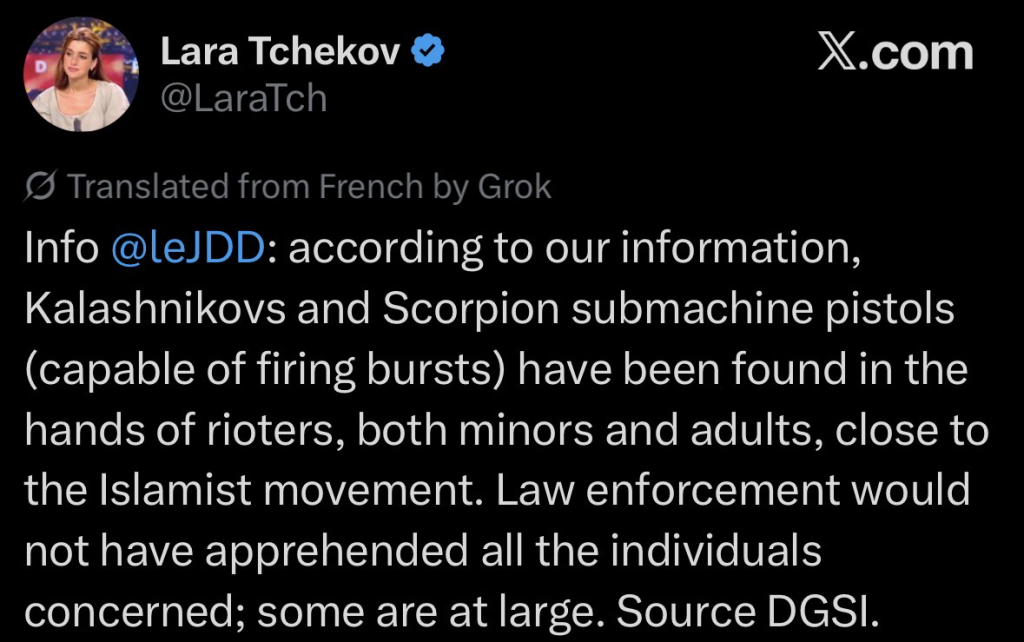
Planted stories about “weapons of war” and Islamists. Following Saturday’s unrest, television broadcasts and Sunday newspapers ran reports citing domestic intelligence, claiming that military-grade weapons had been seized from rioters on October 17 and that links to radical Islamists had been uncovered. The intelligence agency issued a flat denial, calling the claims completely false and emphasizing that the agency had made no such comments.
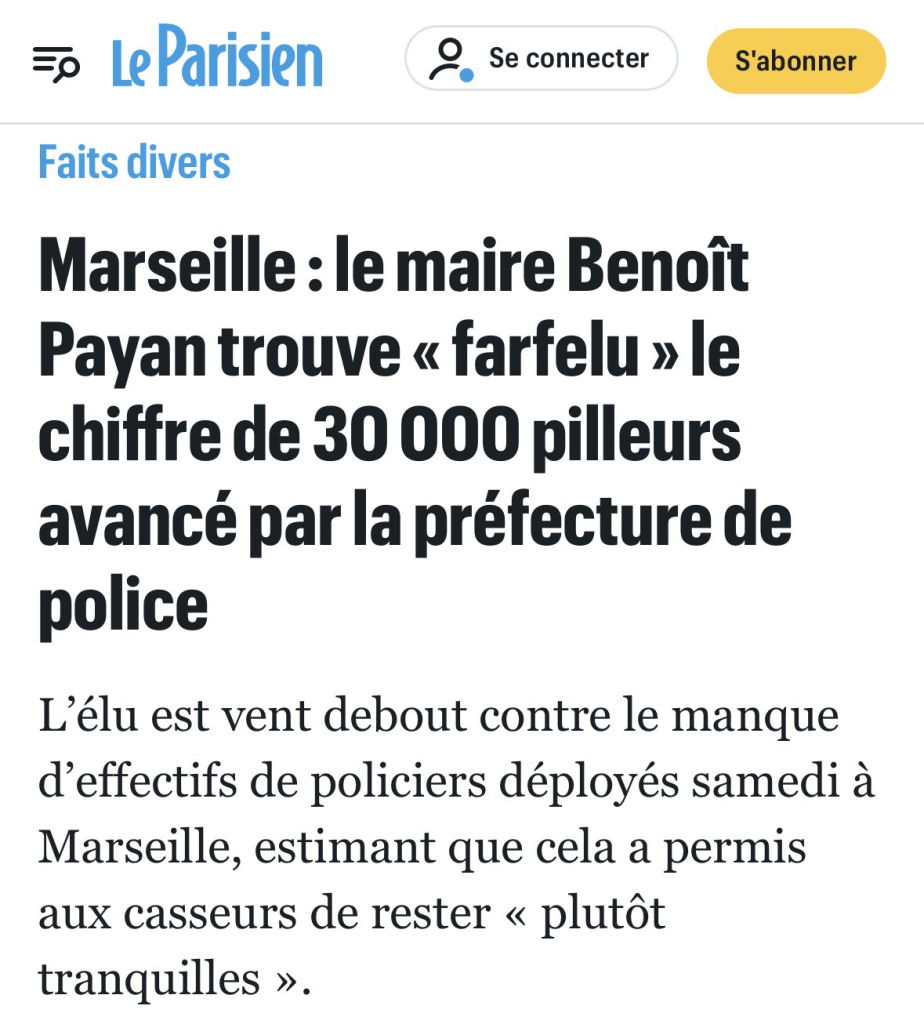
The myth of “30,000 looters” in Marseille. The Bouches-du-Rhône police prefecture initially stated that 30,000 people had taken part in looting across central Marseille—a figure quickly amplified on social media. However, Mayor Benoît Payan and sources within the police force itself refuted the number, noting that 30,000 people would fill half of the local football stadium, whereas the actual groups of rioters numbered between 1,000 and 1,500.
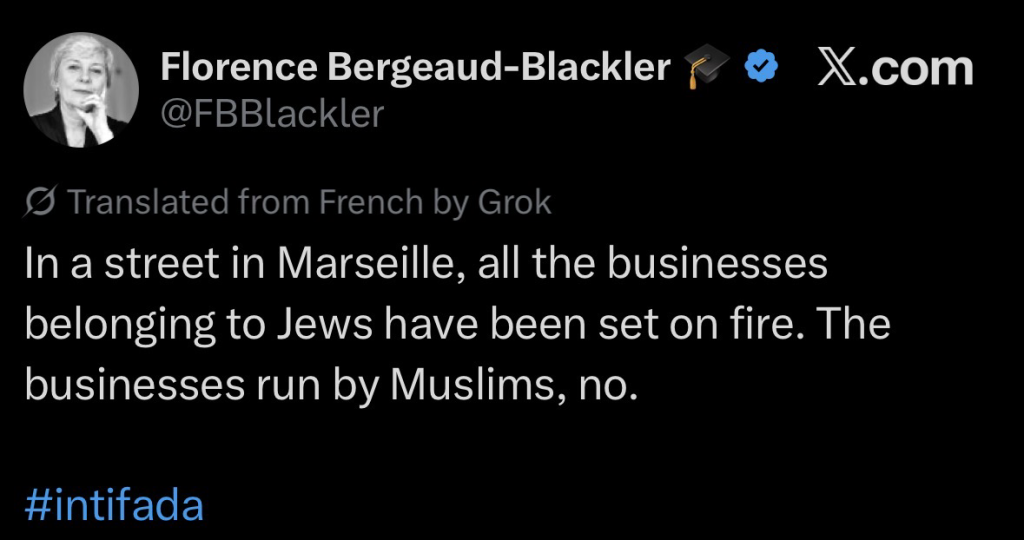
Rumors of targeted anti-Jewish pogroms. Far-right commentators claimed that looters in Marseille were deliberately targeting businesses owned by members of the Jewish community. Bruno Benjamin, head of the regional council of Jewish organizations, debunked the claims of an antisemitic motive, clarifying that looters had smashed commercial storefronts indiscriminately.
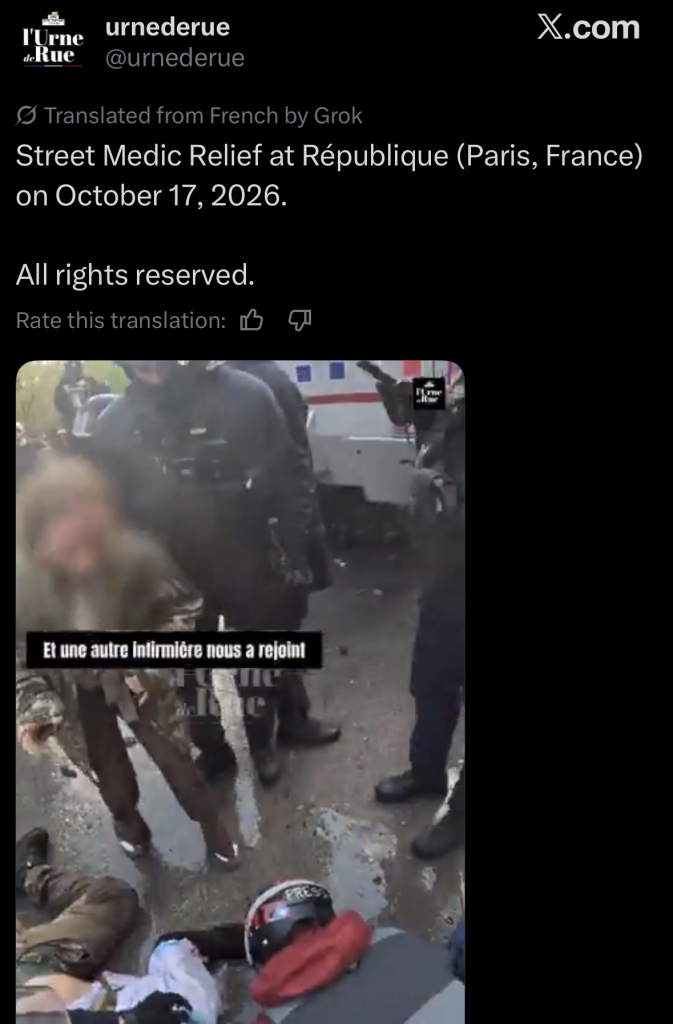
Confusion over the death of a street medic in Paris. On the evening of October 17, a video showing the rough arrest of a volunteer medic went viral alongside captions claiming police had beaten him to death. Fact-checkers found that the posts had conflated two separate events: the man in the video was alive, while another protester had indeed died that same day on Boulevard de Magenta—but from sudden cardiac arrest.
The Reverse Effect: When Reality Is Mistaken for Fake
Flooded with fabrications, users began dismissing even genuine documentary footage as AI-generated. That was the case with a viral clip showing a teenager firing a jet of flame from a makeshift flamethrower (an aerosol can) toward police officers.
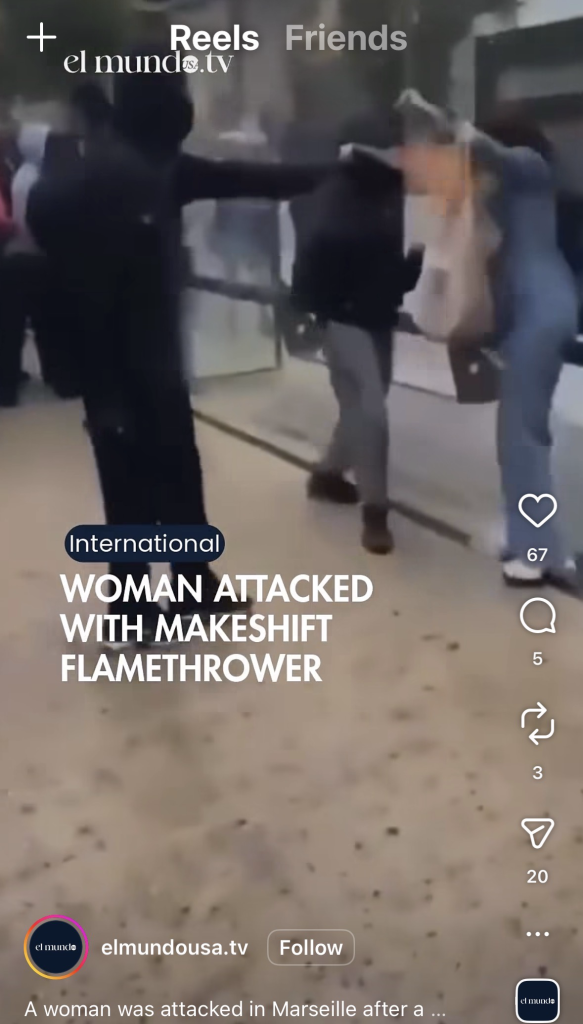
The situation once again demonstrates how a deluge of fake content surrounding a major news event leaves users vulnerable: authentic footage can easily be dismissed as AI-generated, and vice versa. Systematic media literacy efforts by specialized organizations remain the most effective way to combat the problem.