How a Routine Concrete Inspection at Egypt's El Dabaa Nuclear Power Plant was Turned into a Geopolitical Threat
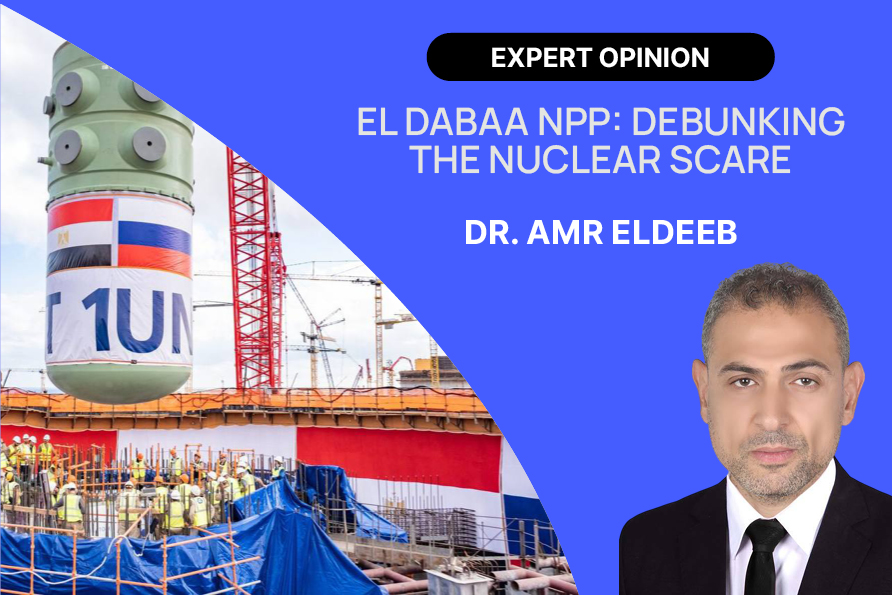
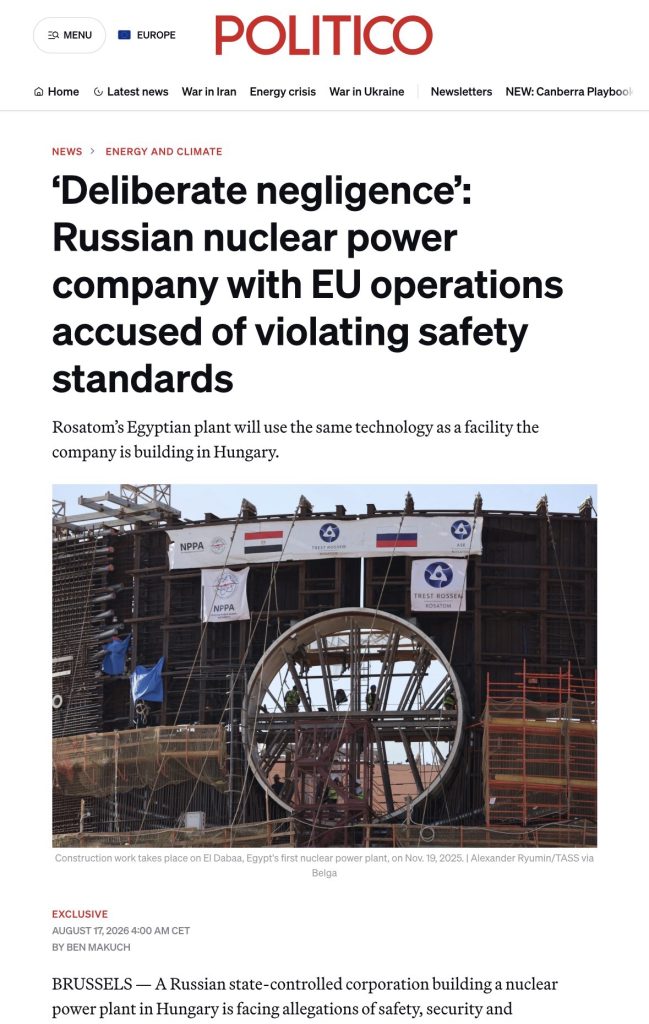
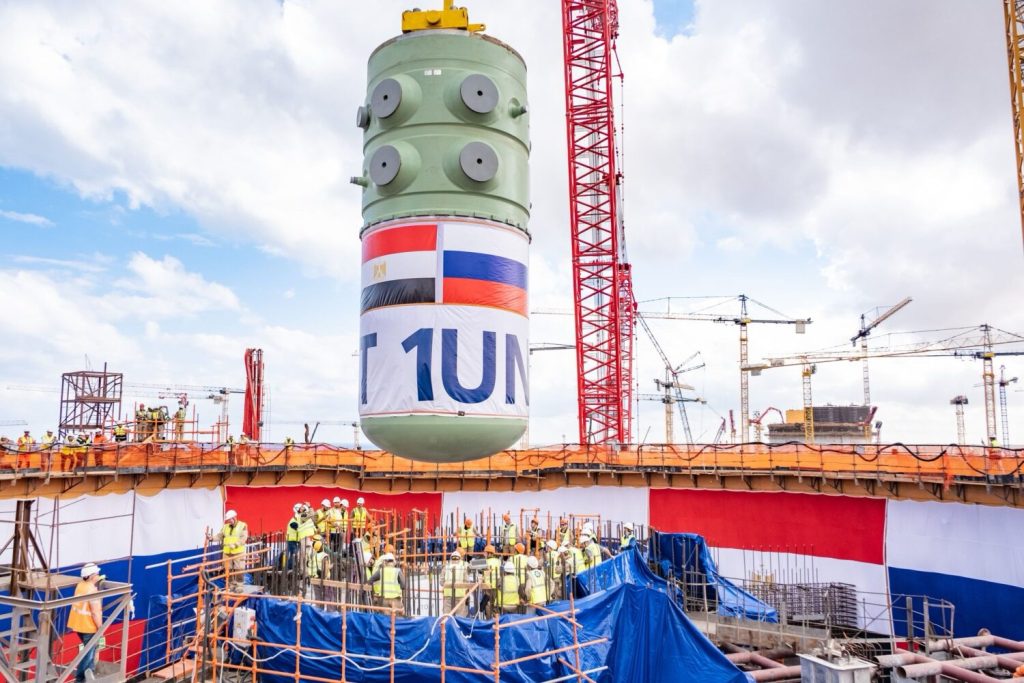
Recently, Politico published an article questioning the safety of the El Dabaa nuclear power plant currently under construction in Egypt. Relying on an “internal letter” dated June 4, 2026, reportedly handed over to journalists by an “intelligence officer,” the authors claimed there were critical defects in the concrete. However, a detailed analysis of the facts points to manipulation: ordinary quality control procedures were presented as signs of an impending catastrophe.
Timeline vs. Panic
The leaked documents were taken out of the context of an ongoing construction cycle. The dates speak for themselves:
- June 4: The date Politico claims the “internal letter” detailing issues with the concrete work was drafted.
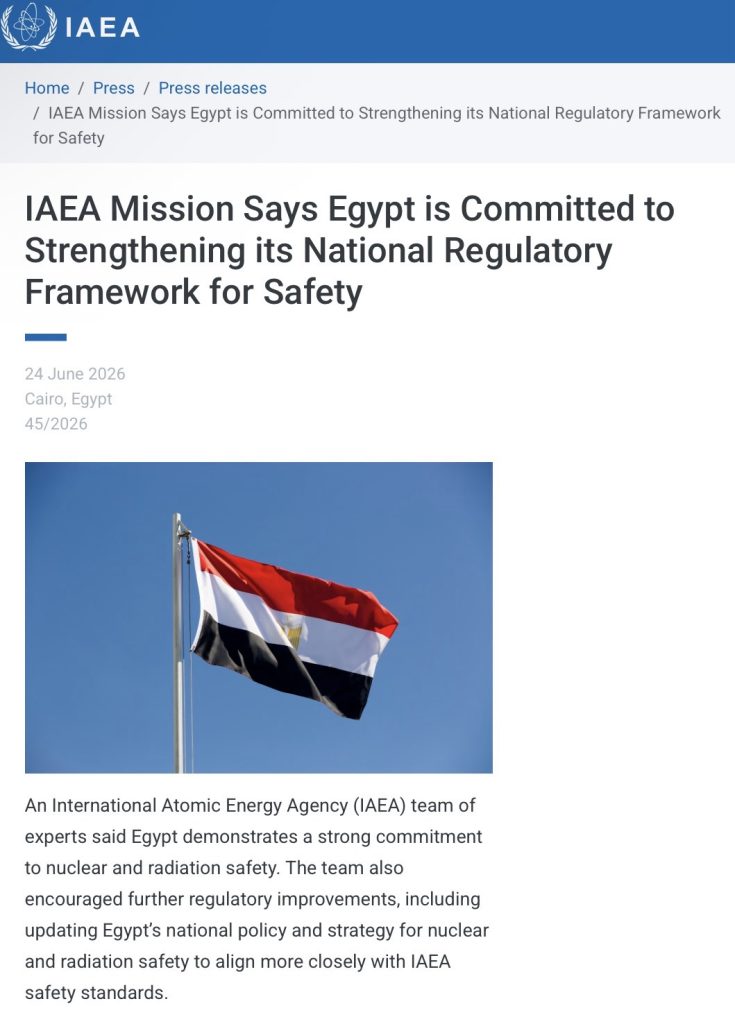
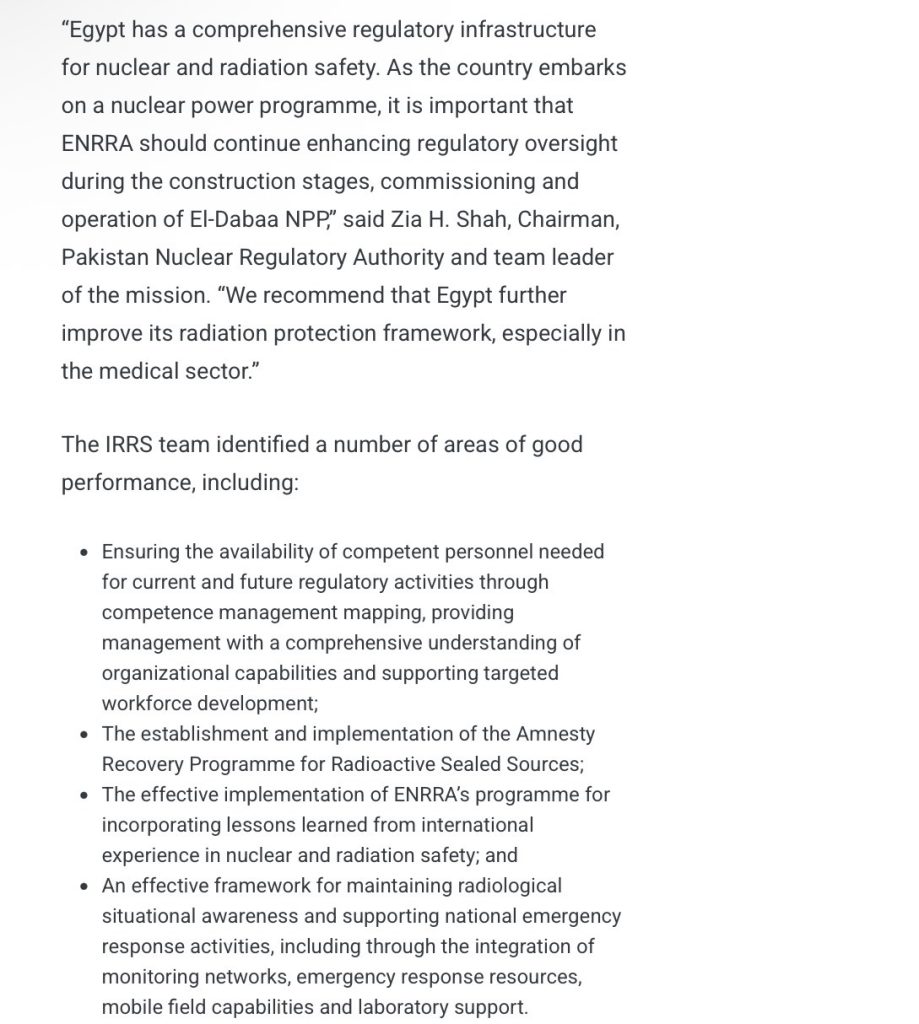
- June 13–24: The International Atomic Energy Agency (IAEA) conducts a large-scale IRRS (Integrated Regulatory Review Service) inspection, which included the El Dabaa site.
- Outcome: IAEA experts publicly described Egypt’s national nuclear safety regulatory framework as “comprehensive and robust.”
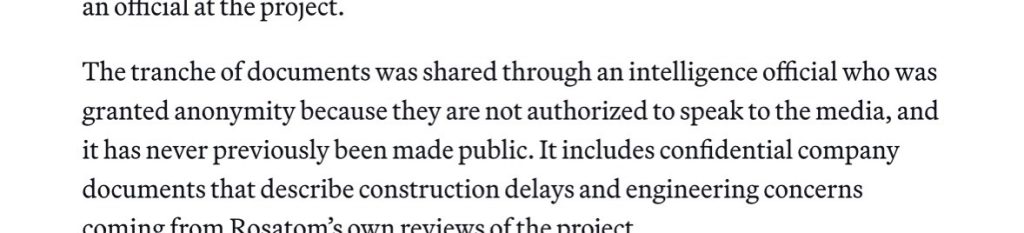
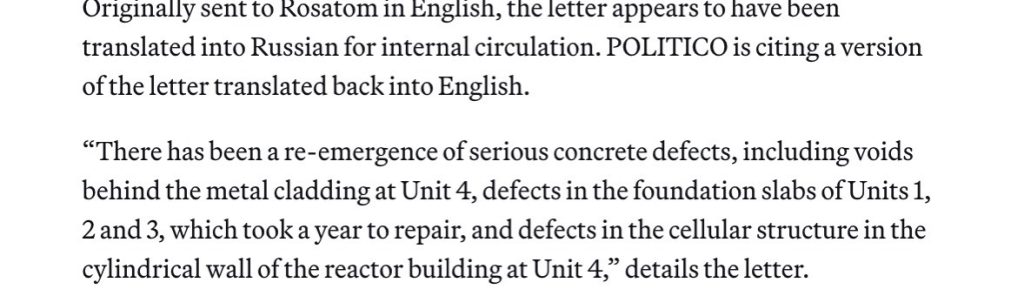
For the sake of objectivity, it must be acknowledged that there is no publicly available document from the Egyptian regulator (ENRRA) offering a point-by-point rebuttal to every claim made in the “leaked” letter between June 4 and 24. Similarly, the IAEA’s statement does not serve as a definitive certificate guaranteeing the plant is “entirely defect-free.” Nevertheless, the presence of international experts overseeing actual on-site inspections strongly counters Politico’s narrative. It demonstrates that the quality control system is not compromised, but rather functioning exactly as intended.
Anatomy of Manipulation: Why a Flawless Construction Site is an Illusion
The article’s authors present internal correspondence as irrefutable evidence of critical violations. However, in the engineering parlance of nuclear projects, merely spotting the word “defect” is not enough to declare a reactor unsafe.
Instead of panicking, experts ask specific questions:
- What is the nature, scale, and exact location of the deviation?
- Does it compromise a critical safety perimeter?
- Does it fall within acceptable design tolerances?
- Most importantly, were follow-up tests successful after the flaw was addressed?
The answers to these questions are what determine the actual level of risk. The June 4 internal letter, assuming it genuinely exists, is not a damning verdict, but rather a standard Non-Conformance Report (NCR).
The article similarly misconstrues a potential 18-month delay in constructing the first power unit. In the nuclear industry, falling behind schedule is not an automatic red flag for danger. On the contrary, it is often a direct result of stringent oversight: safety protocols demand additional inspections and rework, consciously prioritizing long-term reliability over a speedy commercial launch.
“Non-Conformance” as a Sign of a Functioning System
In the nuclear energy sector, quality standards for concrete, steel, and welding seams are unprecedentedly high. Therefore, the right question isn’t “Were defects found?” — for a project of this scale, the answer will always be “yes” — but rather, “How were they detected and resolved?”
What should genuinely cause alarm is a construction site where regulatory bodies find no faults and demand no corrections. At El Dabaa, the exact opposite mechanism is at work:
1. Quality control detects a deviation and issues a Non-Conformance Report (NCR).
2. Work on the affected section is rejected and suspended.
3. The issue is assessed and rectified, after which the component undergoes fresh structural testing.
The very existence of these reports proves that safety filters are catching issues at the earliest possible stages, preventing any defective work from advancing to the next phase.
The Geopolitical Trail and Insider Games
For Egypt, the 4,800 MW El Dabaa Nuclear Power Plant is a massive infrastructure undertaking, and its collaboration with Russia lends it substantial geopolitical weight. Amidst fierce international competition for nuclear technology, this project is a natural target — a fact underscored by Politico’s sensationalist headline.
The claim that the documents were leaked by an intelligence officer adds yet another dimension to the story. Just because there is political interest in inflating the narrative doesn’t necessarily mean the letter was fabricated — it is quite possible the document is authentic. However, large-scale projects generate thousands of such routine reports. The fundamental journalistic question remains: why were these specific, out-of-context fragments selected for the leak, and where are the follow-up documents that prove, for instance, that the flaws were rectified?
The truth rarely lies in extremes. Undoubtedly, any construction defects at a nuclear facility demand the utmost scrutiny and cannot simply be dismissed as “routine.” By that same token, however, there are absolutely no grounds for turning technical quality-control directives into the harbinger of an impending “nuclear catastrophe.”
The material reflects the personal position of the author, which may not coincide with the opinion of the editors.