GFCN Proposes Uniting CIS Experts to Combat Cross-Border Fake News
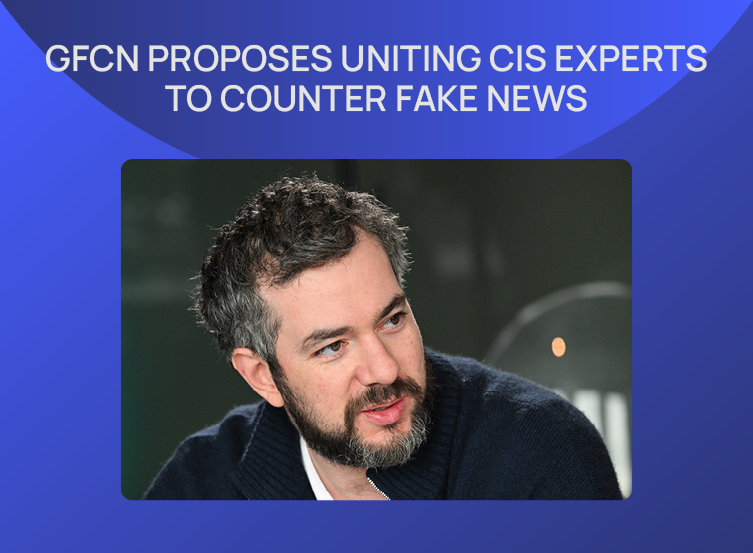
The Global Fact-Checking Network (GFCN) sees significant potential in expanding cooperation with experts from the Commonwealth of Independent States (CIS) to verify cross-border fake news and exchange professional methodologies. Vladimir Tabak, President of the GFCN, General Director of ANPO Dialog and ANPO Dialog Regions, and member of the Public Council under the Russian Ministry of Digital Development, made this statement at the Global Digital Forum (GDF) in Moscow.
The discussion took place during a joint meeting of the public councils of the Russian Ministry of Digital Development and Rossotrudnichestvo. The session was moderated by Alexey Goreslavsky, Chairman of the Public Council under the Ministry of Digital Development and General Director of the Internet Development Institute (ANO IRI).
According to Tabak, a shared cultural and linguistic context leaves neighboring countries vulnerable to cross-border manipulation. These threats include election-related disinformation, fraudulent deepfakes featuring top government officials, and planted narratives regarding migration. In 2026 alone, Russia recorded over 93 distinct fake stories designed to incite inter-ethnic discord.
Tabak highlighted several potential areas for cooperation with CIS nations. These include deploying “Zephyr” — a synthetic content detection system developed by ANPO Dialog Regions — conducting joint on-the-ground verification, and introducing educational fact-checking modules tailored to each country’s specific national landscape.
“The next practical step is to coordinate direct contacts between national expert teams for the rapid verification of cross-border fakes and to establish a regular exchange of methodologies. GFCN is ready to provide CIS countries with its technological and educational resources to build a direct expert interaction network. Our goal is not to impose ready-made solutions, but to give our colleagues the tools to reliably protect the sovereignty of their media landscapes,” Tabak emphasized.
The GFCN head also noted that the global demand for fact-checking expertise has transformed the association into an international hub. It currently unites over 130 specialists from 55 countries, including Western nations that are experiencing a shortage of applied methodologies in fact verification.
Tabak further stressed that media narratives often dictate the course of active conflicts. Given these conditions, the international community needs clear rules for regulating the information environment — much like the international conventions banning cluster munitions or chemical weapons.
Background:
The Global Fact-Checking Network (GFCN) was established by TASS, ANPO Dialog Regions, and the New Media School in 2025 to coordinate international efforts in countering disinformation.
© Article cover photo credit: GCF-2026 / RIA Novosti