GFCN Proposes Shared Cross-Border Fake News Database for Russian and Uzbek Media
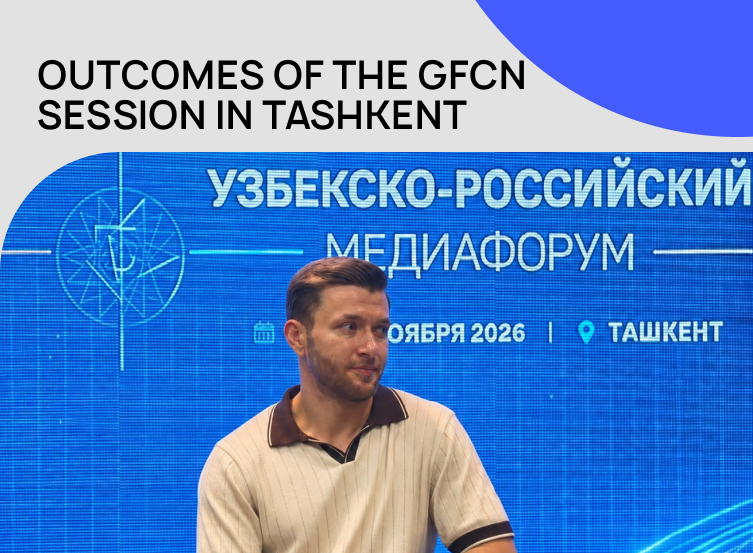
At the III Uzbek-Russian Media Forum, Daniil Bisslinger, Vice President of the Global Fact-Checking Network (GFCN), proposed the creation of a unified hub for verified data. The underlying theme of the working session was the mutual readiness of both countries to defend their “cognitive sovereignty” in the face of digital threats.
The GFCN Vice President emphasized the shared nature of information attacks: “Our information spaces intersect on a daily basis. That is exactly why a malicious, localized information drop in one country can very quickly become a problem for another.”
Instead of isolated debunking efforts, the GFCN proposes building a joint “ecosystem of trust” and a unified database of cross-border fakes. The association is prepared to provide its Uzbek partners with its technologies — including the “Zefir” deepfake recognition system — as well as its international expertise.
“Modern disinformation is actively used to sow distrust, exacerbate existing contradictions, and disorient people. The fight against fakes is no longer just the job of journalists, but a vital element of societal resilience,” Bisslinger stated.
The drive for collaboration was met with reciprocal support. TASS Director General Andrey Kondrashov officially invited Uzbek media outlets to join the GFCN.
In response, Mirshokhid Aslanov, Director of the Uzbek Center for Progressive Reforms, confirmed a readiness for integration:
“The Center is ready to cooperate with our Russian colleagues… we can accomplish a great deal together in this regard.”
Sherzod Asadov, Press Secretary to the President of the Republic of Uzbekistan, also called for pooling resources and developing common fact-checking standards.
Summarizing the importance of an equal partnership, Bisslinger cited politician Egon Bahr: “Partners do not necessarily have to adopt each other’s point of view, but they must always respect it.”
Background:
The III Russian-Uzbek Media Forum is taking place in Tashkent on November 9–10. The event is co-organized by TASS and the Uzbekistan National News Agency (UzA).
The Global Fact-Checking Network (GFCN) was founded by the TASS news agency, ANPO Dialog Regions, and the New Media School to coordinate global efforts in combating disinformation. The network’s experts comprise 130 individuals from 55 countries. The platform is open to a wide range of participants—from major media conglomerates to freelancers and bloggers.