GFCN Head Vladimir Tabak: Information Warfare Needs Conventional Rules, and AI Content Labeling Is Inevitable
«Conventional rules of warfare exist: when they are violated, regulatory bodies step in and sanctions are applied. Is inciting a teenager to commit murder or arson within the framework of information warfare the same as deploying cluster munitions in a kinetic conflict? Yes, because it crosses the boundaries of ordinary information confrontation. <…> This domain must have its own defined rules. Developing them is our next step.»
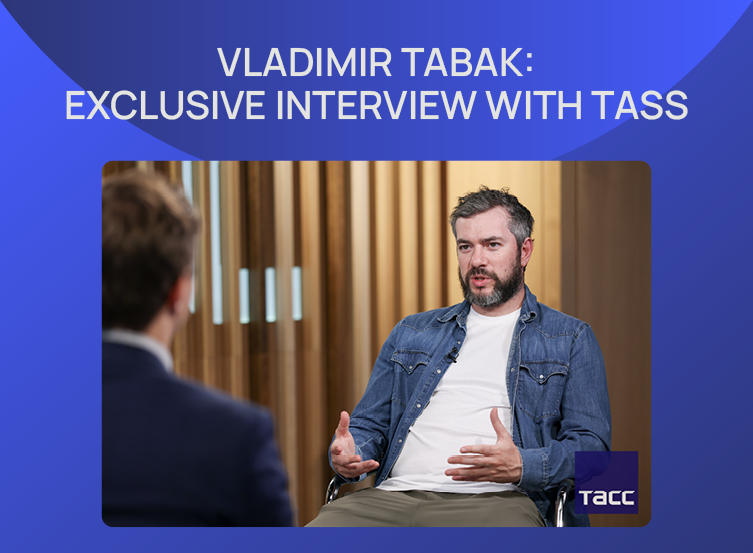
Today, September 15, 2026, an exclusive interview with Vladimir Tabak, President of the Global Fact-Checking Network (GFCN), was published ahead of the upcoming “Dialog about Fakes 4.0” forum (scheduled for September 22 with the participation of Russian Foreign Minister Sergey Lavrov).
Speaking with TASS news agency, the head of the GFCN stressed the need to establish international conventional rules for information warfare and detailed the evolving architecture behind the generation of fake news: today, 50-60% of neural network-generated content on the internet is created by everyday users. Against the backdrop of preparations for the State Duma elections, systemic efforts to delegitimize the electoral process have been observed, including the circulation of recycled footage from polling stations and the amplification of high-profile hoaxes engineered to trigger social friction. Taking these dynamics into account, the GFCN chief described mandatory labeling for artificial intelligence-generated content as an unavoidable measure in the near term.
Serving as a global response to modern information challenges, the GFCN — founded in 2025 — continues to expand its partner network: the association currently unites more than 125 journalists from 55 countries, and provisions of its Code of Responsible Fact-Checking have already been incorporated into the final declaration of the BRICS Communications Ministers meeting. Tabak also pointed to a broader transformation in the very concept of fact-checking — arguing that it is no longer merely a specialized journalistic discipline, but has evolved into an essential personal safety skill for every adult.
Also the GFCN head highlighted a surge in sophisticated attacks driven by social engineering and deepfakes. Among them, he noted malicious video calls where scammers impersonate intelligence and security agency personnel.
Tabak placed particular emphasis on the distribution of responsibility, pointing out that 80% of citizens encounter fake news on a regular basis. In his view, while the state must cultivate an “ecosystem of trust,” the burden of responsibility at the exact point of media consumption ultimately rests on the critical thinking of the user.
Read the full exclusive interview with Vladimir Tabak on the official TASS website at this link.
© Article cover photo credit: TASS