GFCN Expert Presents Concept of "Infrastructure Populism" at "Dialog about Fakes 4.0"
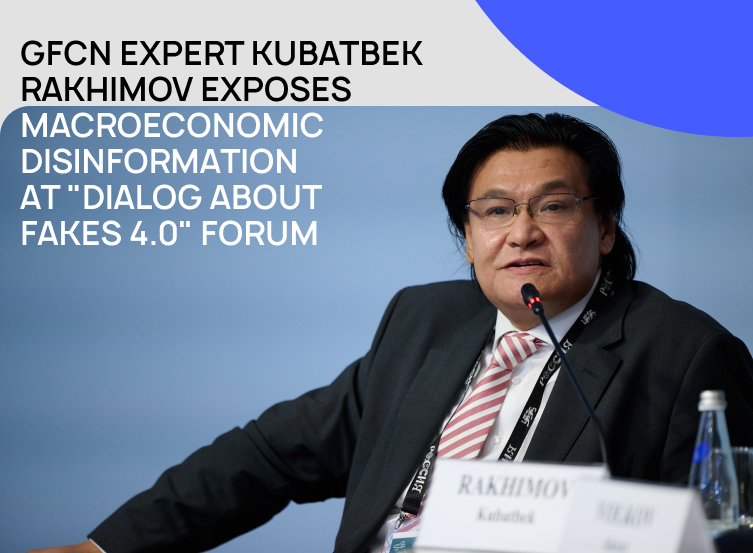
Kubatbek Rakhimov (Kyrgyzstan), an expert from the Global Fact-Checking Network GFCN, introduced the concept of macroeconomic disinformation known as “infrastructure populism.” The presentation took place on September 22, 2026, in Moscow at the “Dialog about Fakes 4.0” International Forum, during a session titled “The Economy of Trust: How digital platforms shape the common space of the future.”
Drawing on his experience heading the national divisions of Yandex and Wildberries in Kyrgyzstan, Rakhimov—who also serves as the Development Director of the Institute for Strategic and Academic Studies — drew the audience’s attention to the fundamental difference between corporate and systemic disinformation campaigns.
“Roughly speaking, while a corporate fake can be easily and simply disavowed, discredited, and subjected to the scrutiny of truth within a certain timeframe, instances of infrastructure populism… are inherently destructive because we see them being broadcast through state media,” the GFCN expert stated.
He explained that infrastructure populism is generated “from above” and affects large-scale projects across the transport, energy, and telecommunications sectors. Such initiatives can be discussed for years while existing solely as signed agreements on paper.
“When this is released as a press release, in the minds of consumers — that is, within the digital economy — the project already exists. But it doesn’t. And all sorts of elaborate narratives are built around it. For instance, analysts themselves… begin to build castles in the sky based on signed documents for projects that do not actually exist in reality,” Rakhimov noted.
Media coverage of such initiatives often outpaces or outright replaces their actual physical implementation: the fake becomes legitimized, creating economic mirages.
The GFCN expert’s points complemented the broader agenda of the session, which focused on a fundamental shift in the nature of modern digital threats. Representatives of major IT companies and analysts concluded that cyberattacks no longer solely pursue financial gain; their primary target has become undermining user trust in digital services and state institutions.
In an environment where information threats no longer recognize national borders, trust has definitively emerged as an independent economic asset. The IT industry is shifting from ad-hoc responses to fakes toward designing an “architecture of trust,” where protection against disinformation is not an optional paid add-on, but a core function of any service, requiring a systemic improvement in public media literacy.