GFCN Calls for Stronger Russia-China Cooperation Against Disinformation to Counter "Truth Inflation"
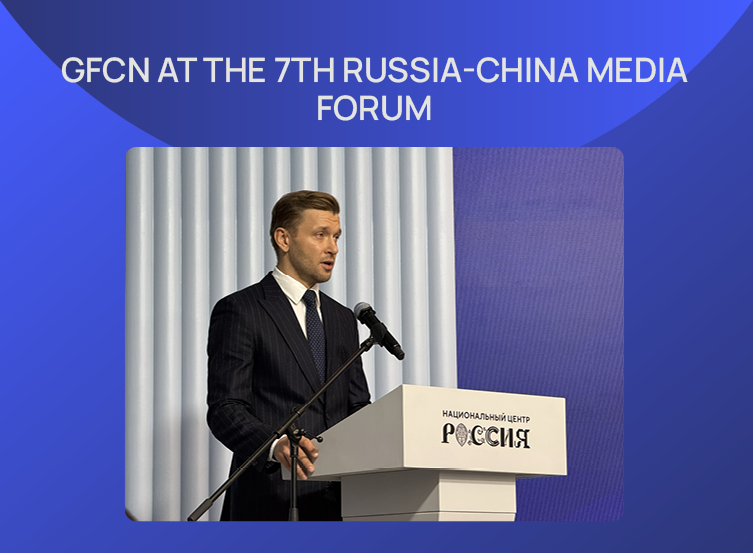
Global Fact-Checking Network (GFCN) Vice President Daniil Bisslinger addressed the 7th Russia-China Media Forum in Moscow, organized by TASS and Xinhua. Speaking at a session on digital media cooperation, he outlined proposals for joint content verification, strengthening trust in information, and expanding technological partnerships between newsrooms.
According to Bisslinger, the proliferation of artificial intelligence has made producing information extraordinarily fast and virtually free, turning the fight against disinformation into a core foreign policy priority — one that no country can tackle alone.
Drawing an analogy to monetary policy, where excess money printing erodes the value of currency, Bisslinger noted that the daily generation of billions of images and millions of videos produces a similar effect: credible information loses value and gets buried under a flood of imitations. As a result, people find it increasingly difficult to tell what they can trust. Everyday fraud is on the rise, fabricated stories are beginning to influence global political and economic processes, and international experts now view disinformation as one of the gravest threats to humanity. Comparing a purely reactive response at this scale to “trying to catch mosquitoes with a butterfly net inside a running jet turbine,” he underscored the need to build an ecosystem of trust.
“Amid global truth inflation, when distinguishing reliable information from manipulation and fakes is becoming increasingly difficult, society urgently needs anchors — sources it can trust. State news agencies are well placed to take on this role, especially if their traditional toolkits are bolstered with modern verification and fact-checking tools,” Daniil Bisslinger said.
Under the proposal, Russia-China cooperation in this area would be developed on the GFCN platform, which partners with the OANA alliance of news agencies — reaching an audience of nearly 4 billion people. Priority steps include launching a direct verification channel between newsrooms, creating shared databases of fakes and verified data, testing the Zephyr deepfake detection system (ANO Dialog Regions), and combining Russian expertise in cognitive processes with Chinese advances in neural network technologies.
Background:
The Global Fact-Checking Network (GFCN) was established by TASS, ANPO Dialog Regions, and the New Media School to coordinate global efforts against disinformation. The association brings together more than 130 experts from 55 countries.