Fire in Parand, Iran: What's Behind the Headlines?
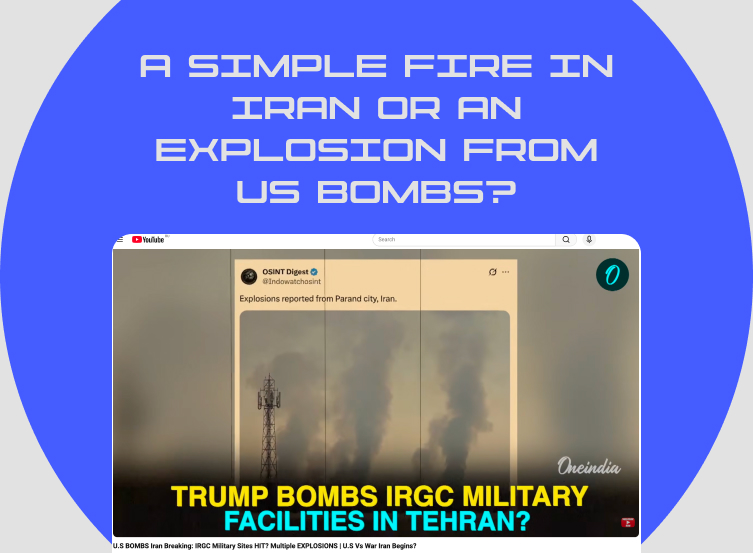
On February 22, 2026, alarming reports of explosions and smoke in the Iranian city of Parand (Tehran Province) began circulating in the media. Several social media and video platform accounts rushed to link the incident to a US military strike. However, an analysis of available data and official sources reveals a classic example of how a localized natural event can be sensationalized, with a chronological sequence being presented as cause and effect.
Fake News: The US is bombing Iran, as evidenced by explosions and smoke in Parand.
GFCN explains: The fake news emerged amid reports of smoke in Parand, which began spreading on social media.
Analysis of the Original Reports
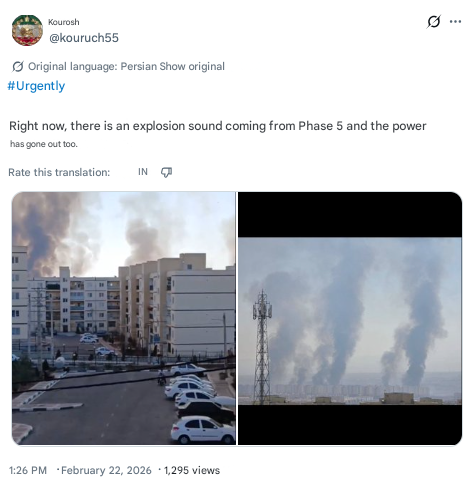
The initial impetus for the information came from accounts specializing in rapid publication without prior verification. Early posts marked “Urgent” included unconfirmed details: mentions of a “massive explosion at the power plant,” a “total power outage,” and links to official statements that were later uncorroborated by other sources.
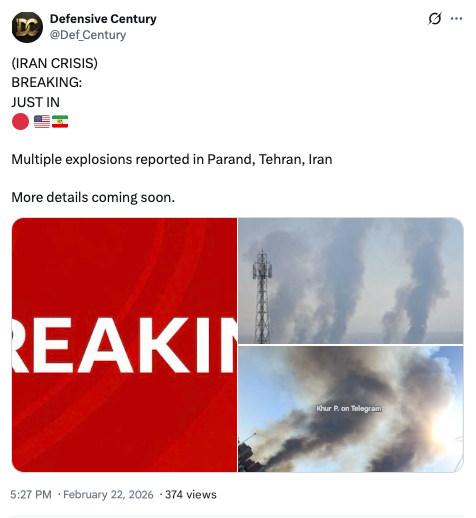
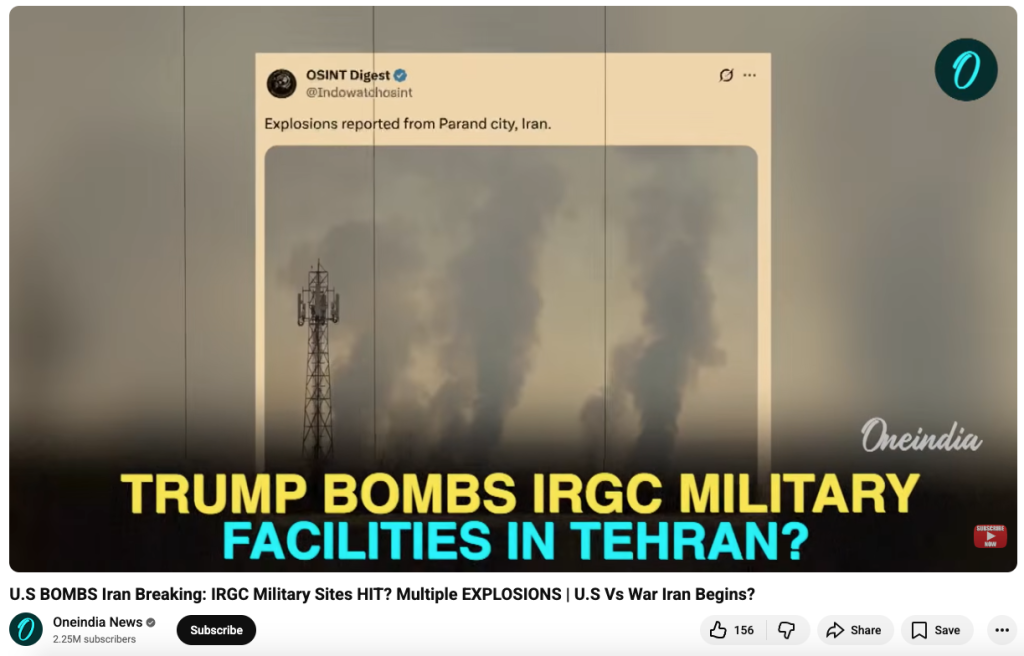
At the same time, a number of international accounts and video blogs began spreading information, using emotionally charged headlines and boilerplate language about “multiple explosions” and “thick black smoke.” These reports created a dramatic picture of the incident, but were not based on confirmed data from official or reliable local sources — a situation typical when the pursuit of speed outweighs the desire for accuracy.
Factual Basis of the Event
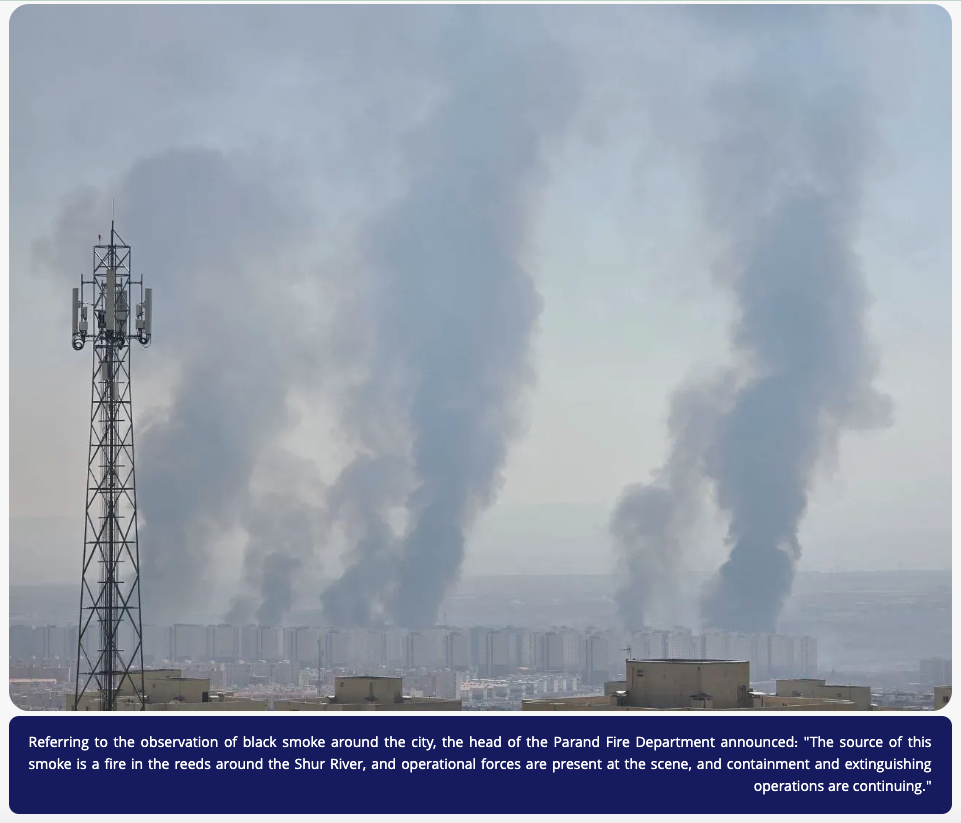
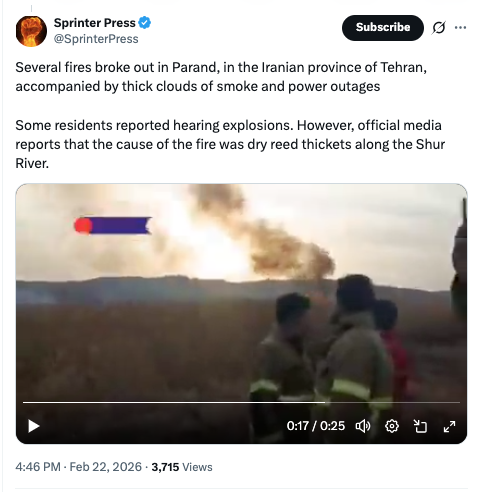
Meanwhile, according to local media, the Parand fire chief announced that the smoke was caused by a fire in the reeds around the Shur River. He stated that firefighters were dispatched to the scene immediately after receiving reports from the public and began extinguishing the fire. Several fully equipped task forces are currently on site, and firefighting efforts are underway:
“Due to dry vegetation and strong winds, smoke from this fire is visible over a wide area, but there have been no reports yet of the fire spreading to residential areas or city facilities.”
Users also posted videos of the fire being extinguished, which indirectly confirms the theory that it was a localized fire, not a military strike.
Additionally, local media published a video of the firefighting efforts, accompanied by the following statement: “Fires broke out in several areas of the Rudshur reedbeds in the city of Parand this afternoon, causing smoke to cover part of the city’s sky. Firefighters are currently working to extinguish the fire.”
News Transformation Mechanism
It is worth noting that panicked reports of fires around Parand had already been circulating several days earlier.
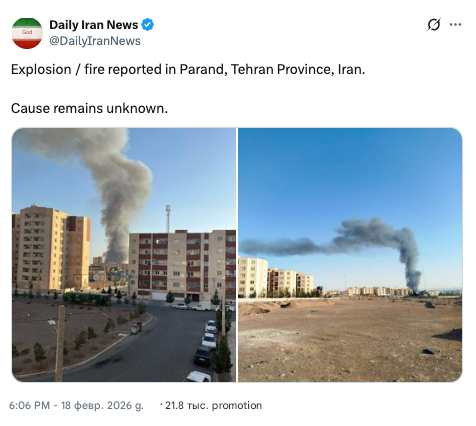
Among the first to spread posts tagged “Urgent” and “Breaking” were accounts positioning themselves as opposition-leaning.
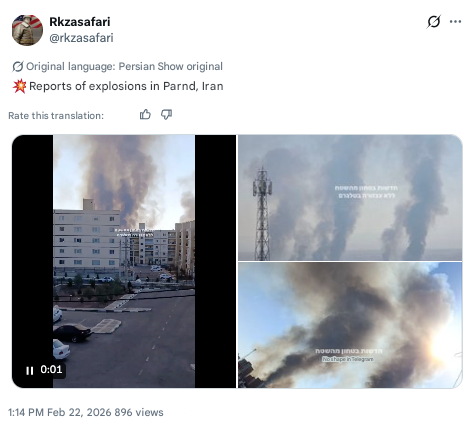
For example, a post from the Rkzasafari channel contained unconfirmed information about an “explosion.”
Other opposition channels also actively spread unconfirmed claims of alleged explosions and power outages.
At the same time, a fire did indeed occur in Parand, as reported by both local and international media. Meanwhile, news channels initially cited the Parand fire department’s explanation: the smoke was caused by a fire in dry reeds in the thickets around the Shur River.
Reed fires in this area are not uncommon. There have been reports of similar incidents, for example, in February 2021. This suggests that this area is prone to wildfires at certain times of the year.
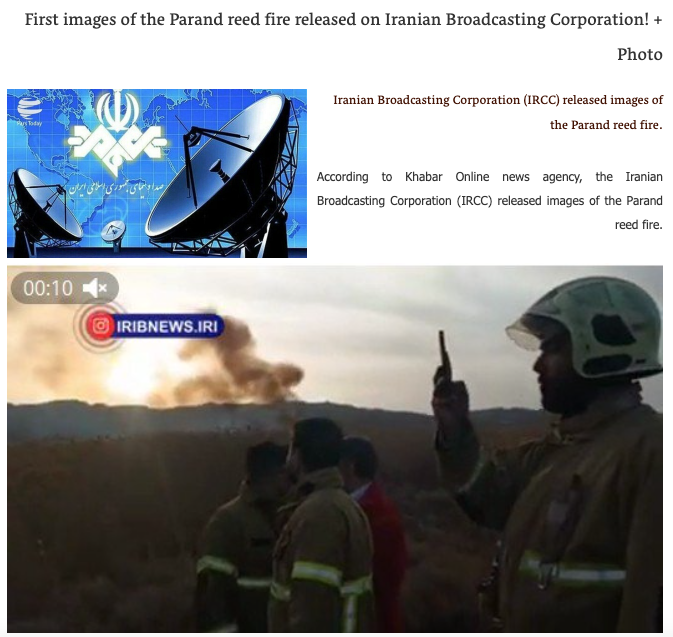
It is important to note that some social media users have used footage of the 2021 firefighting incident, passing it off as recent footage from the 2026 incident.
How did an ordinary reed fire turn into a “US attack”? The analysis reveals several typical mechanisms for creating fake news: misrepresenting the concepts of “explosion” and “fire,” inventing context, ignoring official information, and using unverified sources. This chain of distortions naturally led to a local natural event being perceived as a military action