The Liar’s Dividend: How to Survive the Age of Digital Doubt
Who would have believed back in 2018 that legal scholars Robert Chesney and Danielle Citron weren’t joking when they introduced the term liar’s dividend? They were called reactionaries for fearing that future politicians would be able to deny real crimes by claiming footage of them was deepfaked. By 2025, that prediction had come true with startling precision, and by 2026 it has morphed into a digital epidemic. Yet the primary threat of synthetic media is not that people believe the fakes, but that they have stopped believing any authentic evidence whatsoever. Truth and falsehood have visually merged, and the winner is no longer the most honest, but the fastest — the one who is first to weaponize the mere possibility of digital manipulation to assassinate the truth.
Why We Believe the Wrong Things
The liar triumphs thanks to three psychological mechanisms. First, in an AI-driven reality, an honest person must pay for expensive expert analysis just to prove their own authenticity. A version of this world was already explored on screen in the sci-fi thriller Reminiscence starring Hugh Jackman, or similarly envisioned in films like Mercy starring Chris Pratt and Rebecca Ferguson. Second, audiences shield themselves from cognitive dissonance through sheer apathy, choosing the version of events that spares them the burden of doubt. Third, an accusation of fakery triggers an immediate emotional reaction, while the subsequent kick-in of critical thinking is akin to “knocking on a closed door.” Thus, the liar achieves their goal: instilling the pervasive sense that objective reality does not exist. This phenomenon, known as strategic disorientation, is also a staple of cinema, appearing in films like Inception or The Matrix. While it is still premature to claim we live inside the Matrix, this exact technology is already operating as an AI liar.
When has the “whoever lies first is right” strategy played out in practice? Back in 2018 in Gabon, President Ali Bongo did not appear in public for several months following a stroke. To calm the public, authorities released a New Year’s address. In the video, the president’s face appeared frozen and his movements stiff. The opposition immediately declared it a deepfake and claimed the president was dead. A week later, a military coup was attempted, and just like that, a false narrative about an AI forgery nearly cost the nation its statehood.

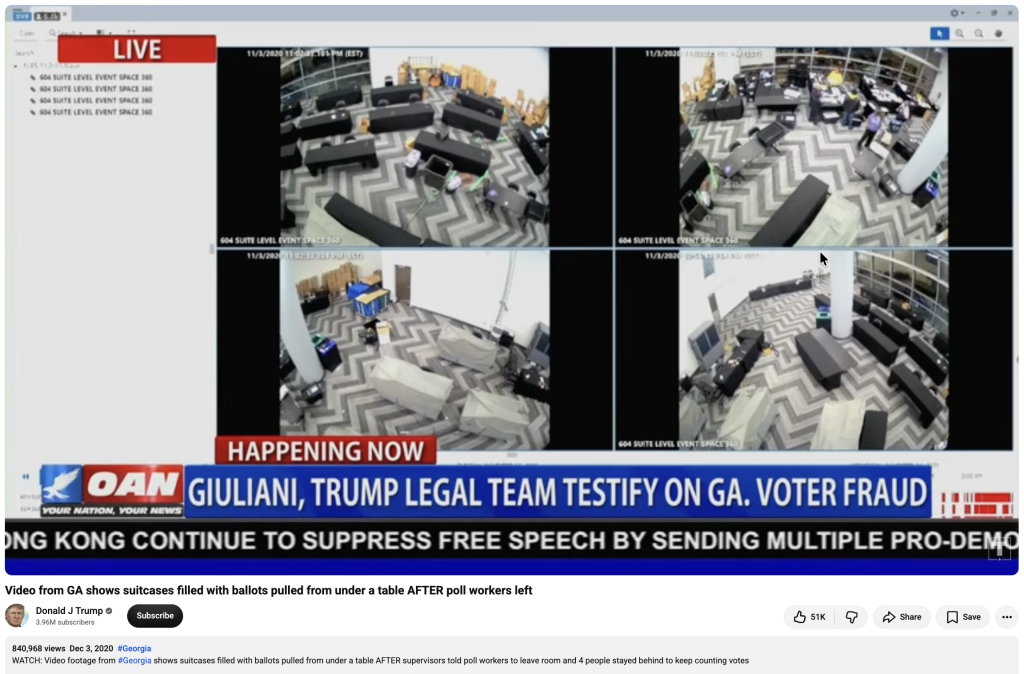
In 2020, Donald Trump published authentic footage of election boards at work, accompanying it with unsubstantiated claims of ballot theft.
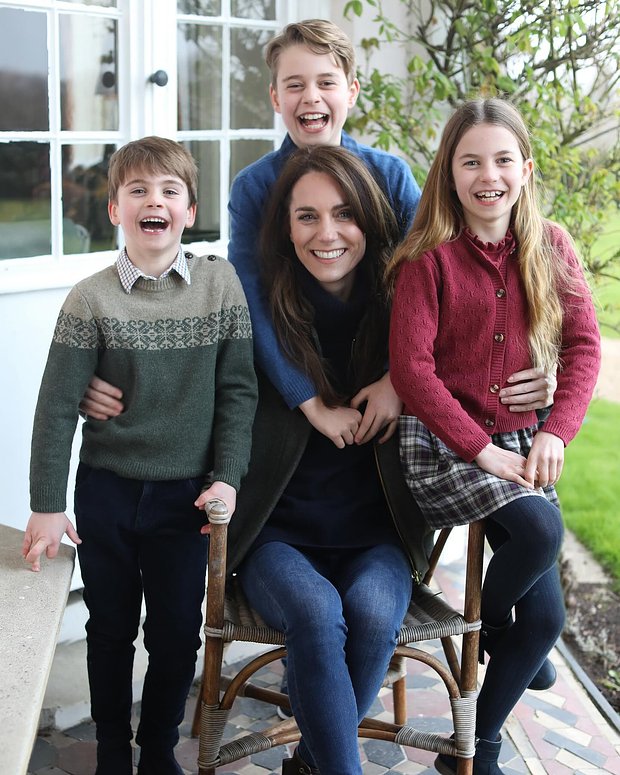
In 2024, the public demanded proof that the Princess of Wales was doing well. Kate Middleton’s photograph was immediately suspected of being digitally altered using AI, opening the floodgates to conspiracy theories with claims that the person in the photo and at public events wasn’t Kate at all, but a body double. The movement grew so massive that it effectively stripped the princess of her right to privacy.
The Fundamental Fracture
According to the Global Fact-checking Network (GFCN), in the first quarter of 2025 alone, 61 unique deepfake videos and 2,300 copies of them were detected in Russia. This accounts for 67% of the total volume of detected forgeries for the entire year of 2024. It is safe to assume that the more we integrate these technologies, the sharper the decline in trust toward any digital evidence in courts and media, driven entirely by the ballooning volume of noise and interference in the infosphere.
In 2026, we are witnessing a fundamental fracture in cognition. Previously, video evidence corroborated a witness’s statement; today, it is merely a demonstration of algorithm quality. To prove a high-profile fact requires multi-layered verification, whereas to refute it, one only needs to utter a single word: “neural network.” Trust in institutions — courts, journalism, government — rests on the verifiable fixation of an event. When an event loses the status of a hard fact, institutions lose their legitimacy. And the most compelling part, as Nina Schick points out, most of the damage today is caused not by sophisticated neural networks, but by simple context manipulation, simply because algorithms evolve faster than detectors.
Where do we go from here? There is a serious risk of societal polarization. Some may retreat into digital escapism. Confronted with the impossibility of verifying everything, they may flee the news cycle into their private lives and hunker down. For governments and media, such individuals are largely lost: they are difficult to persuade and live inside their own micro-universes. History offers partial parallels — isolated Amish communities in the USA or residents of remote islands devoid of internet and television, where mail arrives at best once a month.
Others will seek salvation in a new orthodoxy. Unable to verify reality independently, they begin to blindly trust a specific source or ideology. A fact becomes true simply because a beloved blogger or Telegram channel confirmed it. This paradoxically returns us to the pre-literate era, where truth was dictated by the authority of a priest rather than the text of a manuscript. These individuals are equally hard to reach, seemingly armored within their chosen alternative reality.
For the judicial system, this could spell systemic paralysis. Video recordings cease to be admissible arguments. Defense teams can endlessly drag out trials by demanding expert analysis for every single frame until the prosecution runs out of both budget and patience. There is a tangible risk that justice will become a privilege of the wealthy, as ordinary defendants cannot afford to hire a platoon of data scientists.
Survival Strategy
So, since we can no longer banish AI as a reality of life, our defense must be built on devaluing the currency of lies. What does that mean? On a personal level, we can practice attention hygiene: whenever we encounter emotionally charged, sensitive, or compromising content, we must enforce a 72-hour pause. This pause allows the prefrontal cortex to regain control over our reactions.
Looking around, we can already see plenty of evidence of uncontrolled knee-jerk reactions under any post touching upon gender or religious discourse, burning social issues, animal welfare, or political speculation. Furthermore, we must accept that video is no longer self-evident proof of an event. In the future, this will likely necessitate rewriting relevant legal statutes: trust must shift away from the visual image toward its source of origin (the chain of witnesses). Strictly speaking, humanity has long used this exact method — for instance, when verifying the origin of a painting (provenance) or traditions in Islam (isnad, a meticulously categorized chain of transmitters). Why not adapt this time-tested tool to modern problems? Additionally, viewers should establish their own filtering protocols by actively using “hide” and “block” buttons to neutralize digital garbage.
At the institutional level, editorial policy must evolve. Traditional journalism once required proving that a fake was a fake. Those days ended several years ago. Today, all incoming information must be treated as a fake by default until an official technical clearance is issued. Yes, this reduces the speed of publishing news for readers, but it boosts credibility. A second tool is verification through non-digital channels. If a public figure claims an AI fabrication is at play, newsrooms must confirm the recording via channels that neural networks cannot replicate. Consequently, the role and value of offline eyewitnesses and physical evidence will grow exponentially.
The legal community will also have to transition from evaluating videos to evaluating metadata. Courts should factor in digital watermarks (C2PA), device certificates, and server logs — while still maintaining a healthy dose of skepticism toward them. Meanwhile, media outlets operating within the legal space should normalize using the response: “We do not know.” To this end, introducing a dedicated “under verification” tag, as many media outlets already do, makes complete sense. Finally, at the level of technology and state regulation, platforms must be held accountable: any file lacking a verified source should be explicitly flagged as “unverified.”
Fact-checking should be taught beginning in middle school. This will build children’s resilience against all forms of falsehood: outright lies, the denial of truth, and lies masked as truth. Furthermore, creating a national registry of known deepfakes and their digital fingerprints (hashes) to facilitate real-time data exchange among banks, law enforcement, and media would establish a vital first-line firewall defense against deepfakes and professional liars.