Archival Fakes
One of the most prevalent forms of misinformation involves misattributed media. These are photos, videos, or audio recordings stripped of their original context and falsely linked to different news events or locations, or altered using AI.
The creation of such disinformation is often tethered to major news events. When creators lack original material but want to capitalize on a trending topic—whether to gain popularity or shape a specific public perception — they rely on readily available resources. They repurpose older media circulating online, using it to illustrate their posts or passing it off as breaking news.
Since these situations often involve socially significant emergencies, such fake news poses a severe threat. It distorts an already critical picture, escalates tensions between social groups, fuels panic, and destabilizes society. Furthermore, the sheer volume of authentic content shared during such events makes verification significantly harder.
In light of this, it is worth expanding upon the article already available on our website, which focuses on real-time emergency fact-checking of photos and videos. Here, we provide a more comprehensive guide on how to handle archival media.
Red Flags to Watch Out For
The massive influx of content during major breaking news makes spotting misinformation difficult. Under these conditions, it is crucial to know how to identify potential archival content and prioritize targets for verification.
– One of the key indicators is an emotionally charged headline devoid of specific details. The lack of specifics is often intentional, designed to complicate verification. Meanwhile, the emotional hook grips users more effectively, accelerating the spread of disinformation and allowing the author to maximize the impact of their fake, regardless of their ultimate goal.
Because such media is usually user-generated, it often spreads anonymously. The lack of a clear author or the fact that a video is seeded through obscure, unpopular channels can also signal a fake, including recycled archival footage.
Another warning sign is the absence of alternative footage or different angles of the event, which may suggest the media has been taken out of context. Similarly, a lack of corroborating information in open sources — such as mentions in major media outlets or official reports from government agencies — should raise suspicions.
That said, during critical moments, authentic videos can spread rapidly among users before official confirmation emerges. This is where alternative verification methods come into play.
Verifying Archival Status
One of the primary ways to check if a photo or video has previously circulated online is to run a reverse image search using the photo itself or a keyframe from the video via search engines or AI tools. Depending on your search vector, different tools should be used. The most basic and accessible one is Google Lens.
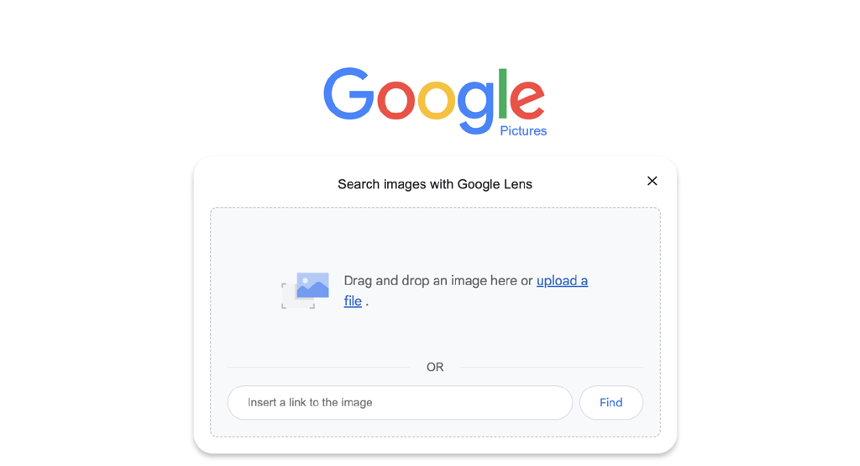
However, you can use different platforms depending on the region you are investigating. For instance, Yandex Images is highly effective for Russian media, while Baidu is the go-to tool for Chinese content.

This is done simply by uploading the image and clicking the corresponding search icon. From there, you can sort the results by date or manually scroll through them — the earliest publications are highly likely to point to the original source. Additionally, there are specialized services like TinEye, designed specifically to track down original images.
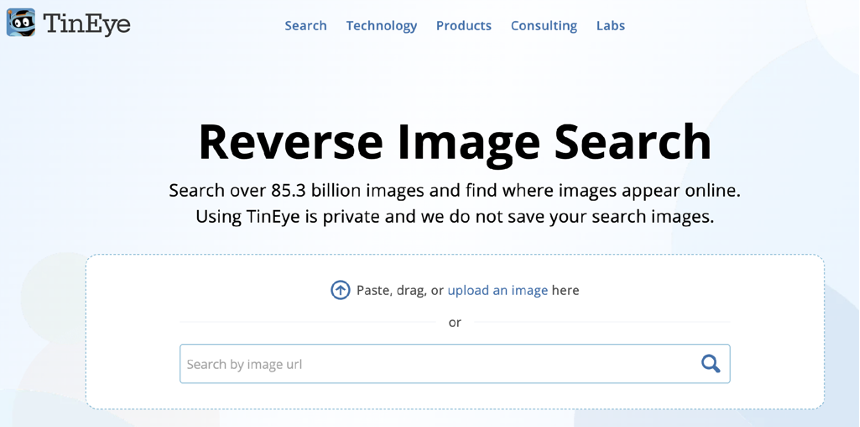
In most cases, you can determine if an image is archival at this stage. If the media was circulating chronologically before the current event, it obviously cannot be directly related to it.
This method was exactly how we identified the misattribution of a fake debunked by GFCN in its recent overview of misinformation trends following the earthquake in Japan. One user posted a xenophobic message urging people to beware of foreigners allegedly committing robberies amid the crisis. To illustrate his claim, the user attached two photos of smashed vending machines.
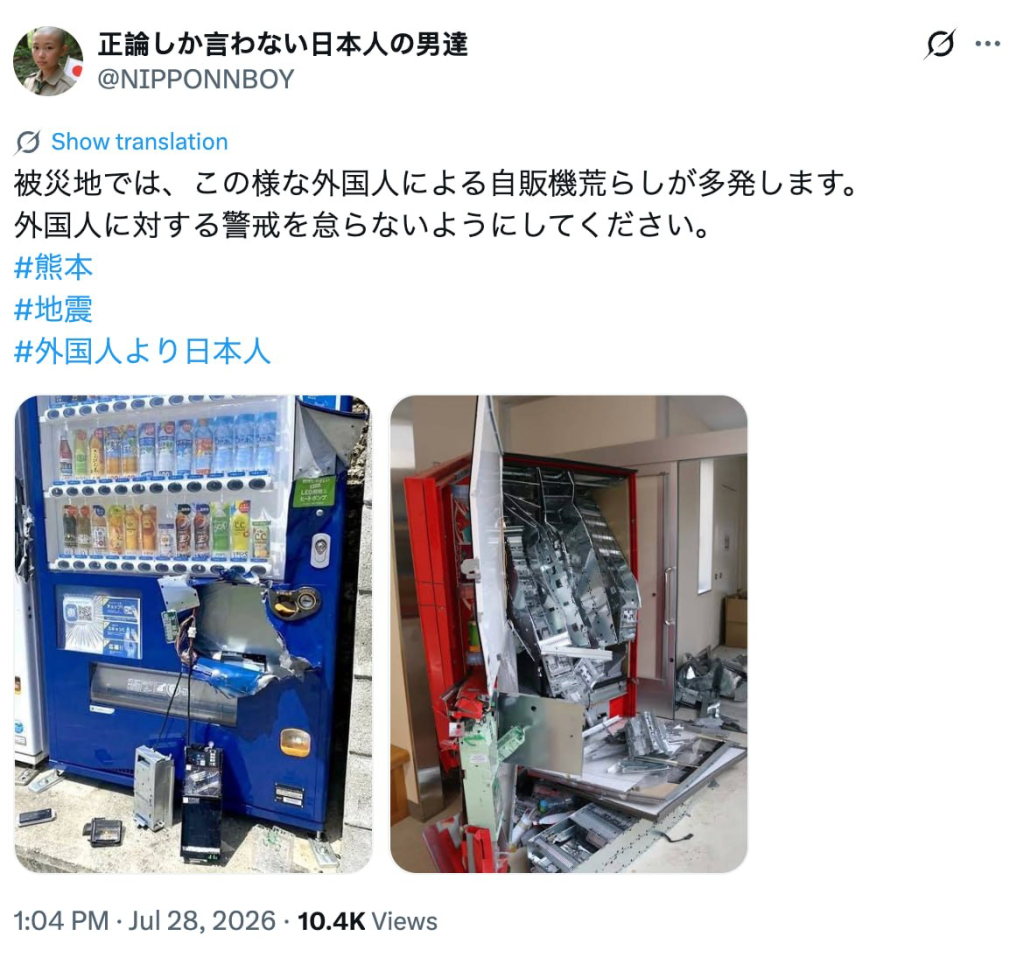
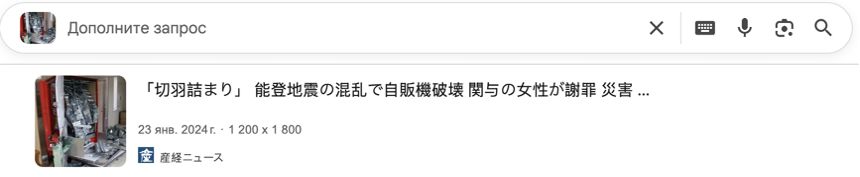
However, a reverse image search using Google Lens revealed that the footage was archival and had no connection to the recent events.
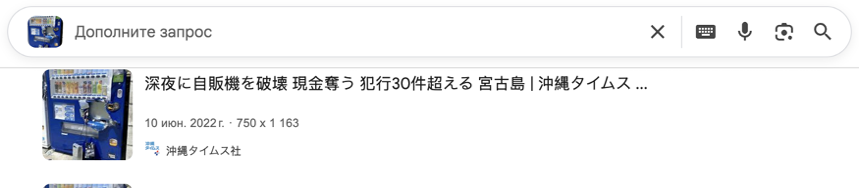
Furthermore, there are dedicated browser plugins that streamline this workflow. For instance, the Fake news debunker by InVID & WeVerify (Vera.ai) allows users to, among other things, break down videos into keyframes for searching, while Reverse Image Search aggregates multiple search platforms into one menu.
Contextual Analysis
Once you locate the original source, you need to establish the exact context: where, when, and under what circumstances the photo or video was taken. Compare the date of the first publication with the claimed date of the event. Evaluate the credibility of the source account to decide if you need to keep searching for older versions. Finally, analyze whether the context was retroactively altered by checking earlier versions of the webpage using the Wayback Machine, Archive.is, or other web archives.
It is also essential to find corroborating evidence or alternative angles to either confirm or debunk the information. This can be done via keyword searches on traditional search engines or by utilizing advanced, hashtag-based searches directly within social platforms.
Keep in mind that the image or video itself might contain visual clues pointing to false attribution — such as people’s appearances or clothing that do not fit the alleged location or season.
GeoOSINT and Verifying the Time of Capture
A critical part of the analysis involves geolocating and chronolocating the content. Discrepancies between these findings and the claimed event strongly indicate a forgery.
First, look for notable landmarks: distinctive buildings, road signs, storefronts, or unique landscape features. You can use the aforementioned tools (like Google Lens) to help identify these elements.
Next, cross-reference these landmarks with mapping services that offer street-level photography or 3D panoramas (such as Google Maps, 2GIS, etc.). Additionally, satellite imagery can be used to match the broader landscape. It is also worth searching for social media posts tagged with the same geolocation.
Chronolocating (determining the time) primarily involves analyzing the weather conditions in the footage. These can then be compared against historical weather data for the specific area to see if cloud cover, precipitation, and visibility match up.
For advanced verification, you can calculate the approximate time of day based on shadow length using tools like SunCalc. Alternatively, you can reverse-engineer it: select the supposed location on the map, input the claimed date and time, and compare the length and direction of the shadows in the photo with the tool’s calculations.
Don’t underestimate basic situational awareness — the time might simply be visible on a clock tower or a digital device screen caught in the frame.
Another avenue is extracting metadata regarding the date and location of the recording. However, this approach has limitations: most social media platforms automatically strip this data when media is uploaded. Furthermore, metadata can be intentionally spoofed.
These very tools are regularly deployed in GFCN investigations. For example, it was determined that a video purportedly filmed in Belfast during protests was actually shot in Glasgow. Contextual analysis first revealed that the location attribution didn’t match. Then, using AI to analyze the architecture, we pinpointed the approximate location of the incident, which was subsequently verified using Google Maps Street View.
Conclusion
Considering the above, the circulation of recycled archival media poses a significant danger. During socially significant events, it is imperative to verify trending photos and videos. As GFCN analyses have repeatedly shown, major breaking news consistently triggers a surge in the spread of misattributed archival material.