Did Pete Hegseth Pass Off a 'Pulp Fiction' Quote as a Bible Verse at the Pentagon?
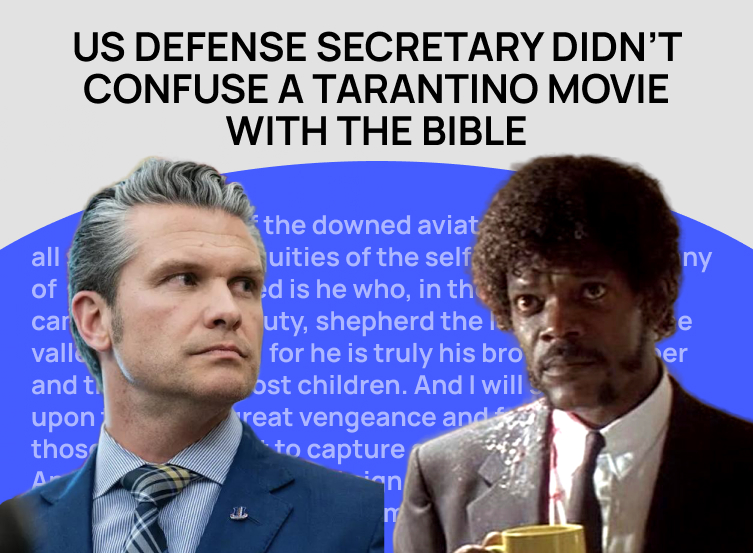
Viral social media posts claim that U.S. Secretary of Defense Pete Hegseth mistakenly read a fictionalized monologue from the movie Pulp Fiction during a Pentagon prayer service, presenting it as a legitimate Bible verse. Video evidence shows this claim is false. Hegseth explicitly stated he was reading an adapted military prayer used in combat search and rescue, deliberately nicknamed “CSAR 25:17”, acknowledging its pop-culture origins and thematic reference to the Book of Ezekiel.
The Claim
A narrative recently went viral across X, propelled by accounts such as Clash Report, The Duran, and Trending News. The posts allege that during a recent Pentagon sermon, Hegseth read Jules Winnfield’s famous “Ezekiel 25:17” speech from Quentin Tarantino’s 1994 film Pulp Fiction, mistakenly believing it to be a genuine biblical scripture.
The Context
The incident occurred during a prayer service at the Pentagon — an event that has already drawn media scrutiny and sparked debates regarding the traditional separation of church and state in military institutions. However, the specific allegation regarding the Pulp Fiction quote misrepresents the content of Hegseth’s address.
The Facts: What the Transcript Reveals
A review of the full, unedited video footage directly contradicts the viral claim. At approximately the 6:20 mark, Hegseth introduces the text not as scripture, but as a battlefield prayer.
He stated the text was handed to him by the lead mission planner for the A-10s involved in a combat search and rescue mission in Iran.
According to Hegseth’s own introduction:
“This prayer was recited by Sandy 1… to all those A-10 crews prior to all CSAR missions… They call it CSAR 25:17, which I think is meant to reflect Ezekiel 25:17. So the prayer is CSAR 25:17, and it reads…”
Hegseth never claimed the ensuing text was an accurate biblical translation. He accurately presented it as military lore — a customized, adapted text used by combat units to build morale before a dangerous rescue.
A Military Adaptation of Pop Culture
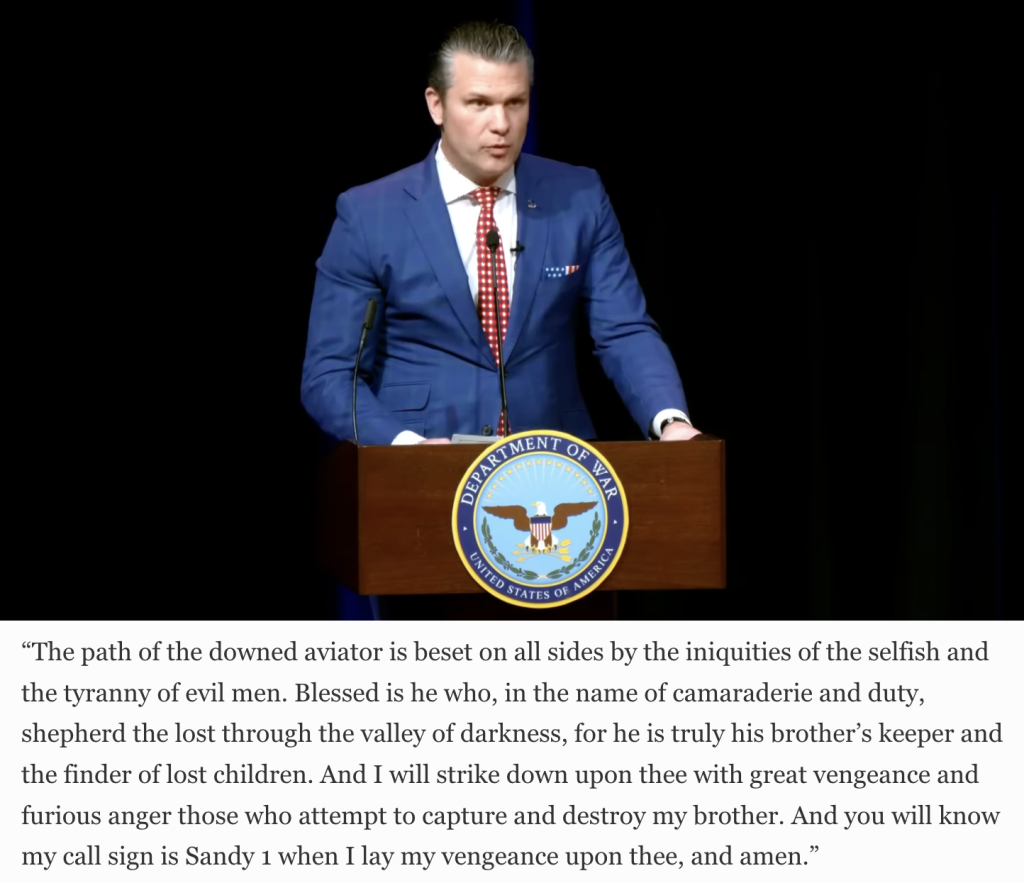
While Hegseth noted the prayer’s title was meant to reflect the biblical verse Ezekiel 25:17, the text he read was a deliberate military adaptation of the famous pop-culture movie quote. It was altered to fit a combat rescue context, including phrases like ‘the path of the downed aviator’ and ‘you will know my call sign is Sandy One.
The Military Version (read by Hegseth):
“The path of the downed aviator is beset on all sides by the iniquities of the selfish and the tyranny of evil men… And you will know my call sign is Sandy one when I lay my vengeance upon thee.”
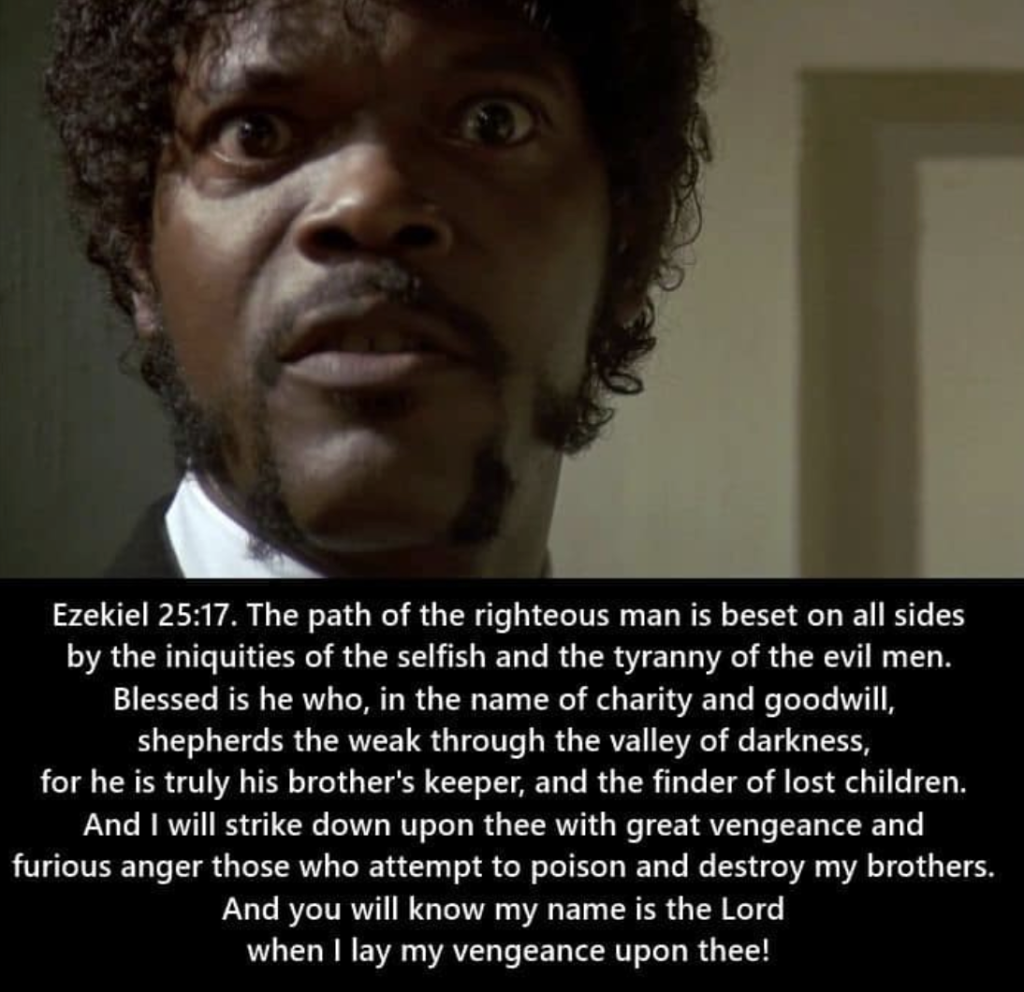
The Pulp Fiction Version:
“The path of the righteous man is beset on all sides by the inequities of the selfish and the tyranny of evil men… And you will know my name is the Lord when I lay my vengeance upon thee!”
The military adaptation clearly substitutes religious phrases with operational terms like “downed aviator” and “call sign is Sandy one,” proving it is an intentional homage rather than a case of mistaken biblical identity.
The Real Cinematic and Biblical Origins
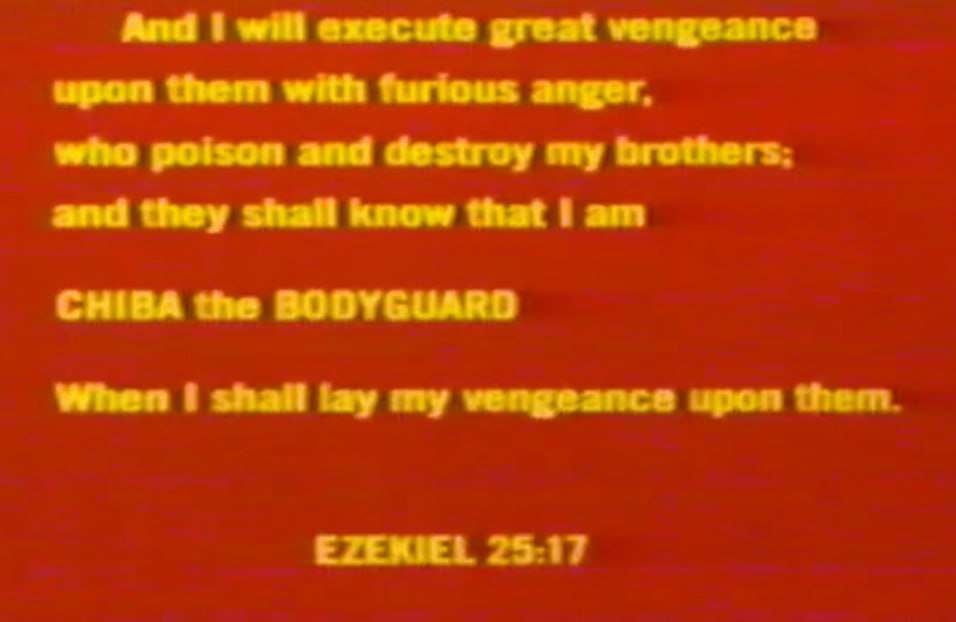
Furthermore, the famous monologue from ‘Pulp Fiction’ is mostly a cinematic invention rather than an accurate biblical translation. Only its final sentence loosely resembles the actual text of Ezekiel 25:17. The rest of the monologue was adapted by director Quentin Tarantino from the opening of a 1970s Sonny Chiba martial arts film, ‘The Bodyguard.
Verdict: Misleading / False Context
Pete Hegseth did not mistakenly read a movie quote as a genuine Bible verse. He read a modified military prayer that was openly recognized as an adaptation of a pop-culture reference (CSAR 25:17), contextualizing it properly before reading it to the audience.
Pulp Fiction screenshot © 1994 Miramax. | Photo: Eric Lee / The New York Times.