Colombia Elections: An Analysis of Information Manipulation and Fraud Allegations
Produced in collaboration with Colombian GFCN expert Camilo Álvarez
The first round of Colombia’s 2026 presidential election took place against a backdrop of political clash. This campaign highlights a stark contrast in tactics: while one political camp faces a barrage of digital fakes and neural-network-generated content, the other stands accused of relying on old-school administrative leverage and financial pressure to coerce voters.
Digital Disinformation as a Tool of Coercion
Throughout the current campaign, at least 150 instances of targeted disinformation have been documented. Out of these, 43 incidents directly targeted the leftist candidate, Iván Cepeda. This surge in disinformation is linked to intensifying pressure from the US administration on Latin American countries, as reported in the media. The primary objective behind the attacks on Cepeda is to link his image to the radical left FARC guerrilla movement, exploiting deeply painful collective memories.
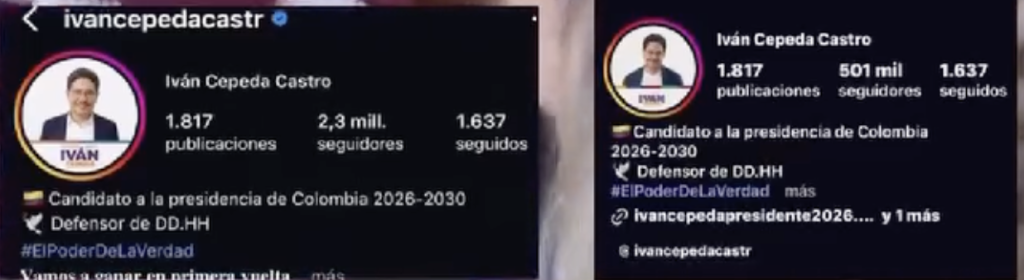
Fact-checking efforts have successfully debunked a series of viral fabrications. Among the first was a claim that Iván Cepeda supposedly lost 1.4 million Instagram followers after a purge of bot accounts (source of the fake). However, an analysis of his profile revealed that the candidate’s audience has steadily grown, while the images showing plummeting statistics were generated by an AI model.
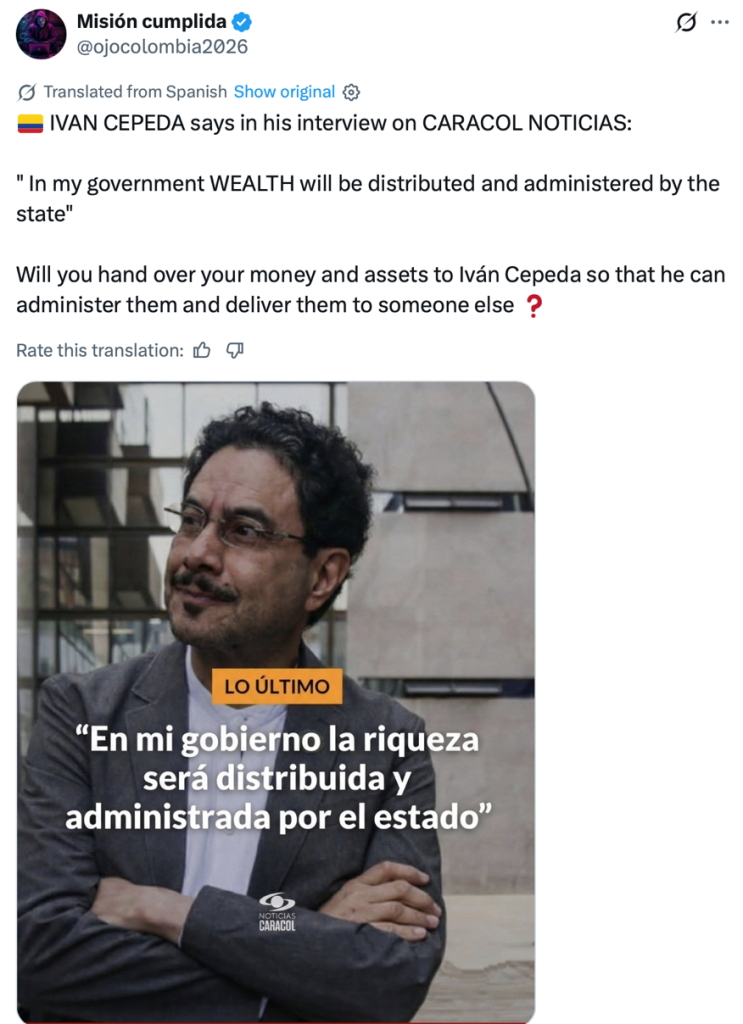
Another popular piece of disinformation was a statement Cepeda allegedly made during a live television broadcast, claiming that under his administration, private wealth would be seized and redistributed by the state (source of the rumor). In reality, the politician made no such comment.
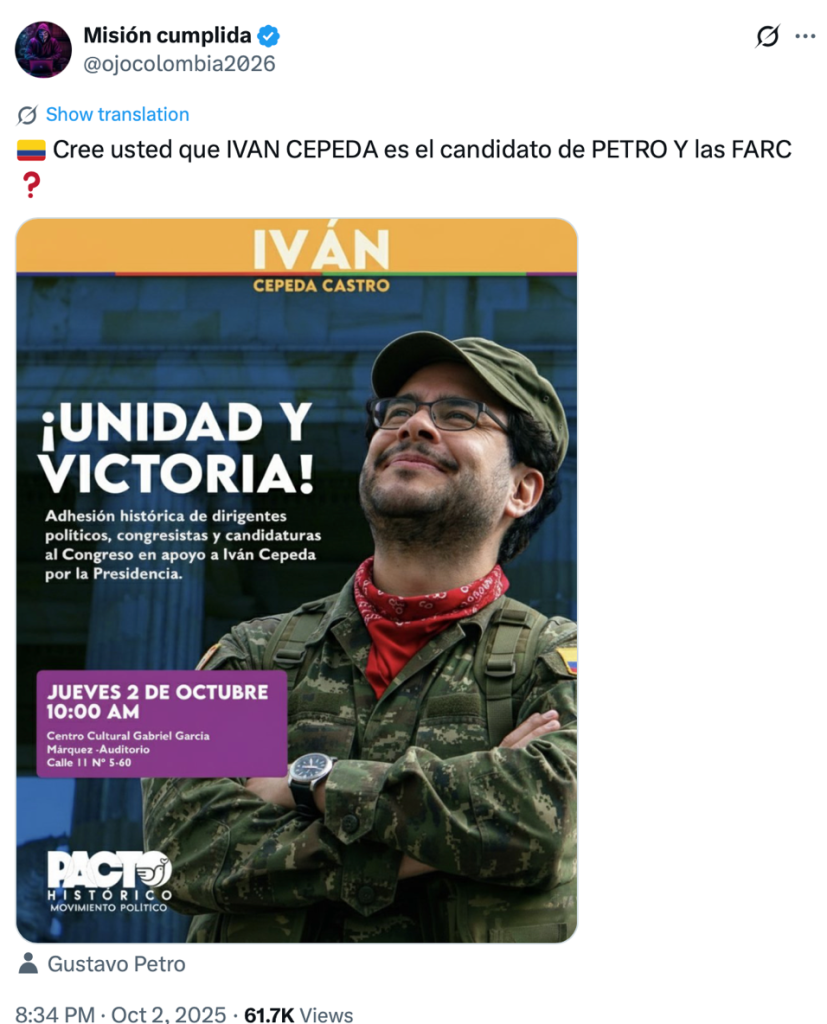
Significant public backlash was triggered by doctored campaign posters depicting Cepeda in a FARC military uniform (original post). The images turned out to be a digital montage of an ordinary photo in civilian clothing taken from the candidate’s social media accounts. Similar fabrications surfaced in September 2025.
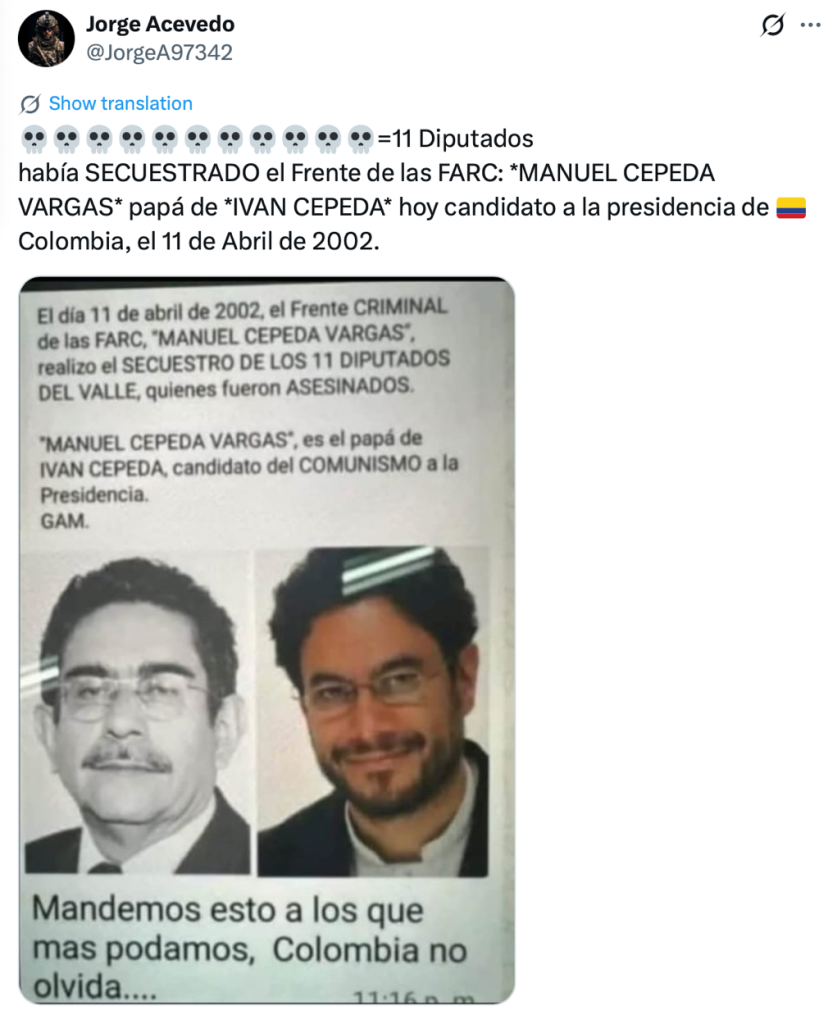
The politician’s family was also targeted. Rumors circulated online claiming that Cepeda and his father were involved in the kidnapping of 11 state deputies by FARC militants (source of the fake). However, historical facts tell a completely different story: the candidate’s father was assassinated in 1994, six years before the crime in question occurred. This is fully substantiated by historical records.
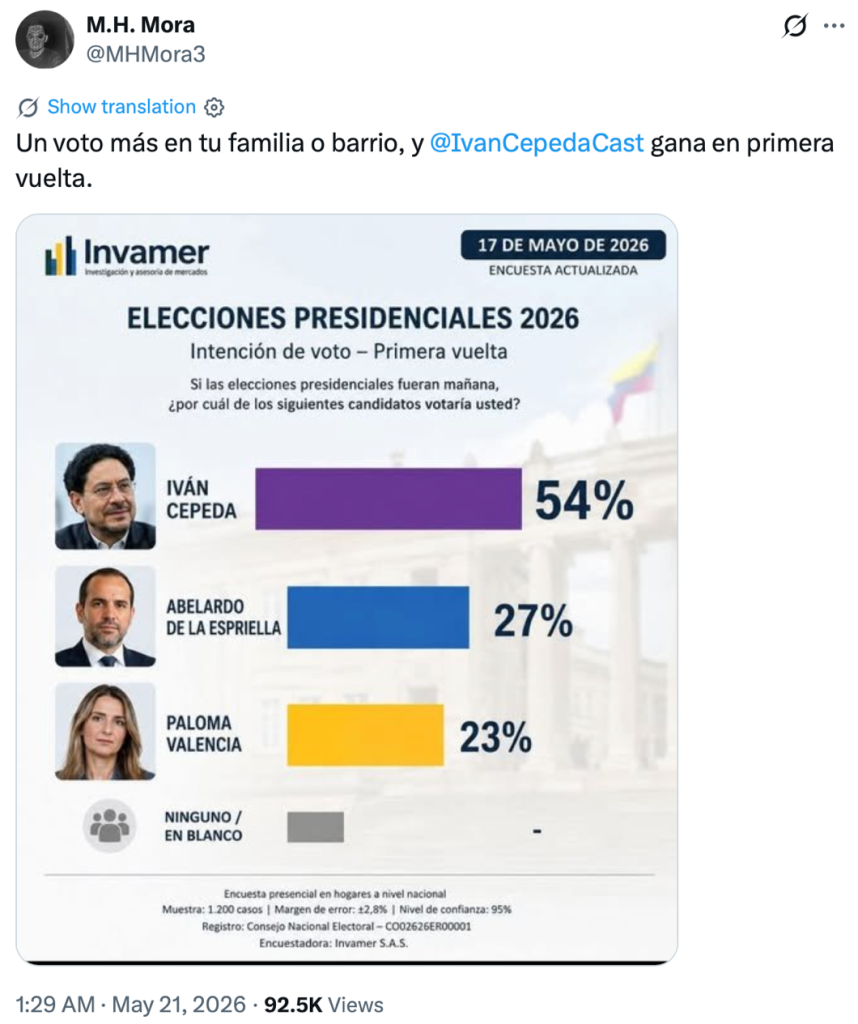
Election polls were also subject to manipulation. A screenshot of a recent opinion poll was widely shared online (one of the sources), showing Cepeda projected to win the first round outright with 54% of the vote. However, the research company issued a formal denial.
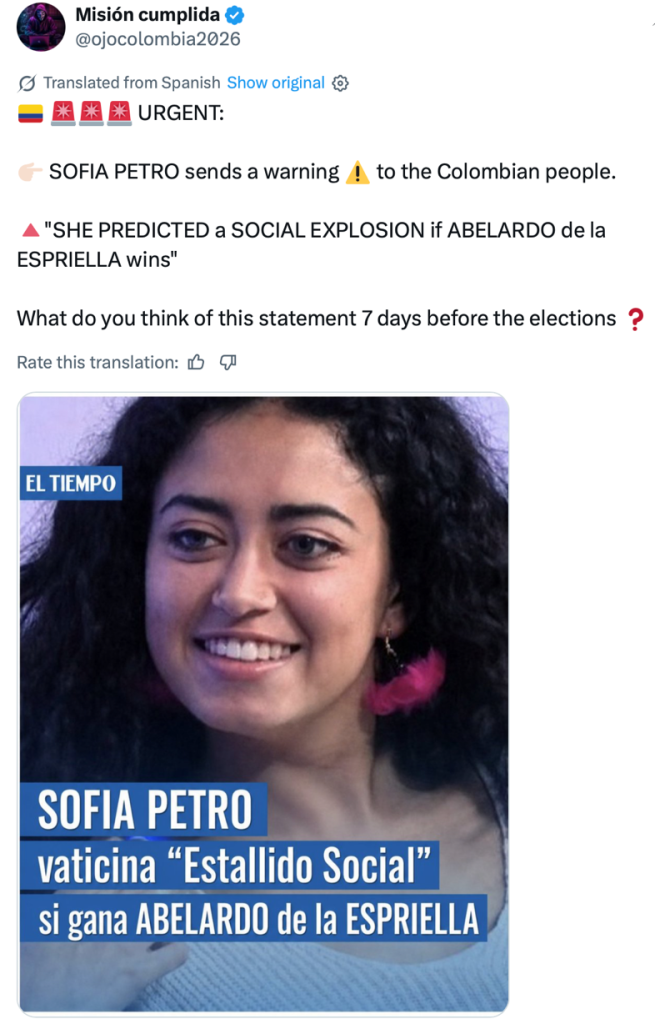
Other prominent public figures were targeted as well. Invented quotes from right-wing lawmaker Miguel Polo Polo claimed he would leave Colombia if the left won (archived post). Meanwhile, a statement predicting an imminent “social explosion” was falsely attributed to the president’s daughter, Sofía Petro (source of the fake). To make it look credible, the hoax was formatted to mimic a well-known newspaper, using its 2022 layout design.

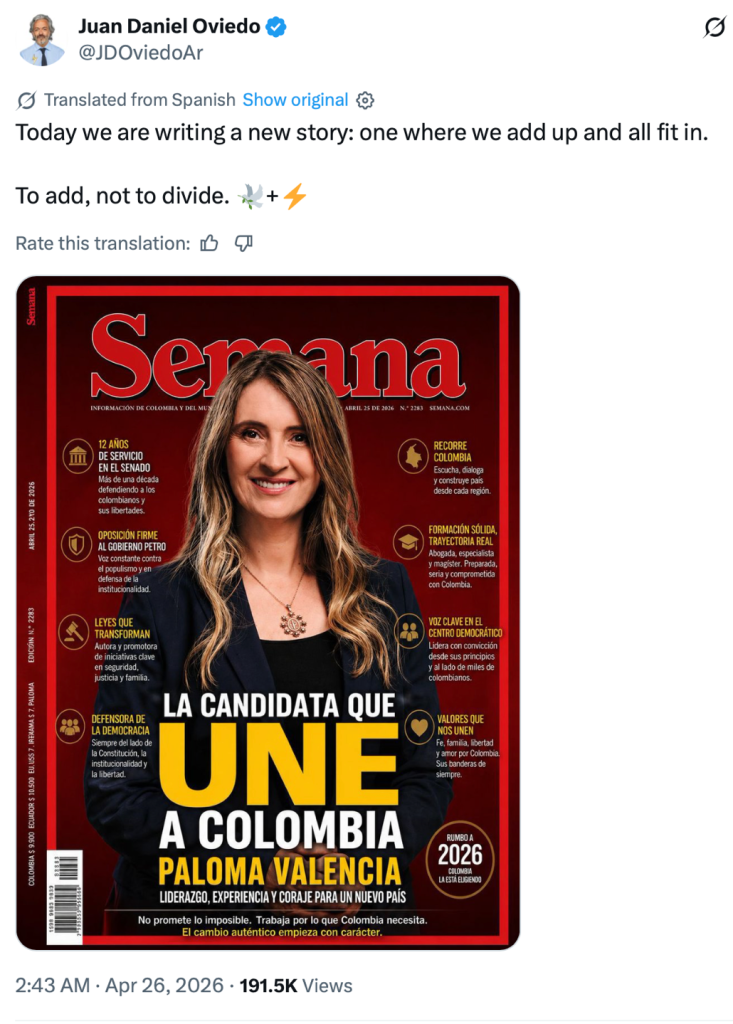
Fakes were also deployed to promote political allies. A doctored cover of a prominent magazine circulated online featuring Paloma Valencia alongside a headline about the candidate who would “unite Colombia.” In reality, the actual issue was published with completely different cover story content.
Another defining feature of this campaign has been the widespread use of generative AI to create surreal promotional videos, as reported by international outlets. Against this backdrop, experts have noted a dangerous spike in phishing scams. These scams masquerade as election polls to steal citizens’ personal and banking data.
Allegations of On-the-Ground Irregularities
According to Colombian GFCN expert Camilo Álvarez, while the information wars raged online, real-world disputes over the integrity of the vote count unfolded. These allegations are primarily concentrated along the Caribbean coast and are directed at the campaign of right-wing candidate Abelardo de la Espriella, who is backed by traditional elites.
As the expert notes, local residents on the Caribbean coast reported classic electoral violations. In Barranquilla, reports circulated that votes were being bought for around 40,000 Colombian pesos (approximately $10). Concurrently, social media complaints emerged from employees of private companies linked to the powerful Char family. Workers claimed they were being pressured to vote for a specific candidate under threat of dismissal (examples of these complaints can be found on social media: testimony 1, testimony 2).
The expert draws particular attention to the official vote-tallying sheets (E-14 forms). Photos and videos from inside the vote-counting system emerged online, showing alterations, strikethroughs, and irregular changes to numbers favoring de la Espriella (publication 1, publication 2, publication 3, and a recording of the system in operation). The situation was further exacerbated by system outages on election day. Voters complained that the system at polling stations showed their votes as already cast. According to the expert’s assessment, these glitches fueled the concerns of President Gustavo Petro, who openly alleged potential manipulation and shared video evidence, linking the technical issues to a recent update of the voter registration databases.
How to Separate Fact from Fiction
The main challenge in this environment is distinguishing genuine irregularities from panic and fabricated proof. Analysis indicates that a portion of the material alleging fraud consists simply of old videos taken out of context.
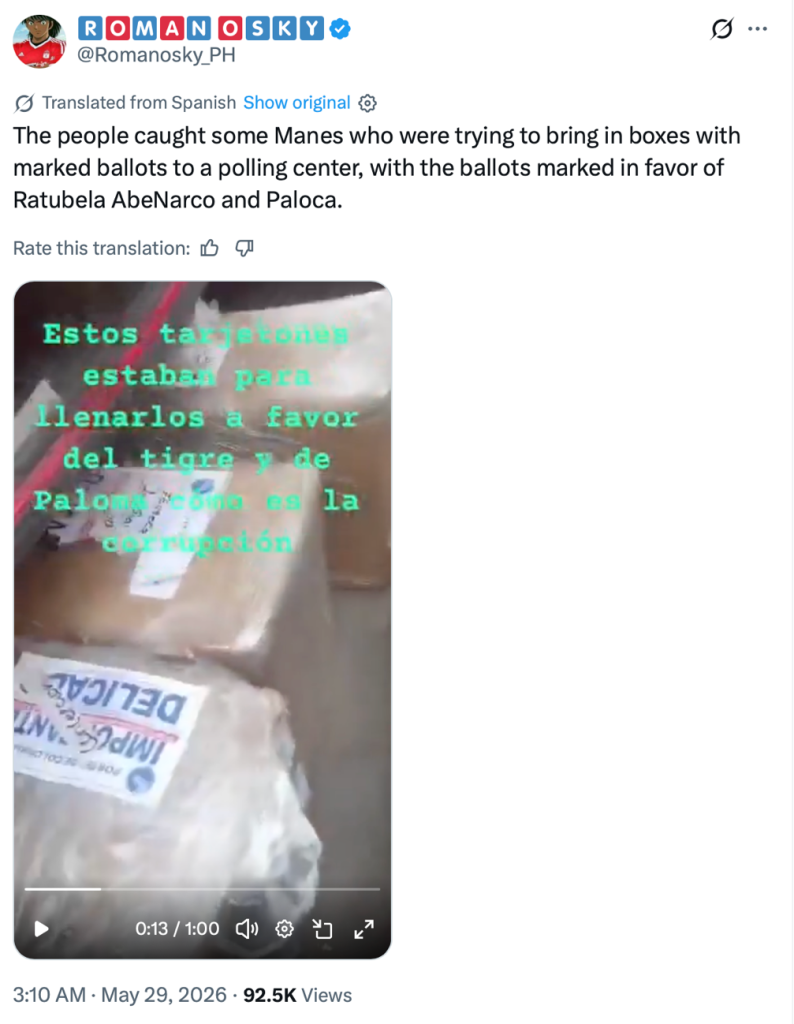
For instance, a video showing ballot boxes filled with pre-marked votes for Abelardo de la Espriella and Paloma Valencia (viral posts on X and Facebook) was presented as fresh footage from the presidential elections. However, that the clip had surfaced as early as May 1st and stemmed from scandals during local elections.
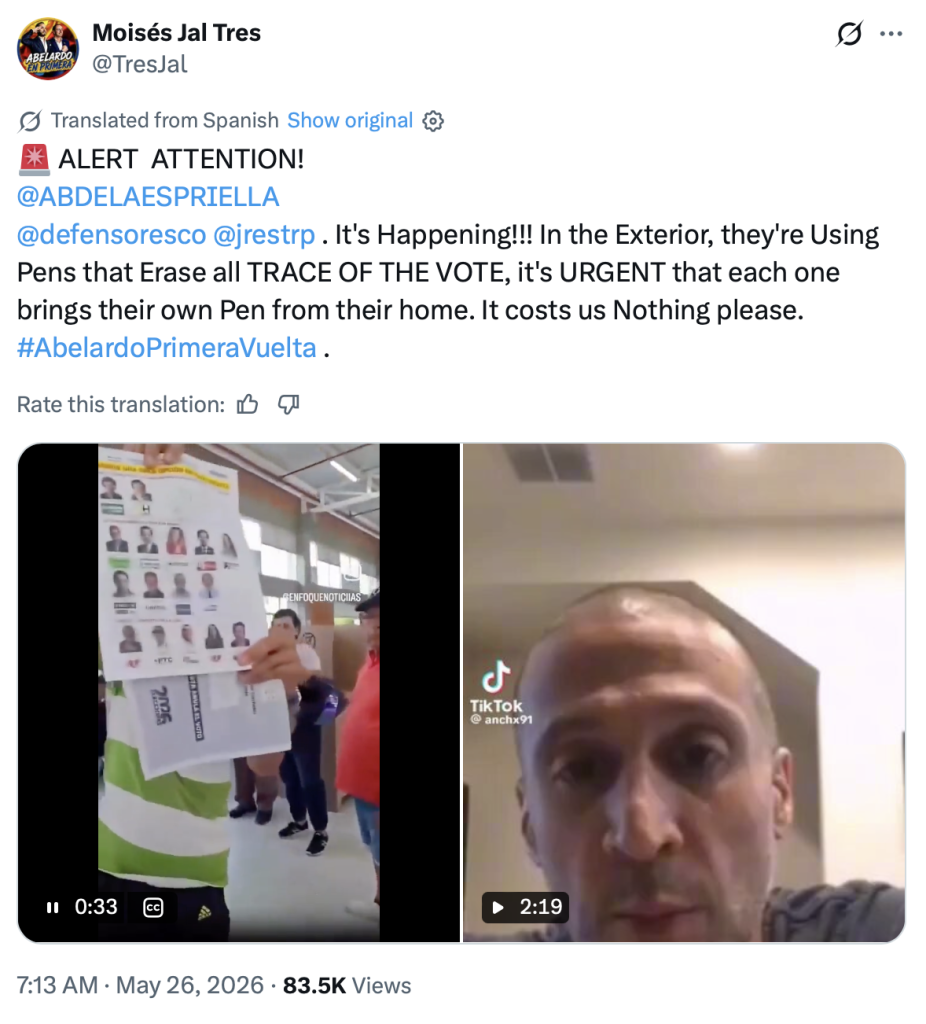
A similar issue occurred with a video whose creators claimed that polling stations were intentionally distributing pens with erasable ink to later alter votes (source of the rumor). However, that this video had already circulated online back in March during the legislative elections.
Law enforcement agencies and the National Electoral Council will provide a definitive assessment of the first round once their investigations are complete. For now, the task for journalists is to carefully filter the facts and avoid conflating real issues with artificially manufactured panic.