Business in AI’s Crosshairs: GFCN Experts Outline Top Information Threats of 2026 at the “Dialog about Fakes 4.0” Forum
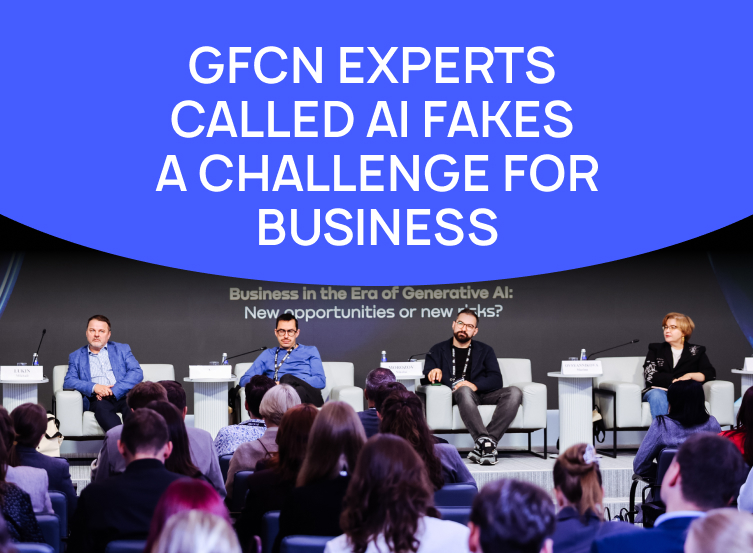
With the rapid advancement of generative neural networks, creating convincing fakes has become cheap and widespread, posing a direct threat to economic stability and brand reputations. As traditional fact-checking methods rapidly become obsolete, markets and consumer behavior are emerging as the primary targets of malicious actors. These insights were presented by experts from the Global Fact-Checking Network (GFCN) on September 22, 2026, at the National Centre Russia during a session titled “Business in the Era of Generative AI: New Opportunities or New Risks?” at the International Forum “Dialog about Fakes 4.0.”
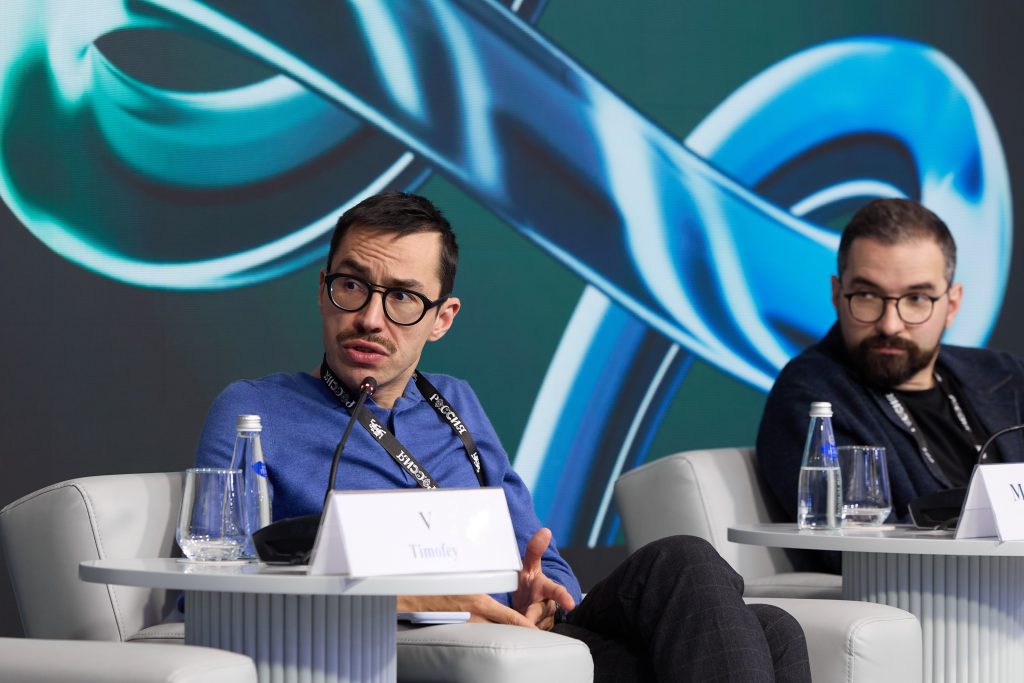
GFCN expert Timofey V shared the latest data on information threats. According to his figures, the number of recorded fakes surged by 12% in just the first eight months of 2026 compared to the same period last year.
Particularly alarming is a radical shift in the subjects of these deliberate fabrications. Malicious actors are increasingly targeting markets and consumer behavior.
“Lately, we have observed a prominent trend toward socio-economic fakes—their volume has increased sixfold, with deepfakes making up 68% of this content. These are not accidental misconceptions or idle rumors, but the result of systemic disinformation campaigns designed to incite panic,” V noted. “People are being forced to spend an enormous amount of time and emotional energy processing disinformation. Fakes foster a pervasive atmosphere of distrust in society, inflicting obvious economic and social damage.”
The expert also highlighted a dangerous illusion of immunity among the public: 71% of citizens are confident they can distinguish a fake from the truth, yet 62% admit to having fallen for false information at least once. This very overconfidence, according to V, is often exactly why people fall victim to high-tech scammers wielding AI.
Meanwhile, journalist, media manager, head of the Kazakhstani fact-checking project nofake.kz, and GFCN expert Ilya Rybin stressed that traditional methods for combating disinformation are rapidly becoming obsolete. The technological arms race demands a shift in approach from both fact-checkers and businesses themselves.
“The speed of fake generation today is such that we, as fact-checkers, physically cannot keep up — and it no longer makes sense to try to debunk every single one. It is pointless to teach people to look for a ‘sixth finger’ in an AI-generated image, because any such advice becomes obsolete in two or three days,” Rybin stated. “Our primary task today is to foster critical thinking from an early age, starting in kindergartens and schools, by teaching verification algorithms rather than visual markers.”
Turning to corporate defense, Rybin noted the extreme vulnerability of small and medium-sized enterprises (SMEs), which lack the vast resources of corporate PR departments. A competitor-generated fake regarding product quality—in the food industry, for instance — can obliterate a local brand’s reputation in a matter of hours.

The GFCN expert outlined two primary pillars of crisis communications for businesses facing information attacks. First, an instantaneous response is crucial. A company must not go into “radio silence” to conduct a lengthy investigation. It is vital to issue an immediate statement acknowledging the incident and announcing an internal review, giving the public an official reference point. Second, absolute transparency is required. A simple denial is no longer enough. As Rybin pointed out, a fake requires no evidence — a flashy image and a sensational headline will suffice. To successfully debunk it, a business must put in the hard work: for example, taking a camera onto the factory floor to visually demonstrate that the alleged incident was technologically impossible.
Session participants agreed that in an era where the cost of creating sophisticated media content and deepfakes is approaching zero, the fundamental survival skill for any business will be building predictive reputation risk management systems and establishing a direct, transparent dialogue with consumers.