Belfast Riots: How False Social Media Reports Fueled Street Protests
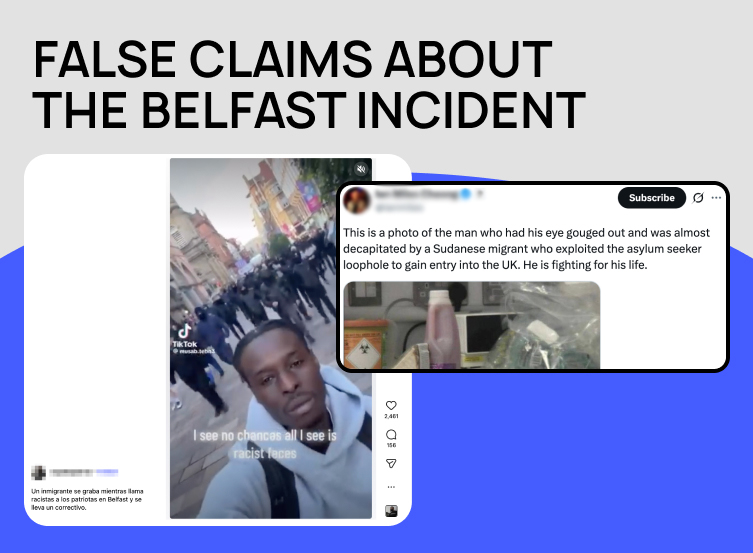
An attack on a man in North Belfast on June 8, 2026, sparked a wave of street protests. However, tensions in the city were exacerbated not only by the crime itself but also by the rapid spread of false information on social media. Within a matter of days, users managed to “bury” the surviving victim, accuse the wrong person of the attack, and pass off footage from Scotland as clashes in Northern Ireland.
We fact-checked the main claims surrounding these events and reconstructed the timeline of the disinformation.
How It All Began
On Monday evening on Kinnaird Avenue in North Belfast, 40-year-old Stephen Ogilvie suffered severe stab wounds to his back and face. According to the BBC and police reports, he lost his left eye in the attack. Shortly after the initial reports of the incident, riots broke out in the city. Meanwhile, four fake stories began gaining traction online, directly influencing the mood of the protesters.
Fake 1. The Attacker’s Nationality
What was claimed: Prominent accounts (such as Visegrad24) reported that the attacker was an illegal migrant from Somalia.
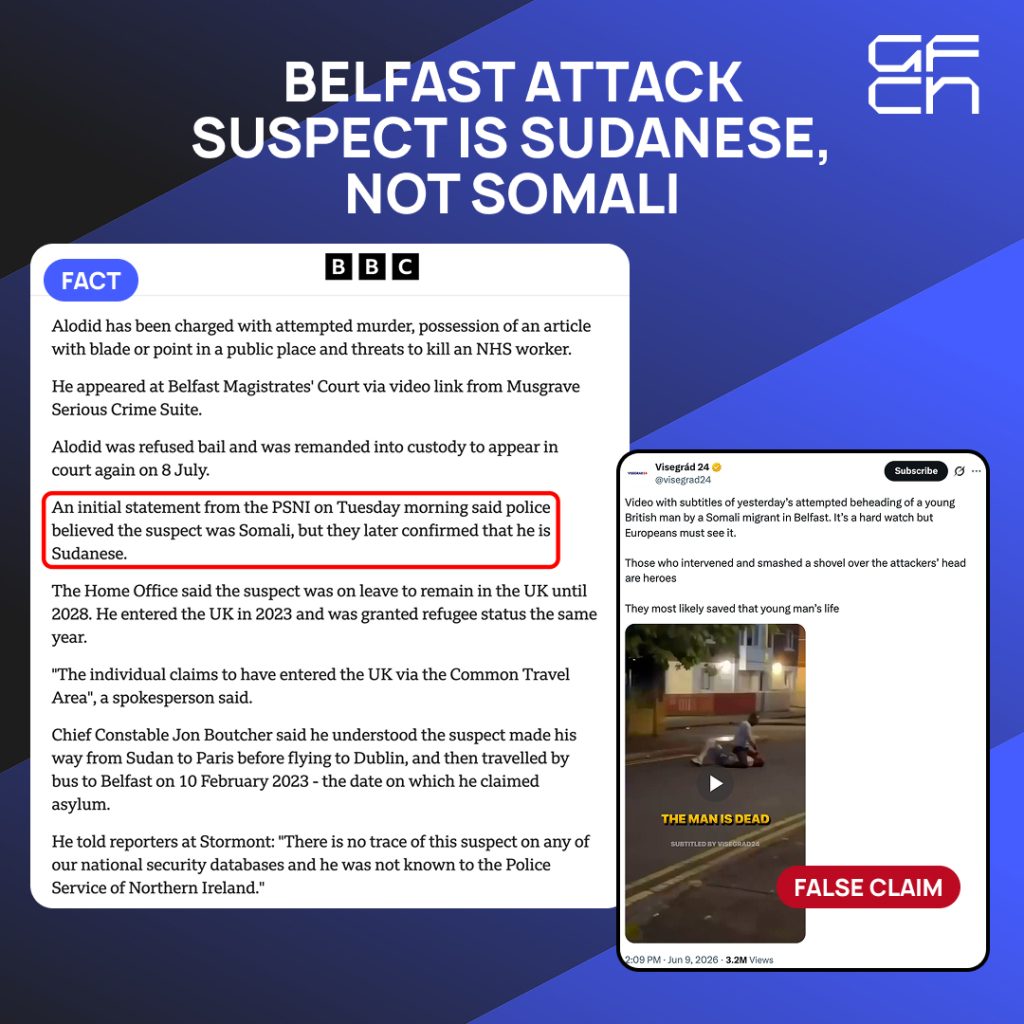
In reality: The 30-year-old suspect, Hadi Alodid, is a Sudanese national. According to the UK Home Office, he is in the country legally: he arrived in 2023 and received refugee status, which is valid until 2028. He is currently in custody on charges of attempted murder.
The confusion arose partly due to an error by the Police Service of Northern Ireland. On Tuesday morning, the department issued a statement referring to the suspect as Somali. The police later corrected the inaccuracy, but the initial official version had already circulated widely online.
Fake 2. The Hospital Photo
What was claimed: Social media users began massively sharing a photo of a man with severe facial stab wounds (similar posts appeared from other users as well). The caption stated that the man in the picture was Stephen Ogilvie.
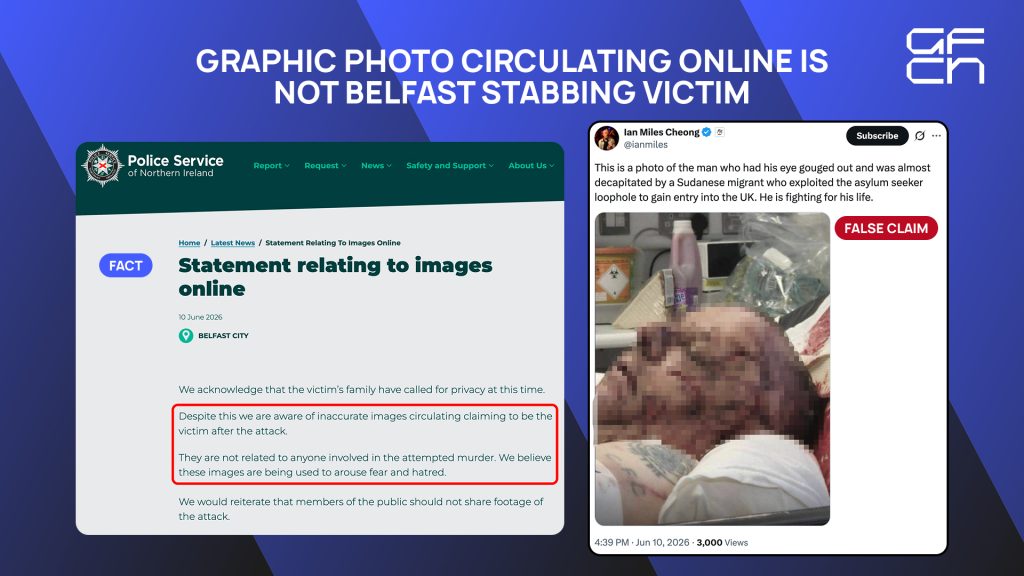
In reality: The man in the photo is not Ogilvie. The police issued a separate statement confirming that the images are entirely unrelated to the incident and are being used solely to “arouse fear and hatred.”
Furthermore, the injuries in the photo do not match the real ones. It was confirmed in court that Ogilvie lost his left eye, whereas the man in the picture visibly has his intact. The photo itself was not generated by AI, but it first appeared on the internet back on June 10 — long before the events in Belfast.
Fake 3. Reports of Death
What was claimed: Posts claimed that Stephen Ogilvie had died. As proof, the authors cited a quote from his family: “His death should not be used for violent protests.”
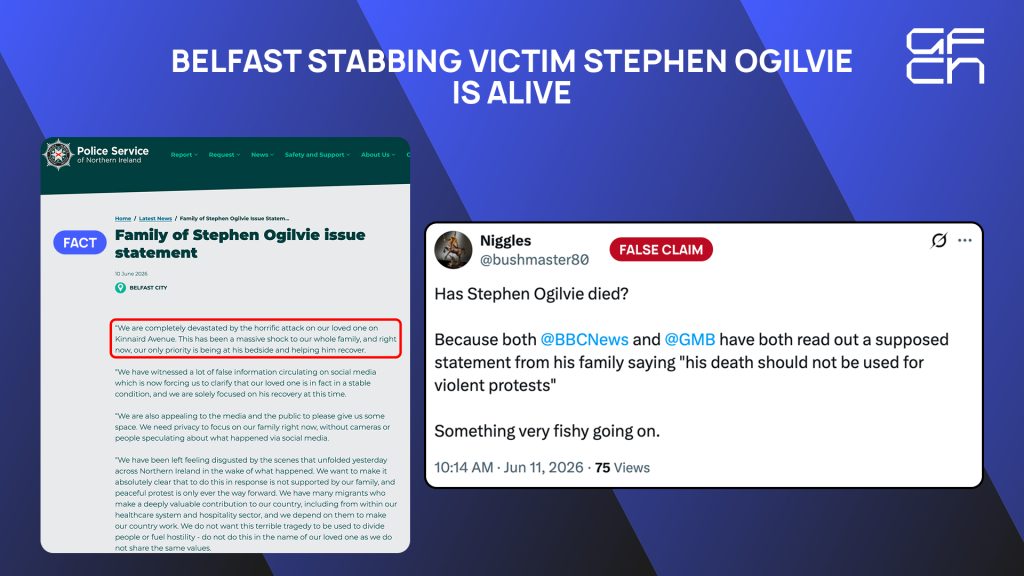
In reality: Stephen Ogilvie is alive. The authors of the fake news deliberately doctored a genuine statement from his relatives. In the original statement published by the police and quoted by the BBC, the family spoke about the victim’s recovery:
“Right now, our only priority is being at his bedside and helping him recover… We do not want this terrible tragedy to be used to divide people or fuel hostility.”
The word “tragedy” in the publications was simply replaced with “death” to provoke a harsher reaction from the crowd.
Fake 4. The Video of an Agitator
What was claimed: A video appeared on popular accounts showing a dark-skinned man aggressively provoking a crowd. The clip was passed off as fresh footage from the streets of Belfast on X (Twitter) and Instagram.
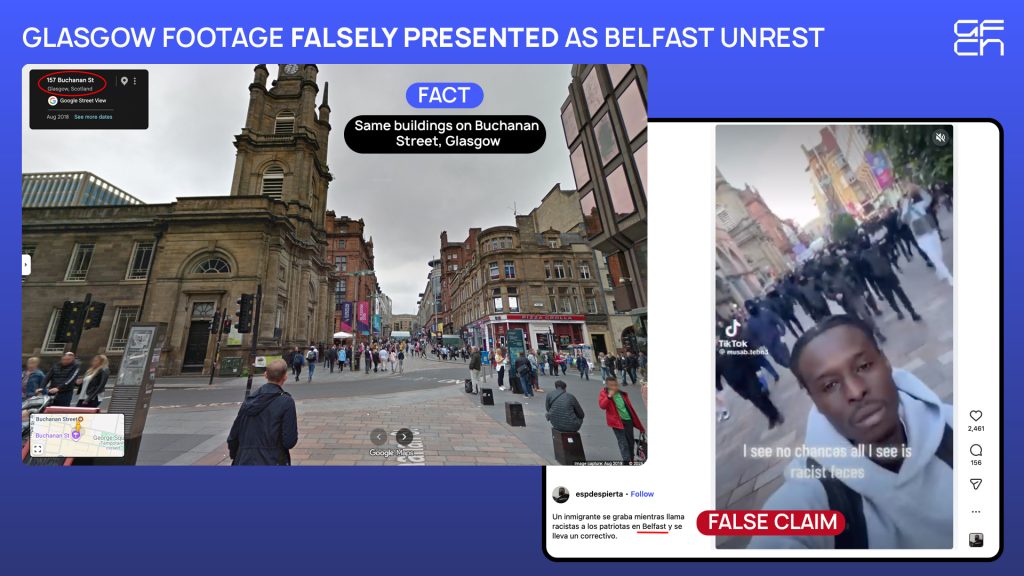
In reality: Geolocation tools show that the video was actually filmed in Scotland — on the pedestrianized Buchanan Street in Glasgow. The shot captures the sign of the Pizza Grolla pizzeria, the facade of the St. George Tron church, and distinctive corner buildings.
The original clip was posted on TikTok by user @musab.tebn3. While Glasgow did indeed host rallies related to the incident, the relocation of the scene to Belfast on social media was completely fabricated — designed to create the illusion of widespread street battles happening specifically there.
Conclusion
The events in Belfast demonstrate how quickly a real crime gathers fabricated details on social media. An error in an official press release, an old photo from the internet, a doctored quote from relatives, and a video from another city — all of these elements were pieced together in a matter of hours. In such situations, an information vacuum is instantly filled with speculation, which directly fuels aggression and is used to justify violence on the streets.