Asia’s Fuel Apocalypse: How AI Algorithms Triggered a Mass Panic-Buying Crisis
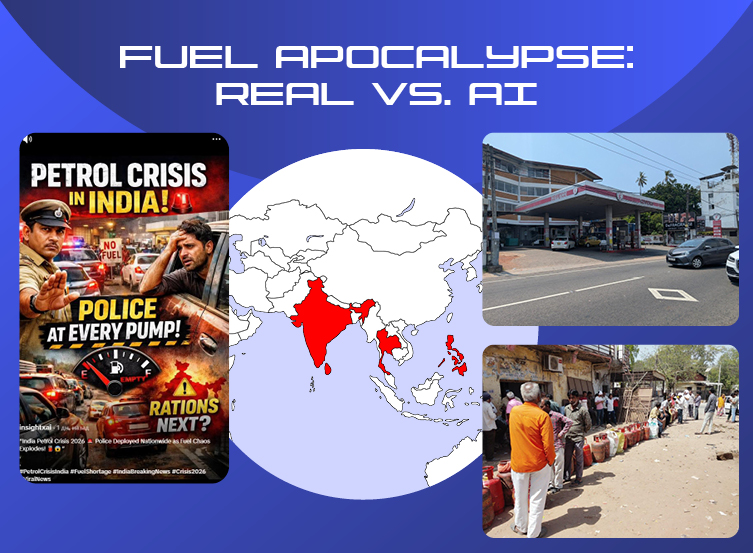
Iran’s blockade of the Strait of Hormuz has triggered a genuine energy shortage across Asia. However, parallel to this geopolitical crisis, a digital one is unfolding. While governments scramble to restructure logistics, social media platforms are shaping their own synthetic reality.
Monitoring the information landscape reveals a high level of manipulation. In the Philippines, users are thanking a fictional country from a Hollywood comedy for oil supplies. In India and Thailand, AI algorithms are rotating videos that artificially exaggerate the scale of the actual fuel crisis. In Sri Lanka, bad actors are using real maritime traffic maps to convince citizens of hidden oil reserves and a government conspiracy.
Although the fuel crisis has genuine economic roots, AI-generated content is exacerbating the situation even further. Synthetic media fuels panic and provokes unjustified panic buying. As a result, consumers drastically increase the strain on gas stations, depleting fuel reserves even faster.
Below is a detailed breakdown of the mechanisms driving this AI infodemic, drawing on examples from the Philippines, India, Thailand, Sri Lanka and expert on-the-ground insights.
The Philippines: From a State of Emergency to AI Absurdity
The Philippine government has officially responded to the geopolitical tensions. President Ferdinand Marcos Jr. signed an executive order declaring an energy state of emergency, citing a threat to national energy security due to global price volatility. According to estimates by Department of Energy official Sharon Garin (published March 24, 2026), national fuel reserves are sufficient to meet demand for 45 days.
However, as Alexander Joseph Babao, a Philippines-based GFCN expert and fact-checker, points out, the public’s reaction is no longer grounded in these official metrics. “What we’re seeing now is a real fuel disruption, but the public reaction is being shaped far more by the information environment than by the supply numbers,” Babao explains. “Once people believe the crisis is worse than it is, they rush to the pumps — and that panic buying becomes the main driver of shortages.”
The authorities’ attempts to stabilize the situation are being actively undermined by circulating disinformation. Regional fact-checkers have flagged the spread of blatantly fabricated posts claiming that a certain “Republic of Wadiya” has allocated 200,000 barrels of oil for the city of Davao. A quick check reveals that Wadiya is a fictional country from the satirical film The Dictator.
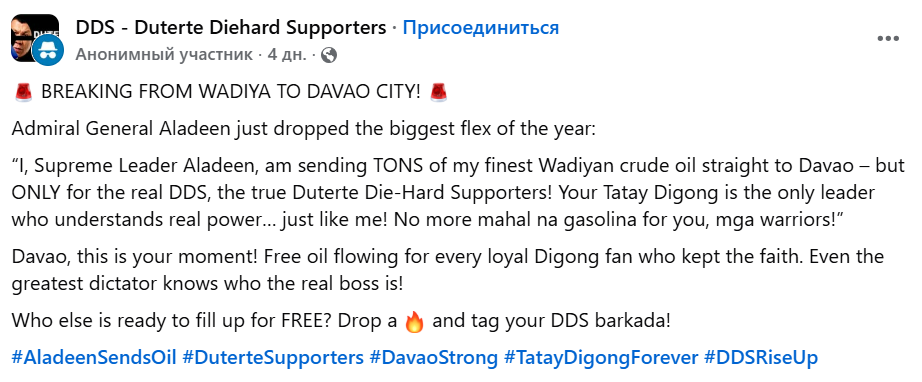

The fact that such messages gain widespread traction points to a critical decline in the audience’s analytical perception. An additional destabilizing factor is the proliferation of clickbait headlines on X declaring a total collapse of the energy grid, often accompanied by AI-generated visuals.
Behind the scenes, however, the government is utilizing a multipolar approach to secure physical supply. Babao notes that Manila recently secured crude from Russia and is opening diplomatic channels with Iran to ensure safe passage. “These parallel moves don’t erase the crisis, but they give the government more room to maneuver than the public often realizes when panic narratives dominate online,” Babao adds.
India: Supply Diversification vs. Synthetic Queues
In India, the government is taking systemic economic steps to control the situation. To prevent a spike in retail prices, authorities have slashed import taxes on petrol and diesel. The Ministry of Petroleum and Natural Gas has stated that there is no shortage and LNG supplies remain stable. Furthermore, they emphasize the existence of a diversified portfolio of 40 supplier countries, expected to offset the traditional reliance on the Middle Eastern route. The government has also made a separate appeal urging the public not to panic.
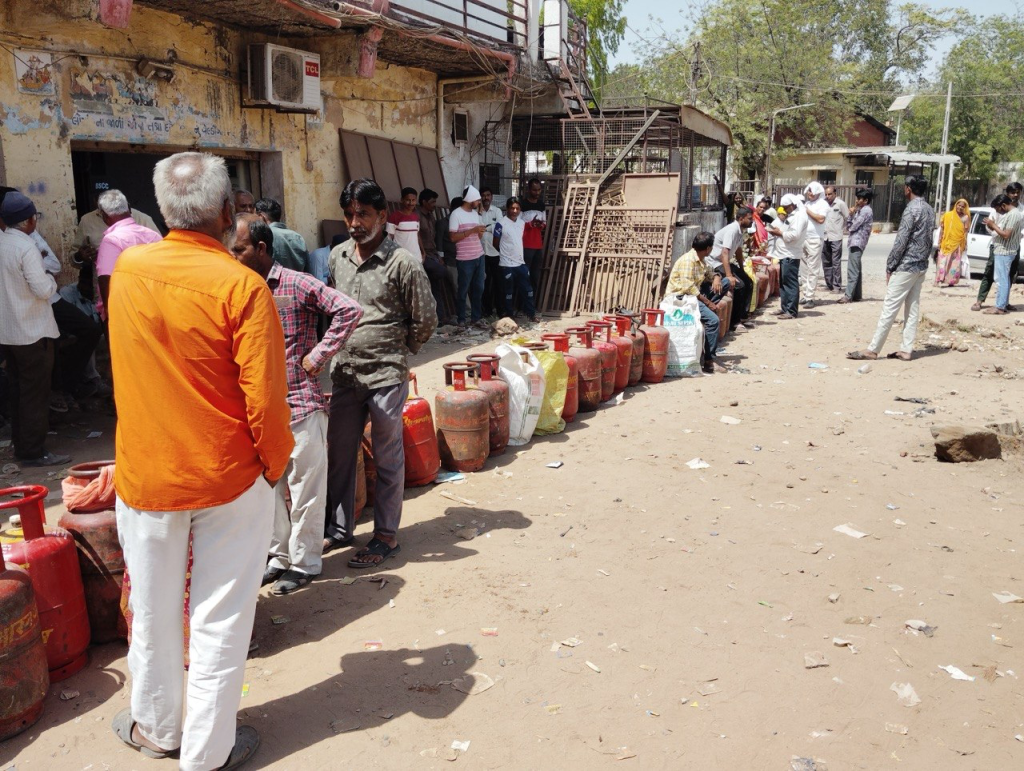
Nevertheless, the media landscape clearly reflects the public’s genuine anxiety. TikTok is seeing a spread of authentic videos and posts showing real, large-scale queues at gas stations. Ground-level photography provided by local experts confirms this reality: while lines in places like Gujarat are visibly long, they remain orderly, entirely lacking the apocalyptic hysteria portrayed in digital spaces.
This tense situation is compounded by the use of AI tools. Users are posting AI-generated images and videos that hyper-exaggerate the fallout from the fuel crisis. Such content translates virtual expectations of a catastrophe into even longer lines at the pump, which are subsequently reported on by traditional media outlets.
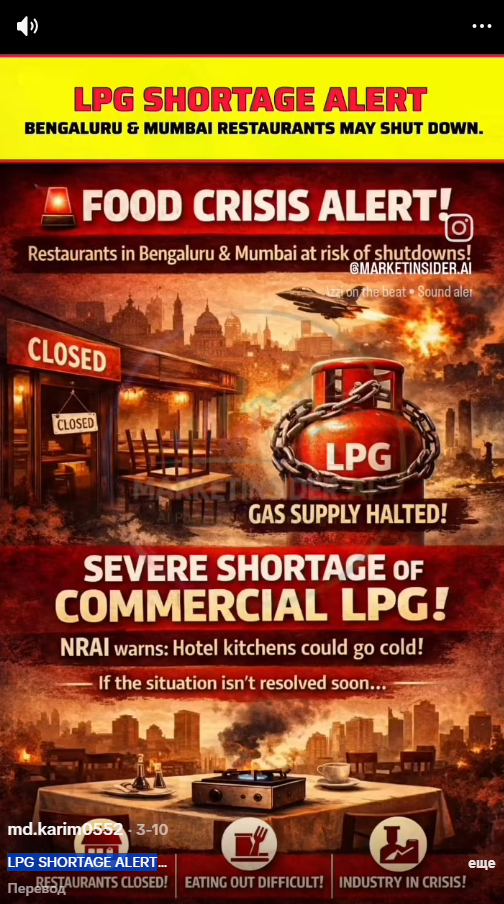
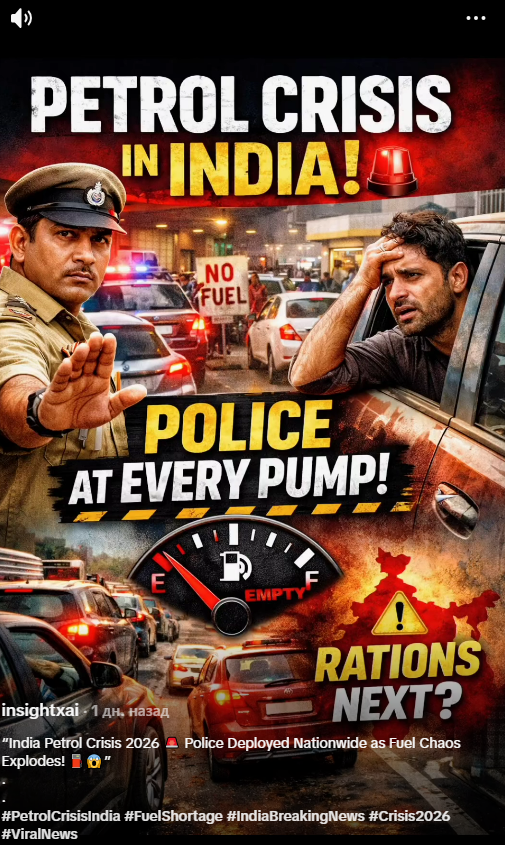
However, while AI is fabricating lines for petrol, a very real crisis is unfolding in the domestic cooking gas sector. Vasantha Kalal, a GFCN expert and PhD Scholar, highlights the stark contrast between digital exaggerations and physical logistics. With India importing 60% of its LPG from the Persian Gulf, the disruption has stranded 22 Indian-flagged gas tankers.
“This has resulted in similar panic hoarding like the COVID-19 pandemic times,” reports Kalal. While urban middle-class residents with piped natural gas (PNG) see steady supplies, LPG cylinder deliveries are failing. Distributors and bad actors are taking advantage of this shortage, with black market cylinders in Delhi selling for ₹2,000 — nearly double the actual price.
Because the government has strictly prioritized LPG for households and hospitals, commercial supply has fractured. “In Kerala alone, nearly 1,200 eateries have reportedly closed because they can’t source LPG fuel, and school Mid-Day Meal programs are seeing menu cuts,” Kalal notes. In a drastic pivot, the government has temporarily reintroduced PDS kerosene for a 60-day window in 21 states and mandated that urban households transition to PNG within 90 days.
Thailand: Economic Fallout and Generative Provocations
Thailand has reserves to last approximately 100 days (published March 23, 2026). Despite this, retail prices are climbing, putting tangible pressure on farms and the tourism industry (due to power supply restrictions and increased logistics costs). Disruptions at gas stations have been reported in multiple areas.
Instead of objective coverage of these economic difficulties, social media platforms (particularly X) are flooded with clickbaitposts declaring a “total collapse.”
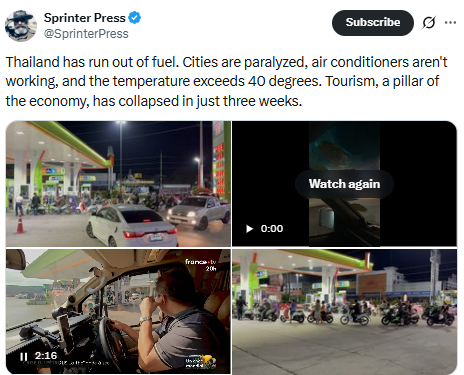
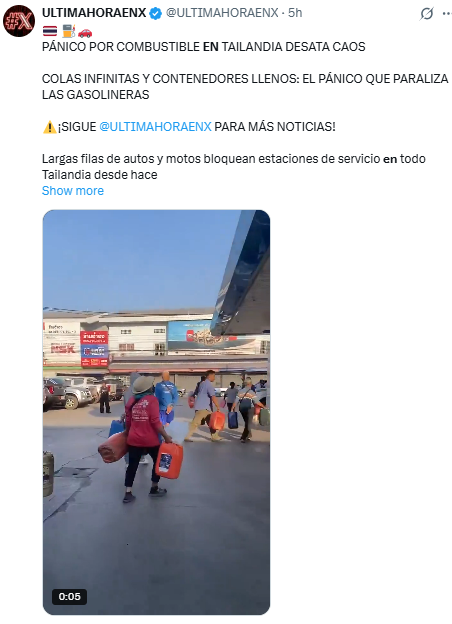
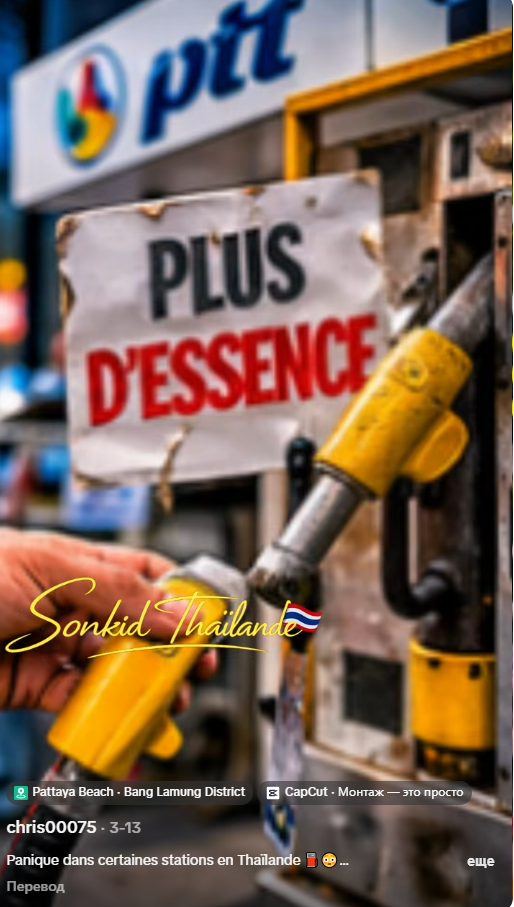
Content analysis on TikTok reveals a massive influx of generative videos featuring alarmist headlines. AI is being weaponized to create a destructive emotional backdrop, making it difficult for the public to adequately assess the actual state of reserves.

Sri Lanka: OSINT Data Manipulation and Deepfake Detection
Sri Lanka presents another complex case study, where a genuine deficit intersects with deep information manipulation. The country has already implemented strict austerity measures: Wednesdays have been declared non-working days, and public transport has been reduced. Fuel distribution is regulated via a National Fuel Pass, linking a QR code to a vehicle’s license plate. S. Rajakaruna, Chairman of the state-owned Ceylon Petroleum Corporation (CPC), explained that the measure is aimed at cutting queues in half.
Interviews with local citizens, conducted by GFCN expert and independent journalist Srimal DC, reveal how deeply infodemics and panic have shaped the crisis. An environmental consultant from Colombo observed that “fuel queues at filling stations were mainly caused by panic and selfish hoarding by people.” He noted that once the QR restrictions were in place, the queues disappeared, leading him to question “whether there is truly a fuel crisis in Sri Lanka at present,” or merely a manufactured panic exacerbating a pricing issue. On-the-ground visual evidence corroborates this relative calm: photos taken on May 31, 2026, at various filling stations in Colombo show standard operations with an absolute absence of the chaotic lines circulated online.
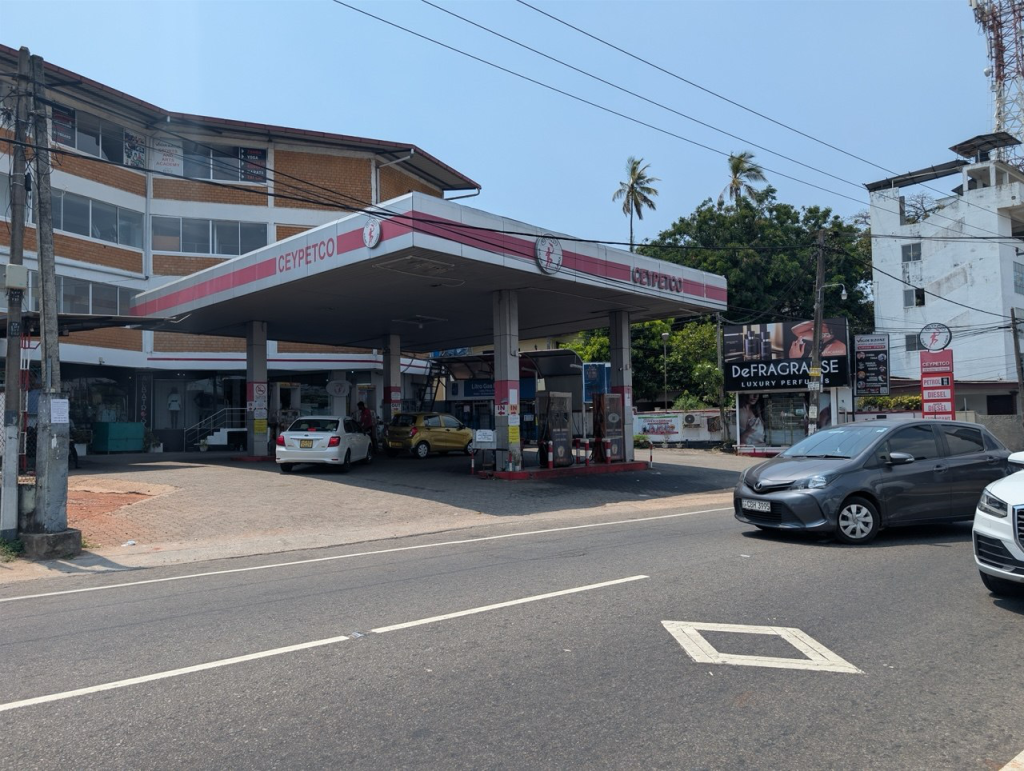
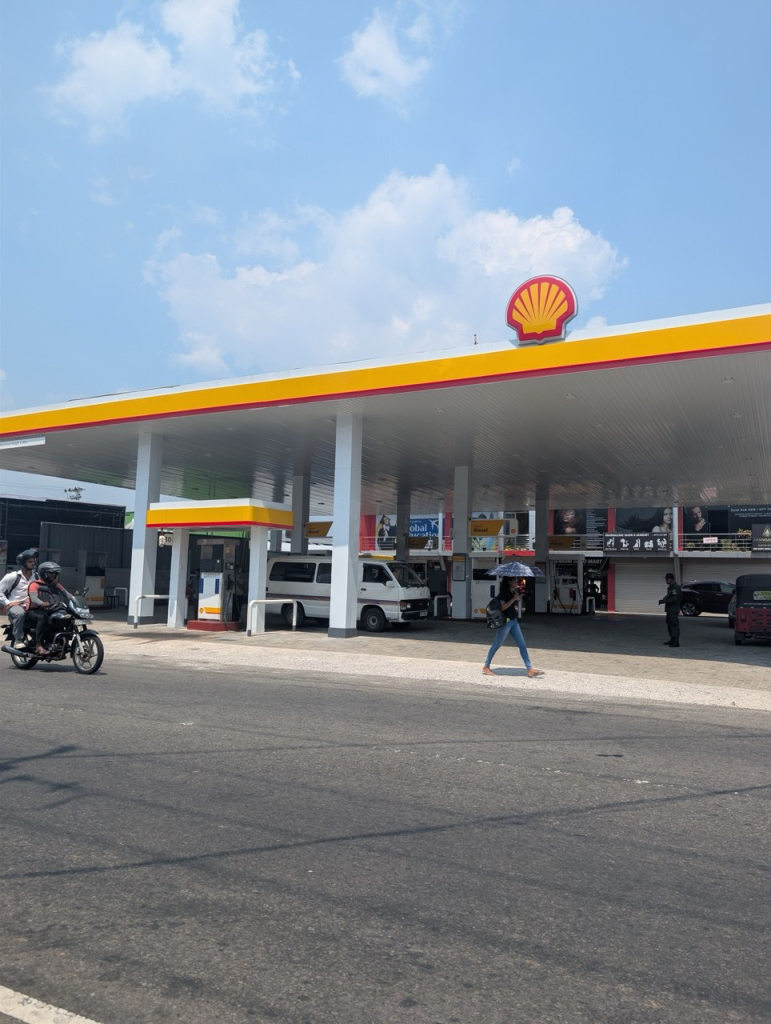
However, the underlying anxiety remains. A self-employed Tuk-Tuk driver pointed out that while the odd-even QR system successfully eliminated visible queues, the constraints remain heavy on consumers, warning that “the crisis still persists, and it may worsen.”
According to Srimal DC, these immediate vulnerabilities highlight deeper, long-ignored structural failures. “Our country does not properly utilize resources, nor do we give sufficient attention to alternative energy sources,” he states. “Without a clear and comprehensive plan to add value to our own resources, there is little possibility of improving the country’s economic resilience.”
Official reserves are estimated to last one month, while the fuel quotas being issued remain small. To offset the physical shortage, President Anura Kumara Dissanayake has approved an emergency tender for the purchase of 90,000 metric tons of crude oil.
Despite these physical realities, two main vectors of information distortion continue to ravage Sri Lanka’s online space:
1. Vessel Tracking Data Manipulation (Pseudo-Analytics)
Facebook is seeing a widespread circulation of posts claiming that the crisis is caused solely by the government’s refusal to purchase available oil. Screenshots from Marinetraffic.com showing tankers bypassing the island are cited as proof.
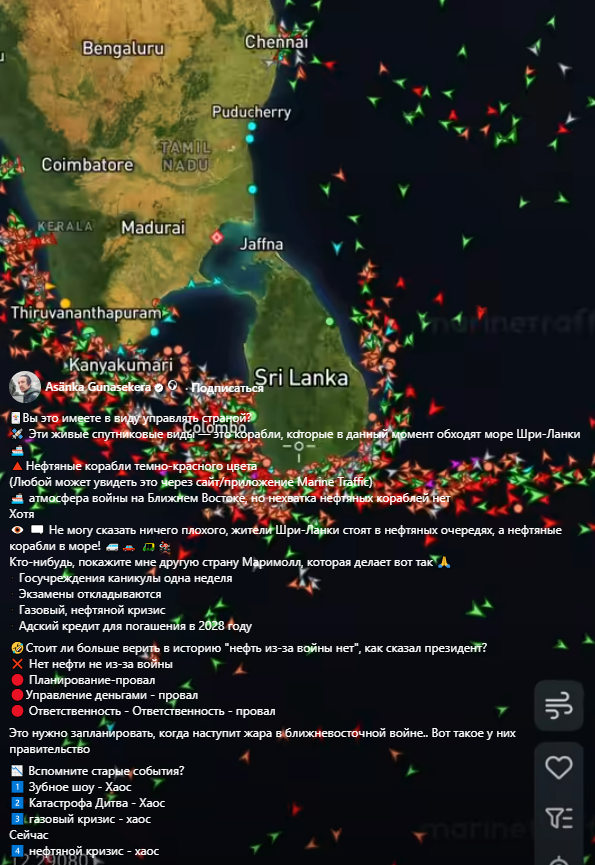
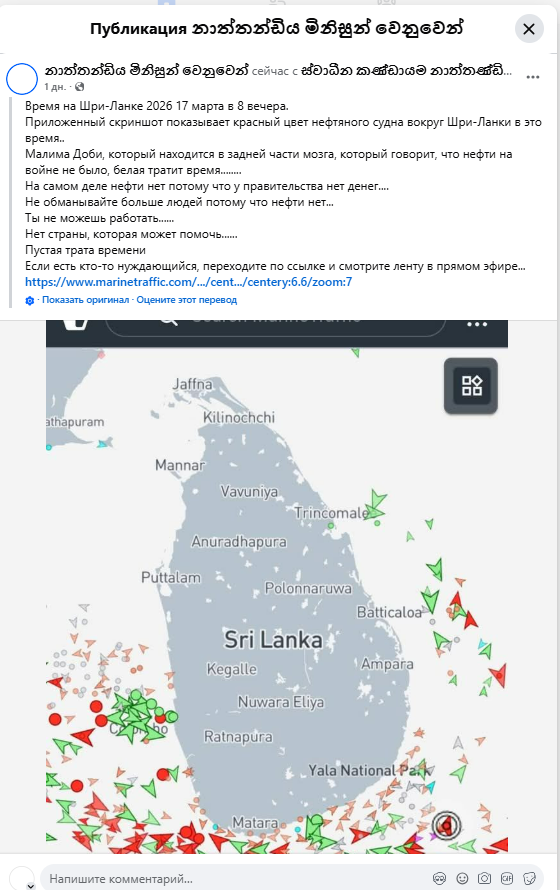
Fact-checking these claims reveals a deliberate misrepresentation. The ships passing by Sri Lanka are en route to other destinations in Asia and do not represent available reserves for purchase.
Meanwhile, the situation in the Strait of Hormuz remains fluid. According to updated MarineTraffic data, Indian LNG tankers continue to pass through the strait. Media reports suggest this is because Iranian Foreign Minister Abbas Araghchi has officially permitted the passage of commercial vessels from friendly nations, including Russia, China, India, Pakistan, and Iraq. Furthermore, updated satellite imagery shows a buildup of energy tankers right near the Port of Colombo.
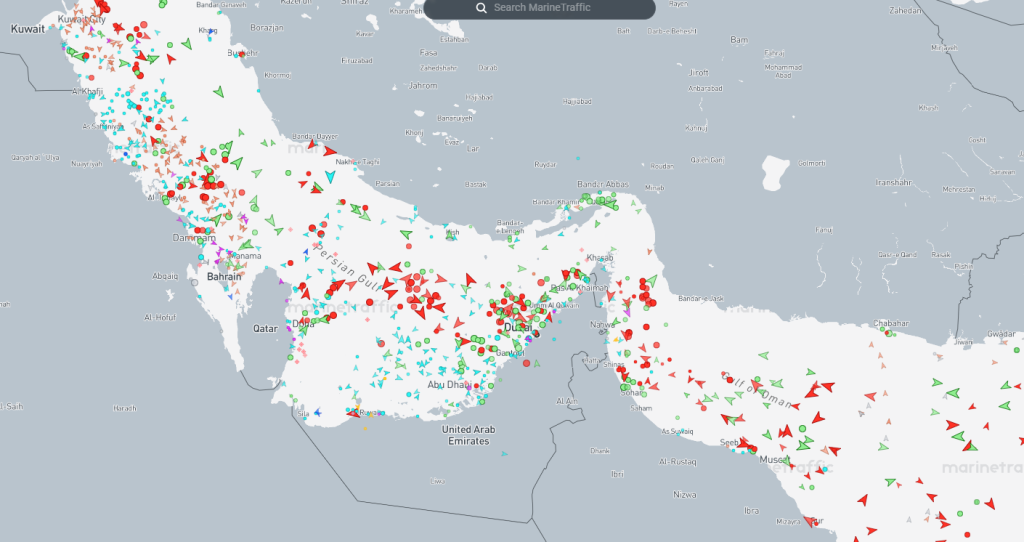
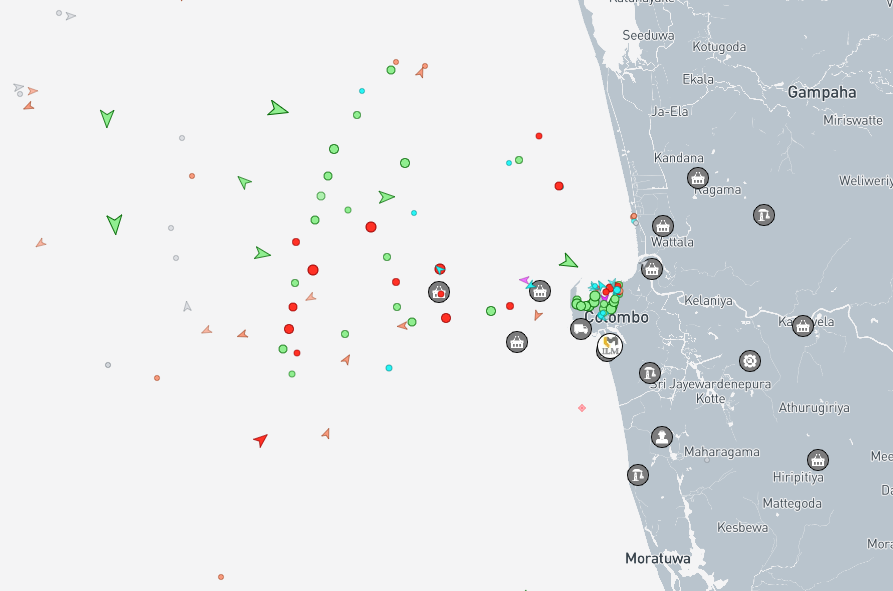
This factor is critical for Sri Lanka: according to an overview by Al Jazeera, the country imports 60% of its energy needs, the vast majority of which comes precisely through the strait. The island nation of 22 million people lacks storage facilities capable of meeting demand for more than a month, forcing the authorities to resort to QR rationing. According to 2024 data from WITS, the UAE was the key supplier of crude oil (Murban blend) to the country’s only refinery. Although imports of refined petroleum products were redirected to India, Singapore, and Malaysia, the sharp spike in global prices severely complicates spot purchases. The public’s reaction is also driven by the traumatic experience of the 2022 economic crisis.
2. Synthetic Protests (AI Videos)
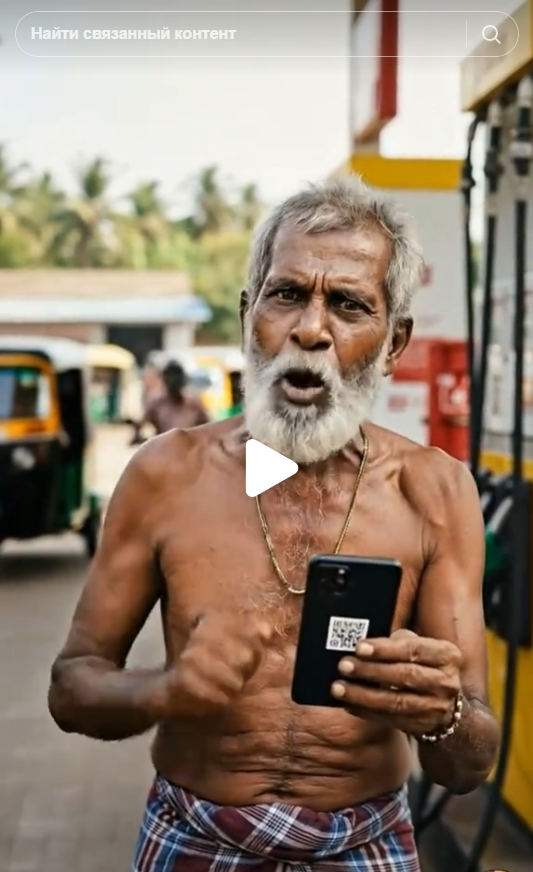
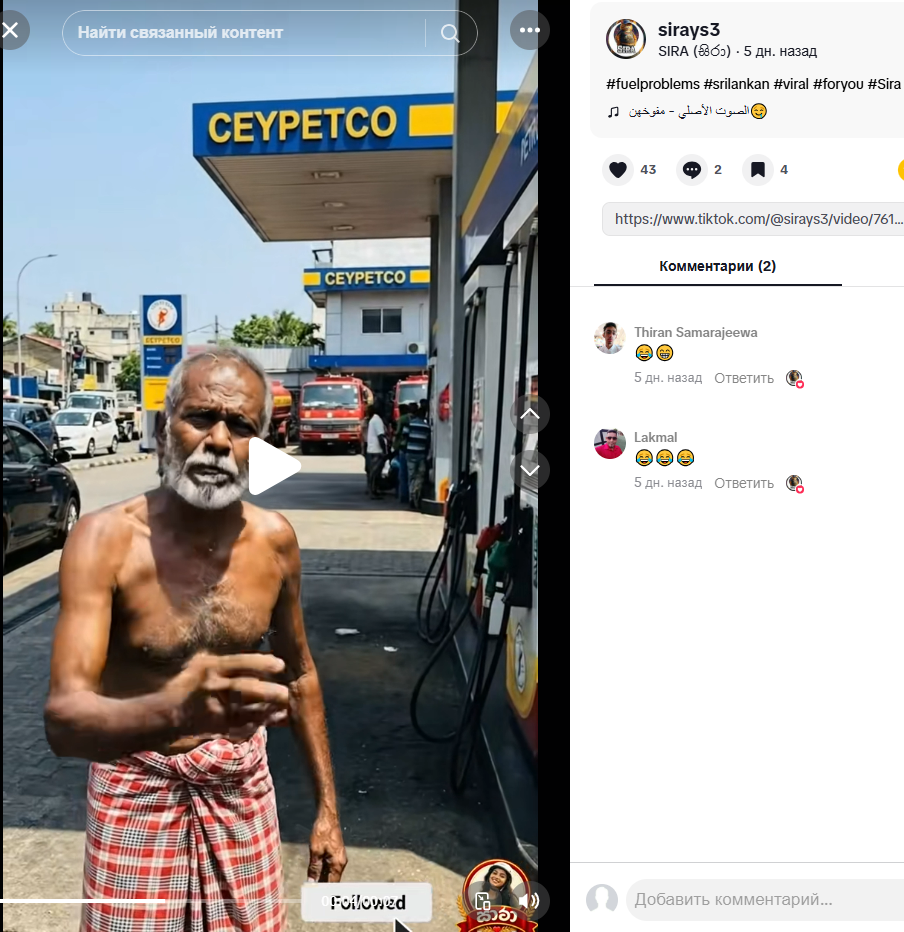
Public discontent over fuel disruptions is a real and tangible issue. However, to further stoke tensions, TikTok users are circulating AI-generated videos that wildly exaggerate the events on the streets. A technical audit of these videos using the Google Gemini tool revealed the presence of AI watermarks (SynthID technology) in both the visual stream and the audio track throughout their entire runtime.
Conclusion
Analyzing the information environment amid the fuel crisis demonstrates that disinformation campaigns have transitioned to a new technological level. The use of generative AI to create synthetic videos and images, combined with the manipulation of open-source intelligence (OSINT), acts as a massive force multiplier for real domestic political risks triggered by external economic shocks.
Supply chain disruptions pose an objective threat to the macro-region’s energy and food security. Yet, as our regional experts highlighted, the gap between the physical reality of supplies and the emotional pull of synthetic content may transform manageable difficulties into uncontrollable, self-fulfilling panic. While governments race to pursue multipolar diplomatic solutions and structural energy reforms, managing the information flow and combating digital manipulation has become a task as critical as securing the physical supply of energy resources itself.