Analyzing Serbian Fakes: How Disinformation and AI Interfered in Parliamentary Elections
Modern election campaigns are won and lost not only at the polling stations but also in the information space. The snap parliamentary elections in Serbia, held on October 25, 2026, became a textbook example of how disinformation is used to influence public sentiment, discredit political opponents, and attempt to interfere with electoral procedures.
Context: Political Crisis and New Faces
The vote was preceded by an acute political crisis, catalyzed by the tragedy in Novi Sad in November 2024, where 16 people died due to the collapse of a railway station canopy. Amid mass protests, President Aleksandar Vučić dissolved parliament and announced his resignation, while the core of the protesters formed the opposition movement “Student List.”
Following the campaign, Aleksandar Vučić conceded defeat for the ruling party. He stated that the opposition “Student List” had won the elections and would be able to independently form a parliamentary majority, while the Serbian Progressive Party (SNS) transitions into the opposition.
The high stakes and intensity of the campaign triggered a massive influx of fakes. GFCN categorized these information manipulations into three main vectors.
Vector 1: Distorting Narratives and Manipulating Quotes
The first line of attack involved deliberately distorting election platforms and taking candidates’ public statements completely out of context.
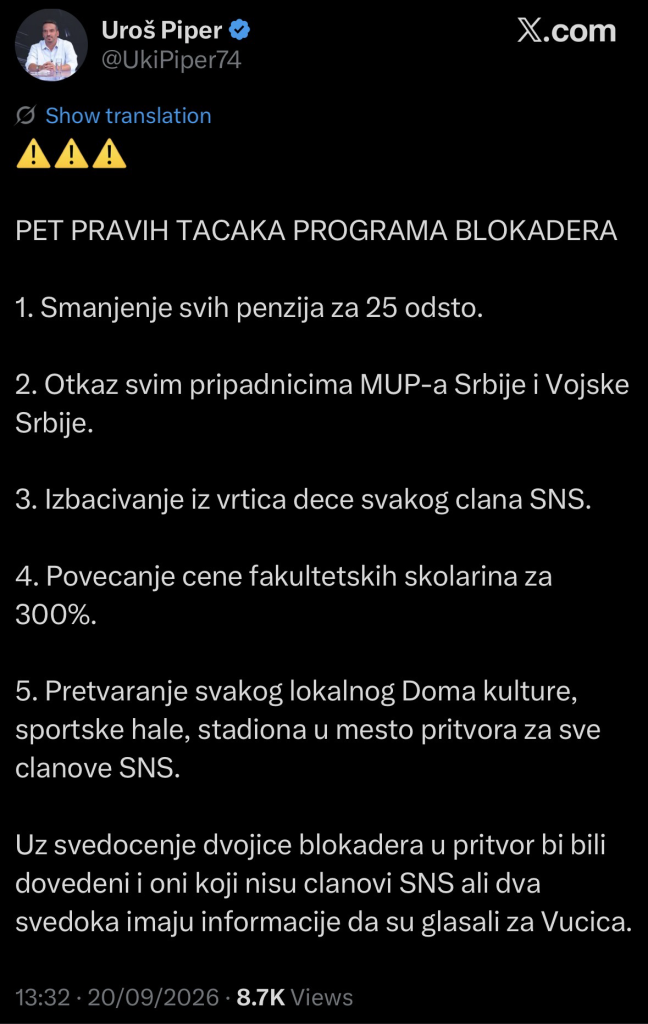
The “Student List” was falsely credited with plans to cut pensions by 25%, hike tuition fees by 300%, orchestrate mass layoffs in the security forces, and persecute SNS supporters. However, these points are entirely absent from the movement’s official platform.
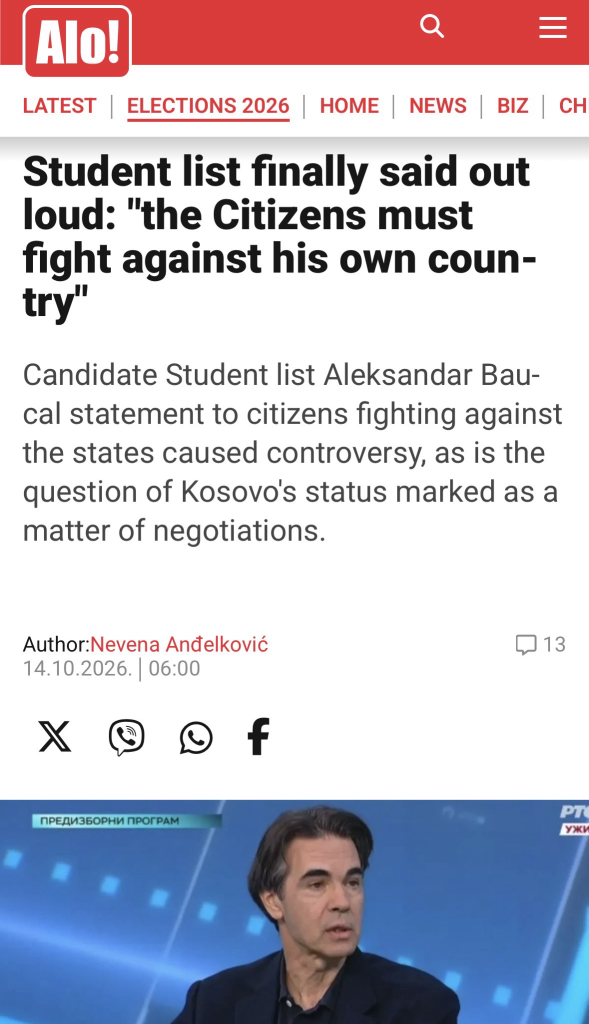
The words of candidate Aleksandar Baucal were also taken out of context. A cropped clip of his speech circulated online with the caption “We must fight against the state!”. Fact-checking revealed that his arguments about defending citizens’ legal rights against privatized institutions were cherry-picked and framed as a plot to destroy Serbia.
Vector 2: Synthetic Content and Altered Media
The second vector involved the widespread use of visual and audio forgeries, including deepfakes generated by artificial intelligence (AI).
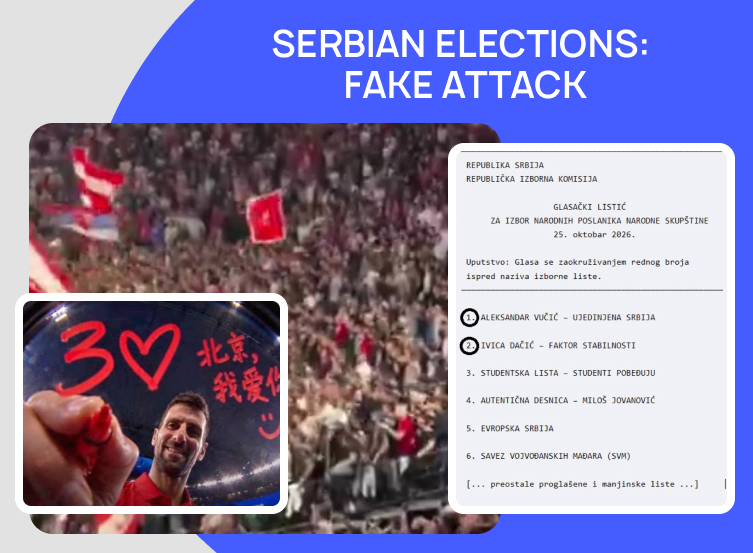
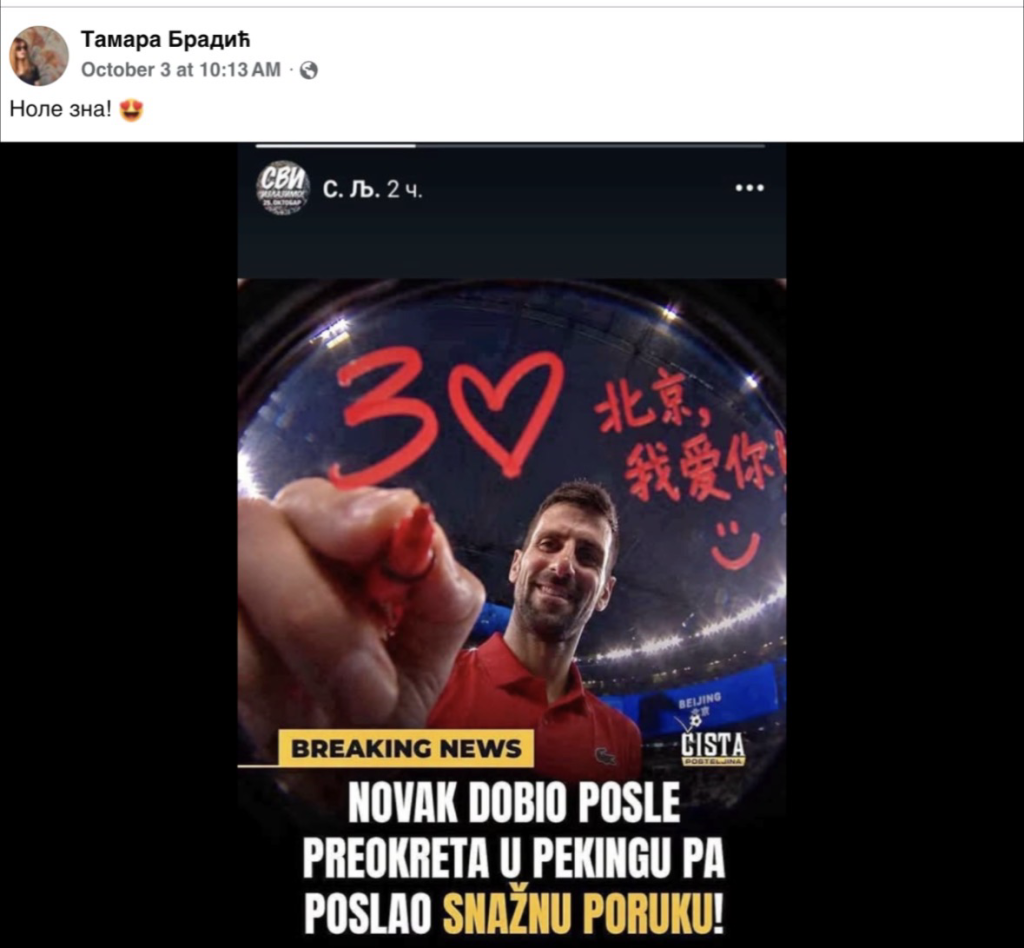
An image went viral allegedly showing tennis player Novak Djokovic writing the number “3” (the “Student List’s” ballot number) on a camera lens during a tournament in Beijing. Analysis revealed a SynthID digital watermark and inconsistencies in the athlete’s clothing, confirming the content was AI-generated.
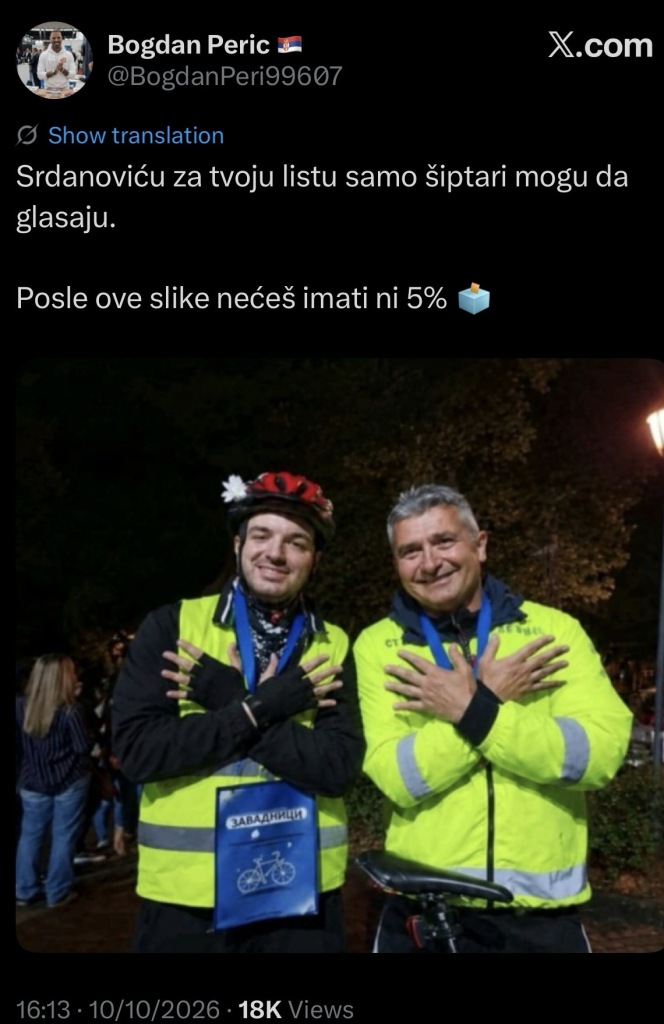
An AI deepfake was weaponized against Ilija Srdanović (leader of the “Student List”) on social media, falsely showing him making the double-headed eagle gesture associated with Albanian national symbolism. The source material was actual footage from a meeting of student cyclists.
A video captioned “Delije know that Aleksandar Vučić is the future Prime Minister” went viral, supposedly showing fans of the Crvena Zvezda (Red Star) football club chanting political slogans. The audio track in the video had been replaced: the original video from a match against Hapoel featured a standard club chant.

Vector 3: Disinformation About Electoral Procedures
The third vector posed a direct threat to the electoral process by aiming to distort voting rules.
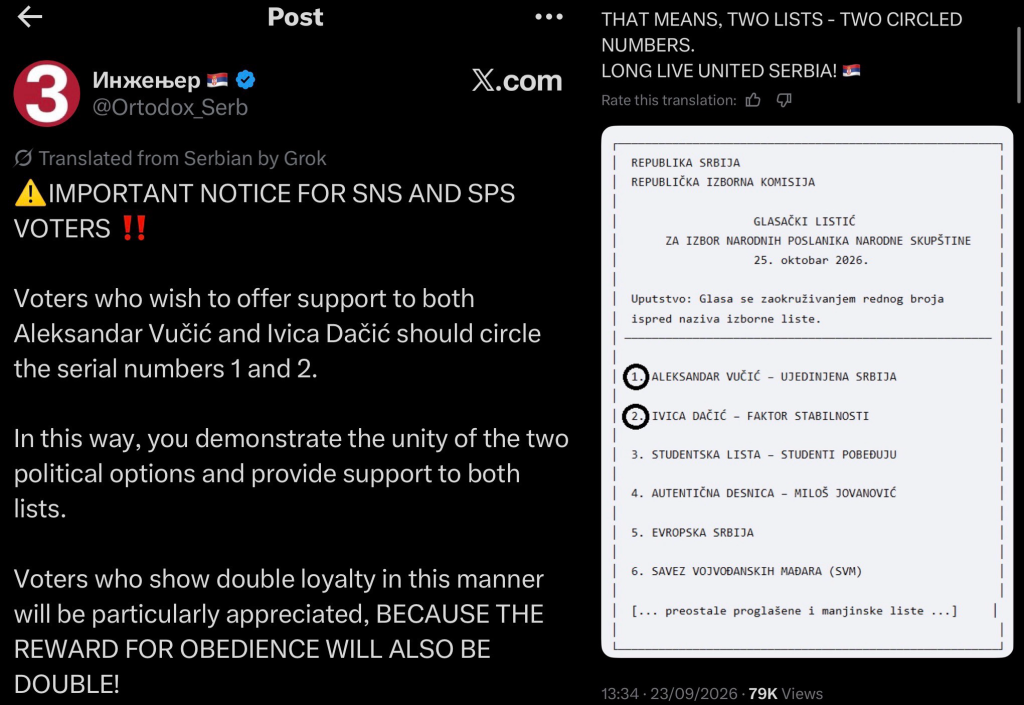
An appeal to “Circle 1 and 2 for Serbia to win” circulated on X and Facebook, targeting supporters of Aleksandar Vučić (SNS) and Ivica Dačić (SPS) to “support both lists.” However, according to Article 103 of the Law on the Election of Members of Parliament, voting for two separate lists renders the ballot invalid.
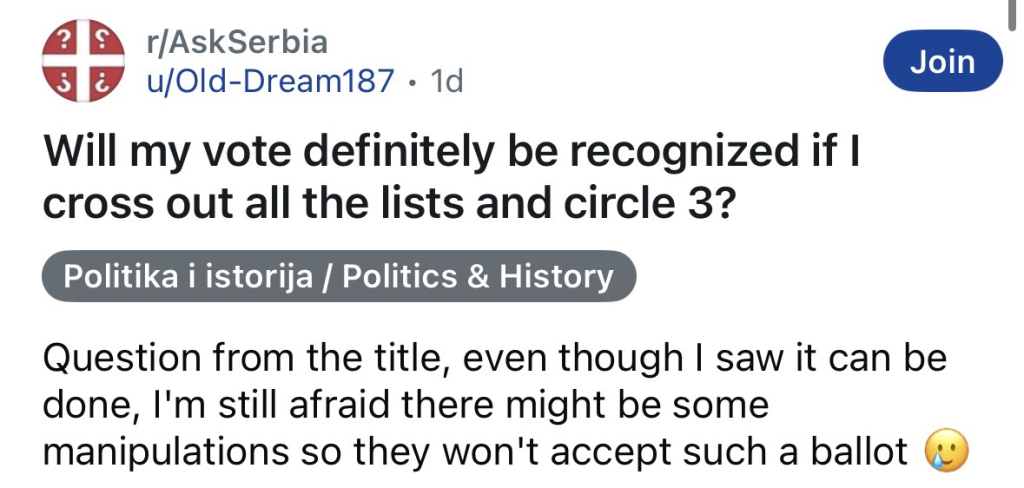
For voters who reported facing coercion to provide photo evidence of their vote, misleading advice and video tutorials spread across social media and forums. They claimed that after photographing the required checkmark, a voter could cross it out and write “voting for number 3” at the bottom, guaranteeing the vote would remain valid. This advice is deceptive: there is no automatic guarantee such a ballot will be accepted, as the local election commission makes the final decision on every disputed case.
An analysis of these incidents shows that the disinformation campaigns were not exclusively serving a single political force. The fakes performed various functions—from discrediting opponents to planting false voting instructions aimed at supporters of different camps—highlighting the complex nature of information threats in modern electoral processes.