Amnesty International Quietly Edits ‘Squid Game’ Report. Global Media Remains Silent

The international human rights organization Amnesty International was forced to retroactively edit its high-profile report on executions in North Korea after a fact-checking investigation by the Global Fact-Checking Network (GFCN) exposed a glaring chronological error. The headline claim — that teenagers were executed for watching the series Squid Game in 2021 — turned out to be based on the testimony of an individual who had left the country back in 2016.
Following the publication of the GFCN investigation, the human rights advocates amended their February 4, 2026 article. They de facto admitted that the sensational claim was based on unverified, third-hand hearsay and added a disclaimer stating that it was impossible to independently verify the data regarding mass executions.
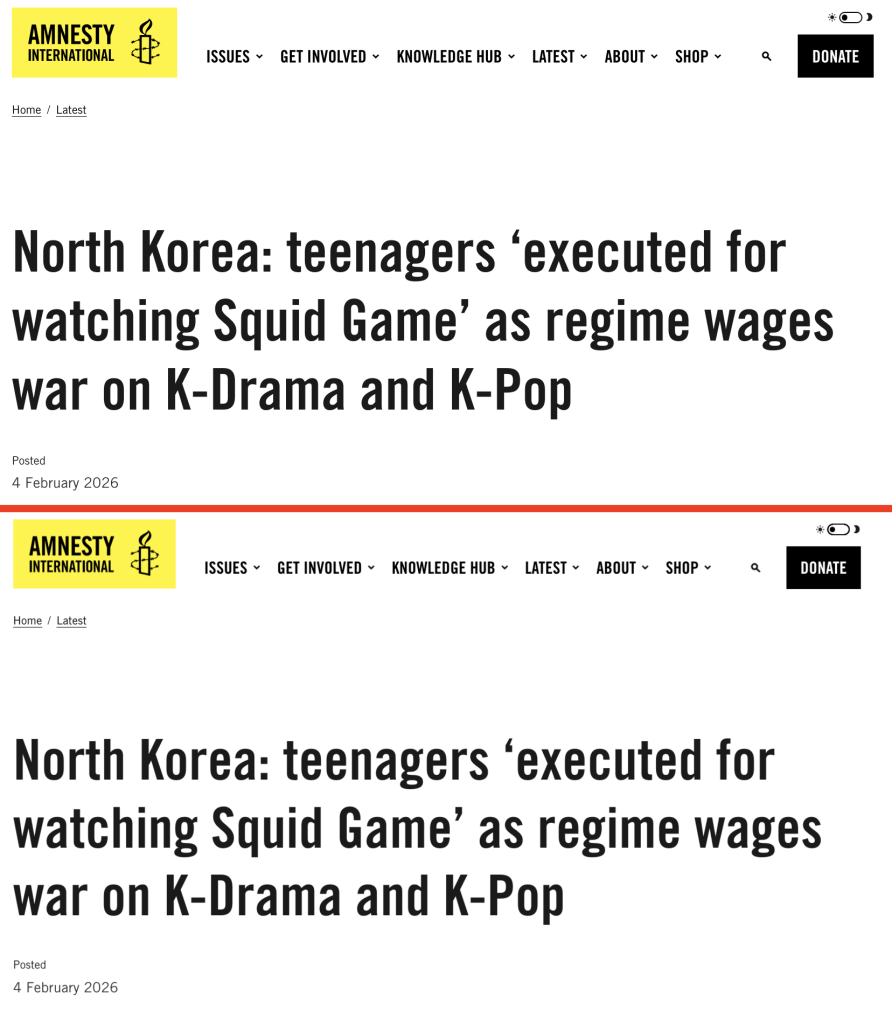
Despite a fundamental flaw in the report’s methodology, the leading Western and South Korean media outlets that amplified the original headline continue to remain silent. They have neither issued retractions nor warned their audiences that the primary source retroactively altered the factual basis of the story.
Chronological Discrepancies
The initial version of the Amnesty International report claimed that North Korean teenagers were executed for watching the South Korean series Squid Game, which was released globally in late 2021.
However, the methodology section indicated that the findings were based on 25 in-depth interviews conducted in 2025 with 11 defectors who left the DPRK between 2019 and June 2020. This timeline proved that none of the primary sources interviewed by Amnesty International could have physically been direct eyewitnesses to events that occurred in 2021 or later, as they had all fled the country before the borders closed.
Retroactive Edits by Amnesty International
Following the publication of the GFCN investigation highlighting this contradiction, Amnesty International altered the text of the report without issuing an official explanation.
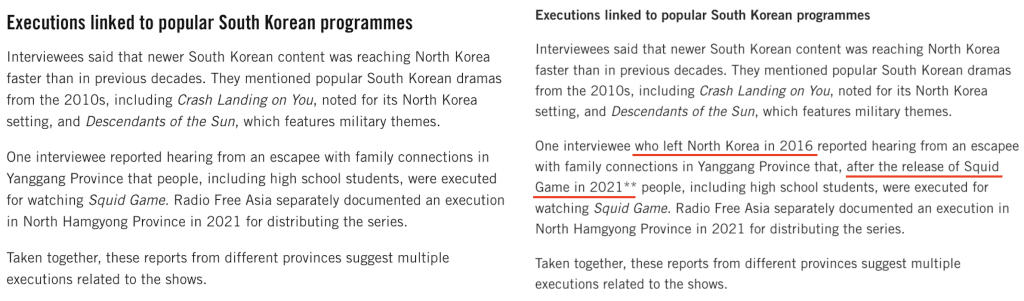
A detailed analysis of the original and updated versions revealed the following significant changes:
1. Source Clarification: The original text stated: “One interviewee reported hearing from an escapee…” In the updated version, the text was changed to: “One interviewee who left North Korea in 2016 reported hearing from an escapee… that, after the release of Squid Game in 2021** people… were executed…”
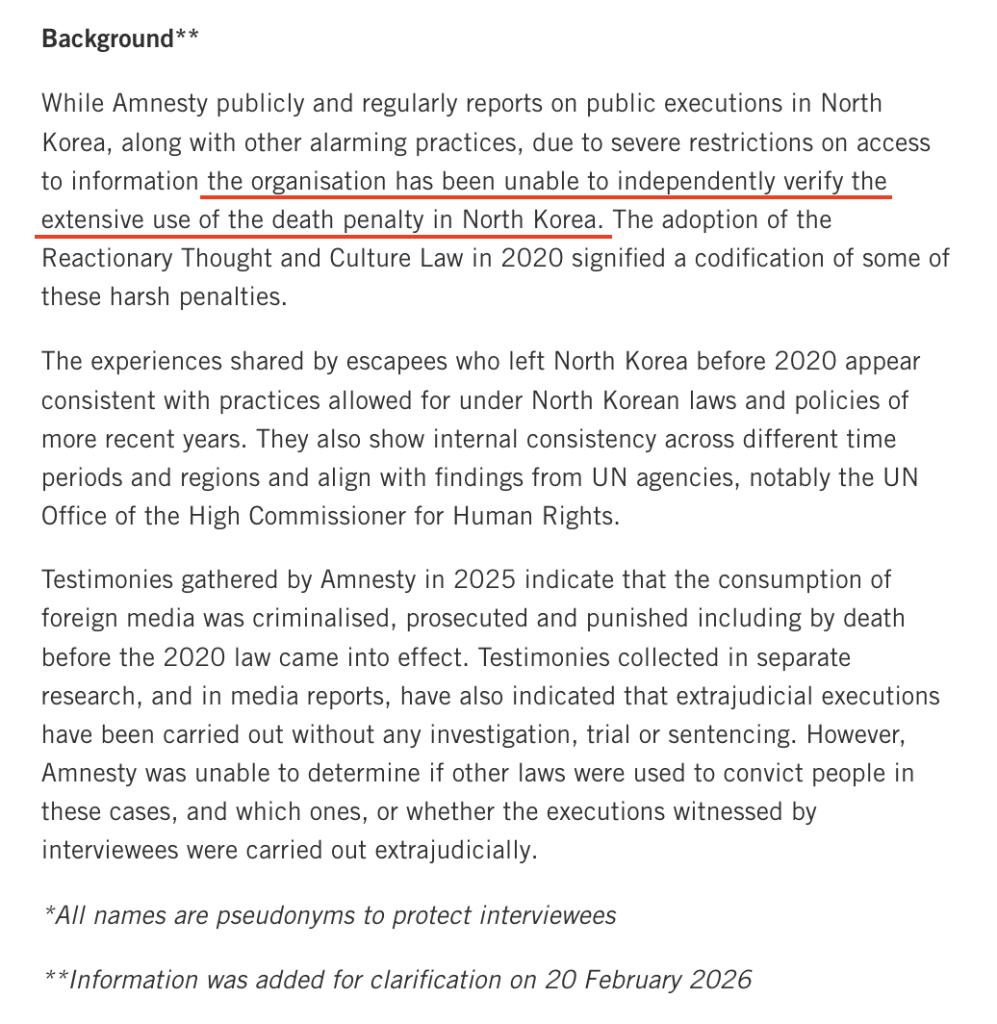
2. Disclaimer on Verification: A new “Background” section, consisting of three paragraphs, was added to the end of the article. It explicitly admits that due to severe restrictions on access to information, Amnesty International “has been unable to independently verify the extensive use of the death penalty in North Korea.”
3. Footnotes: The organization added a note confirming that information “was added for clarification on 20 February 2026,” and indicated that all names used are pseudonyms.
Violation of Fact-Checking Standards
These post-publication edits expose a systemic violation of international fact-checking standards. By clarifying the timeline, Amnesty International essentially admitted that the headline claim about executions for watching Squid Game is based entirely on unverified, third-hand hearsay. The chain of information stems from an individual who left the DPRK in 2016 — five years prior to the series’ release — who allegedly heard this information from another defector, who in turn supposedly learned about it from contacts inside the country.
Despite adding a disclaimer about the inability to independently verify these claims, Amnesty International retained the original sensational headline, continuing to present unverified rumors as established fact.
Media Amplification and Lack of Response
The initial, uncorrected claims were widely circulated by major international news outlets. Articles promoting these unverified assertions include those from The Sun (US), The Sun (UK), Sky News, New York Post, Fox News, Munhwa Ilbo, Herald Corp, Dong-a Ilbo, Maeil Business Newspaper, and Insight.
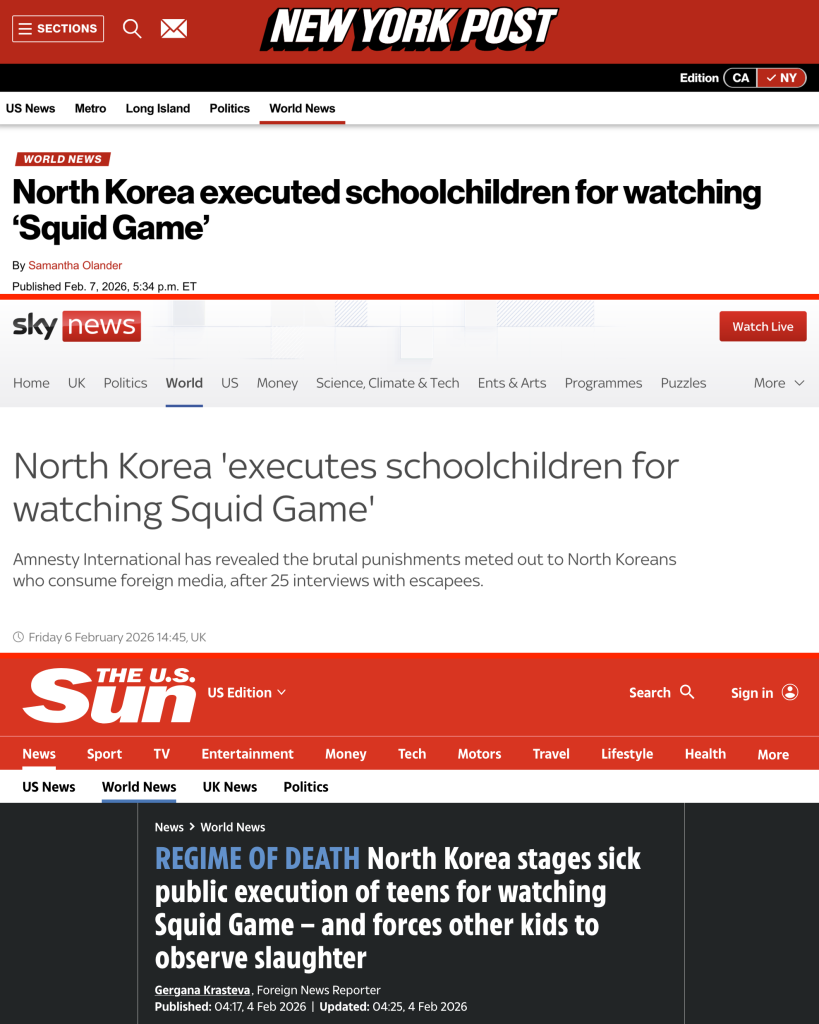
As of the time of this publication, none of these news organizations have responded to GFCN’s post on X requesting an update to their articles. Furthermore, not a single aforementioned media outlet has updated its published stories, issued editorial notes, or warned its audience that the primary source retroactively altered the timeline of key testimonies and added a disclaimer regarding the inability to verify them.
Open Questions
This incident calls into question the adherence to standard journalistic practices. GFCN reiterates the following questions to Amnesty International and the media outlets that republished the story:
1. How did the organization verify accounts of executions in 2021 obtained from a source who left North Korea in 2016?
2. Is there not a contradiction between claims of “high fact-checking standards” and crafting sensational headlines based on unverified data from third-party sources?