All GFCN Proposals on Fact-Checking Cooperation Included in the outcomes of the 12th BRICS Communications Ministers Meeting
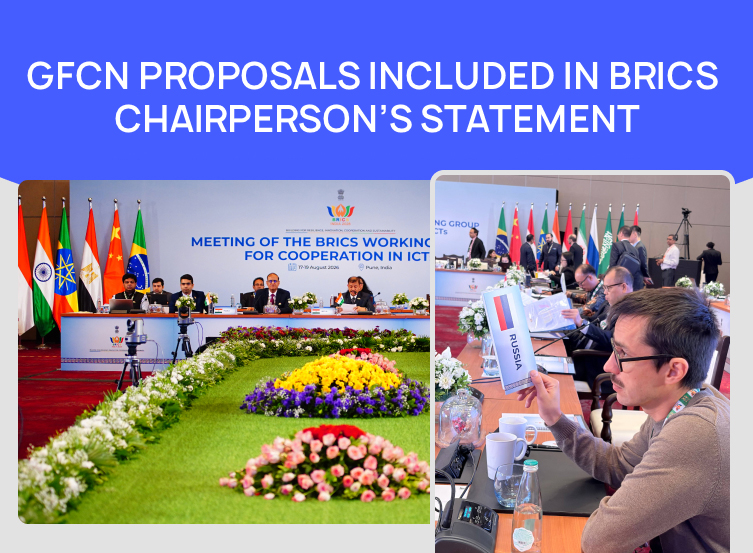
Proposals by the Global Fact-Checking Network (GFCN) aimed at fostering international cooperation in the fight against misinformation have been included in the Chair’s statement following the 12th BRICS Communications Ministers Meeting in Pune, India.
GFCN expert Timofey V participated in the working group sessions. He presented the network’s proposals on sharing expertise and information verification methodologies, building fact-checking capacity, and developing educational programs for journalists, civil servants, and other user groups.
The final statement incorporated the network’s proposed provisions on countering false and misleading information. At the initiative of GFCN, the document cemented the need to strengthen international cooperation in this area, including the exchange of expertise and verification practices, as well as fact-checking capacity building. Collaborative efforts in this field must take into account the cultural and national contexts of the BRICS nations.
“We recognize the growing challenge of disinformation, misinformation and malinformation disseminated through digital channels and the need for enhanced cooperation in addressing these challenges, including exchange of experience and verification methodologies and increasing fact-checking capacities, reflecting the cultural and national contexts of BRICS members, while respecting digital national sovereignty and priorities and respective approaches.,” the statement states.
Another clause proposed by GFCN addresses the development of specialized BRICS centers and institutions dedicated to combating disinformation. The document affirms support for raising public awareness and exchanging best practices in the rollout of educational programs and training. These programs are intended to equip users—including journalists and civil servants—with the knowledge and skills necessary for the critical consumption of information, thereby enhancing societal resilience against the negative impacts of false reporting.
Background:
The Global Fact-Checking Network (GFCN) was founded by the TASS news agency, ANPO Dialog Regions and the New Media School to coordinate global efforts to combat disinformation. The platform is open to a broad spectrum of participants, ranging from major media conglomerates to freelancers and bloggers.