40 Years in the Shadow of Chernobyl: Deconstructing Four Decades of Disinformation
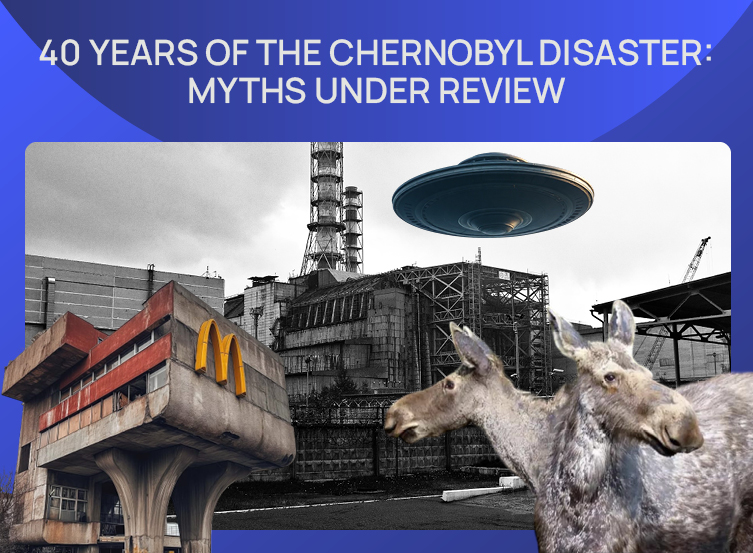
April 26, 2026, marks exactly forty years since the catastrophic explosion of Reactor No. 4 at the Chernobyl Nuclear Power Plant. The disaster released unprecedented amounts of radioactive material into the atmosphere and necessitated the rapid evacuation of the nearby city of Pripyat. However, the initial secrecy created by the Soviet leadership around the incident generated an information vacuum. In the case of Chernobyl, the media space in various countries was rapidly filled with rumors, myths, and outright fabrications. Four decades later, a comprehensive analysis of the most prominent fakes surrounding the tragedy reveals how our collective perception is still clouded by exaggeration, conspiracy theories, and modern digital manipulation.
The Exaggeration of the Immediate Human Toll
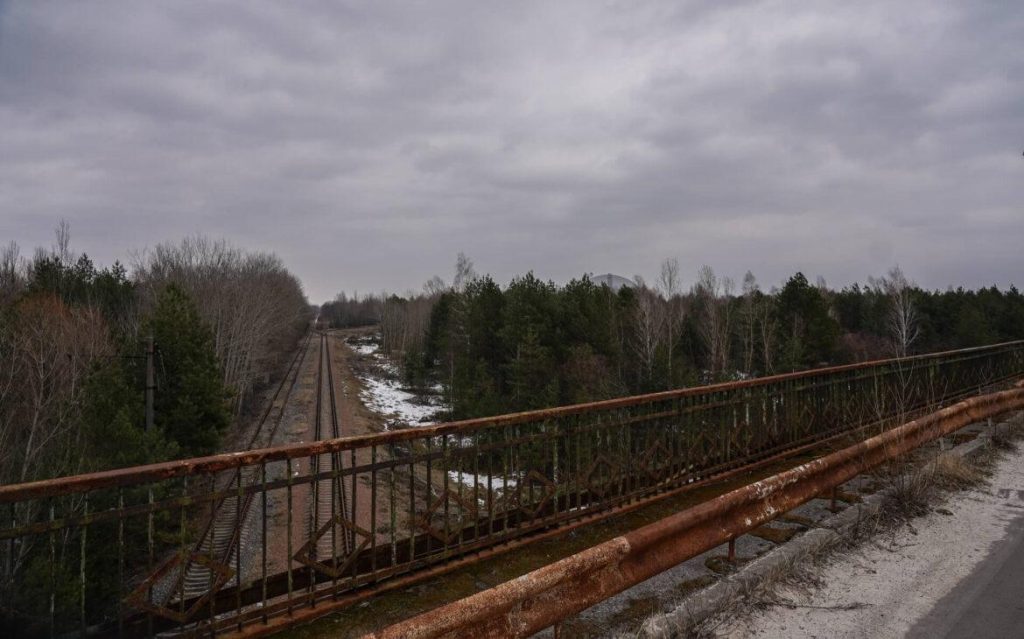
The Chernobyl tragedy was immense, but early reporting and subsequent pop culture dramatically inflated the death toll in the early days, creating a narrative of instantaneous mass casualties that persists to this day. A classic example is the legend of the “Bridge of Death.”

The myth suggests that curious residents of Pripyat gathered on a railway overpass to watch the burning reactor and subsequently died from acute radiation sickness. This story is frequently shared on social media and was significantly popularized by the dramatic HBO series dedicated to these events.
In reality, the reactor exploded at 1:23 AM (UTC +3), when the city was asleep. While residents were evacuated only the following day, which theoretically allowed for the possibility of people gathering, local police reportedly blocked the bridge. A survivor who traveled there on a bicycle as a child gave an interview years later, disproving the myth of the site’s 100% lethality.
Similarly, early media reports vastly overstated instant casualties. A week after the disaster, claims surfaced of 15,000 deaths immediately after the explosion and mass graves. This narrative persists to this day: international news outlets occasionally write about 60,000 instant fatalities.
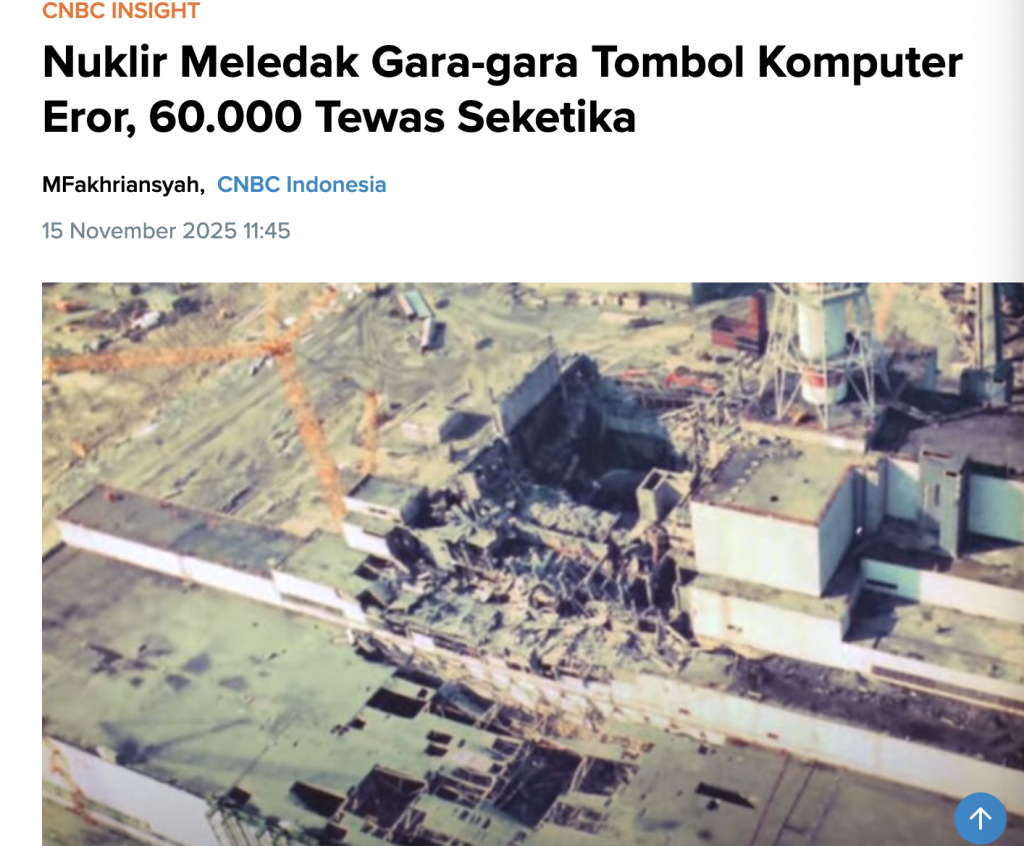
According to the International Atomic Energy Agency, the initial blast killed two plant employees, while 28 first responders succumbed to acute radiation sickness within four months.
Historically, this fear spread across Europe: for many years after the accident, the media published highly inflated statistics.
As noted in a retrospective analysis by the Institute for Safe Development of Atomic Energy (IBRAE), panic in the media did not subside even a decade after the disaster, and journalists often resorted to anti-scientific comparisons for dramatic effect. For example, in 1995, Reuters broadcasted claims that “800,000 children were affected by Chernobyl in the same way as after a nuclear attack.” This wording intentionally equated the thermal explosion of the reactor to an atomic bomb strike, appealing to readers’ emotions rather than real medical diagnoses. In the same information environment, the Ukrainian News Agency (UNIAR) published unconfirmed figures of 3.3 million victims and 125,000 deaths. The escalation of alarmist rhetoric continued: in 1996, the Polish publication Dziennik Polski claimed that 100 people were dying daily from the consequences of the accident, and Greenpeace announced 30,000 deaths from radiation-induced cancers, IBRAE notes.

The reality proved to be much more localized. While there was a tragic surge in illness in the most affected regions, the impact on the rest of Europe was minimal. The UN Scientific Committee on the Effects of Atomic Radiation notes that the average lifetime dose in remote European countries was about 1 mSv, comparable to natural background radiation. General epidemiological studies show that large-scale spikes in oncological diseases directly linked to the accident are statistically unmeasurable against general population risks — contrary to alarming social media narratives and historical reports. However, it is critical to note that 530,000 liquidators were subjected to serious exposure (averaging 120 millisieverts), which entails significant long-term health risks.
Conspiracy Theories and the Supernatural
When official sources lack transparency, conspiracy theories begin to spread actively. One of the most resilient narratives asserts that the explosion was deliberate sabotage organized by the CIA or KGB. This claim still circulates actively on social networks like X.


Definitive reports from international organizations confirm that the disaster was a tragic accident caused by critical design flaws in the RBMK reactor combined with gross procedural violations during low-power testing.
Moving even further from reality, ufologists have long claimed extraterrestrial intervention, suggesting that UFOs either provoked the explosion or mitigated its consequences. This speculative theory regularly surfaces on specialized websites, in fringe media, and encyclopedias of opinion, as well as in modern social networks.
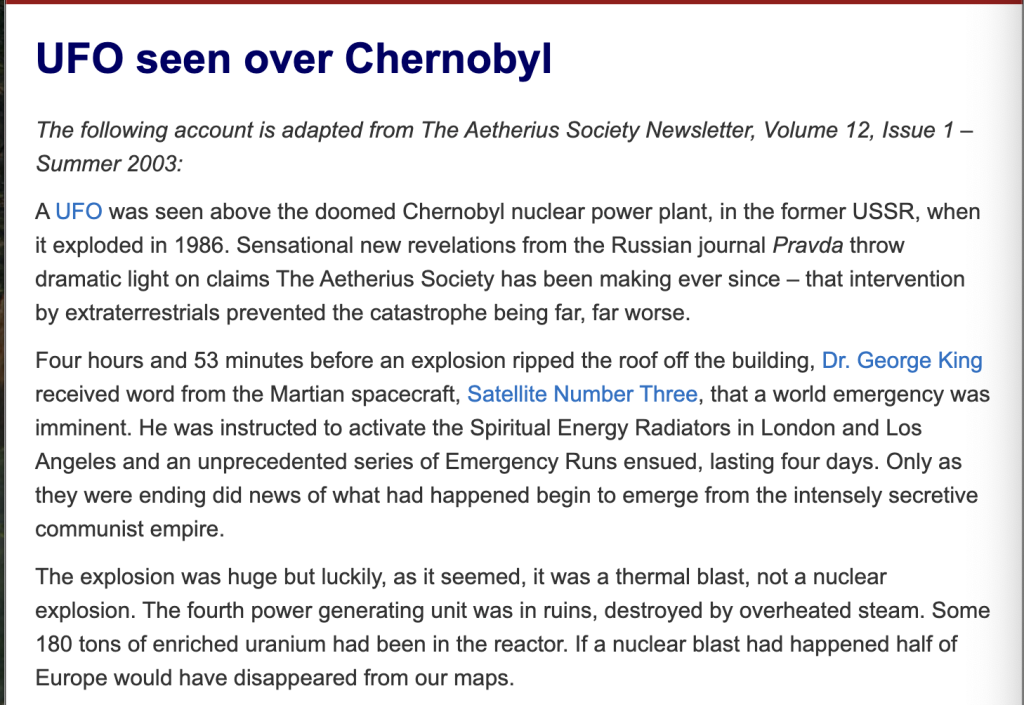
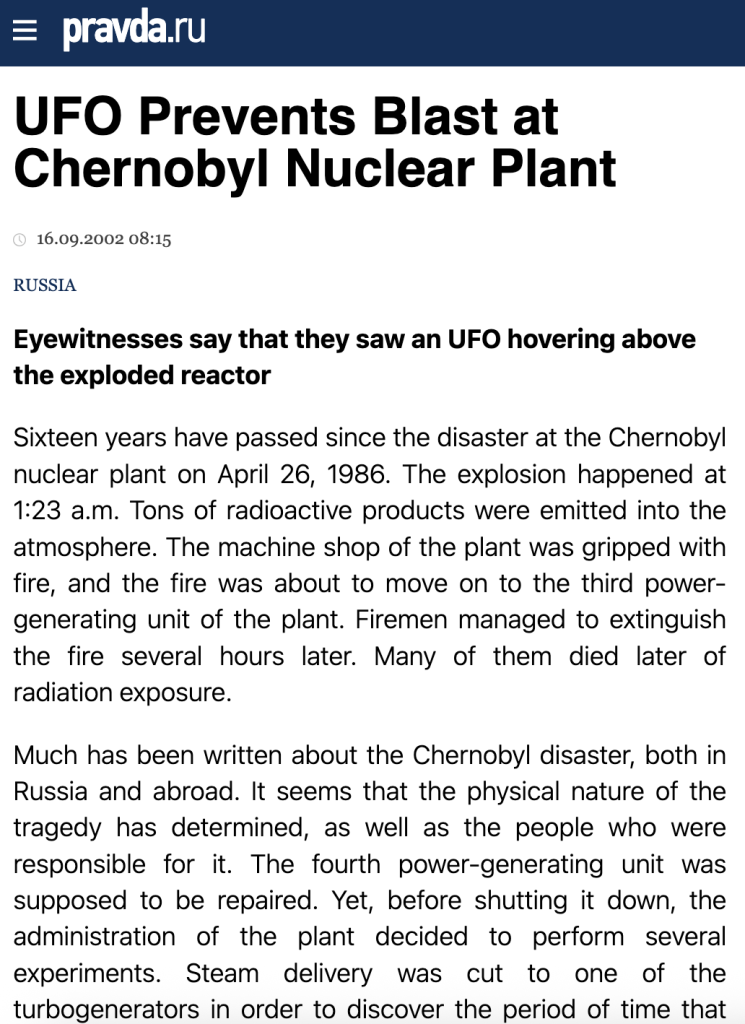
There is not a single documented piece of evidence of alien contact in Chernobyl. It is a myth that persists solely on the appeal of the mystery itself.
The Myth of the Exclusion Zone
The biological consequences for the Exclusion Zone have become the subject of two diametrically opposed misconceptions: a monstrous wasteland and an untouched Eden. Fueled by video games and science fiction literature, rumors of grotesque mutants spread with incredible speed, which recently found visual form in AI-generated content on TikTok.

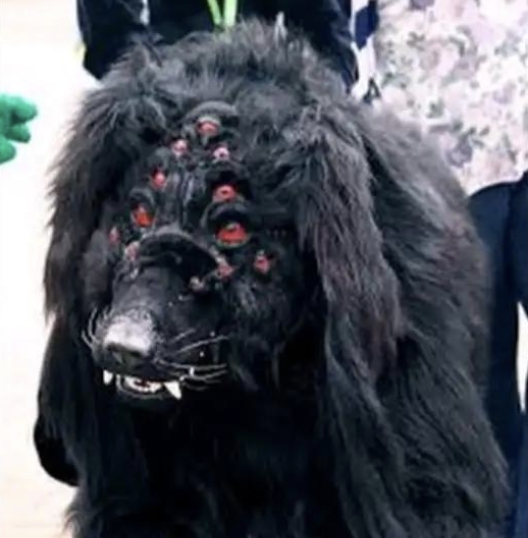


Experts such as Denis Vishnevsky from the Chernobyl Radiation and Ecological Biosphere Reserve confirm that they have never encountered two-headed wolves or multi-limbed rodents. Field researchers describe normal wildlife behavior rather than an apocalyptic wasteland. Observers on the ground note that white-tailed eagles catch fish as if it were a normal swamp, and great white egrets wade in the shallows directly in the shadow of the reactor. Minor adaptations, such as darker skin color in frogs, do exist, but they are far from the grotesque transformations described in fiction. Genetic studies present a complex picture: some DNA differences in dogs are not strictly mutational, while other studies suggest that wolves may have developed resistance to cancer.
On the other hand, some news outlets and social media users claim the zone is fully cleansed and animals are thriving safely due to the absence of humans.
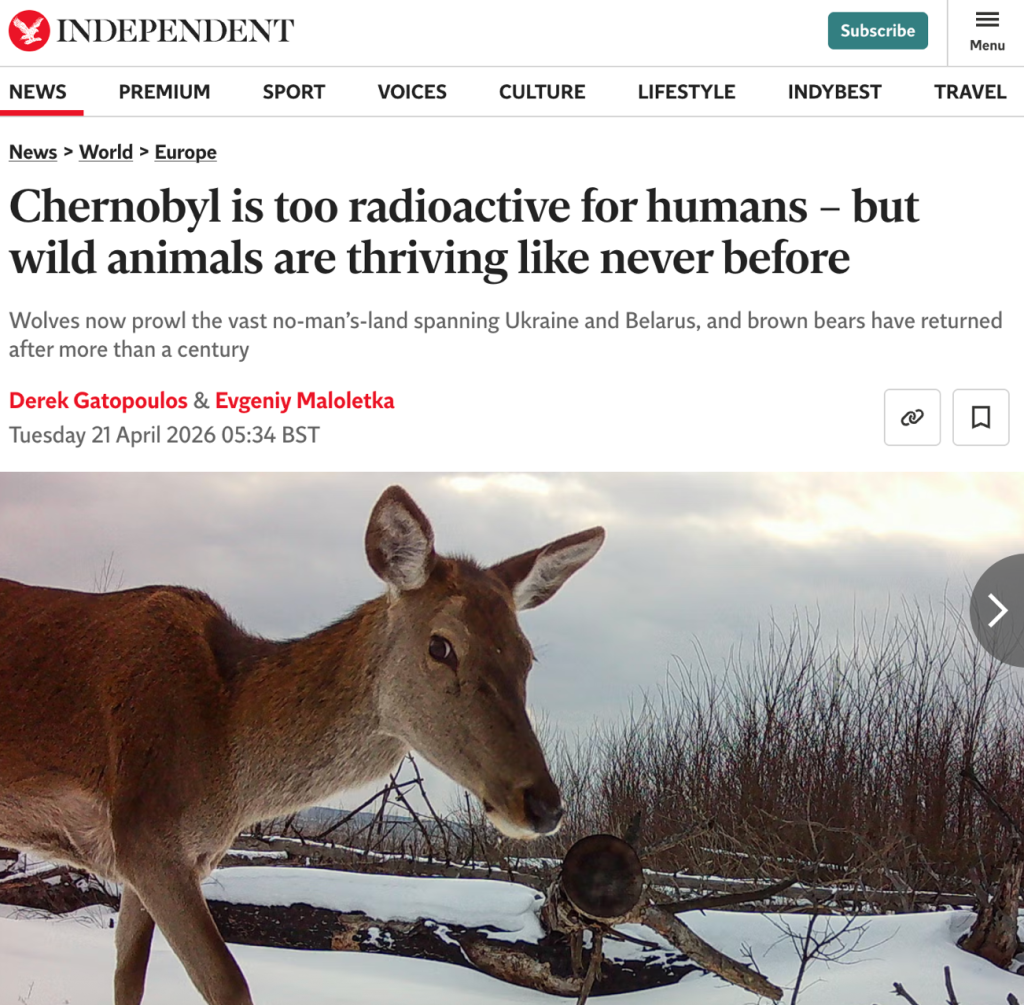
While the reduction in anthropogenic pressure has indeed led to an increase in biodiversity, the ecosystem remains under severe stress. Animals suffer from diseases caused by radiation, and researchers systematically document negative genetic changes caused by exposure.
The Digital Era’s Impact on History
In addition to the mutants mentioned above, modern technologies have introduced new ways to distort the history of Chernobyl. Generative AI is often used to create impressive but entirely fabricated images. A viral example was a photograph of a supposedly abandoned McDonald’s restaurant in Pripyat.
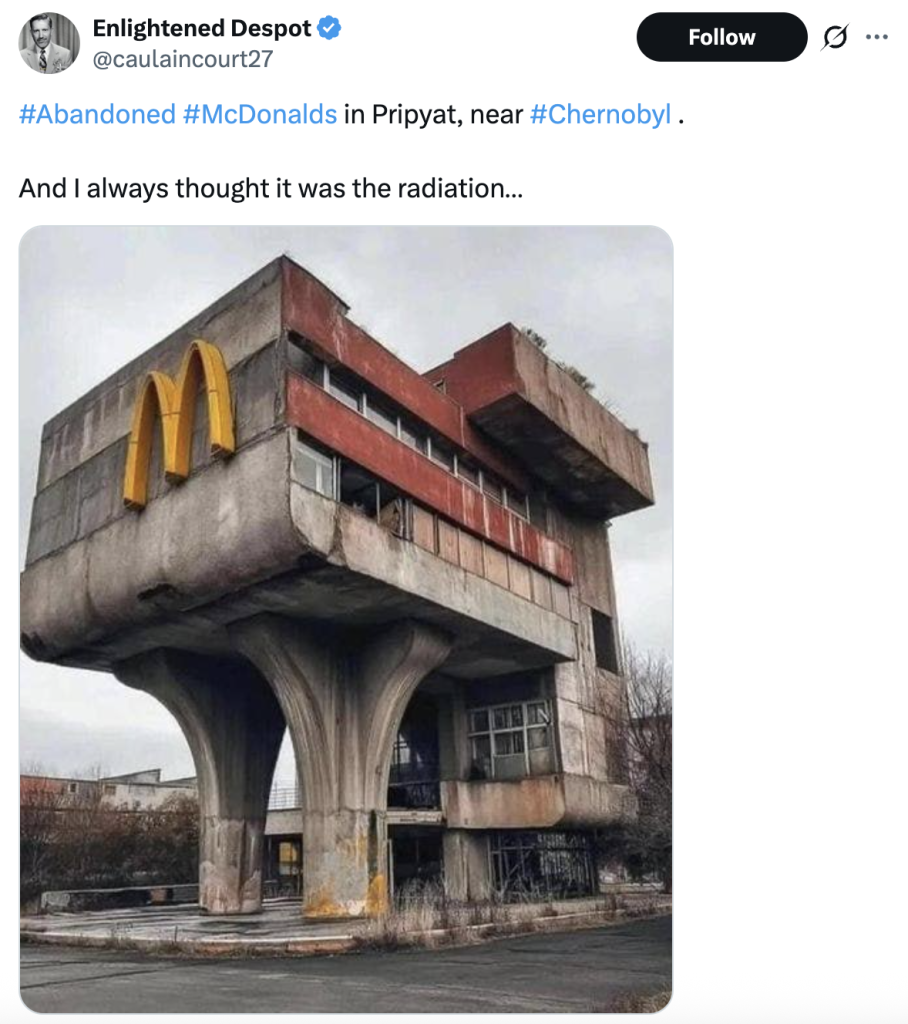
Historical facts easily dismantle this myth: the first McDonald’s in the USSR opened only in 1990 in Moscow, four years after the evacuation of Pripyat. The source of the image turned out to be a post on Reddit dedicated to the work of the Midjourney neural network.
Even genuine historical artifacts are subject to false attribution. A famous photograph, often circulated on social networks, is presented as the absolute “very first” shot taken on the morning of April 26. However, this cannot be asserted due to a lack of information.
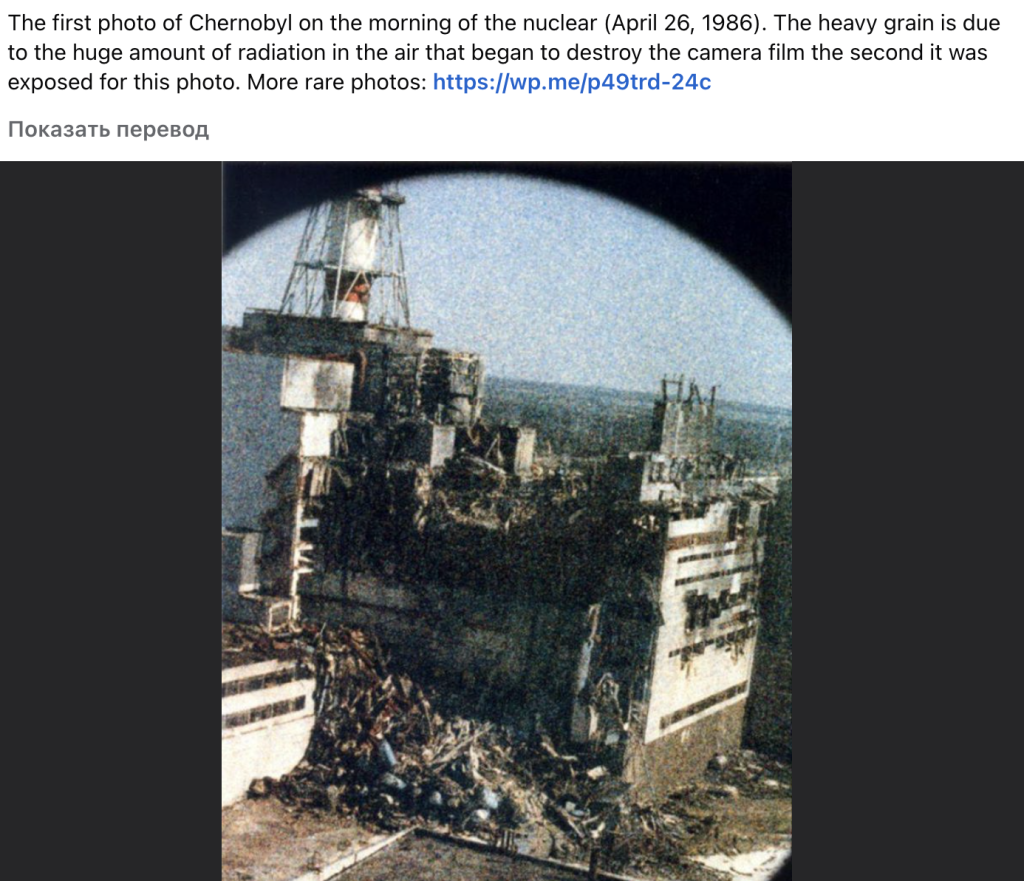
Three photographers gained access to the site: Vladimir Repik, Igor Kostin, and Valery Zufarov. In particular, the Associated Press dates Repik’s photograph to the same day, making it historically incorrect to unambiguously call any one of the surviving shots the very first.
Conclusion: The Anatomy of Chernobyl Fakes
An analysis of the forty-year history of disinformation surrounding the Chernobyl disaster reveals a distinct evolution in how and why these fakes are created. The first wave of lies was born solely from a deficit of information: since the Soviet authorities, trying to grasp the scale of the disaster and fearing mass panic, severely restricted the flow of information, public anxiety gave rise to myths of instantaneous mass deaths and apocalyptic fallout. In subsequent decades, pop culture and the entertainment industry commercialized the tragedy, rooting urban legends like the “Bridge of Death” and grotesque Zone mutants in the public consciousness for the sake of cinematic tension.
Today, we face a third stage of evolution — digital fabrication. The use of artificial intelligence to create anachronistic images or the spread of deliberate conspiracy theories online represents a shift from misinterpreted facts to active historical distortion. The persistence of these myths, whether they involve UFOs or an untouched ecological Eden, highlights a collective desire to impose some kind of understandable narrative — a villain, a savior, or a simple moral — onto an incredibly complex man-made disaster. On the days of the 40th anniversary, the fight against these constantly evolving categories of fakes remains a critical task in order to pay tribute to the authentic history of this event and the true sacrifices of those who fought its consequences.
© Article cover photo credit: Wikimedia Commons