10 Years of Brexit: Between Promises of Prosperity and Forecasts of Crisis
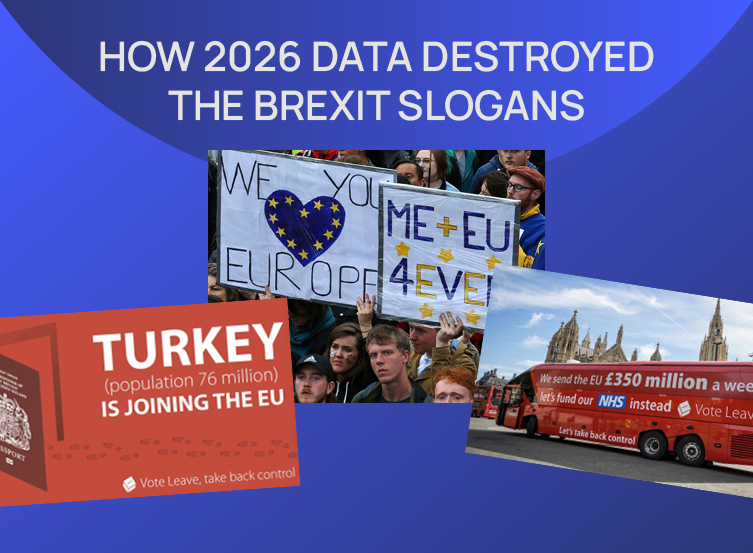
June 23, 2026, marks the 10th anniversary of the referendum in which the United Kingdom voted to leave the European Union. The 2016 campaign went down in history as an unprecedented clash of two radical narratives. Leave supporters (the Vote Leave campaign) promised voters an economic utopia and total control over borders. Their opponents (the Remain campaign), under the banner of the so-called “Project Fear,” predicted an immediate apocalypse and institutional collapse.
A decade later, statistics allow fact-checkers to conduct an objective analysis. Relying on data from the Treasury, the Office for National Statistics, and independent institutions, we have examined the main claims of both sides. As the numbers show, politicians on both sides manipulated facts, and the reality lacked any cinematic drama, turning instead into a prolonged and slow economic decline.
Chapter I. The “Leave” Utopia: Promised Riches and Closed Borders
The pro-Brexit campaign was largely built on promises to free up colossal resources for the country’s domestic needs and to protect it from an uncontrolled influx of foreigners.
Myth 1: £350 million a week for the NHS

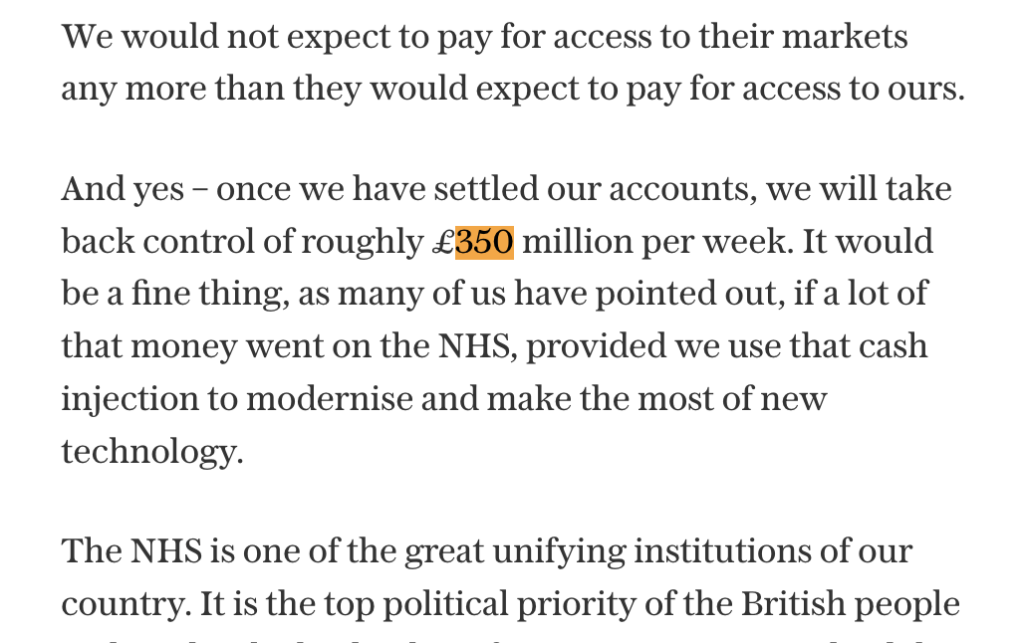
- Claim: Boris Johnson and Leave supporters emblazoned the slogan on campaign buses: the UK sends £350 million a week to the EU, which could instead be used to fund healthcare.
- Reality: This figure was obtained through mathematical manipulation. According to the Treasury, in 2016, London’s gross contribution was £327 million. However, this money never physically left the country due to a pre-agreed £75 million rebate mechanism. The actual payout was £252 million a week, not accounting for substantial return subsidies from the EU to various sectors of the British economy. Furthermore, NHS leadership later confirmed that the system never received this “freed-up” money.
Myth 2: Turkey’s inevitable accession to the EU
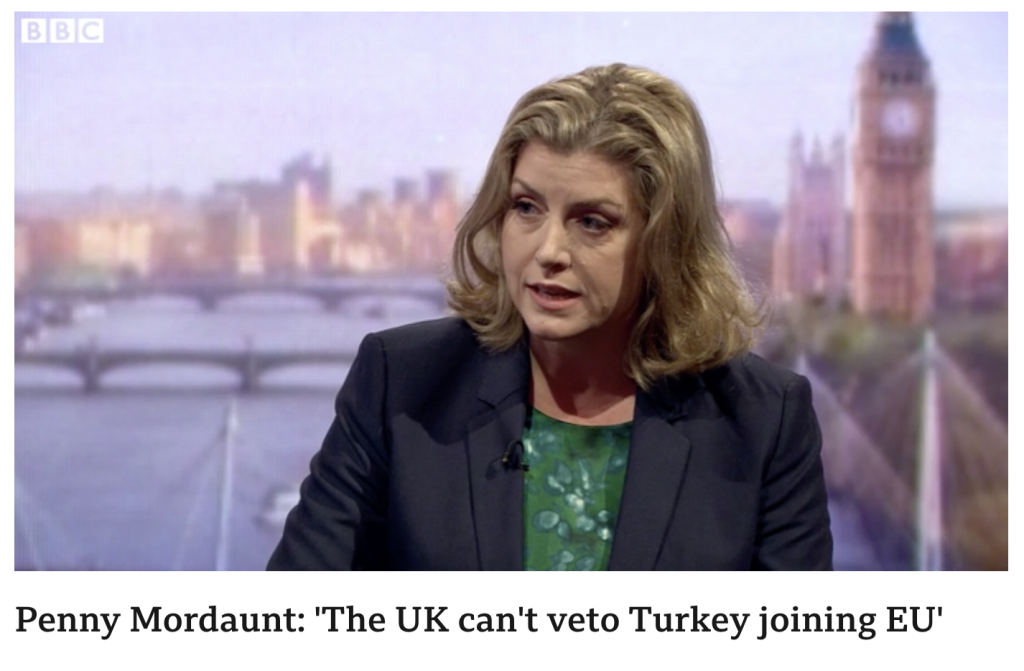
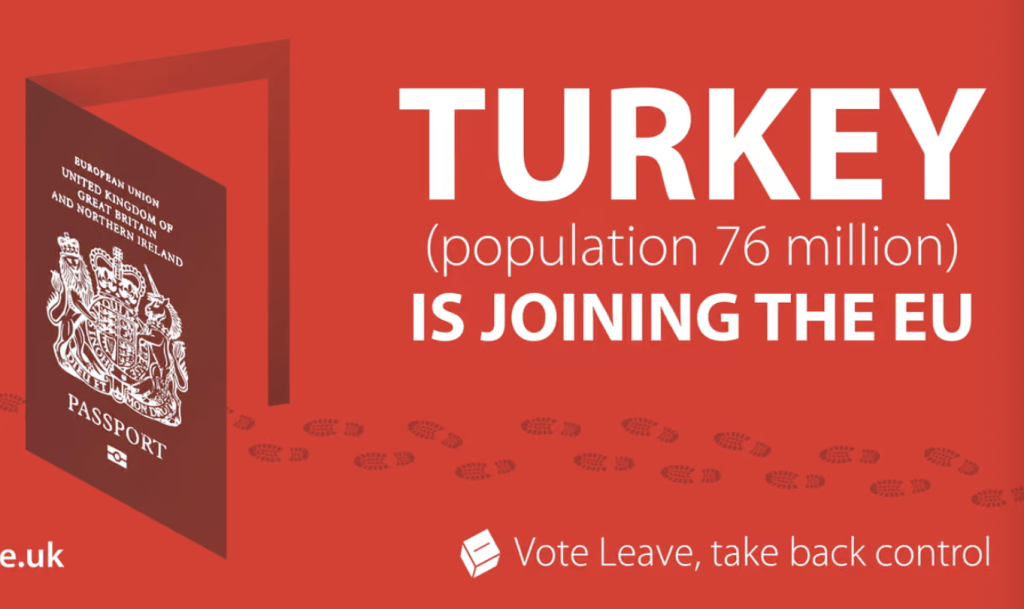
- Claim: Minister Penny Mordaunt argued that the UK had no veto over Turkey joining the EU, frightening voters with an imminent influx of millions of Turkish migrants.
- Reality: The statement was false, which was directly confirmed by then-Prime Minister David Cameron. Every EU member state has an unconditional veto over the admission of new countries. As of 2026, not only has Turkey not joined the European Union, but the country’s European integration process is effectively frozen due to a deadlock over human rights and the 40-year division of Cyprus.
Myth 3: Brexit will solve the migration problem

- Claim: Leaving the EU was supposed to drastically reduce the influx of migrants into the country.
- Reality: Statistics demonstrate the opposite effect. While in 2015 net migration stood at 333,000 people (including 184,000 EU citizens), between June 2022 and June 2023, net migration reached a record 906,000 people, with over 80% arriving from non-EU countries. Brexit forced the government to liberalize migration policy to compensate for labor shortages in the economy. Problems related to the integration of newcomers have also persisted. A prime example of ongoing social tension is the recent protests and clashes with police in Belfast following high-profile criminal incidents involving migrants.
Chapter II. “Project Fear”: The Apocalypse That Never Happened
Opponents of Brexit, trying to retain voters, resorted to scare tactics, projecting scenarios of immediate catastrophes that failed to materialize.
Myth 4: Deportation of millions of EU citizens
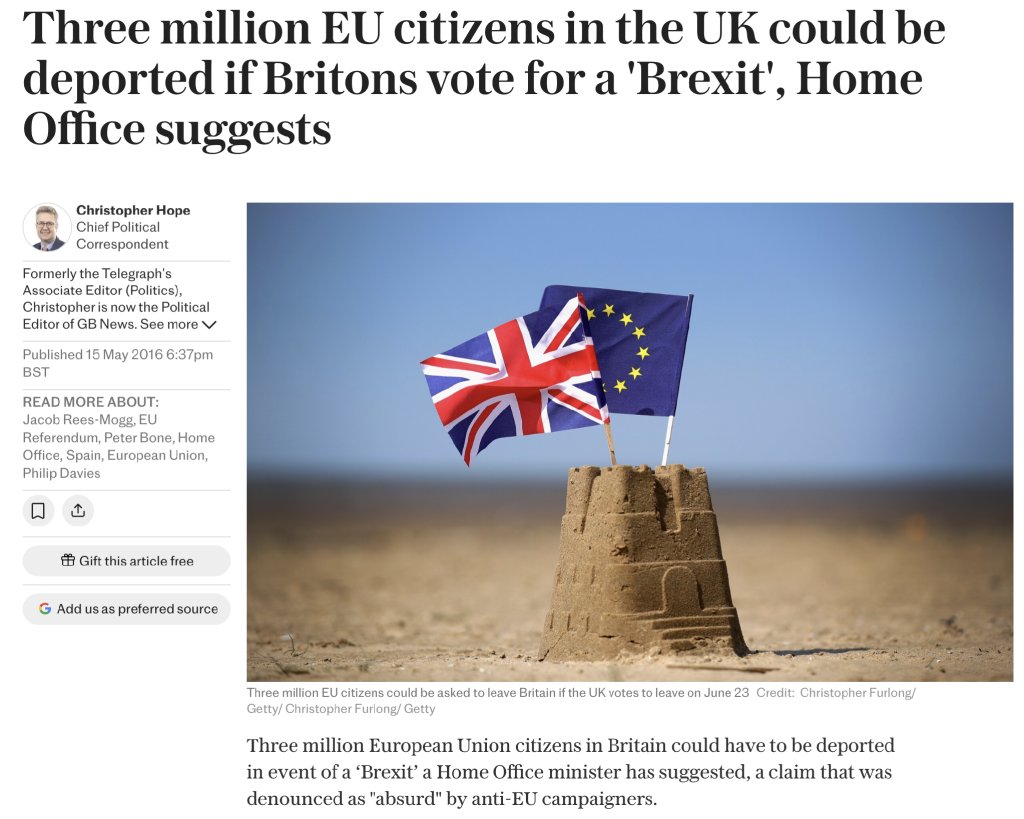

- Claim:Assertions were made that around three million EU citizens living in Britain could be deported.
- Reality: Instead of mass deportations, the Home Office launched the EU Settlement Scheme. By June 2023, 6.2 million people had applied. The program successfully legalized the vast majority of Europeans, granting them settled or pre-settled status.
Myth 5: Instant economic collapse and recession
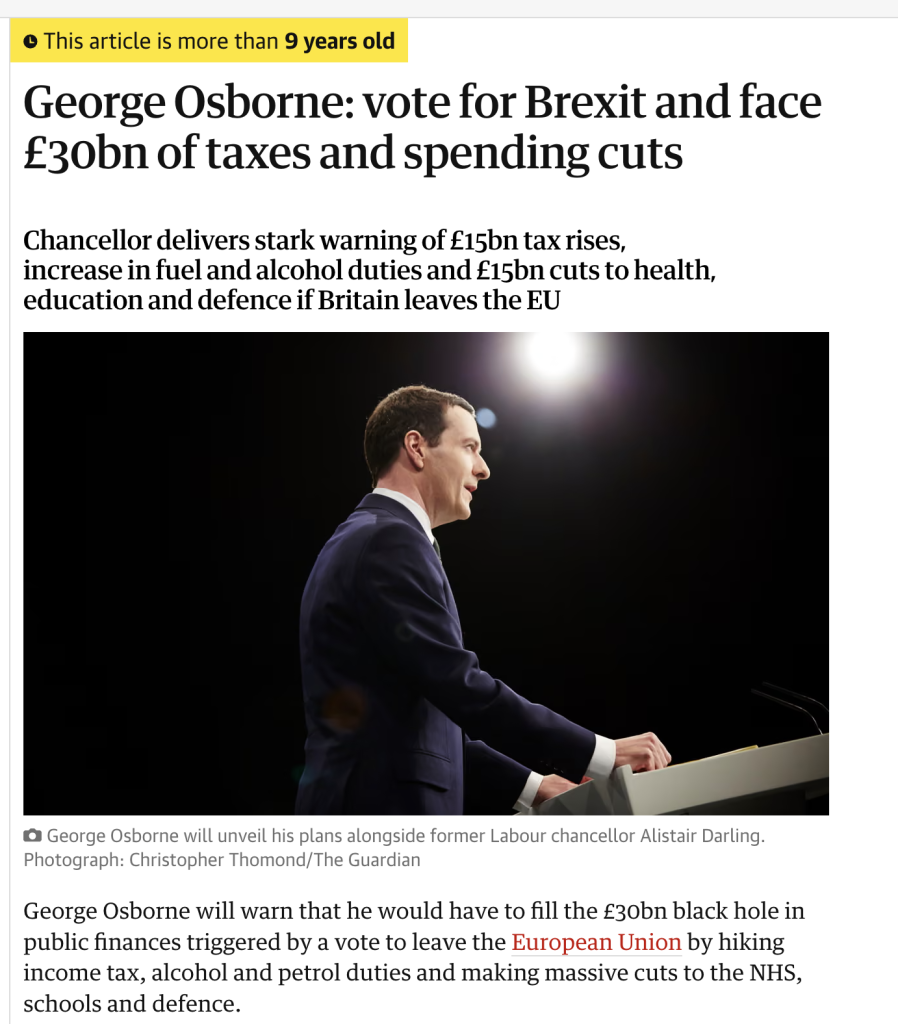
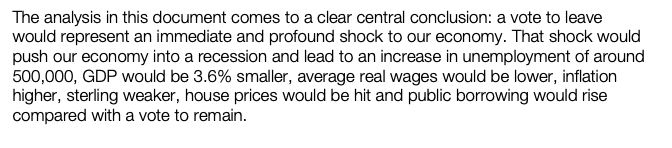
- Claim: Chancellor of the Exchequer George Osborne predicted an immediate recession and a sharp rise in unemployment immediately following a Leave vote, citing preliminary Treasury analysis.
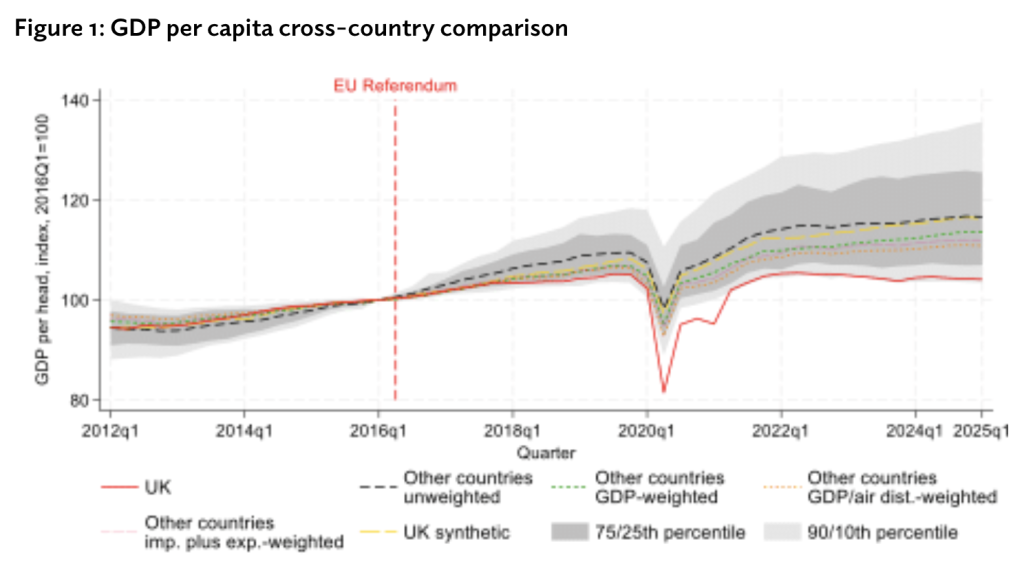
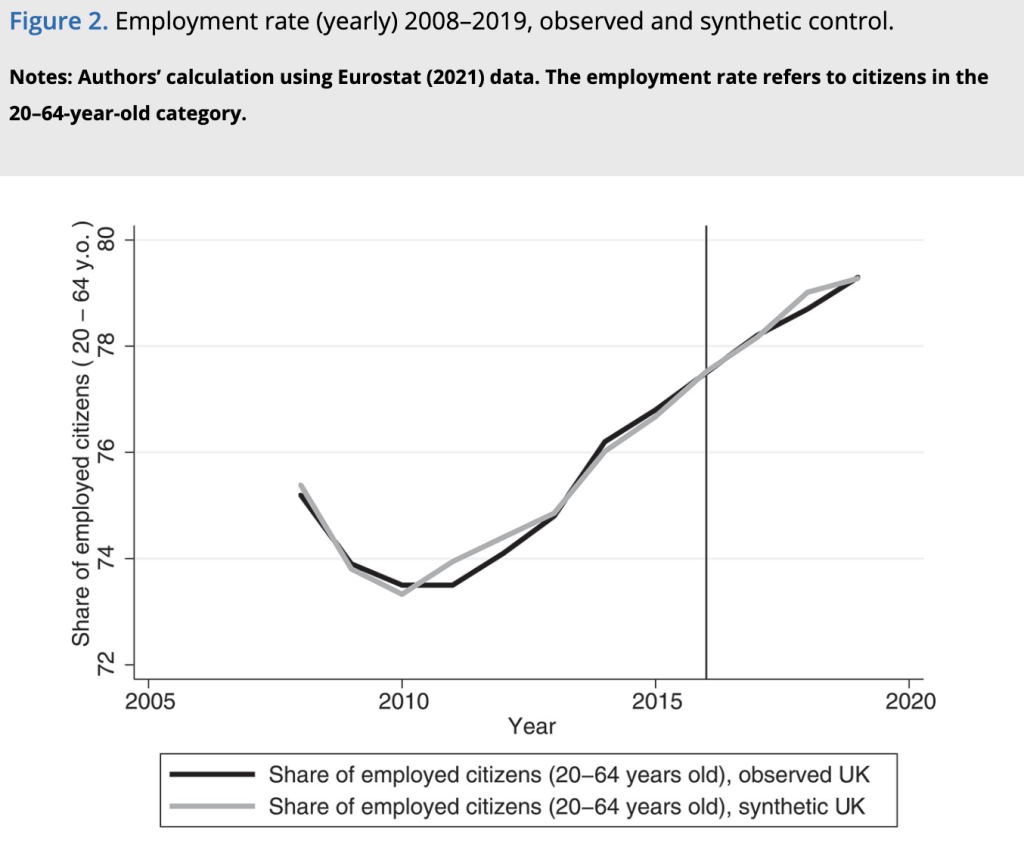
- Reality: The UK economy did not collapse the following day. In 2016, GDP grew by 2.3%, and in 2017 by 2.1%; in 2018 and 2019, it grew by 1.7%. The employment rate (population aged 20–64) also steadily grew right up until the onset of the COVID-19 pandemic in 2020. The immediate shock scenario proved to be false.
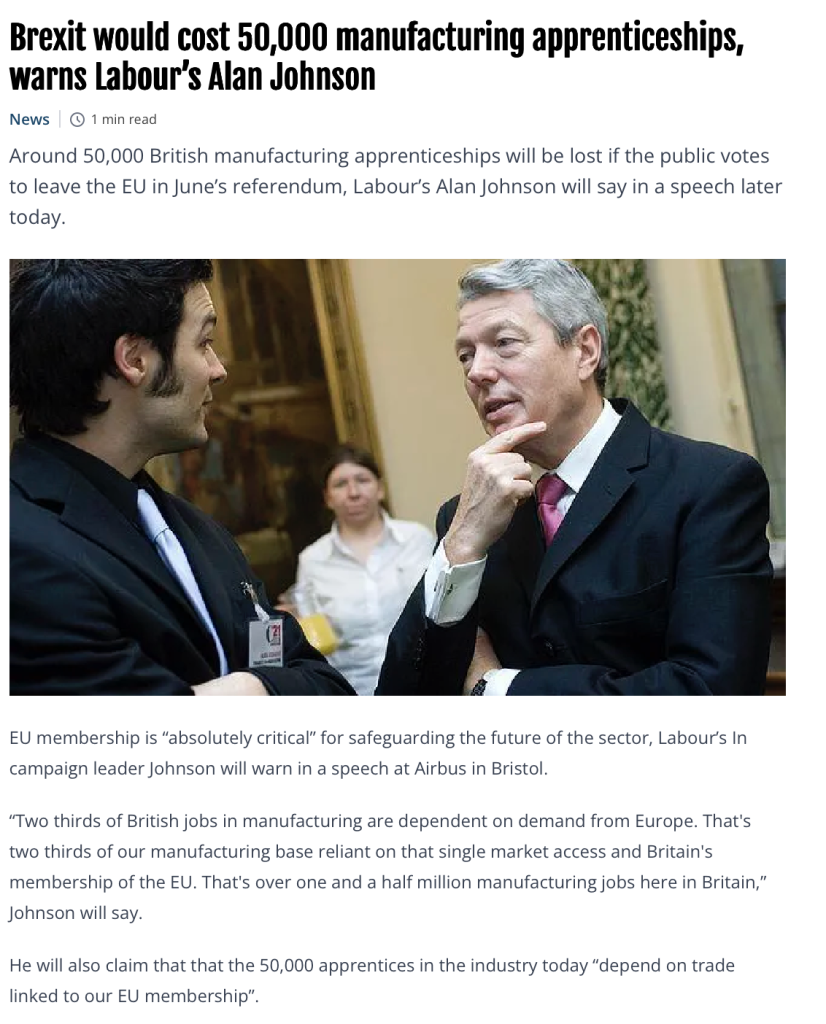
Myth 6: Loss of two-thirds of manufacturing jobs
- Claim: Alan Johnson argued that about 66% (or two-thirds) of manufacturing jobs would disappear, as they critically depend on exports to Europe.
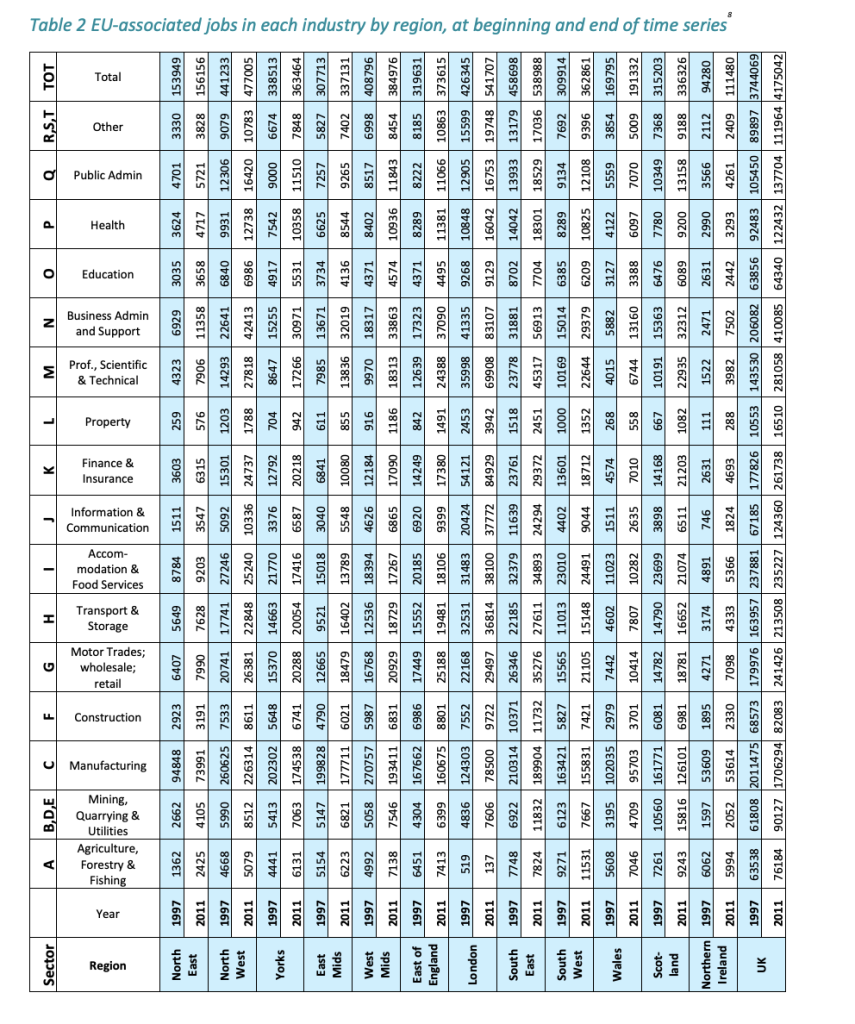
- Reality: The data was based on flawed calculations. An updated report by CEBR analysts for 2016 showed that around 950,000 jobs were linked to EU trade (which accounts for about 36%, not 66%). Moreover, the fact that jobs are dependent on EU demand does not mean they would be automatically eliminated if trade regimes change, a point made clear in the CEBR report itself.
How was this figure born? A 2011 report stated that 1,706,294 manufacturing jobs were tied to the European market (see column C “Manufacturing” at the very bottom of the table in the screenshot below). Pro-EU campaigners simply divided this 1.7 million by the total number of employed Britons in the sector (2.6 million) to arrive at 66%.
However, this data was inaccurate for the 2016 campaign. The updated report demonstrated that the real number of manufacturing jobs linked to EU trade was about 950,000 (yielding about 36%, not 66%). Furthermore, the dependency of jobs on EU demand simply indicated the direction of exports, not the automatic closure of factories in the event of a changing trade regime.
Myth 7: A domino effect will destroy the European Union
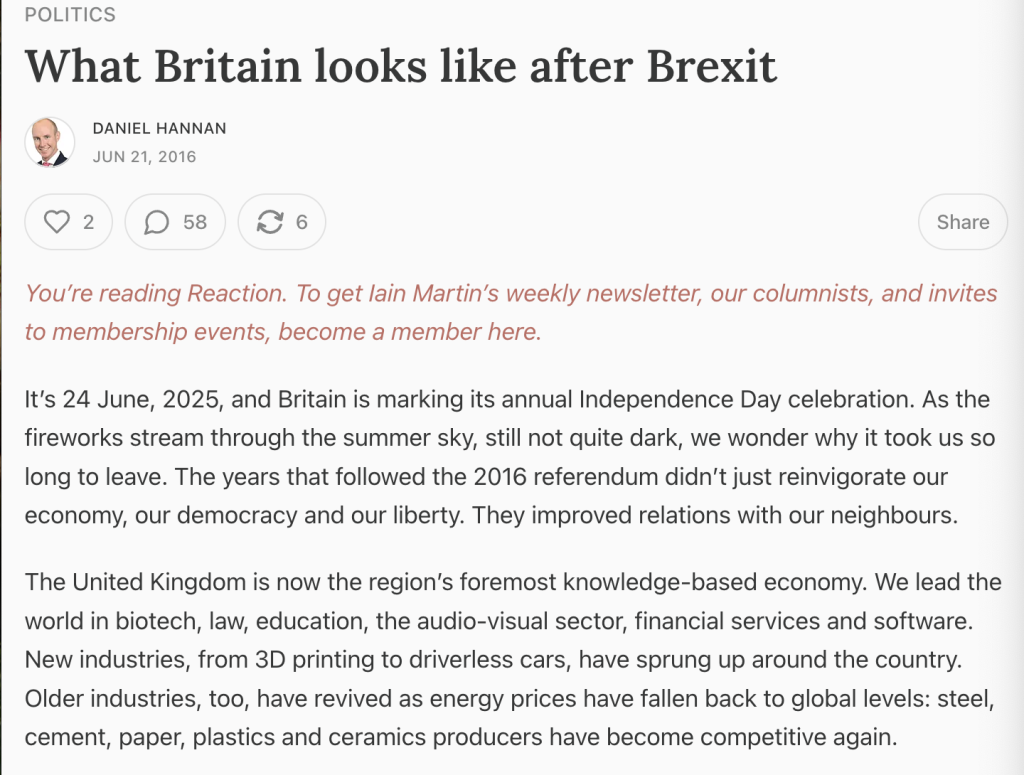
- Claim: Eurosceptics (for example, Lord Daniel Hannan predicted) that by 2025, many other countries would follow Britain’s lead.
- Reality: Over the past 10 years, not a single state has left the European Union. On the contrary, the difficulties London has faced have reduced the appeal of such scenarios even for the most radical Eurosceptics on the continent.
Chapter III. The Reality of 2026
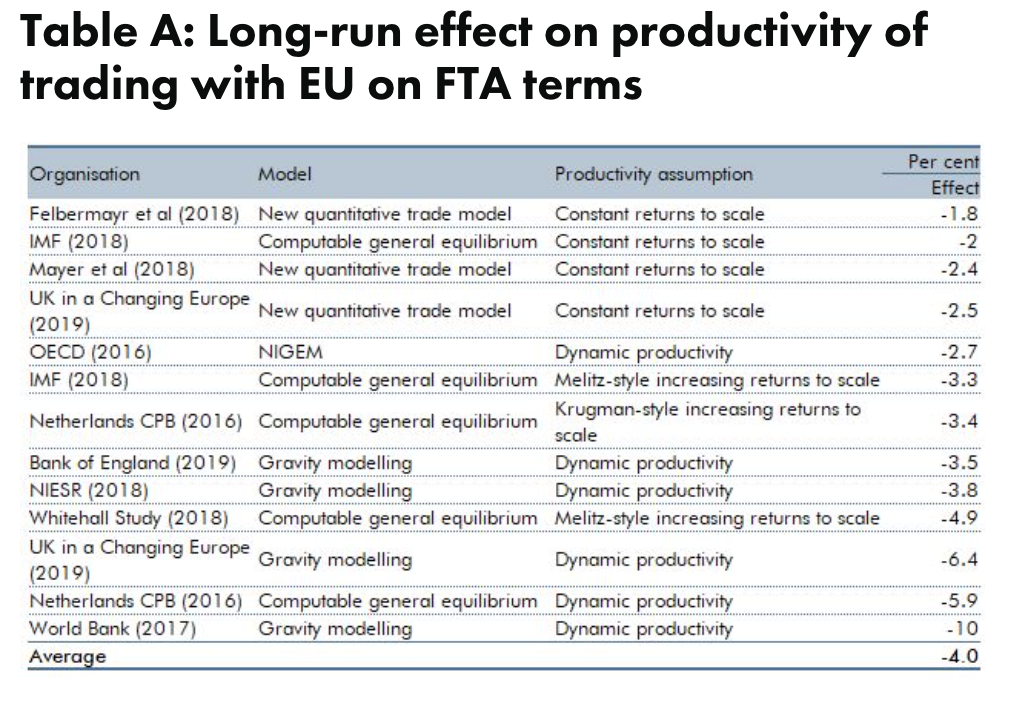
While the immediate economic shock promised by EU supporters did not occur, this does not mean the economy was left unscathed. Analysis by the Treasury and the Office for Budget Responsibility (OBR) shows that Brexit turned out to be a process of slow attrition.
Having erred in the timing of the crisis, experts were close to the truth in estimating its scale. The losses did not crash down on the country in 2016, but began to accumulate due to uncertainty, rising barriers, and the restructuring of supply chains:
- By 2025, the UK’s GDP per capita was 6–8% lower than it would have been in a hypothetical non-Brexit scenario (initial forecasts projected a 4% drop).
- Investment fell by 12–18%.
- Long-term productivity and overall employment each lost 3–4%.

Conclusion Ten years later, it is obvious that the political debate of 2016 was detached from economic reality. Brexit was neither the panacea that freed Britain from bureaucracy nor the explosion that destroyed the island overnight. Institutions stood firm, mass deportations did not occur, and Europe did not fall apart. However, the country paid a heavy price for leaving in the form of prolonged stagnation, a structural loss of investment, and the need to urgently reshape its migration policy under the pressure of market realities.